 * Image is for illustrative purposes only.
Nara National Museum
奈良国立博物館
Overview
Museum Overview
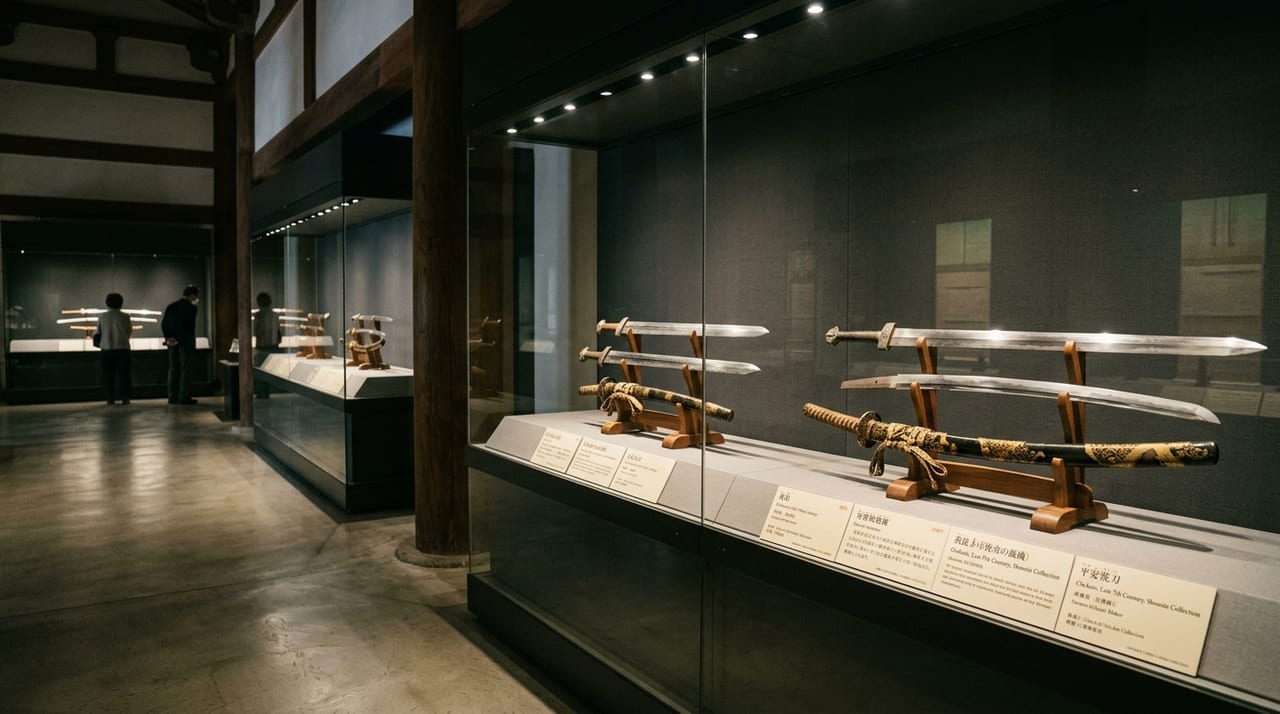
Nara National Museum opened in 1895 (Meiji 28) as the Imperial Nara Museum and was the second national museum to open after Tokyo, making it one of Japan's representative national museums. Located in Nara Park, home to the World Heritage temple Kōfuku-ji and other sites, it stands in a solemn environment enveloped by the greenery of Nara Park. While known as a shrine of Buddhist art, it is also an extremely important institution from the perspective of the historical origins of the Japanese sword. The Nara period (710–794) was the era when swords that became the prototype of the Japanese sword were born, and the Shōsōin imperial treasures, which are borrowed from the Imperial Household Agency and displayed every autumn, are the one and only existence that conveys this historical evidence to the present day.
Shōsōin Exhibition and Ancient Swords
The museum's largest annual event is the "Shōsōin Exhibition," held every autumn (October–November). The Shōsōin, which houses treasures associated with Emperor Shōmu and Empress Kōmyō, contains numerous swords and weapons from the Nara period. These are swords of diverse forms, such as "tōsu" (small blades), "yokutō" (side swords), and "warabite-tō" (fern-frond swords), with a mixture of imported pieces from the continent (Tang, Silla) and domestically made blades. The Shōsōin preserves actual material evidence from the transition period between the Nara age when straight-bladed chokutō without curvature were mainstream and the establishment of the curved tachi with its distinctive arc. These ancient swords are occasionally displayed at the annual Shōsōin Exhibition. Tickets for the Shōsōin Exhibition require advance reservation, and the venue draws numerous visitors from across Japan during the exhibition period.
Yamato Tradition and Nara Sword Smiths
Nara is the birthplace of the Yamato tradition (Yamato-den), one of Japan's Five Great Sword Traditions. The Yamato tradition is said to be Japan's oldest sword-smithing lineage and is said to inherit forging techniques reaching back to the Nara period. Yamato comprised five schools — Senjuin, Taima, Hoshō, Shittari, and Tegai — and each school forged swords while serving at renowned temples and shrines in Nara. In particular, major temples and shrines such as Tōdai-ji, Kasuga Grand Shrine, and Kōfuku-ji each retained dedicated sword smiths and had them forge dedication and protective blades. The characteristic of the Yamato tradition lies in the pure hamon based on the suguha (straight blade edge) and the finely packed masame-hada (straight-wood grain pattern). The aesthetic of the Yamato tradition, which values dignity over splendor, embodies the religious and cultural atmosphere of the region of Nara. At Nara National Museum, Yamato tradition swords are occasionally displayed in special exhibitions, where one can appreciate the graceful beauty of ancient Yamato blades from the Heian to Kamakura periods.
Buddhist Statues, Buddhist Art, and Swords
As a treasure trove of Buddhist art, Nara National Museum maintains a permanent display of Buddhist statues from the Heian to Kamakura periods in the annual "Nara Buddha Hall." The Japanese sword and Buddhist art share a profound connection. The carving of the "kurikara dragon" inscribed on the blade is a symbol of Fudō Myōō, and the faith in swords as instruments of dharma protection was nurtured within the great temple culture of the Nara period. Sword smiths of Yamato forged blades under the patronage of temples and shrines, and these blades carried the significance of dedication to the kami and Buddha. Kasuga Grand Shrine houses the "Kasuga Grand Shrine Treasure Hall," and by visiting it together with Nara National Museum, one can develop a more comprehensive understanding of ancient and medieval sword culture.
Nara Park Cultural Zone
Nara National Museum stands at the heart of Nara Park, a vast cultural zone. Within walking distance are concentrated the Great Buddha Hall of Tōdai-ji, Kasuga Grand Shrine, Kōfuku-ji, the Kasuga Grand Shrine Treasure Hall, the Nara Prefectural Museum of Art, and many other notable sites — so many that one cannot visit them all in a single day. An encounter with approximately 1,200 deer roaming freely in Nara Park is also a popular experience among domestic and international tourists. Autumn, when the Shōsōin Exhibition overlaps with the fall foliage season, becomes the most crowded season of the year.
Special and Planning Exhibitions
Beyond the Shōsōin Exhibition, several special and planning exhibitions are held annually, with intensive displays of Nara and Yamato art treasures, including National Treasures and Important Cultural Properties. In the area of swords, exhibitions may be held featuring notable Yamato tradition blades or introducing swords transmitted through Nara temples and shrines. The museum shop offers sophisticated goods incorporating Shōsōin motifs and is popular as a souvenir of Nara.
Highlights
- Shōsōin Exhibition (annual, autumn) — special display of treasures from the imperial repository, including rare ancient swords and weapons from the Nara period
- Birthplace of the Yamato sword tradition — exhibitions on the five Yamato schools (Senjuin, Taima, Hoshō, Shittari, Tegai), whose suguha hamon and masame jihada define classical Japanese sword aesthetics
- Buddhist art and sword culture — the kurikara dragon and esoteric carvings on sword blades originate in the temple culture of Nara; explore this connection through the museum's unrivaled Buddhist collection
- Prime location in Nara Park — steps from Tōdai-ji, Kasuga Shrine, and Kōfuku-ji
- Nara Butsuzo-kan (Buddhist Sculpture Gallery) — permanent display of Heian and Kamakura-period sculptures
* Opening hours and exhibitions are subject to change. Please check the official website before visiting.