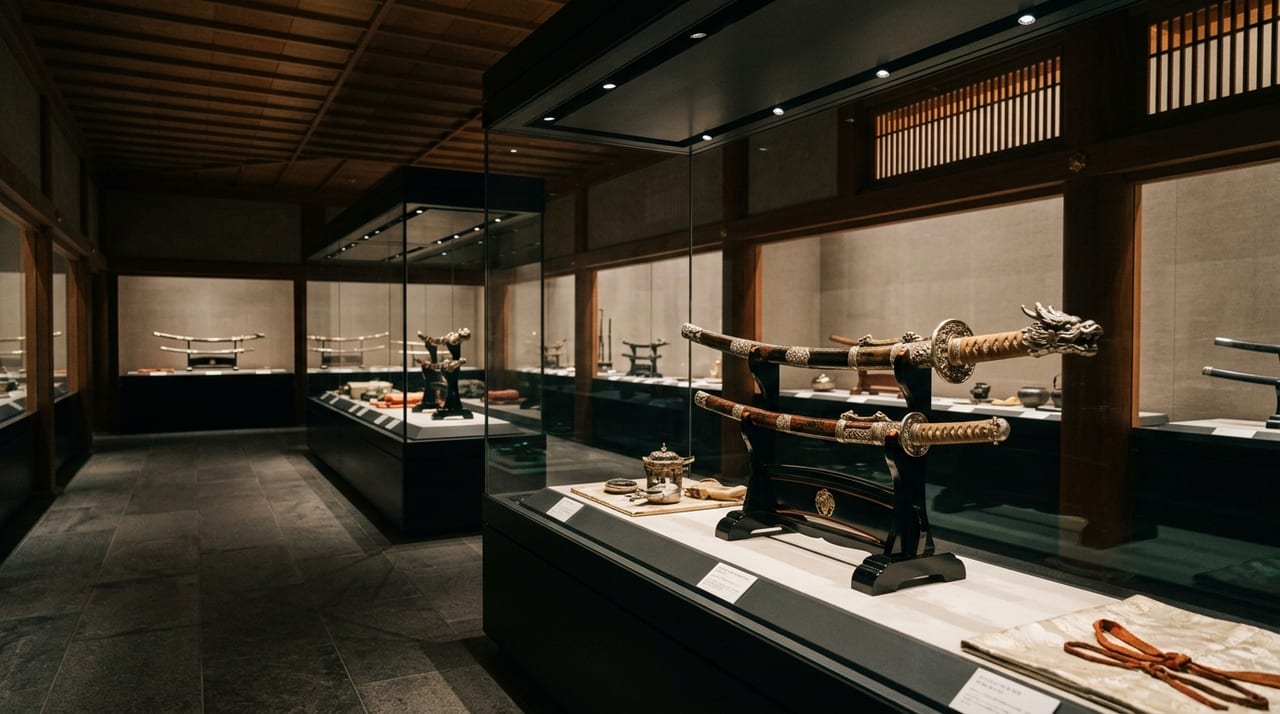
 * Image is for illustrative purposes only.
Kumano Hayatama Grand Shrine Treasure Museum
熊野速玉大社 宝物館
Overview
Overview of the Shrine and Treasure Museum
Kumano Hayatama Taisha is one of the Kumano Sanzan (Three Kumano Shrines), registered as a UNESCO World Heritage Site as a sacred pilgrimage site and routes in the Kii Mountains. With Hayatama no Okami and Fusumi no Kami as its principal deities, it is an ancient shrine that has served as the head shrine for all Kumano shrines nationwide and has gathered deep devotion. During the Heian period, pilgrimages by retired emperors and cloistered emperors to Kumano were frequently conducted, and it has a history of receiving pilgrimages from many imperial family members, nobility, and samurai, beginning with Emperor Goshirakawa. The treasure museum in the shrine precincts houses numerous national treasures and important cultural properties donated by these pilgrims.
National Treasure Swords
The supreme treasures of the Kumano Shrine Treasure Museum are two national treasure tachi with gold and silver decoration known as 'Kingin-sō Torikubi Tachi.' These are ancient shrine treasures—tachi said to have been donated by Ashikaga Yoshimitsu and others during the Muromachi period—and their exquisite gold and silver decoration is known as a masterpiece of medieval sword fittings. The magnificent ring-pommel tachi adorned with gold metalwork depicting two dragons at the pommel conveys the pinnacle of craftsmanship from the Northern and Southern Courts period. The silver example is a paired work with similar style, conveying the solemnity of an ancient shrine treasure to the present day. These are national treasures of incomparable historical value, indispensable to understanding the origins of the Japanese sword.
Swords Donated by Kamakura-Period Samurai
In addition to these ancient swords, the treasure museum also houses swords donated by samurai and nobility who made pilgrimages to Kumano during the Heian and Kamakura periods. The numerous donated tachi designated as important cultural properties are valuable documentation showing that the Kumano Sanzan were objects of worship for samurai during the establishment of the samurai government. Within a pilgrimage of the Kumano Kodō (Kumano Pilgrimage Routes) that combines visits to Nachi Waterfall, Kumano Hongu Taisha, and Kumano Nachi Taisha, encountering the sword treasures of Kumano Hayatama Taisha provides the deepest possible experience of the world of 'sword veneration,' where the Japanese sword, Shinto, and Buddhism intersect.
Nature and Culture of Kumano
The Kumano region where the treasure museum is located is a land of profound spiritual devotion, also called 'the spiritual homeland of the Japanese people.' The Kumano River, Mount Kamikura (which rises behind Kumano Hayatama Taisha and is home to Kamikura Shrine, enshrined on the Gotobiki Rock), and other natural environments embody the history of human prayer. Walking the Kumano Kodō (Nakahechi and Oohechi routes), a World Heritage Site, to visit Kumano Hayatama Taisha and experiencing the sacred origins of the Japanese sword in Shingū will provide an unparalleled spiritual experience.
Highlights
- One of two national treasure Kingin-sō Torikusubi Tachi—an ancient shrine treasure tachi said to have been donated by Ashikaga Yoshimitsu and others during the Muromachi period. A masterpiece of medieval sword fittings adorned with exquisite gold and silver decoration.
- The second of two national treasure Kingin-sō Torikusubi Tachi—a paired set of medieval ancient shrine treasures with gold and silver decoration. The metalwork at the pommel and other features convey the pinnacle of Muromachi-period craftsmanship, possessing incomparable historical value.
- Donated tachi from the Heian and Kamakura periods (Important Cultural Properties)—numerous swords donated by samurai and nobility who made pilgrimages to Kumano. First-rate historical documentation of sword veneration during the establishment of the samurai government.
- Core of UNESCO World Heritage Kumano Sanzan—Kumano Hayatama Taisha is the head shrine of all Kumano shrines nationwide. A sacred site visited by many retired emperors and samurai, including Emperor Goshirakawa, where one can experience the wellspring of Japanese spiritual culture.
- Combination with Mount Kamikura and Kumano Kodō—a pilgrimage through the Kumano Sanzan visiting Kamikura Shrine (Gotobiki Rock), Kumano Hongu Taisha, and Kumano Nachi Taisha. A unique journey where the natural environment and culture of the World Heritage site blend seamlessly together.
* Opening hours and exhibitions are subject to change. Please check the official website before visiting.