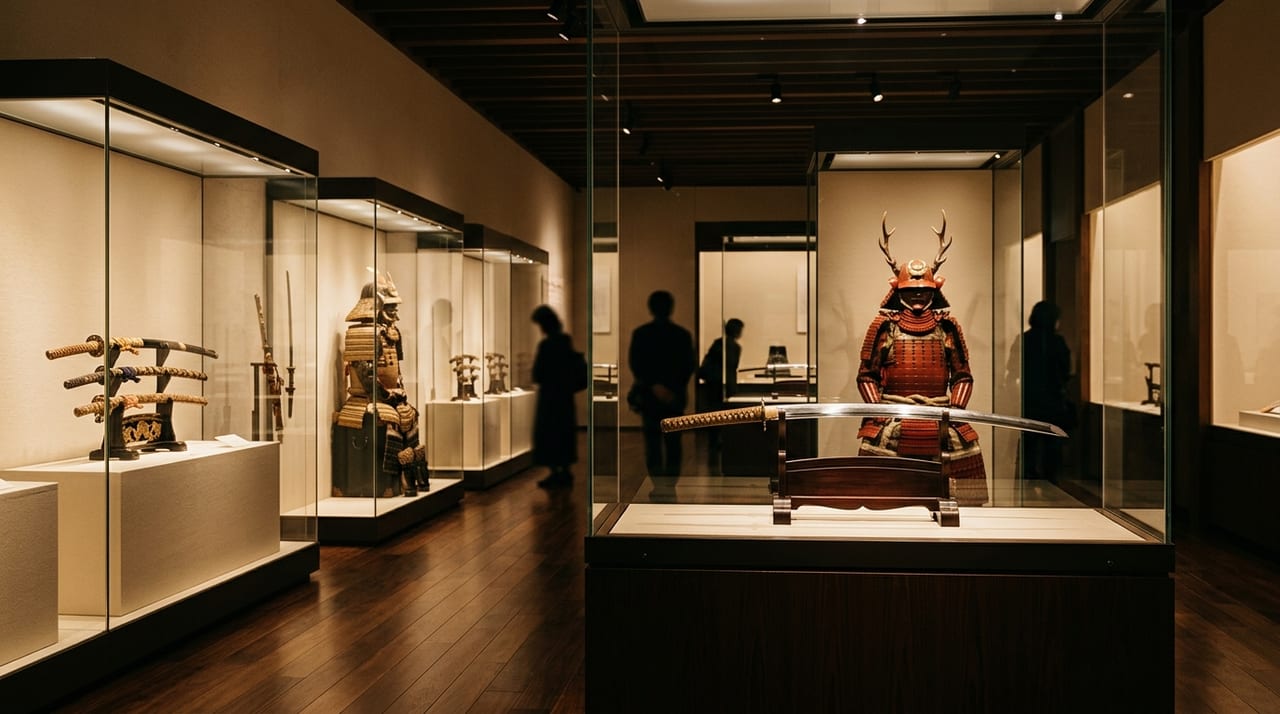
 * Image is for illustrative purposes only.
Wakayama Castle Tenshu (Tower) and Wakayama City Museum
和歌山城天守閣・和歌山市立博物館
Overview
Wakayama Castle and the History of the Kishu Tokugawa Clan
Wakayama Castle originated as a fortress built in 1585 (Tensho 13) on the orders of Toyotomi Hideyoshi by his younger brother Hidenaga. From 1619 (Genna 5) onward, it became the seat of the Kishu Tokugawa clan, one of the Tokugawa Three Great Houses. The Kishu Tokugawa clan, along with Owari and Mito, was one of the Tokugawa Three Great Houses eligible to provide a successor to the shogun, and produced the Eighth Shogun Tokugawa Yoshimune and the Fourteenth Shogun Tokugawa Iemochi. As one of the most important daimyo houses in Japan's early modern history, Wakayama Castle stands out in terms of cultural and political significance as the seat of the Kishu Tokugawa clan. Though the tenshu was destroyed in wartime bombing, it was restored to its original appearance in 1958 (Showa 33) and is now a tourist attraction offering panoramic views of the city.
The Kishu Tokugawa Clan's Sword Collection
The Kishu Tokugawa clan, as one of the Three Great Houses, enjoyed prestige equal to the shogunal family and was enthusiastic about collecting masterwork swords and treasures across generations. Known as the family that produced Shogun Yoshimune, the Kishu domain held many swords with clear provenance—legendary blades granted by the shogun's household, renowned swords presented by various daimyo, and works by the domain's official sword smiths. In the Wakayama Castle Tenshu exhibition, weapons and swords associated with the Kishu Tokugawa clan are displayed, allowing visitors to directly witness the sword culture of a major daimyo domain with prestige comparable to the direct vassals of the shogunate. In Kishu, there is also a strong tradition of sword dedication culture connected to Kumano faith from ancient times, and the swords dedicated to the "Three Mountains of Kumano" (Kumano Hongu Grand Shrine, Kumano Hayatama Grand Shrine, and Kumano Nachi Grand Shrine) include historically valuable pieces. Wakayama's sword culture extends beyond samurai culture alone and has aspects as a spiritual culture deeply connected to sacred mountain worship.
Sword Smiths and Sword-Making Centers of Ki'i Province
While Ki'i Province (Wakayama Prefecture and southern Mie Prefecture) is not a particularly prominent sword-making region, the sword smiths employed by the Kishu domain during the Edo period possessed a distinctive style. In particular, the works of smiths reflecting the tastes of Lord Yoshimune are deeply connected to Edo sword culture through direct relations with the shogunal household. At the Wakayama City Museum, research and investigation into Ki'i Province sword smiths is also conducted, working toward clarifying the history of the region's sword culture. The Kii Peninsula also retains a rich tradition of folk beliefs and customs related to swords, and sword research is conducted from perspectives beyond samurai culture, such as the relationship between agriculture, fishing industries, and swords.
Wakayama Castle's Fortifications and Surrounding Cultural Properties
Wakayama Castle is designated as a national historic site, with numerous historical structures surviving, including the connected tenshu, the Okaguchi Gate (Important Cultural Property), and the Oiomawariguchi Gate. Within the castle grounds are scenic gardens such as the Tsuru Valley (Tsuru no Tani), offering seasonal beauty throughout the year. The Wakayama City Museum is adjacent to the castle grounds and serves as a comprehensive museum covering the history and culture of Wakayama City, with abundant exhibits of swords and weapons. Wakayama City has excellent access from Tokyo and Osaka via the limited express 'Kuroshio' train (via the Hanwa Line), and functions as a gateway to the Kumano Kodo World Heritage area. It is popular as a cultural tourism route combining the Kumano pilgrimage with sword culture.
The Kishu Tokugawa Clan and Shogun Yoshimune's Passion for Swords
The Eighth Shogun, Tokugawa Yoshimune, is known for his Kyoho Reforms, and his aspect as an advocate of frugality and simplicity is famous, but in cultural matters he was also deeply knowledgeable about sword appreciation. After assuming the shogunate, Yoshimune undertook the project of organizing and authenticating the shogun's household sword collection, and under the cooperation of the Honaami family, confirmed the origins of many masterwork swords. It is believed that some of the swords and weapons brought to Edo Castle by Yoshimune when he became shogun later dispersed to various locations, and it remains possible that swords connected to Yoshimune may still exist in various places throughout Wakayama and the Kii Peninsula. The Wakayama Castle exhibition is a place where visitors can experience Wakayama's pride as the hometown of Shogun Yoshimune, and provides an opportunity to reconfirm the position of the Kishu domain in early modern sword culture.
Swords Dedicated to the Three Mountains of Kumano and Sacred Mountain Worship
The "Three Mountains of Kumano"—Kumano Hongu Grand Shrine, Kumano Hayatama Grand Shrine, and Kumano Nachi Grand Shrine—located in southern Kii Peninsula, have been known since the Heian period as sacred sites visited by emperors, reigning emperors, and military leaders, and many masterwork swords have been dedicated there. Records remain of visits by historically important figures such as Emperor Sutoku, Retired Emperor Sutoku, and Minamoto no Yoritomo, and among the dedicated swords are those designated as National Treasures and Important Cultural Properties. Retired Emperor Sutoku, who established the imperial sword-smithing system and is known as a passionate collector of swords, had his dedicated swords hold special significance as nodes connecting Kumano worship and sword culture. At the Wakayama City Museum, research, investigation, and exhibits related to these Kumano-dedicated swords are conducted, where visitors can learn about sword culture connected with religious and Buddhist beliefs, distinct from samurai swords. The route from Wakayama tracing the Kumano Kodo pilgrimage to the Three Mountains of Kumano holds special significance for Japanese sword enthusiasts as a journey of deeply experiencing the spiritual dimension of Japanese sword culture.
Wakayama Castle's Architecture and Castle-Town Culture
Wakayama Castle features abundant highlights of castle architecture, including the Okaguchi Gate (Important Cultural Property), the Ninomaru Garden, and the connected tenshu, and is designated as a national historic site. The Ninomaru Garden within the castle grounds preserves the appearance of an Edo-period daimyo garden, and is also beloved by citizens as a scenic spot for spring cherry blossoms and plum blossoms. In the castle town, the samurai culture transmitted by descendants of former Kishu domain retainers continues to live on today, and cultural property protection activities in cooperation with the Wakayama Prefectural Museum are ongoing. By combining visits to multiple facilities displaying swords and weapons within Wakayama City, visitors can experience the totality of Ki'i Province's samurai culture.
Highlights
- Swords of the Kishu Tokugawa Clan (One of the Three Great Houses) — Sword collection of the Three Great House that produced Shoguns Yoshimune and Iemochi. A collection of renowned blades of high prestige, including gifts from the shogun's household and presentations from various daimyo
- Swords Dedicated to the Three Mountains of Kumano — Swords dedicated by successive emperors, shoguns, and daimyo to Kumano Hongu, Kumano Hayatama, and Kumano Nachi Shrines. A unique Wakayama sword culture connected with sacred mountain worship
- Swords Related to Shogun Yoshimune — Wakayama, the hometown of Shogun Yoshimune who implemented the Kyoho Reforms. A place where the provenance of the swords Yoshimune brought to and collected at Edo Castle can be explored
- Important Cultural Property — Okaguchi Gate and Other Surviving Structures — Edo-period buildings surviving alongside the restored tenshu. Swords and weapons can be appreciated within the actual castle fortification space
- Cooperation with the Wakayama City Museum — Visitors can deeply learn about Wakayama's history and culture at the adjacent comprehensive museum. Ideal for combining with Kumano Kodo World Heritage tourism
* Opening hours and exhibitions are subject to change. Please check the official website before visiting.