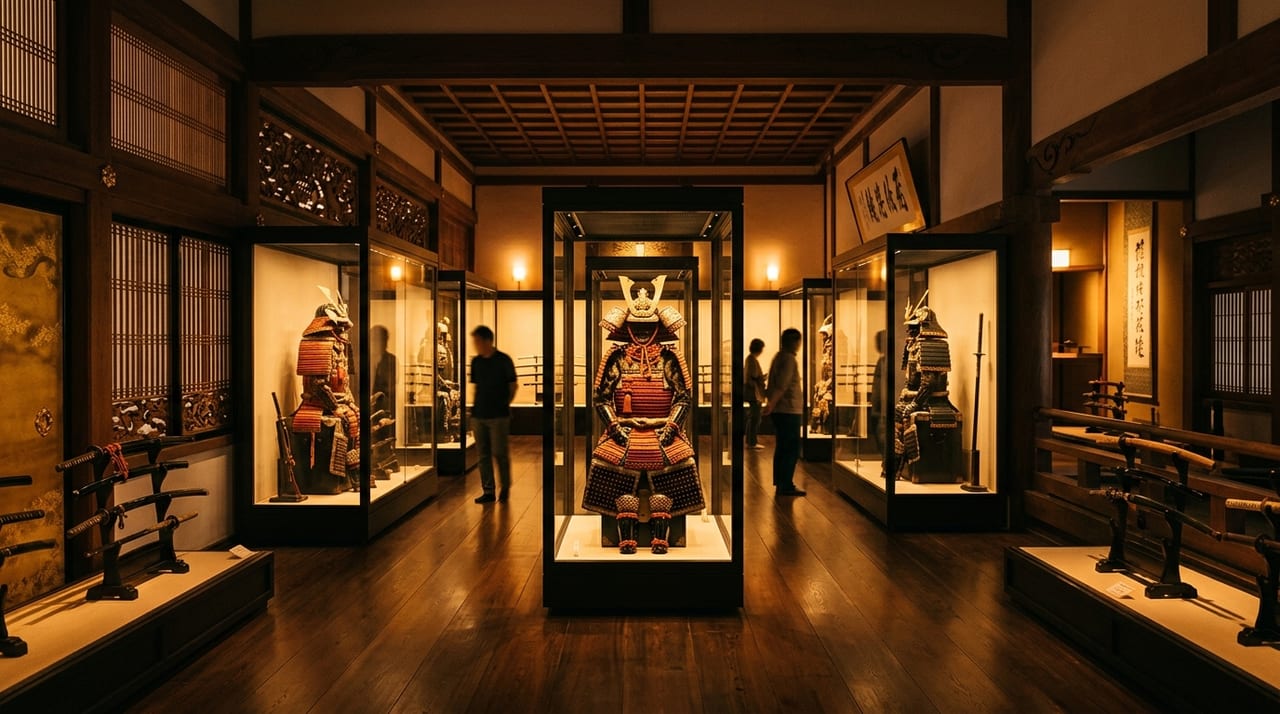
 * Image is for illustrative purposes only.
Kōyasan Reihōkan (Kōyasan Treasure Museum)
高野山霊宝館
Overview
Kōyasan Reihōkan is a museum facility located within the sacred precinct of Kōyasan in Itō-gun, Kōya-chō, Wakayama Prefecture, and represents one of Japan's foremost museums of religious art, managed by Kongōbu-ji — the head temple of Shingon Buddhism — to collect and display the temple treasures and cultural properties of Kōyasan. Founded in 1921 (Taishō 10), its holdings encompass approximately 28,000 designated cultural properties — including numerous National Treasures and Important Cultural Properties — spanning Buddhist sculptures, mandalas, esoteric ritual implements, paintings, calligraphy, swords, and armor. As a facility located at the core of the UNESCO World Heritage site "Sacred Sites and Pilgrimage Routes in the Kii Mountain Range," it serves a vital role in presenting the essence of Japanese culture to the world.
The distinctive position Kōyasan Reihōkan holds in the history of sword and armor collections stems from the swords and armor offered by warrior lords in devotion to Kūkai (774–835) — the founding patriarch of Kōyasan, known as Kōbō-Daishi — and in veneration of their ancestors. Daimyo families of the Sengoku period — including the Toyotomi, Tokugawa, Mōri, Uesugi, Shimazu, and others — offered swords and armor to various temples of Kōyasan as prayers for victory, as acts of ancestor veneration, and as dedications to their family temples, thereby establishing a unique religious context for this collection of martial equipment.
The holdings include armors designated as National Treasures and Important Cultural Properties, permitting systematic appreciation of ōyoroi (great armor), dōmaru (body armor), haramaki, and other styles spanning the Heian through Muromachi periods. The collection also includes Important Cultural Property–class swords; the group of works offered and commissioned by various warrior clans as votive and official swords embodies the religious and cultural dimensions of Japanese swords and armor.
The experience of viewing swords and armor alongside Buddhist art and esoteric implements within the unique cultural environment of Kōyasan — a UNESCO World Heritage site — holds special significance for domestic and international visitors as an opportunity to directly encounter the intersection of Japanese religion and samurai culture.
Highlights
- Sword and armor offerings from Sengoku daimyo (Toyotomi, Tokugawa, Mōri, Uesugi, etc.) — the most religiously contextualized nihonto collection in Japan
- National Treasure and Important Cultural Property armor — ōyoroi, dōmaru, and haramaki spanning Heian through Muromachi periods
- Important Cultural Property votive swords — blades offered to Kōyasan by warrior clans as acts of devotion and memorial
- 50,000+ object religious museum — the unique experience of viewing swords alongside Buddhist sculpture and esoteric ritual implements
- UNESCO World Heritage Kōyasan setting — the single most powerful site in Japan for experiencing the intersection of religion and warrior culture
- Founded 1921 — over a century of preservation of Kōyasan's sacred cultural treasures
* Opening hours and exhibitions are subject to change. Please check the official website before visiting.