Tegai School — The Techniques and History of Yamato-den Established by the Swordsmith Collective of Kasuga Grand Shrine, Nara
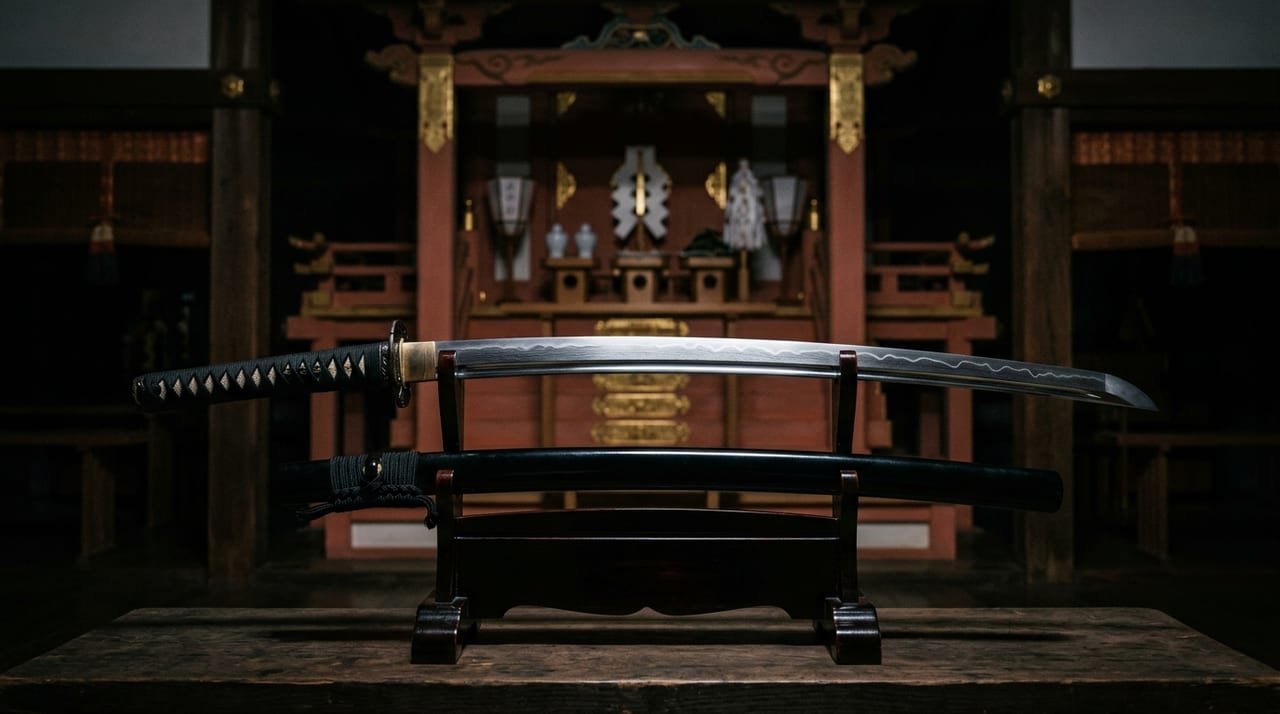 * Image is for illustrative purposes only.
Table of Contents
What Is the Tegai School — The Central School of Yamato-den
Yamato-den, one of the Gokaden of the Japanese sword, is the collective term for the swordsmanship culture that developed in Yamato Province, corresponding to the present-day Nara Prefecture region. The principal school that constitutes this Yamato-den is the Tegai School, alongside the Senjuin School, the Hōshō School, the Shikkake School, and the Taima School.
The name Tegai School is said to derive from the fact that its smiths were subordinate to Tōdai-ji and lived and forged blades in front of the Tegai-mon, the great gate on the northwest side of Tōdai-ji. The accepted explanation is that "Tegai" is a corrupted reading of the gate name Tegai-mon, and forging under the protection of Tōdai-ji became the identity of the group. The school flourished from the middle to the late Kamakura period, and Kanenaga is renowned as its most representative tōkō.
Among the five schools of Yamato-den, the Tegai School stands apart from the others in having a specific institutional affiliation — Tōdai-ji. The Senjuin School, the Hōshō School, the Shikkake School, and the Taima School each conducted activities rooted in temples, shrines, or localities within Yamato Province, but the Tegai School is distinctive in bearing the name of a specific architectural structure — the Tegai-mon gate — which has made it easy for later generations of sword enthusiasts to trace its origins. The Tegai-mon remains standing today within the precincts of Tōdai-ji in Nara, conveying a fragment of the landscape that the tōkō of the Tegai School would have seen every day.
Kanenaga — Founder and Supreme Master of the Tegai School
The most celebrated tōkō of the Tegai School is Kanenaga. His active period is believed to have been around the Shōō-Einin era (1288–1298) of the late Kamakura period. Kanenaga's blades possess all the typical characteristics of Yamato-den, and have been repeatedly cited in later sword research as the "model of Yamato-den."
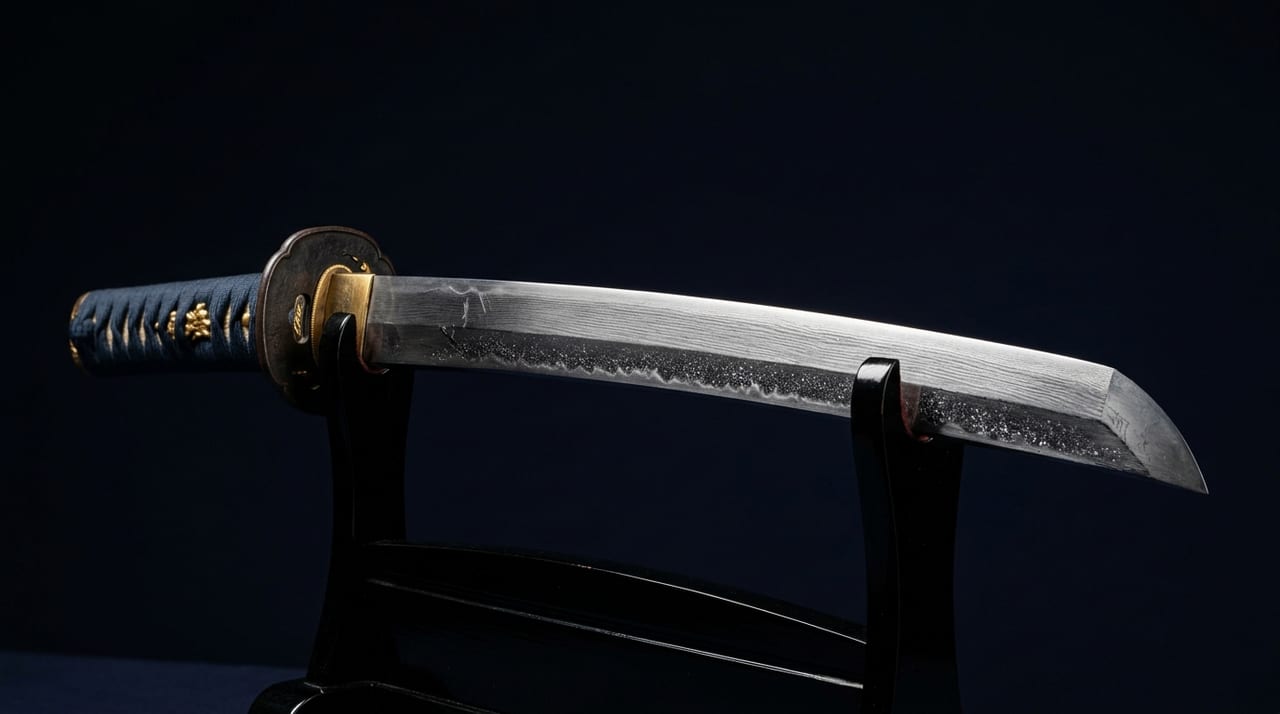
To enumerate the characteristics of Kanenaga's blades: the kitae-hada of the jigane is a ko-itame type with flowing masame mixed in, and ji-nie is fine and plentiful. The hamon is a gentle undulation of small notare mixed with small gunome (ko-gunome), possessing a quiet quality close to suguha. The nie is strong, and kinsuji and sunagashi frequently appear within the hamon. The bōshi turns in a small round (ko-maru), giving a calm impression. All of these together embody the beauty unique to Yamato-den — described as "solid and sturdy" — which differs from the brilliance of the Bizen tradition and the intensity of the Sōshū tradition.
Studying Kanenaga's blades also serves as a starting point for understanding Yamato-den as a whole. The masame in the jigane, the hamon with suguha as its basis, the bōshi turning in ko-maru — these elements are found to varying degrees in the work of the other four Yamato schools as well, such as the Senjuin School and the Taima School. By using Kanenaga's work as a reference point, one can more easily grasp the overall outline of Yamato-den as a technical tradition. For those not yet accustomed to sword appreciation, first committing Kanenaga's characteristics to memory and then comparing them with other Yamato blades will allow both similarities and differences to come into view.
Technical Characteristics of Yamato-den — Why Does It Have Masame Jigane?
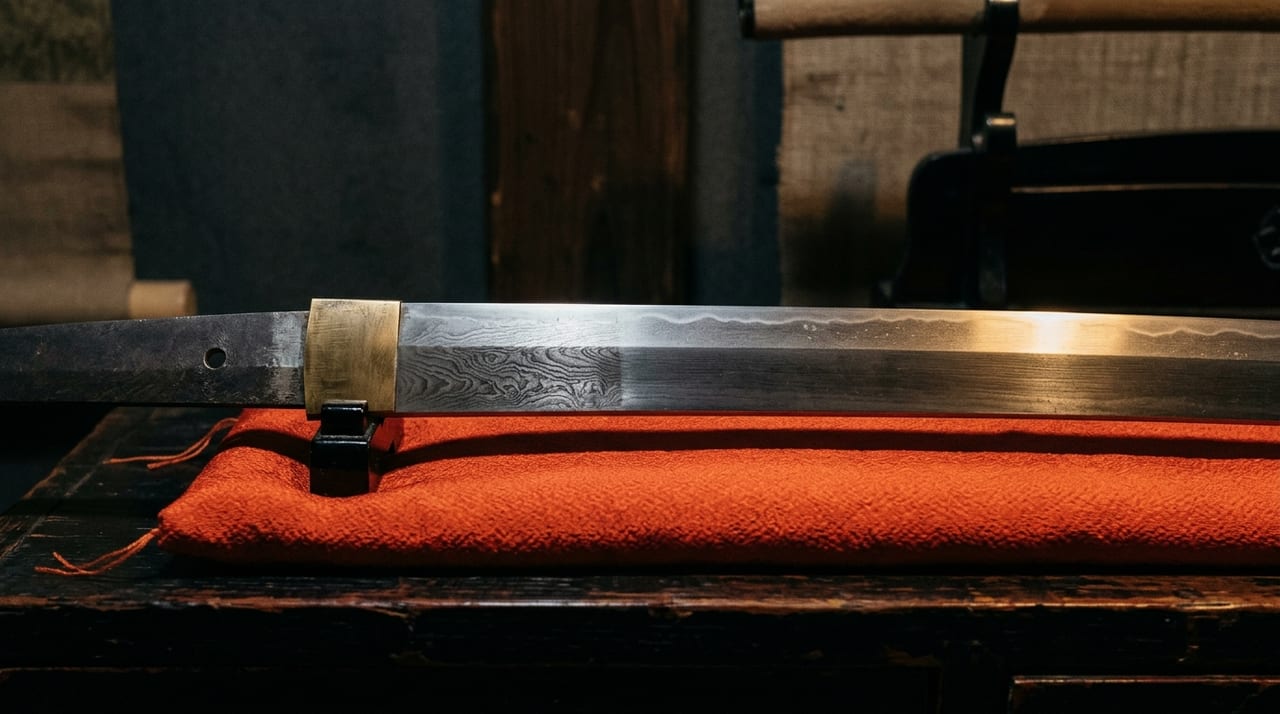
The greatest technical characteristic shared by all of Yamato-den is masame kitae-hada. While Bizen-den is based on itame and Sōshū-den displays large and flowing hada, Yamato-den tends to show masame running through the forging. This masame hada is believed to originate from how the material is handled and the direction of orikaeshi tanren.
By consistently maintaining the direction in which the kaji folds the steel, and patiently building up the layers so that the fibrous iron structure aligns in the longitudinal direction, a grain pattern appears that resembles cutting across the annual rings of a tree. This masame often runs along the sori of the blade and gives a visually precise and meticulous impression. Yamato Province has since ancient times been regarded as a "sacred land," and not a few sword connoisseurs observe that this pure character of the land was reflected in the temperament of the kaji.
This masame hada is also cited as the reason why Yamato-den blades are described as "combat-oriented," not just for its aesthetic quality. The view that an attitude prioritizing forging precision and blade functionality over the pursuit of an ornate hamon manifests in the result of masame hada is a perspective frequently mentioned when discussing Yamato-den. However, masame hada is also a type of hada in which the skill or lack thereof in tanren readily shows in the jigane, and a high level of technique is required to maintain a clean, unbroken masame.
The Lineage of the Tegai School — Kanenaga's Successors
After Kanenaga, the Tegai School was carried on by multiple smiths. Tōkō such as Tegai Kuniyasu, Tegai Kaneyoshi, and Tegai Kanekiyo — smiths who inherited the character "Kane" from Kanenaga's mei, or smiths who bore the "Tegai" prefix in their names — continued to forge blades throughout the Muromachi period.
Many of them were active as craftsmen associated with Tōdai-ji, forging blades under religious patronage. This was a culture unique to Yamato Province in which faith and smithing were intertwined, in contrast to the tōkō of Bizen and Sōshū, whose primary livelihood was trade with the warrior class and merchants. The sacredness of the land of Nara has placed the atmosphere of Tegai School blades closer to "sacred-precinct craft objects" than to "tools of war."
Behind the Tegai School's ability to sustain itself throughout the Muromachi period, the backing of Tōdai-ji played a large role. Unlike tōkō collectives in other provinces, which tended to be at the mercy of shifts in warrior government, the Tegai School, under the protection of a temple and shrine, is thought to have been able to continue forging relatively stably through the changes of the age. This is also cited as one of the reasons why a consistent style was maintained in Tegai School blades.
Extant Tegai School Blades and Appraisal Points
Among the extant blades of the Tegai School, multiple masterpieces have been designated kokuhō and jūyō bunkazai. Some blades accepted as authentic works of Kanenaga have been designated kokuhō, and they can be seen at special exhibitions at the Japanese Sword Museum and the Nara National Museum. The following points are focused on during appraisal.
First, confirming the "ko-itame hada with a tendency toward masame." The masame grain lines running through the jigane are the foremost indicator for identifying the Tegai School. Second, the "strength of nie." As is true of Yamato-den in general, the Tegai School has relatively fine and plentiful ji-nie. Third, "hamon with suguha as a basis." The Tegai School, as represented by Kanenaga, favors a hamon of suguha with small irregular elements added, and does not adopt intense expressions such as the Sōshū hitatsura. Fourth, "the shape of the bōshi." Ko-maru bōshi are most common, and when nie is strong, midarekomi may extend into the bōshi as well.
Arranging these appraisal points in a table, they can be organized as follows.
| Appraisal Point | Characteristics to Note |
|---|---|
| Jigane | Ko-itame hada with a tendency toward masame; fine and plentiful ji-nie |
| Hamon | Suguha-based with small notare and small gunome; accompanied by kinsuji and sunagashi |
| Bōshi | Turns in ko-maru; when nie is strong, midarekomi may extend into it |
| Overall style | A solid and sturdy character distinct from the brilliance of Bizen and the intensity of Sōshū |
What to Know When Appreciating or Purchasing Tegai School Blades
When appreciating or purchasing kotō dating to the Kamakura period — not just those of the Tegai School — there are several common points to verify.
- Whether a kanteisho is present: A kanteisho issued by a specialist organization such as NBTHK records the results of expert examination of the blade's period, quality, and provenance, and serves as an important reference for determining authenticity and authorship.
- Condition of preservation: The state of polishing and the presence or absence of rust are directly tied not only to the asset value of the blade itself, but also to the ease of observing the jigane and hamon. When appreciating delicate grain lines such as masame hada, the quality of the polish greatly affects what can be seen.
- Confirming accessories: Whether accessories such as koshirae and shirasaya have been handed down together with the blade can also serve as a clue to the blade's provenance.
- How to direct light during appreciation: Masame hada and the strength of nie can be confirmed more clearly by observing the blade with light directed at an angle. With light from directly above alone, the character of the jigane can appear flat.
These are basic perspectives common to appreciating and collecting not only Tegai School blades but Yamato-den as a whole, and indeed kotō in general, and they are practical verification points for readers encountering swords for the first time.
Conclusion — The Legacy the Tegai School Left in the History of the Japanese Sword
Against the backdrop of the spirituality of Nara as a religious city, the Tegai School pursued a swordsmanship beauty that was solid and pure. Among the Gokaden, Yamato-den stands farthest from warrior power and is the group of schools that developed in the purely religious and craft context. Within that, the Tegai School produced the once-in-a-generation master Kanenaga and established the standard for Yamato-den thereafter.
Even today, the aesthetic of the Tegai School — masame jigane and suguha with strong nie — is revered as symbolic of "Yamato swords," and in the world of sword appreciation it remains an essential reference as a foundation for understanding the Gokaden.