Complete History of Yamato-den — The Divine Swordsmiths of Nara, Pillars of the Gokaden
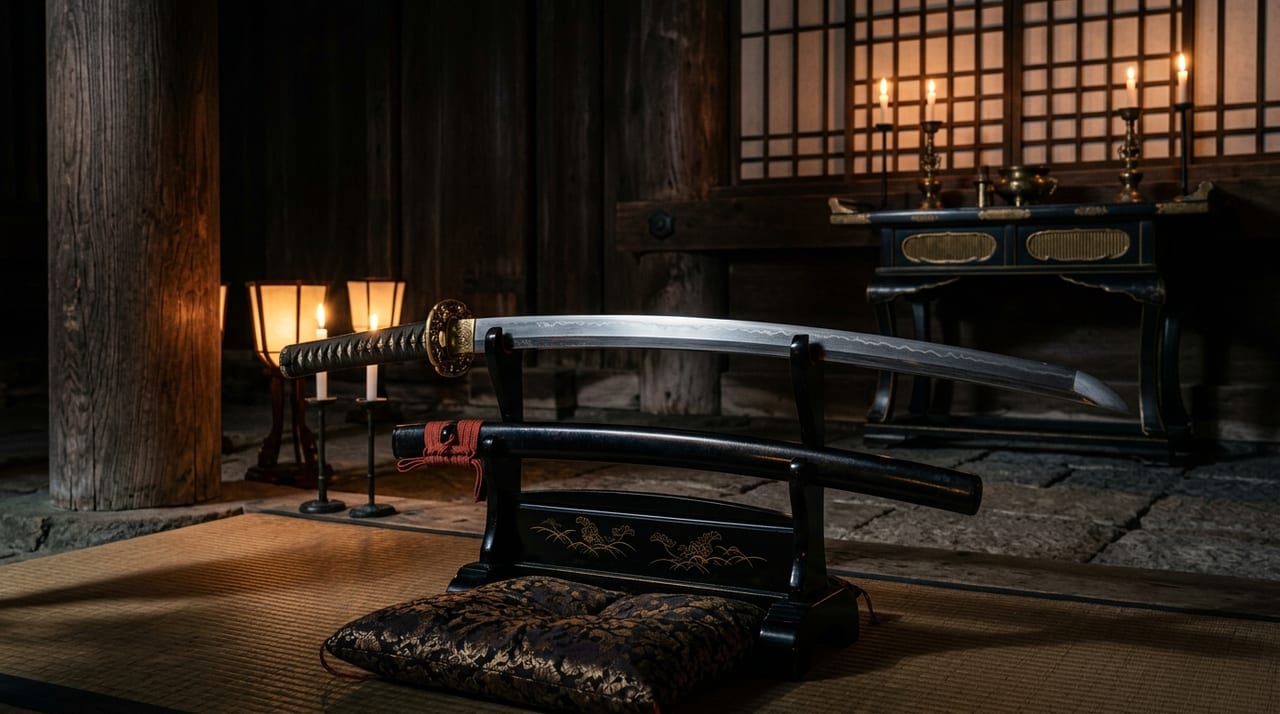 * Image is for illustrative purposes only.
Table of Contents
Regional Background of Yamato-den — The Religious City of Nara and Its Swordsmiths
Yamato-den is a swordmaking tradition that developed in Yamato Province (present-day Nara Prefecture) and is one of the five traditions (Gokaden) of Japanese swordmaking — Bizen-den, Sōshū-den, Yamashiro-den, Mino-den, and Yamato-den. Nara has been one of Japan's central religious cities since antiquity, known as a place where great temples and shrines — Tōdai-ji, Kasuga Taisha, Kōfuku-ji, Hase-dera, and others — are concentrated.
This religious environment strongly shaped the swordsmith culture of Yamato-den. Many of Yamato's tōkō belonged to temples and shrines or operated as organized groups under their protection, fulfilling the role of producing weapons for sōhei (warrior monks) while also being deeply involved in crafting sacred swords to protect those institutions. Against this backdrop, it is said that swords of Yamato-den carry a stronger religious and spiritual significance than those from other regions.
The Five Schools of Yamato-den — Characteristics of Each School
Yamato-den is divided into five major schools, each with a different base while inheriting a common system of swordmaking techniques.
Tegai School — A Group of Master Smiths Associated with Tōdai-ji The Tegai School was a group of tōkō who worked inside the Tegai Gate of Tōdai-ji and is regarded as the most highly esteemed school within Yamato-den. Its representative tōkō is Kanenaga, and many of his works made inside the Tegai Gate have been designated as kokuhō (National Treasures) or jūyō bunkazai (Important Cultural Properties). The school is characterized by an elegant, archaic style based on suguha and a uniform jigane of tight itame, with fine and even nie throughout, giving the works an overall tranquil beauty.
Tegai Kanenaga is known as a character appearing in the game Touken Ranbu and has become a tōkō familiar to modern sword enthusiasts. Surviving tachi and tantō by Kanenaga maintain high values even for works with a kanteisho (appraisal certificate), representing the highest level of Yamato-den.
Senjuin School — A Group of Swordsmiths Associated with Tōdai-ji The Senjuin School was a group of tōkō based at the Senjuin-dō (Senjuin Valley at the foot of Wakakusa-yama) within the precincts of Tōdai-ji and is considered to have the oldest origins within Yamato-den. It produced many master smiths, including Kanaoi and Yukiyoshi. It is characterized by a classical style featuring a somewhat coarse jigane and hamon centering on suguha, and is evaluated as a school possessing techniques of the oldest class in the kotō period, on a par with the Ko-Bizen school.
Hōshō School — The Oldest Lineage of Yamato Swordsmiths The Hōshō School is a school that inherited the tradition of Yamato swordsmiths stretching from the Nara period through the Heian period, with Sadayoshi and Kuniyoshi known as its representative tōkō. Its style is relatively simple, centering on suguha, but within that simplicity the pure techniques of the kotō period are concentrated. Although surviving works are few, each confirmed work is highly regarded.
Taima School — A Group of Weapon Craftsmen of Taima-dera The Taima School was a group of tōkō based at Taima-dera in Katsuragi-gun, Yamato Province (present-day Katsuragi City, Nara Prefecture), with Taima Kuniyuki and Taima Tomoshige among its known smiths. In addition to suguha, it sometimes employed gunome-midare, giving it a comparatively diverse range of hamon among the five schools of Yamato-den.
Shikkake School — Swordsmiths Associated with Kasuga Taisha The Shikkake School was a group of tōkō based in Shikkake village in Soekami-gun, Yamato Province (near present-day Nara City) and had close ties with Kasuga Taisha. Norinaga is known as its representative tōkō. Among Yamato-den schools, some works show the influence of Sōshū-den, with a powerful style in which nie rises prominently in the jigane.
The five schools of Yamato-den are summarized as follows.
| School | Base | Representative Tōkō |
|---|---|---|
| Tegai School | Inside the Tegai Gate of Tōdai-ji | Kanenaga |
| Senjuin School | Senjuin-dō within the precincts of Tōdai-ji (Senjuin Valley at the foot of Wakakusa-yama) | Kanaoi, Yukiyoshi |
| Hōshō School | Tradition of Yamato swordsmiths stretching from the Nara period through the Heian period | Sadayoshi, Kuniyoshi |
| Taima School | Taima-dera in Katsuragi-gun, Yamato Province (present-day Katsuragi City, Nara Prefecture) | Taima Kuniyuki, Taima Tomoshige |
| Shikkake School | Shikkake village in Soekami-gun, Yamato Province (near present-day Nara City) | Norinaga |
Technical Characteristics of Yamato-den — Its Distinctiveness Among the Gokaden
The most significant way in which Yamato-den swords differ from the other four traditions lies in the combination of jigane and hamon.
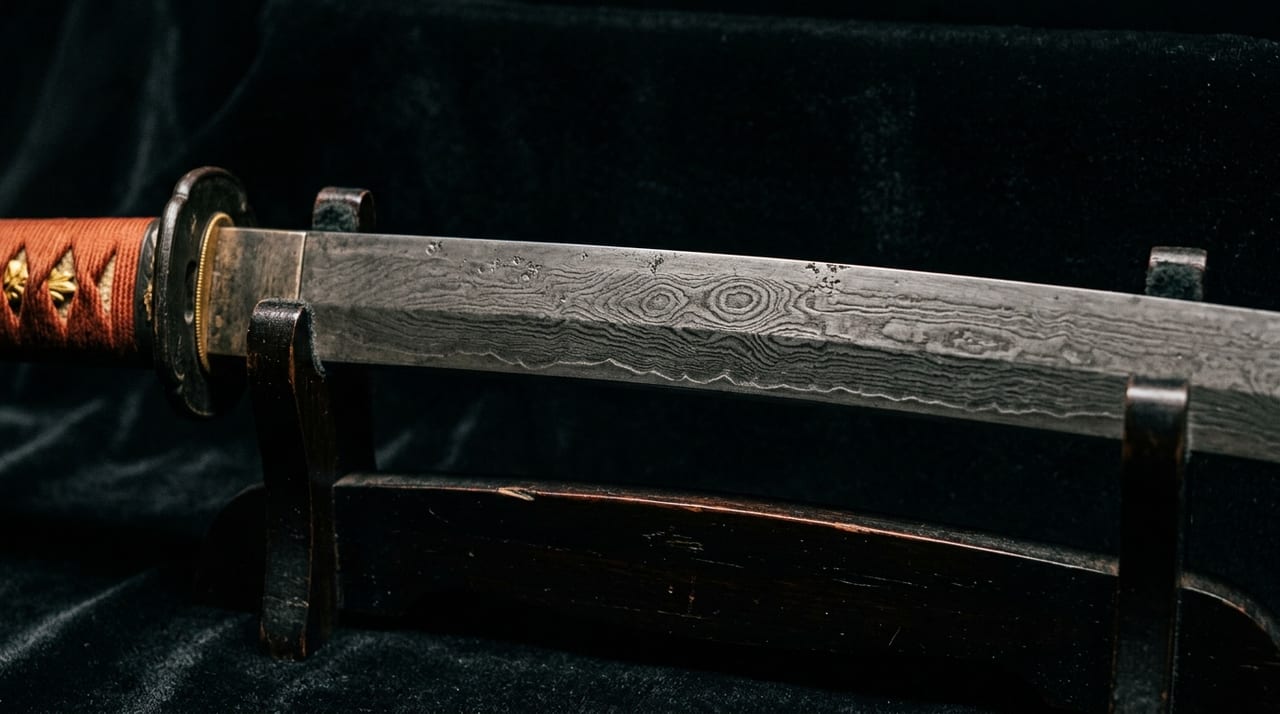
Jigane: The jigane of Yamato-den is generally tight itame, and ji-nie tends to be fine and uniform. Unlike the chōji-hada of Bizen-den or the clear, large itame of Sōshū-den, a somewhat hard and plain itame is the norm. A distinctive utsuri called bō-utsuri can appear in the jigane, and this is one of the important identification points for Yamato-den.
Hamon: The hamon of Yamato-den is based on suguha, which is one of the major distinctions from the other four traditions. Compared to the magnificent chōji-midare of Bizen-den and the intensely nie-laden grand irregular hamon of Sōshū-den, it can appear understated, but fine small irregularities and nie-suji appear within the suguha, containing a complex beauty beneath a seemingly simple surface.
The appearance of bō-utsuri in the jigane is also a characteristic of Yamato-den, and by contrasting it with the chōji-utsuri of Bizen-den and the absence of utsuri in Sōshū-den, it functions as an identification point for Yamato-den. The differences among the three traditions are summarized as follows.
| Attribute | Yamato-den | Bizen-den | Sōshū-den |
|---|---|---|---|
| Jigane | Tight itame, fine and uniform ji-nie | Chōji-hada | Clear, large itame |
| Hamon | Suguha-based, with fine small irregularities and nie-suji | Magnificent chōji-midare | Grand irregular hamon with intense nie |
| Utsuri | Bō-utsuri | Chōji-utsuri | No utsuri |
Kokuhō and Jūyō Bunkazai Works of Yamato-den
The following are among the most significant works by Yamato-den tōkō.
Among Yamato-den works designated as kokuhō (National Treasures), the tachi by Tegai Kanenaga is the most celebrated. It is housed in the Tokyo National Museum and is widely recognized as representing the technical pinnacle of Yamato-den.
Numerous works have also been designated as jūyō bunkazai (Important Cultural Properties), with representative works from each school — the Tegai School, Senjuin School, Shikkake School, and others — housed in museums and art museums throughout the country.
The Decline and Legacy of Yamato-den
Yamato-den reached its peak from the late Kamakura period through the Nanbokuchō period, but upon entering the Muromachi period it gradually declined as it was overshadowed by the ascendancy of the Bizen, Sōshū, and Mino Tradition schools. Compared to the Bizen school, which met the large-scale demand of the Nanbokuchō period, Yamato-den specialized in small quantities of high-quality works and thus found itself at a disadvantage in market competitiveness.
However, the legacy of Yamato-den was passed down to later generations in the form of its technical influence on other schools. The suguha techniques of the Tegai School influenced later tōkō, and during the shinshintō period of the Edo era, classical works of Yamato-den were referenced in the movement to revive suguha.
In modern Japanese sword research, Yamato-den is highly regarded as one of the purest technical traditions of the kotō period and occupies a particularly important position within Gokaden studies.