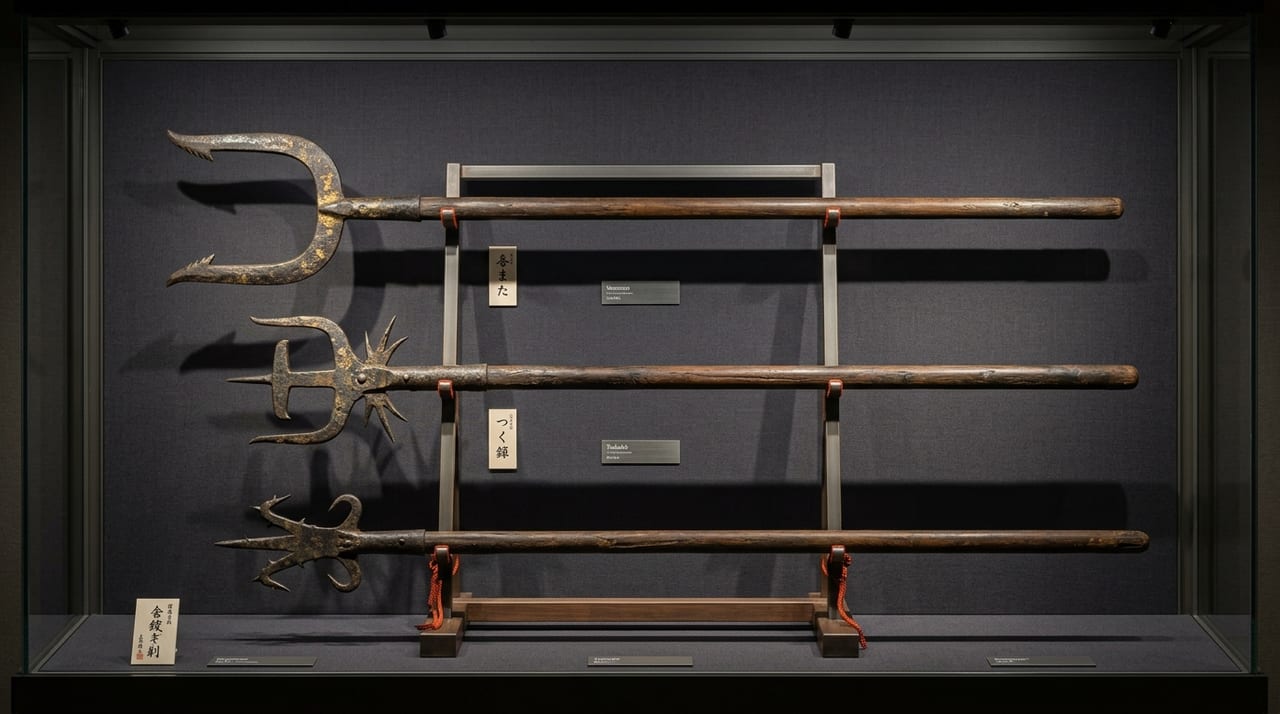
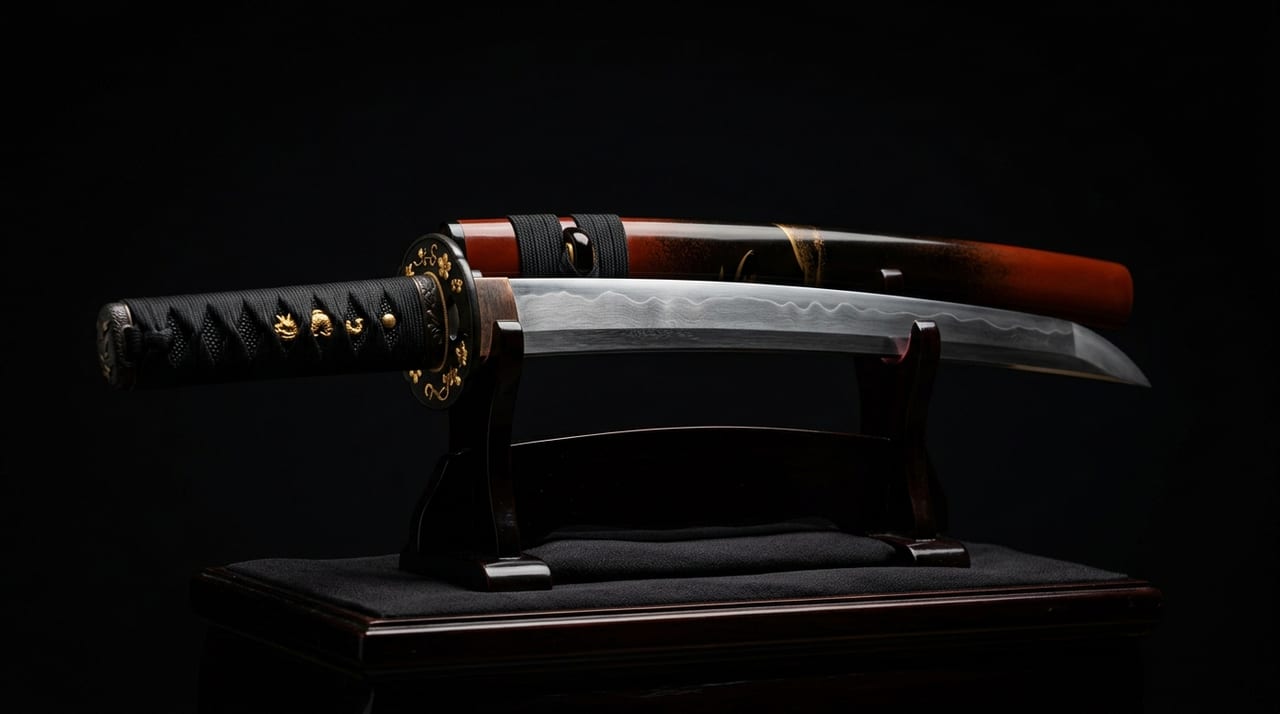
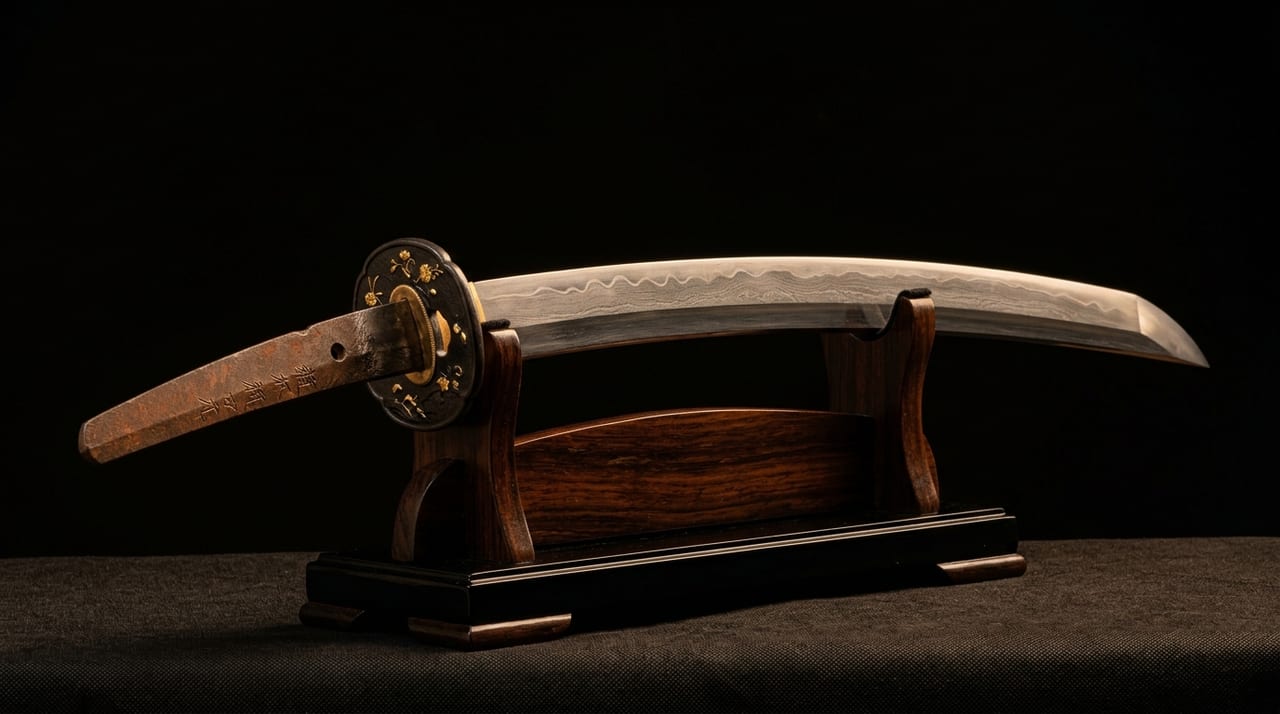
Types and Classification of Yari (Spears) — Forms and Historical Development of the Sankaku, Katakama, Jūmonji, and Kikuchi Styles
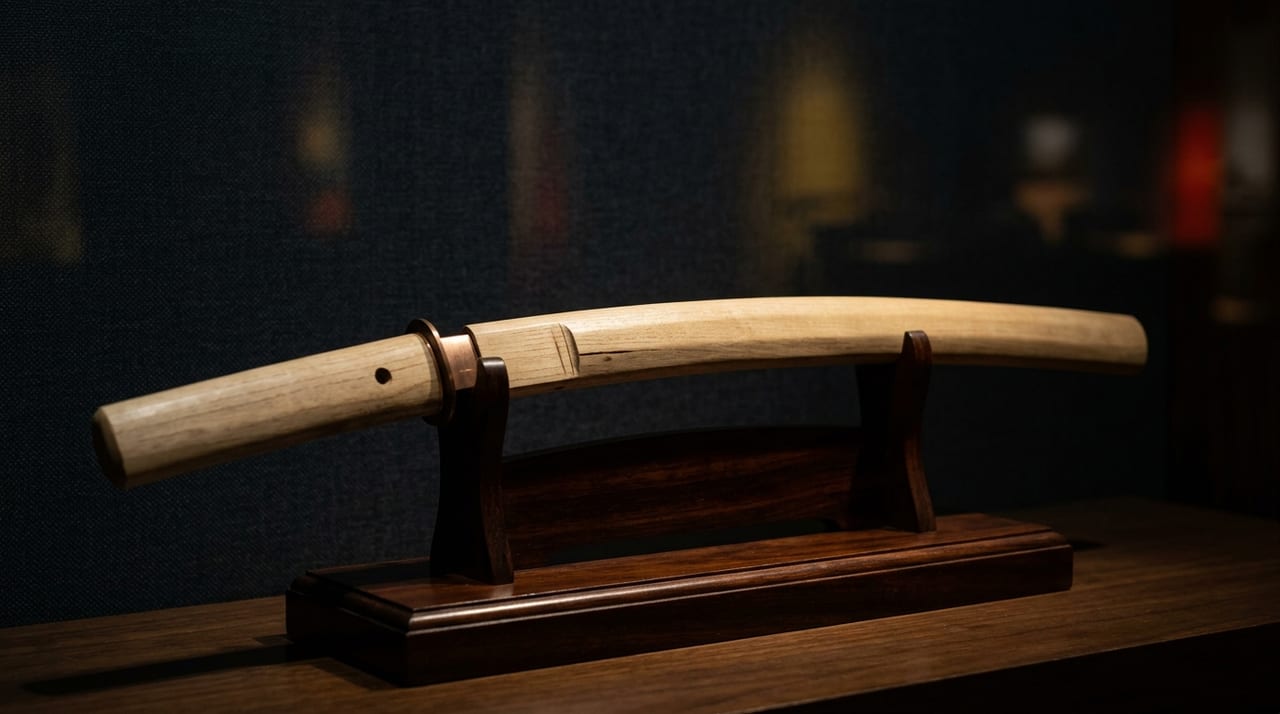 * Image is for illustrative purposes only.
Table of Contents
What Is a Yari?
The yari is a Japanese thrusting weapon consisting of a blade section called the ho attached to the tip of a long shaft. It came into widespread use in earnest during the late Kamakura and Nanbokuchō periods (14th century), and by the Sengoku period (16th century) it had become the primary weapon of infantry units (ashigaru), decisively influencing the course of battles. Today yari are appreciated as art swords, and "sōjutsu" — the art of the spear — is preserved as a branch of iai and the martial arts.
Classification by Ho Shape
Yari are classified primarily by the cross-sectional shape of the ho and the presence or absence of side branches.
Hirasankaku-yari (Flat-Triangle Spear)
The most fundamental type, in which the cross-section of the ho is triangular.
- Shaped exclusively for thrusting; not suited for lateral slashing attacks
- The ho alone measures roughly 30–45 cm in length
- The shaft extends 3–6 meters, making it well suited to the tactic of massed ashigaru charging into enemy ranks
Sasaho-yari (Bamboo-Leaf Spear)
A spear whose ho has a lozenge-shaped cross-section resembling a bamboo leaf.
- The blade is wider than that of the hirasankaku-yari, allowing for slashing attacks as well
- The mainstream practical spear form in wide use from the Muromachi through the Sengoku period
Katakama-yari (Single-Sickle Spear)
A spear with a lateral branch called a kama on one side of the ho.
- In addition to thrusting, the side branch enables compound attacks such as hooking and sweeping
- Considered effective for sweeping at the legs of mounted warriors' horses
- A form that developed out of the practical demands of Sengoku-period combat
- The katakama-yari famous as the favorite spear of Katō Kiyomasa is held by the Tokyo National Museum. The colloquial name "hebi-yari" (snake spear) has circulated, but the correct designation is "katakama-yari"; "hebi-yari" is a misnomer. The Tokyo National Museum piece bears an inscription recording that it was brought as part of the bridal trousseau when Kiyomasa's daughter Yaohime (Yōrin-in) married into the Kii Tokugawa clan, confirming its provenance.
Jūmonji-yari (Cross-Shaped Spear)
A spear with equal side branches on both sides of the ho, forming the shape of the character "jū" (cross) when viewed from the side.
- The ability to sweep and hook in both directions gives it high defensive capability
- Sanada Yukimura (Nobushige) is known as a representative user. The tip of the "Ōchidori Jūmonji-yari" said to have been used by Sanada Yukimura is still preserved today at Zenmyōshō-in (Sanada-an) in Kudoyama, Wakayama Prefecture
- In the Edo period it also served a ceremonial function as a decorative spear signifying the status of samurai households
Kikuchi-yari (Kikuchi Spear)
A long-shafted weapon of straight-sword form said to have been used by the Kikuchi clan of Higo Province during the Nanbokuchō period.
- A single-edged straight spear said to have originated from attaching a tantō to a bamboo shaft, used primarily for thrusting
- It differs from the naginata, which is used primarily for slashing, in blade shape and application
The Three Great Spears of the Realm — Japan's Finest Yari
The three most celebrated spears in Japan are collectively called the "Tenka Sanmeisō" (Three Great Spears of the Realm).
Tonbokiri: The beloved spear of Honda Tadakatsu, one of the Four Heavenly Kings of the Tokugawa. A sasaho-yari with a nagasa of 1 shaku 4 sun (approximately 43.7 cm) and a shaft length of 1 jō 3 sun (approximately 312 cm), said to be the work of Fujiwara Masazane. A Sanskrit character and a sankosho (vajra sword) are carved into the hi of the blade, and it takes its name from the legend that a dragonfly that landed on the tip was split in two. It is currently on loan to and held by Sano Art Museum in Mishima, Shizuoka Prefecture, where it is sometimes displayed at special exhibitions.
Nihongō: A celebrated spear passed down through the Kuroda clan of Fukuoka domain. A large-bodied spear with a nagasa of 2 shaku 6 sun 1 bu 5 rin (approximately 79.2 cm), a total length including shaft of 10 shaku 6 bu (approximately 321.5 cm), and a weight of 2.8 kg; it is currently on permanent display at Fukuoka City Museum. It is also famous for the anecdote in which retainer Mori Tahei Tomonobu won it from Fukushima Masanori in a drinking contest — a story celebrated in the folk song "Kuroda-bushi."
Otegine: A large-bodied spear passed down from the Yūki clan to Yūki Hideyasu. Tragically, on March 10, 1945 (Shōwa 20), the storehouse at the Matsudaira residence in Ōkubo, Tokyo, received a direct incendiary bomb hit during the Great Tokyo Air Raid, and it was destroyed — the only one of the Three Great Spears not to survive to the present day. Reconstructed replicas have been produced and are now on public display.
Historical Development of the Yari
| Period | Main Forms | Characteristics |
|---|---|---|
| Nanbokuchō period | Sasaho-yari, Kikuchi-yari | Spread through massed infantry combat |
| Sengoku period | Jūmonji-yari, Katakama-yari | Development of practical compound-attack forms |
| Edo period | Ceremonial spears | Emphasis on ornamentation; decline of combat use |
Evaluation of Yari Today
Yari eligible for appraisal as art swords fall under the purview of NBTHK (Society for the Preservation of Japanese Art Swords). In the appraisal of spear ho, the jigane, hamon, and construction are assessed together with the form of the side branches and the precision of their manufacture, which are at the heart of the evaluation. Spears made by celebrated tōkō have fetched high prices at auction, and spears with a provenance of ownership by Sengoku-period warriors carry additional cultural-heritage value.
Schools of Sōjutsu and Transmission to the Present Day
Sōjutsu is the martial art of the spear; many schools — including the Hōzōin-ryū, Fūden-ryū, and Tsuranuki-ryū — were established from the Sengoku through the Edo period. The Hōzōin-ryū developed at Hōzōin, a sub-temple of Kōfuku-ji in Nara, and is particularly renowned for its mastery of the jūmonji-yari. Although opportunities for actual combat were lost during the Edo period, the individual schools preserved and transmitted sōjutsu in the form of kata practice (kata-geiko), continuing down to the present day.
Mei and Appraisal of Spear Ho
As with swords, the mei of the tōkō may be cut into a spear ho. There are examples in which the tōkō's name, year of manufacture, and owner's name were inscribed on the nakago, and mei-bearing spear ho with a reliable provenance are subject to NBTHK appraisal. Spear ho that both carry a provenance of ownership by a particularly celebrated warrior and have a confirmed mei are highly regarded as cultural property; spears of the caliber of the Three Great Spears such as Tonbokiri occupy the very pinnacle of this category. In online sword markets as well, the number of spear ho listed for sale is small compared to swords overall, and well-preserved combat-type spear ho carry considerable rarity value.