The History of Yasukuni-tō: The Founding, Operation, and End of the Yasukuni Kaikosha Forge, and Its Legacy in the Postwar Era
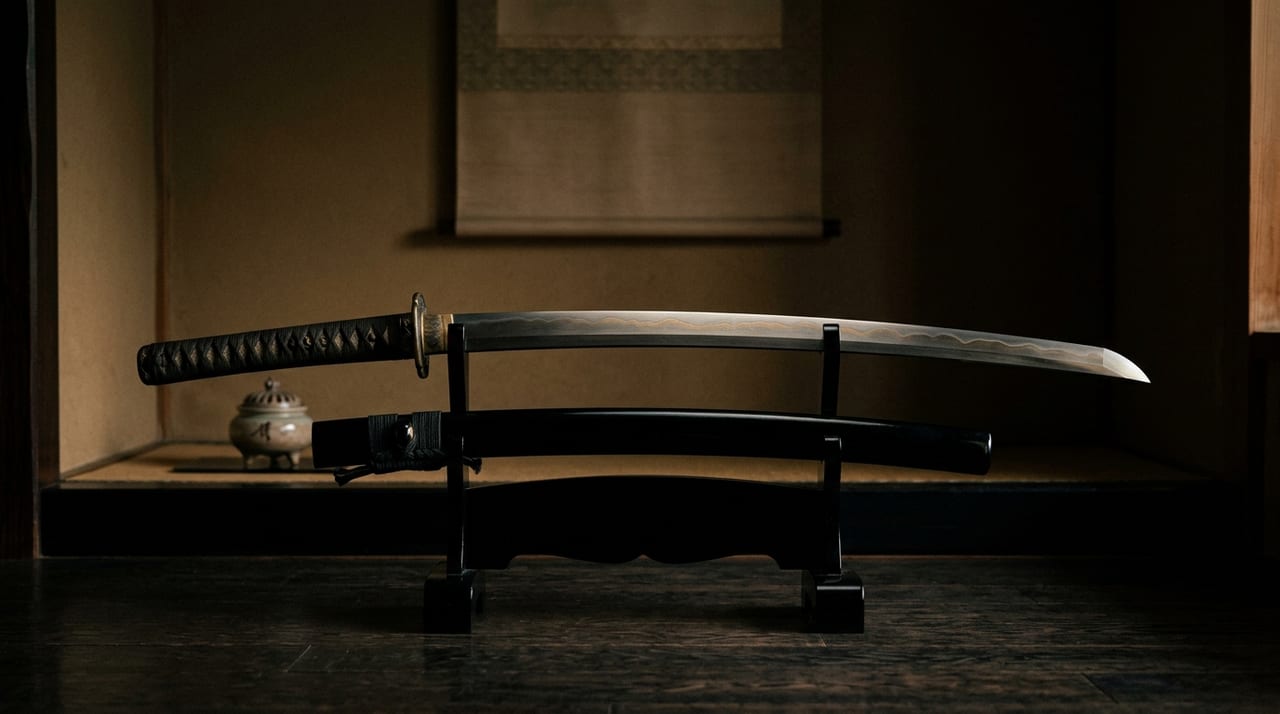 * Image is for illustrative purposes only.
Table of Contents
Yasukuni-tō refers to nihontō forged at a forge established within the precincts of Yasukuni Shrine from the early Shōwa period through the end of the war—originally known at founding as the "Nihontō Tanrenkai" (with Army Minister Araki Sadao serving as advisor), later renamed the "Army-Commissioned Forge." Among modern nihontō collectors, discussions of "how to identify Yasukuni-tō" and "the tōshō of Yasukuni-tō" are common, yet the institutional history of the forge itself—why it was established, how it was operated, and what became of it at war's end—is surprisingly little known. This article traces the Yasukuni forge's history from its founding to its end.
Background to the Founding: The Army's Drift from Nihontō and the Crisis Felt by Traditionalists
After the Meiji Restoration, the Sword Abolishment Edict (Haitōrei) of 1876 stripped the nihontō of its status as a practical weapon of the samurai. However, the Meiji army established regulations for guntō, and officers were required to carry swords. The problem lay in "the quality of the guntō."
During the Meiji-Taishō period, guntō were predominantly of the "Western saber type," with many consisting of nihontō blades housed in Western-style koshirae (saber mountings). Mass-produced blades—so-called "guntō kaji" large-scale productions—also became widespread, and swords hand-forged from traditional tamahagane were becoming a minority even within the military.
Some army officers, sword enthusiasts, and tōshō who were troubled by this situation launched a movement to "preserve and revive traditional nihontō craft within the military." As a result, in Shōwa 8 (1933), with the cooperation of Yasukuni Shrine, the "Nihontō Tanrenkai (with a forge within the precincts of Yasukuni Shrine)" was established.
The leading advocates of the founding were certain officers of the Army Ministry, and with the cooperation of Yasukuni Shrine the forge was placed at the symbolic location within the sacred precincts. It was positioned not as a mere "military supply factory" but as a facility bearing cultural and spiritual significance as a "revival of the spirit and craft of the nihontō."
Organization of the Forge and Selection of Swordsmiths
Skilled tōshō were gathered from across the country at the Yasukuni forge. The selection criterion was technical skill, and master craftsmen from each production region were invited. The notable participating tōshō, who bore the character "Yasu" in their received mei, were the following:
- Miyaguchi Yasuhiro
- Kajiyama Yasunori
- Ikeda Yasumitsu
The management structure of the forge changed in stages.
- At founding: managed primarily by the Nihontō Tanrenkai
- After the outbreak and expansion of the Second Sino-Japanese War in Shōwa 12 (1937): reorganized as the "Army-Commissioned Forge" and brought under army control
Here an important change occurred. Once under army control, the purpose of the forge shifted its center of gravity from "preserving and reviving traditional craft" toward "producing guntō as military supplies." The tōshō were required to meet monthly production quotas, and each was subjected to a production pace of forging dozens of swords per year.
This was a significant departure from the pace of traditional nihontō production—in which a skilled tōshō would spend several weeks to several months on a single sword. As a result, a quality gap emerged among the swords of the Yasukuni forge between "works from the mass-production period" and "labored masterpieces to which full skill was applied."
Characteristics of Yasukuni-tō Blades: Between Craft and Mass Production
Swords made at the Yasukuni forge were clearly set apart from ordinary guntō (machine-made products) in terms of materials and process. They were made as a rule using tamahagane (or high-purity steel) and produced by traditional methods of hand forging and tsuchioki yaki-ire (quenching after applying the clay coating). For this reason, compared to the industrially manufactured swords known as "Shōwa-tō," the quality of the jigane and the richness of the hamon are far superior.
However, due to the effects of mass production, even among works by the same tōshō, there are cases where comparing works made during their time at the forge with those made after going independent reveals more careful finishing in the latter. In research that compared a single tōshō's Yasukuni works with their independent works side by side, some appraisers have pointed out "traces of hasty finishing" in the Yasukuni-period works.
Swords from the forge frequently have "Yasukuni Tanrensho (or stamps or mei of equivalent content)" engraved on the nakago, and this serves as a clue for identification in modern appraisal. However, since the presence and style of stamps vary by period and the tōshō responsible, it is dangerous to make a definitive judgment from appearance alone.
The End of the War, Confiscation, and Dispersal: The Forge's Final Days
With the end of the war in August of Shōwa 20 (1945), the activities of the Yasukuni forge ceased. Under the disarmament orders of GHQ (General Headquarters of the Supreme Commander for the Allied Powers), guntō became subject to confiscation and disposal.
Among the swords produced at the forge, those already delivered to the military became subject to confiscation, while those remaining in the personal possession of tōshō, those sold to private individuals, and unfinished pieces were dispersed in various ways. Some were disposed of, but many were kept secretly by sword enthusiasts, researchers, and former military personnel, and would come to be reassessed as "Yasukuni-tō" during the postwar revival of nihontō.
Following the revision of the Act on Protection of Cultural Properties in Shōwa 26 (1951), as traditional nihontō production was once again permitted as "fine art and craft," many of the tōshō from the Yasukuni forge resumed their swordsmithing activities. There were also tōshō who remained active long after the war and were designated as "Holders of Important Intangible Cultural Properties (Living National Treasures)."
The Assessment of Yasukuni-tō Today
The position of Yasukuni-tō in the collector market is complex. While there is an aspect in which, belonging to the "guntō" category, they are difficult to assess as fully "fine art swords," there are also persistently strong voices that evaluate them as "high-quality swords hand-forged from tamahagane."
In NBTHK appraisals as well, there are cases where Yasukuni-tō are examined separately from ordinary Shōwa-period guntō. In particular, Yasukuni works by renowned tōshō include some that have received Tokubetsu Hozon Tōken or Hozon Tōken certification.
From an international perspective, due to the historical and political background of the Yasukuni forge (its relationship with Yasukuni Shrine and the military), there are voices expressing caution about collecting and researching Yasukuni-tō. On the other hand, researchers who assess them purely in terms of the history of craft and technology—as a "preservation center for nihontō craft in the early Shōwa period"—are also increasing.
Conclusion: What the Forge's Brief History Tells Us
The Yasukuni forge has a history of only 12 years, from its founding in 1933 to the end of the war in 1945. Yet within this brief period, as the sole modern institution that attempted the "organized preservation" of traditional nihontō craft, it occupies an important position in the history of nihontō.
At the same time, it was also an embodiment of the problem of "the contradiction between military demand and tradition"—the clash between pure technical ideals and mass-production demands. This contradiction also offers lessons for the sword culture of today: it is a lesson that the "institutionalization and organization" of traditional craft does not necessarily lead to an improvement in technique.
When appreciating Yasukuni-tō, keeping this complex historical background in mind alongside the beauty of the sword itself will yield a deeper understanding.