Types and Appraisal of Yasurime: The Art of Reading the Craftsman's Code Inscribed on the Nakago
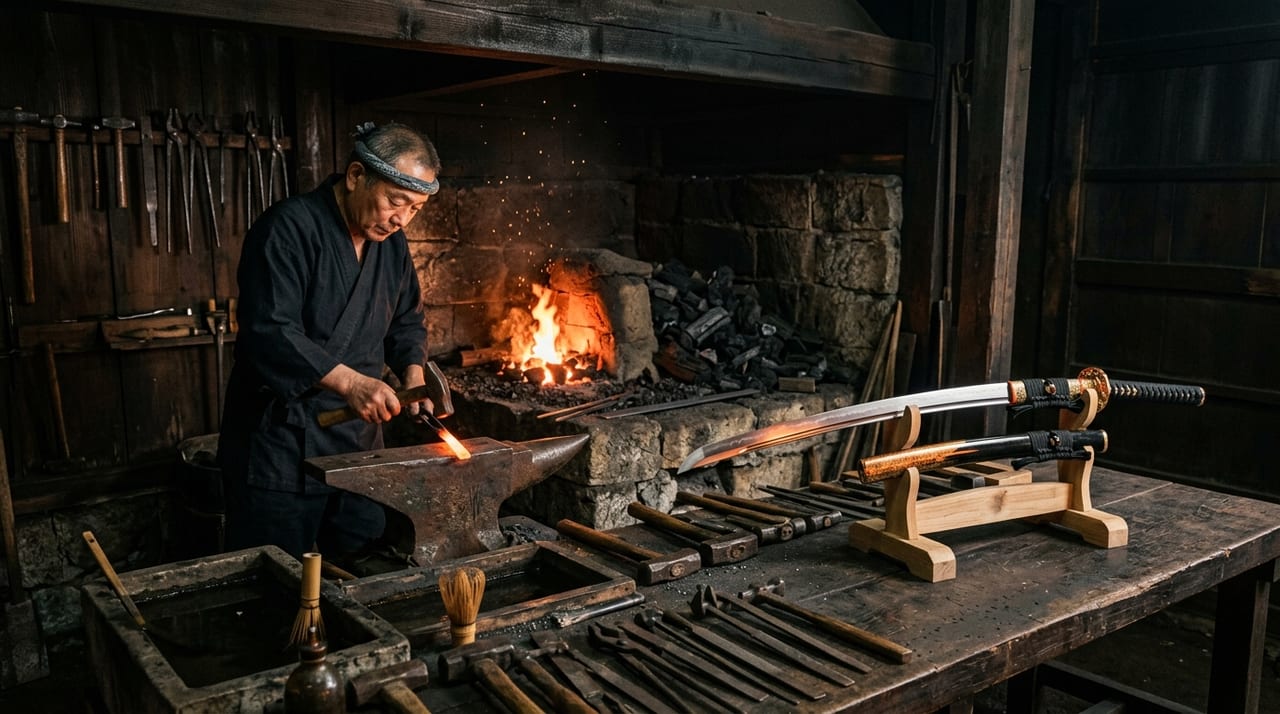 * Image is for illustrative purposes only.
Table of Contents
The Nakago and Yasurime: Why Is a Code Engraved Inside the Tsuka?
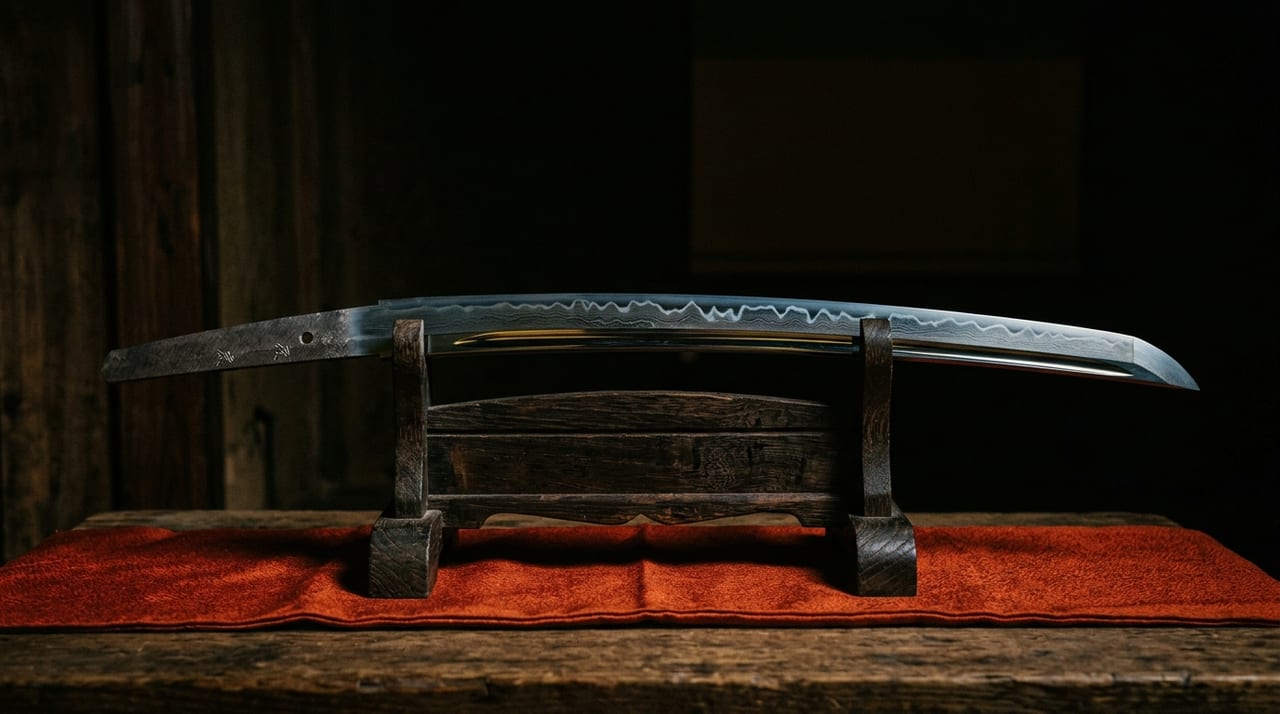
The nakago (tang) of a Japanese sword is normally hidden inside the tsuka (hilt) and is not visible during appreciation. Yet the nakago is the "most important part for proving a sword's provenance," and the yasurime (file marks) applied to its surface serve as a decisive factor in appraisal, alongside the mei (signature), date inscription (nenki), and test-cutting inscription (tameshikirumei).
Yasurime are the pattern of scratches left when the surface of the nakago is worked with a yasuri — a metal file — to finish it after the nakago has been shaped. While their practical purpose is to prevent corrosion and improve adhesion to the tsuka, because each school and period adopted a largely fixed pattern, "which yasurime" came to function as an appraisal indicator of school and period.
Principal Types of Yasurime
Kiri-yasuri: A yasurime in which horizontal lines run at nearly right angles (90 degrees) to the long axis of the nakago; it is the most fundamental form. It is commonly seen on kotō of the Bizen-den and Yamashiro-den. Subcategories are distinguished by whether the lines are perfectly perpendicular or slightly diagonal.
Sujikaiyasuri: A yasurime in which lines run diagonally to the long axis of the nakago; the term is widely used in appraisal. It was frequently used by tōkō (swordsmiths) of the Yamato-den and serves as an appraisal indicator for kotō-period Yamato swords.
Katte-sagari: A pattern in which the file lines run diagonally downward toward the blade side (as seen from the left face of the nakago). It is commonly seen on shintō and shinshintō from the Edo period onward, and became the standard form widely adopted by Edo tōkō in particular.
Gyaku-katte: Yasurime running in the opposite direction to katte-sagari — diagonally downward toward the mune (back of the blade) side of the nakago. Because certain specific schools adopted it, it can serve as an appraisal indicator.
Ōsujichiagai: A yasurime in which diagonal lines are inscribed at a large angle (45 degrees or more), sometimes creating a visually prominent large crosshatch pattern.
Kesho-yasuri: A decorative finish in which fine, regular file marks are applied to make the surface of the nakago appear beautiful. It was often applied by master craftsmen of the late Edo period and later to display their technical skill.
Comparing the above yasurime in the following organized form makes it easier to grasp their characteristics.
| Yasurime | Characteristic direction of lines | Period / school where typically seen |
|---|---|---|
| Kiri-yasuri | Nearly perpendicular to the long axis | Kotō-period Bizen-den and Yamashiro-den |
| Sujikaiyasuri | Diagonal to the long axis | Kotō-period Yamato-den |
| Katte-sagari | Diagonally downward toward the blade side | From the shintō period onward; Edo tōkō |
| Gyaku-katte | Diagonally downward toward the mune side | Specific schools |
| Ōsujichiagai | Large diagonal at 45 degrees or more | Visually distinctive design |
| Kesho-yasuri | Fine, regular decorative marks | Master craftsmen from the late Edo period onward |
No yasurime type alone is sufficient to determine period or school with certainty; judgment is always made comprehensively in combination with other elements such as the mei, jihada (grain pattern of the steel), and hamon (temper line).
Historical Evolution of Yasurime: From Kotō to Shinshintō
Yasurime patterns changed over time and are used as supplementary indicators in period appraisal.
Kotō period (up to around 1596): Kiri-yasuri is the norm. The master smiths (taikō) of Bizen and Yamashiro used relatively fine kiri-yasuri, while the Yamato-den made frequent use of sujikaiyasuri. In many cases the nakago is short and corroded, making the yasurime difficult to read.
Shintō period (around 1596–1764): Katte-sagari becomes mainstream. Edo tōkō adopted a relatively uniform katte-sagari, while Osaka tōkō often stood out for the fineness of their finish.
Shinshintō period (around 1764–1876): Kesho-yasuri increases, and there is a tendency toward higher precision in the finishing of the nakago surface. Leading shinshintō tōkō such as Suishinshi Masahide and Minamoto Kiyomaro finished the nakago with the same care as the rest of the work, treating it as part of the piece as a whole.
Using Yasurime in Sword Appraisal: Detecting Later Alterations
Yasurime are also effective indicators for detecting false mei (nise-mei) and alterations. When the value of kotō surged during the Edo and Meiji periods, the practice of grinding off a nakago's mei and cutting a different one (suriage-mei), as well as adding a fresh mei to mumei (unsigned) swords, became widespread.
Such alterations frequently create inconsistencies in the yasurime in the following respects:
- The yasurime pattern changes only around the mei (evidence of working with a different file)
- The direction of the yasurime does not match the period or school
- Old yasurime are concealed beneath a freshly cut mei (observable under fluorescent light or a magnifying glass)
In NBTHK (Society for the Preservation of Japanese Art Swords) examination, confirmation of the yasurime is a mandatory item in the appraisal process, and when there is doubt, raking-light photography (shakōsatsuei) and microscopic observation of the nakago are performed.
A nakago that has never been cut down from its original state is called ubu-nakago, and it is considered to have high historical value because the yasurime and mei remain exactly as they were when the sword was made. By contrast, a nakago that has undergone suriage may have lost some of the original yasurime or mei, and it is standard practice for the kanteisho (appraisal certificate) to record this fact.
Notes on Examining Yasurime
Because the nakago is housed inside the tsuka, it is necessary to remove the tsuka in order to examine the yasurime directly. However, removing and reinserting the nakago carries the risk of damaging the mekugi or the nakago itself, and should not be done lightly by anyone without specialist skill.
In addition, the rust that develops on the nakago surface over the years is important evidence attesting to the age of the sword, and also provides clues for reading the yasurime. Accidentally wiping or polishing it away not only makes the yasurime harder to read but risks damaging the very appraisal value of the sword, so the general rule is not to clean or maintain the nakago. If the condition of the yasurime is a concern when considering a purchase, it is safer to check the description recorded in the NBTHK kanteisho or the enlarged photographs of the nakago provided by the seller, rather than handling the object yourself.
Yasurime Choices of Contemporary Tōkō: Inheriting Tradition and Expressing Individuality
Contemporary tōkō decide for themselves which yasurime to adopt when making a sword. They most often follow the customs of their teacher's school, though some tōkō have established their own distinctive yasurime patterns.
Yasurime also function as the tōkō's own "signature." By consistently applying the same pattern over many years, a tōkō's yasurime pattern becomes an individual identifying indicator in appraisal. Today, in a small number of cases, a disciple's yasurime differs subtly from their teacher's and is used to determine lineage.
When purchasing a sword, whether the nakago is ubu-nakago or has undergone suriage is one piece of information useful for understanding the sword's provenance and value. If there are any concerns about the condition of the yasurime or the finish of the nakago, understanding can be deepened by consulting the descriptions in the NBTHK kanteisho or making inquiries to the seller.
In the appraisal of Japanese swords, yasurime are one of the "four elements of comprehensive judgment" alongside mei, jihada (grain pattern of the steel), and hamon (temper line), and they continue to this day to serve as an important key to sword research — a craftsman's code concealed within a hidden part of the blade.