Sword Culture of the Muromachi Period: Mass Production and Practicalization Born from the Onin War
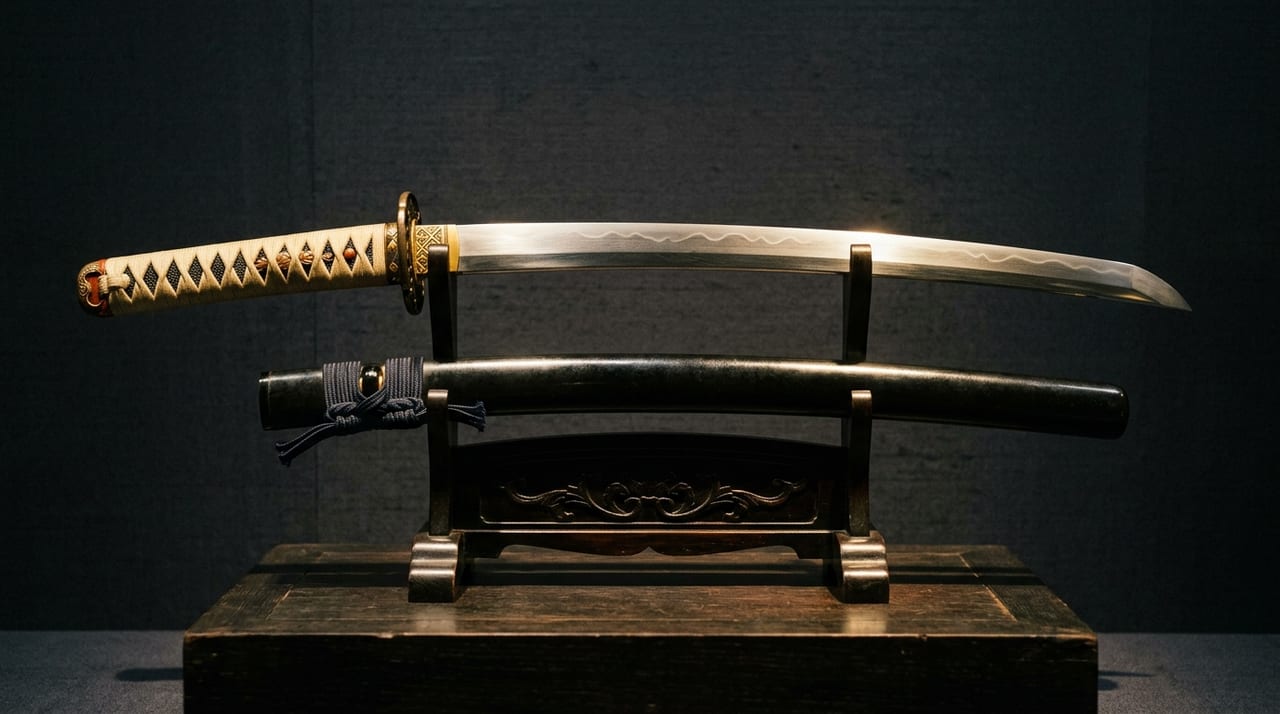 * Image is for illustrative purposes only.
Table of Contents
Overview of the Muromachi Period and Its Position in Sword History
The Muromachi period (1336–1573) was the era when the Ashikaga shogunate established its government in Muromachi, Kyoto, but from the perspective of sword history it is positioned as a "major transitional period from the age of tachi to the age of uchigatana." This is because the transition from the tachi of the Kamakura period, which were prized for their high artistic quality, to the practical uchigatana of the Sengoku period occurred during this era.
The Muromachi period can be subdivided into the following categories.
- Northern and Southern Courts period (1336–1392): Large blades such as odachi and nodachi became popular
- Early to mid-Muromachi period (1392–1467): Conservative styles typified by Ōei Bizen. The transition to uchigatana began.
- After the Ōnin War and Bunmei War = Sengoku period (1467–): Practical uchigatana became mainstream and mass-production systems were established
Characteristics of Muromachi Swords—From Tachi to Uchigatana
The characteristics of Muromachi swords can be summed up in one phrase: the transition from the tachi of mounted warriors to the uchigatana suitable for handling in foot combat. Specifically, the following changes can be noted.
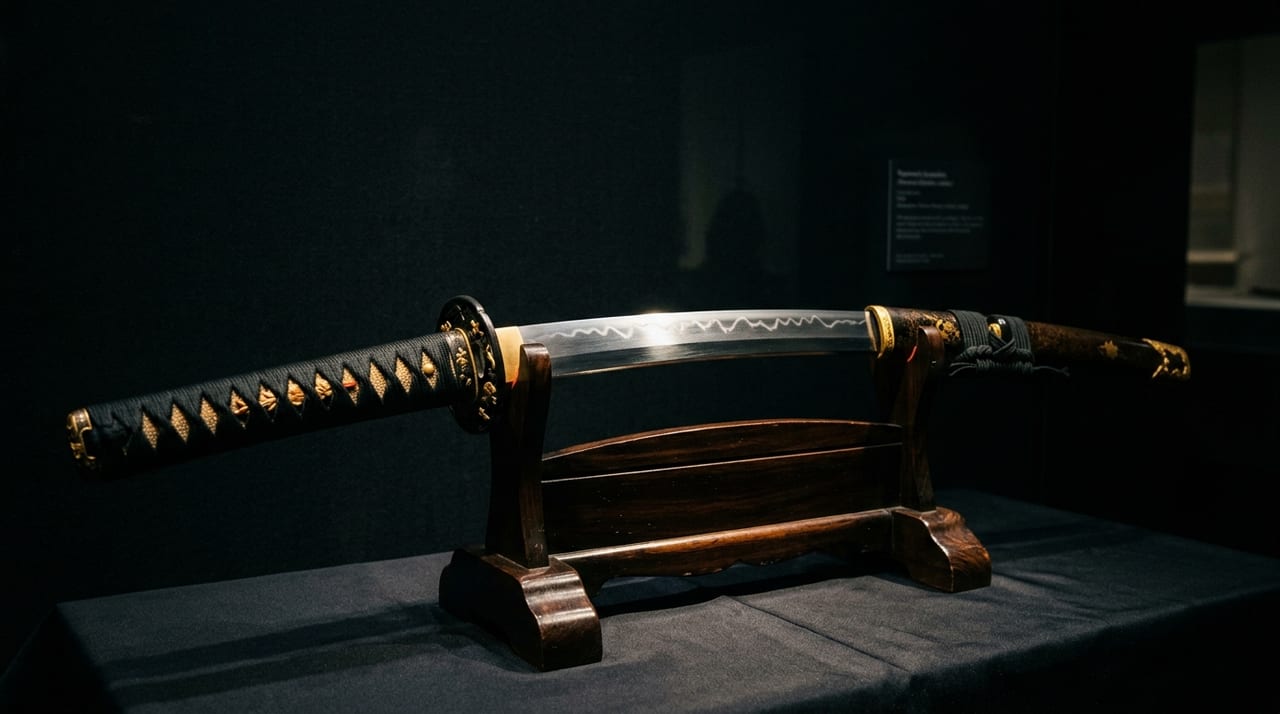
Reduction in size: Compared to the long blades of the late Kamakura and Northern and Southern Courts periods, the uchigatana of the mid-Muromachi period became increasingly shorter, with blade lengths around 2 shaku 1 sun (approximately 64 cm). A notable feature of the mid-Muromachi period was the popularity of "single-handed" swords designed for rapid one-handed drawing strikes.
Sori toward the point: Whereas tachi had sori concentrated near the hilt (koshi-zori), uchigatana shifted to sori concentrated toward the blade tip (saki-zori). This shape was suited to the motion of rapidly drawing the sword from the waist and immediately transitioning to cutting strikes.
Increase in quantity-produced blades: Exploding demand led to mass production of practical swords without signatures or with simplified signatures (the kaszu-uchi-mono discussed below). Meanwhile, custom-made higher-quality works were also produced in parallel, leading to a widening gap in quality.
Swords of the Northern and Southern Courts Period—The Age of Odachi and Nodachi
The beginning of the Muromachi period coincided with the turmoil of the Northern and Southern Courts. During this period, large blades exceeding 3 shaku (approximately 90 cm) in blade length—odachi and nodachi—became popular, and a robust style emphasizing cutting power was favored. Notable swordsmiths of the time included Shizu Saburō Kaneuji, who transmitted Soshu techniques to Mino, Hasebe Kunishige, who developed Soshu techniques in Yamashiro, and Kanemitsu of Osafune Bizen. Many of the large blades from this era were later shortened through a process called "suriage" and converted to uchigatana; consequently, most surviving examples have lost their original length.
Ōei Bizen—The Master Craftsmen "Three Lights" of the Early Muromachi Period
When the turmoil of the Northern and Southern Courts subsided during the Ōei years (1394–1428), three master swordsmiths worked at Osafune Bizen: Morimitsu, Yasumitsu, and Moromitsu—known as the "Ōei Three Lights" after the character "mitsu" (light) in their names. Ōei Bizen swords are characterized by their graceful form, which is intermediate between tachi and uchigatana, and their hamon of koshi-akaki notare-choji (waist-opening wavy choji), combining the dignity of the Kamakura period with Muromachi practicality. They remain popular today as representative works.
The Ōnin War (1467)—A Turning Point in Sword Culture
The greatest turning point in Muromachi sword history was the Ōnin War, which broke out in 1467. This eleven-year conflict that made Kyoto a battlefield rippled throughout the nation and ushered in the Sengoku period.
1. Sudden surge in demand for swords: The conflict that spread nationwide required vast numbers of combatants, from samurai to ashigaru to farmers. Demand for swords skyrocketed, making small-scale production by individual smiths utterly inadequate.
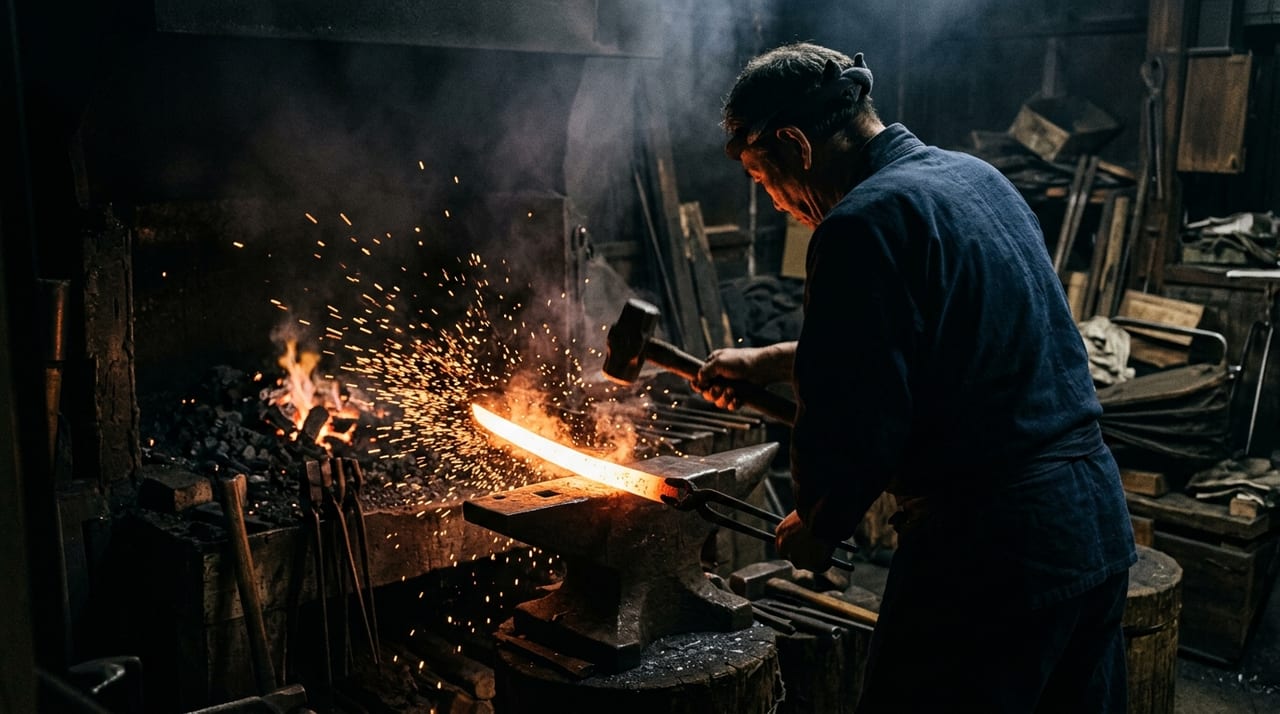
2. Establishment of mass-production systems: To meet demand, the two major production centers of Osafune Bizen and Seki in Mino organized systematic mass-production operations. Swords from this period, called "Suebizen" and "Suezeki," ranged from mass-produced items to high-quality custom works.
3. Uchigatana becomes completely mainstream: Seeking ease of use in combat, the uchigatana—worn with the edge up at the waist for rapid drawing—established itself as the primary weapon, while tachi retreated to ceremonial use and as symbols of status for high-ranking warriors.
Kazu-uchi-mono and Chūmon-uchi—The Age of Mass Production and Export
The products of Suebizen and Suezeki were divided into two categories: "kaszu-uchi-mono" (quantity-produced blades) and "chūmon-uchi" (custom-made blades). Kazu-uchi-mono, popularly called "taba-gatana," were standardized mass-produced goods supplied to ashigaru and for export. Custom-made works made to order for daimyo and high-ranking samurai included masterpieces by smiths such as Yoso Zaemon no Jo Sukesada; even blades bearing the same "Sukesada" signature show extremely wide variation in quality.
Not to be overlooked is sword export. In the kango trade between the Muromachi shogunate and Ming China, Japanese swords became a major export item, with records showing several thousand swords on a single mission to Ming, and tens of thousands following the Ōnin War. Estimates suggest the total export reached over 100,000 swords, making Japanese swords a "manufactured product" representing Muromachi Japan.
List of Famous Muromachi Swordsmiths
| Swordsmith | Production center | Period | Remarks |
|---|---|---|---|
| Morimitsu, Yasumitsu, Moromitsu | Osafune Bizen | Ōei period | "Ōei Three Lights." Representatives of Ōei Bizen |
| Yoso Zaemon no Jo Sukesada | Osafune Bizen | Sengoku period | Considered the greatest smith of Suebizen |
| Katsumitsu | Osafune Bizen | Sengoku period | Famous practitioners include Ukyo no Suke and Jiro Zaemon no Jo |
| Izumi no Kami Kanesada (Nosada) | Seki Mino | Sengoku period | The foremost smith of Mino. Famous for the "Kasen Kanesada" owned by Hosokawa Tadaoki |
| Magoroku Kanemoto | Seki Mino | Sengoku period | "Seki's Magoroku." Known for "three-cedar" hamon and cutting ability of the highest grade |
| Muramasa | Kuwana Ise | Sengoku period | Feared for cutting ability; later generations created "demon-sword legends" |
| Hasebe Kunishige | Yamashiro | Northern and Southern Courts period | Creator of the "Heshikiri Hasebe" |
The Rise of Mino Swordsmiths—The Establishment of Seki's Position
Not to be overlooked in Muromachi sword history is the rise of the swordsmith community of Seki in Mino Province (present-day Gifu Prefecture). Blessed with quality charcoal and convenient water transport, Seki became the second major production center alongside Bizen by the Sengoku period. The Mino tradition is characterized by a bright, clear jigane and hamon featuring sharp-pointed notare as its standard, emphasizing nioi. Magoroku Kanemoto's "three-cedar"—three sharp-pointed notare bundles arranged regularly—is emblematic of this style. Seki swords were cherished by Sengoku warriors for their practicality: "they do not break, do not bend, and cut well." Numerous records remain of these swords being worn as primary weapons by samurai in the Takeda, Uesugi, Oda, and Toyotomi clans.
Wakizashi and Short Swords—The Emergence of the "Daishō" Form
In the late Muromachi period, the custom of wearing a wakizashi (blade length 1 shaku to less than 2 shaku) alongside the primary blade became widespread, creating the prototype for the "daishō" system later formalized in the Edo period. Additionally, it was not uncommon for farmers, merchants, and craftspeople to carry short swords or wakizashi for self-defense, leading to the spread of swords across social classes. This social situation later necessitated the katanagari (sword hunt) edicts of Toyotomi Hideyoshi in 1588.
Muromachi Warfare—Weapons Other Than the Sword
The protagonists of mid-Muromachi to Sengoku battles were not swords alone. The primary weapon of mass combat was the yari (spear), with the long-shafted spears of ashigaru forming the core of battle formations. The naginata, which had been a major weapon through the Northern and Southern Courts period, declined with the proliferation of spears; the nagamaki—a large-bladed sword with a long haft—was used as a slashing weapon. The bow remained important as a ranged weapon, and following the introduction of firearms in 1543 (Tenbun 12), muskets rapidly spread and transformed the nature of warfare. Within this weapons system, the sword was positioned as a weapon for close combat, self-defense, and taking heads, and as a symbol of the samurai's status and spirit.
What are the characteristics of Muromachi swords?
The transition from tachi to uchigatana is the greatest characteristic. The uchigatana, worn with the edge up at the waist, enabled rapid drawing and striking, and short single-handed swords with blade lengths around 2 shaku 1 sun became popular in the mid-Muromachi period. The sori shifted from koshi-zori to saki-zori, and after the Ōnin War, mass-produced blades called kaszu-uchi-mono were manufactured in huge quantities.
What are the famous swords of the Muromachi period?
The "Kasen Kanesada," created by Izumi no Kami Kanesada (Nosada) and favored by Hosokawa Tadaoki, and the "Heshikiri Hasebe," made by Hasebe Kunishige and known through the anecdote of Oda Nobunaga using it to "cut down" (National Treasure, housed in the Fukuoka City Museum), are representative examples. Among swordsmiths, Morimitsu and Yasumitsu of Ōei Bizen, Yoso Zaemon no Jo Sukesada of Suebizen, Magoroku Kanemoto of Seki, and Muramasa of Ise are particularly renowned.
Conclusion—The Legacy Left by the "Age of Practicality"
The Muromachi period was a transformative era when Japanese swords shifted dramatically from "artworks to practical weapons," producing a rich sword culture mixing mass-produced and elite works. Most antique blades in circulation in the modern sword market are from this period, and choice examples of Ōei Bizen and Suebizen offer an accessible entry point for collectors to appreciate the beauty of antique swords at prices more attainable than famous Kamakura-period blades.