The Edo Period Swordsmith Ranking System: Grand Champions and the Evolution of Sword Quality Rankings
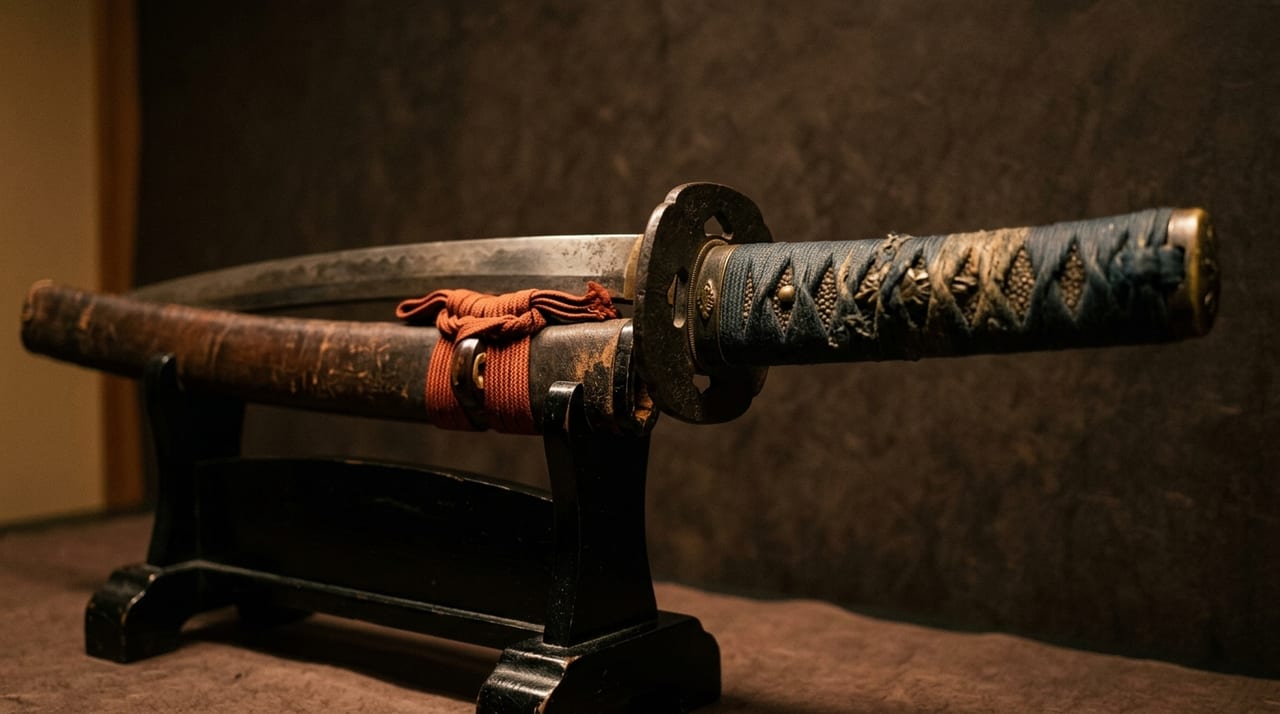
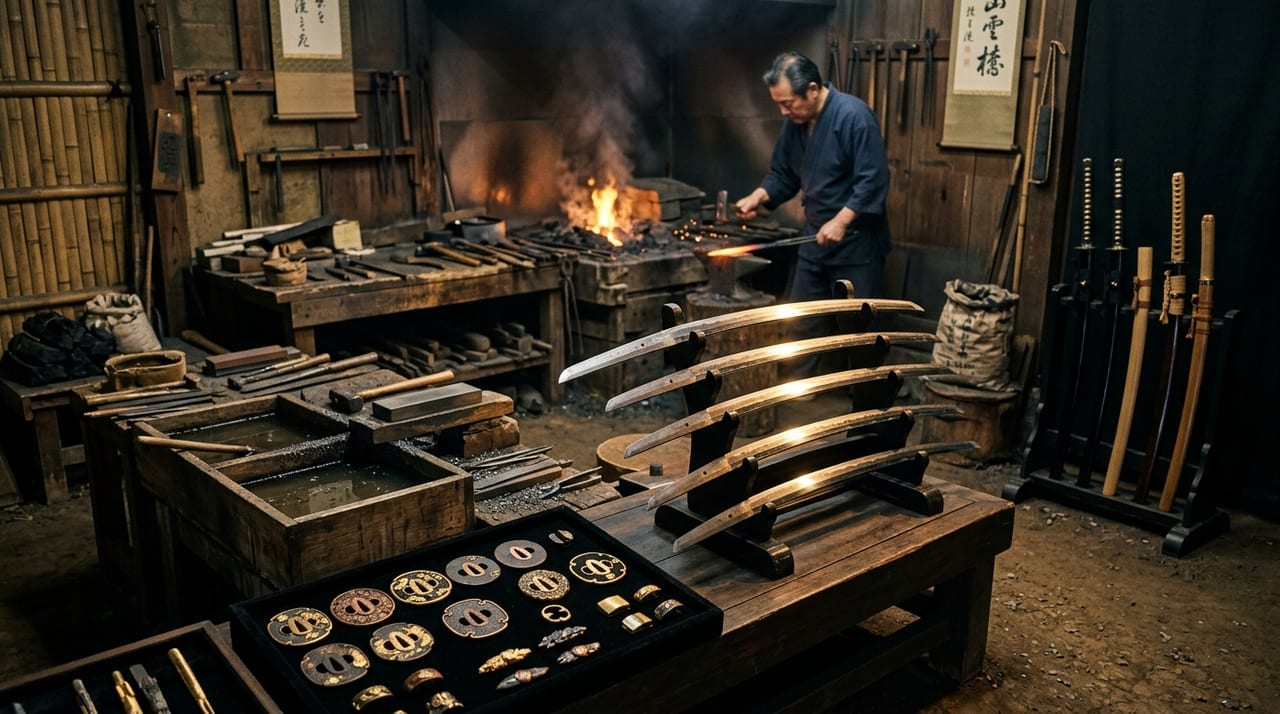
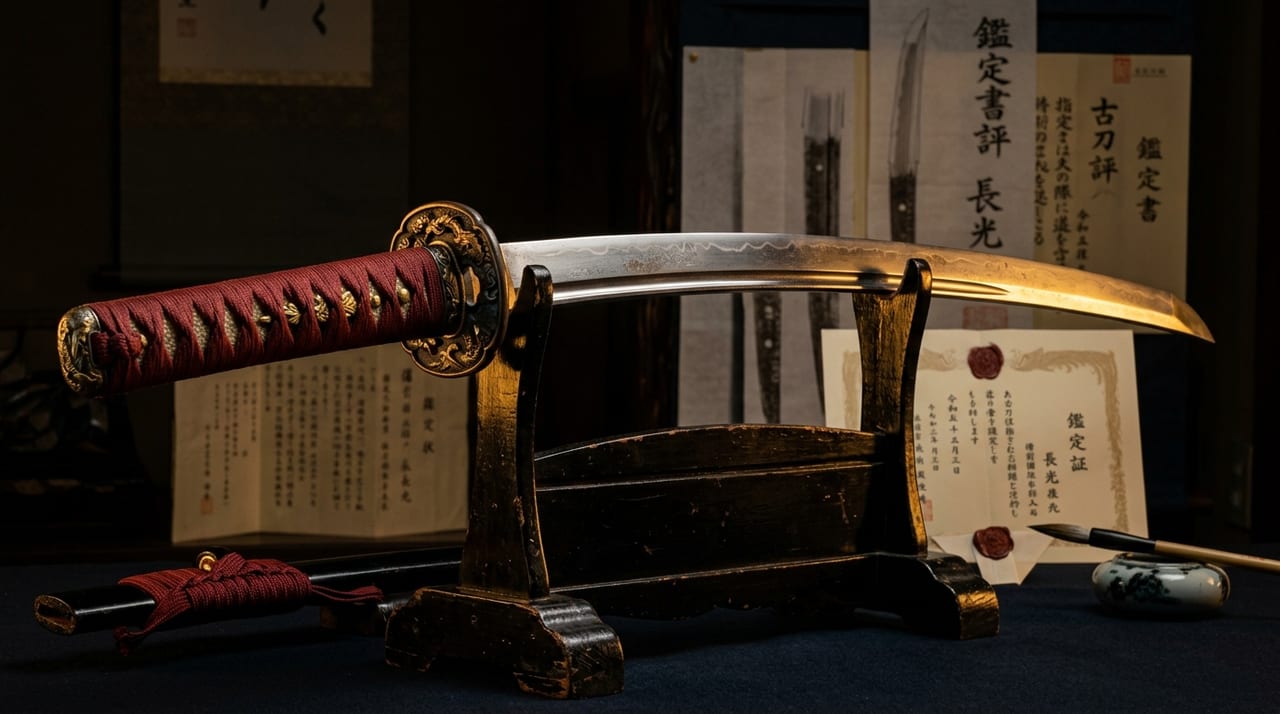
 * Image is for illustrative purposes only.
Table of Contents
Sword Smith Rankings
In the late Edo period (18th–19th centuries), multiple sword smith rankings (tōkō-banzuke) were created, ordering the skills of sword smiths in imitation of sumo rankings, a popular entertainment of the time. The rankings circulated widely among sword merchants, appraisers, and enthusiasts, functioning as a reference material in sword trading.
These rankings answered the interests of Edo-era people in the question "Who is the greatest sword smith?" and possessed commercial and cultural functions equivalent to modern ranking media.
Structure of the Rankings
Like sumo, the rankings divided sword smiths into east and west divisions, ordering them hierarchically from the highest rank to the lowest.
| Ranking Position | Sumo Equivalent | Meaning |
|---|---|---|
| Ozeki (大関) | Ozeki (highest rank before yokozuna) | Highest rank in each division |
| Sekiwake (関脇) | Sekiwake | 2nd rank |
| Komusubi (小結) | Komusubi | 3rd rank |
| Maegashira (前頭) | Maegashira | Upper maegashira |
| Juryo (十両) | Juryo | Mid-rank |
Highest-Ranked Sword Smiths in Representative Rankings
Rankings of the "Famous Master Masterpieces Appraisal Record" Type (Bunka–Tenpo Periods)
East Ozeki: Nagasone Okisato (known as Kotetsu)
- An Edo-period sword smith and former armor maker. Famous for sharp hamon and thick blades, notably used by Kondo Isami, commander of the Shinsengumi
- Many later forgeries bear the "Kotetsu" signature, leading to the saying "Kotetsu is always suspect"
West Ozeki: Suishinshi Masahide
- A late Edo sword smith and theoretical leader of the shinshintō (new new sword) movement. Authored "Tōken Fukkoron" (Discourse on the Revival of Sword Making) in Bunsei 9, establishing the direction of the shinshintō movement
East Yokozuna Equivalent: Minamoto no Kiyomaro (known as Kiyomaro)
- An Edo sword smith of the Tenpo–Kaei period. Considered the greatest sword smith of the shinshintō era and treasured as one of two great masters alongside Kotetsu
Background and Intent Behind the Creation of Rankings
The creation of rankings was led primarily by Edo sword merchants and sword appraisers. Their intentions were multifaceted:
- Commercial purposes: High-rated smiths' works commanded higher prices, so rankings that authorized such evaluations directly increased commercial profits
- Education for enthusiasts: Amid the sword enthusiast boom, rankings organized knowledge and aided new collectors in purchasing decisions
- Cultural entertainment: The ranking format modeled on sumo rankings aligned with Edo culture's approach to entertainment and information consumption
It is said that Edo had a format called "mitate-banzuke" (humorous rankings) modeled on sumo rankings in fields beyond swords, suggesting that the ranking format itself was a method of organizing information familiar to ordinary people. The sword smith rankings were one example emerging from this cultural soil.
However, the objectivity of the rankings was not necessarily guaranteed, as the creators' preferences, commercial interests, and distribution volumes all introduced bias.
Major Shinshintō Sword Smiths Featured in Rankings
Shinshintō (the new new sword period, from approximately Meiwa 1 [1764] to the end of the shogunate) represents the third phase of Japanese sword making, following koto and shinto. The rankings feature many master smiths of the shinshintō period.
| Sword Smith | Origin and Period | Characteristics |
|---|---|---|
| Suishinshi Masahide | Late Edo, Edo | Founder of shinshintō theory |
| Taikei Naotane | Late Edo, Edo | Suishinshi's disciple, master of various koto copies |
| Minamoto no Kiyomaro | Tenpo–Kaei, Edo | Highest master alongside Kotetsu, lived to age 42 (born Bunka 10, died Kaei 7) |
| Koyama Munetsugu | Late Edo, Edo | Master who balanced production volume with quality |
| Hosokawa Masayoshi | Late Shogunate, Edo | Prominent practitioner of Suishinshi's school |
Influence on Modern Sword Appraisal
Edo-period rankings continue to be referenced as a reference material in modern sword appraisal. In NBTHK (Japan Art Sword and Blade Preservation Society) examinations, works by sword smiths highly ranked in the rankings tend to receive higher evaluations.
However, modern appraisal is not simply dependent on rankings but comprehensively evaluates the following elements:
- Period of forging (works from a master's mature period are valued more highly)
- Preservation condition (polish and surface quality)
- Individual piece quality (even the same smith had varying results)
- Documentation such as oshigata (blade rubbings) and provenance
The rankings hold value as historical materials preserving one aspect of 18th–19th-century sword culture and serve as important primary sources for sword researchers.
How to Reference Rankings When Appreciating and Purchasing Swords
When actually appreciating or purchasing swords, here are important points to keep in mind regarding how to use rankings.
- Rankings do not guarantee absolute quality: Rankings represent only the relative evaluation of sword merchants and appraisers at the time of their creation and do not guarantee the individual piece's quality or preservation condition
- Works by the same smith vary: Even sword smiths highly ranked may show differences in quality between early works and mature works, or between commissioned pieces and mass production
- Appraisal certificates are essential: Rankings are merely reference information; in actual transactions and collecting, official appraisal certificates issued by institutions such as NBTHK are essential for confirming the authenticity and quality of individual pieces
- Be aware of signature forgery risks: As mentioned in the Kotetsu section, the more popular and highly valued a smith in the rankings, the more likely their signatures are forged, and high ranking does not itself guarantee authenticity
Rankings are ultimately a key to understanding the history of sword culture. When evaluating individual pieces, one should rely on existing appraisal certificates, oshigata, and provenance documentation. Especially when considering works by top-ranked smiths, careful attention to appraisal certificates' notations on preservation condition and publicly available photographs and detailed information about actual pieces is essential, rather than relying solely on the ranking position.
Summary
Sword smith rankings were a product of the intersection of Edo-period commercial culture and sword enthusiast culture. While retaining some influence on modern sword appraisal, they are positioned as historical materials to be critically consulted. For sword collectors, knowledge of the rankings is indispensable cultural literacy for understanding the evaluation criteria of koto, shinto, and shinshinto.