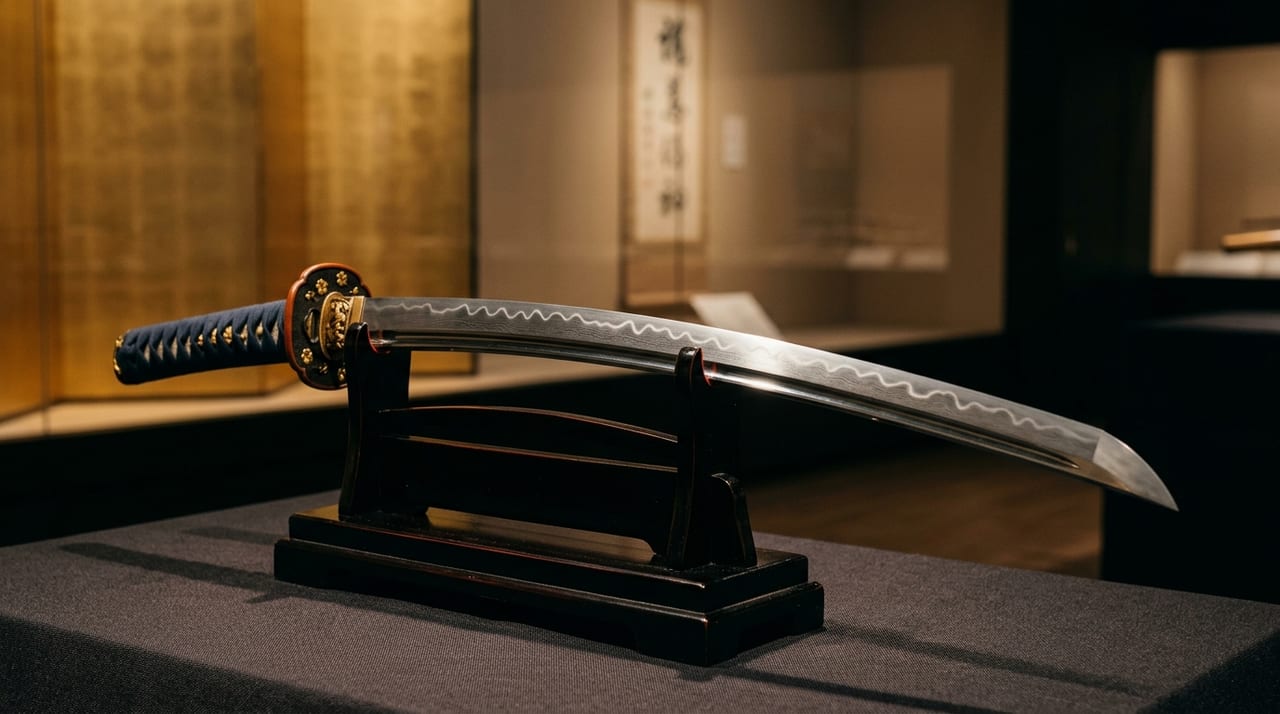
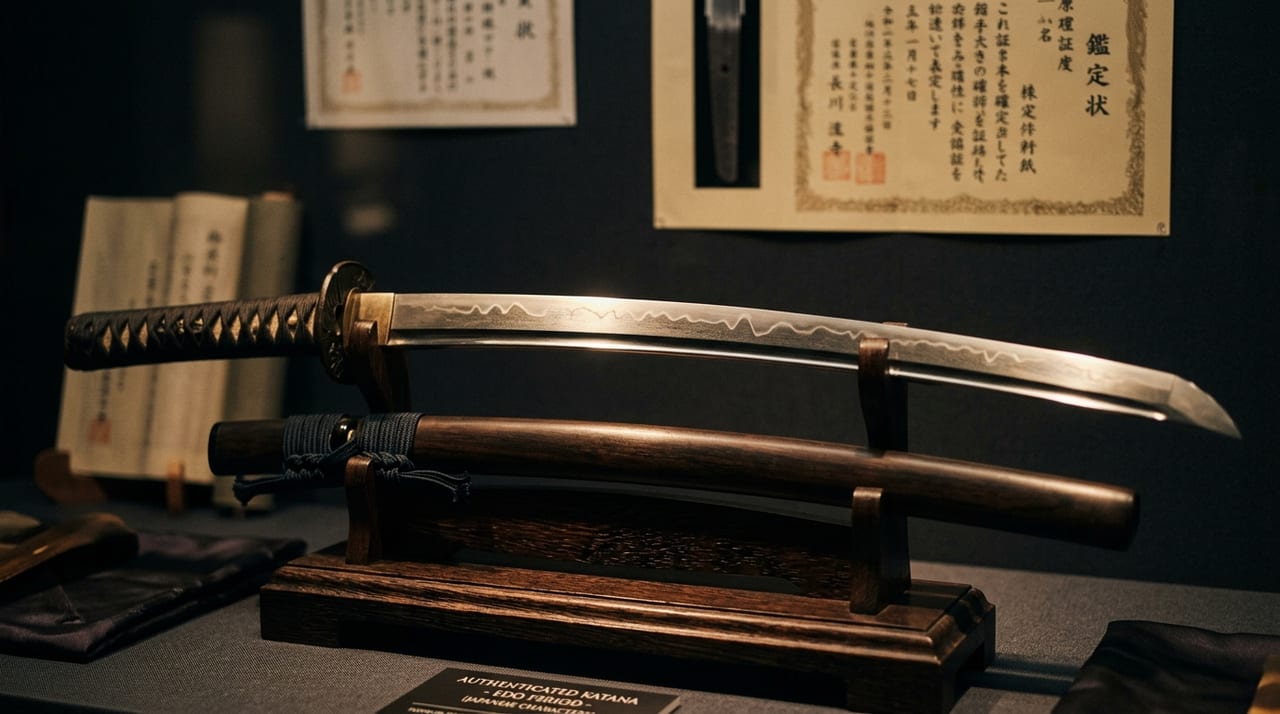
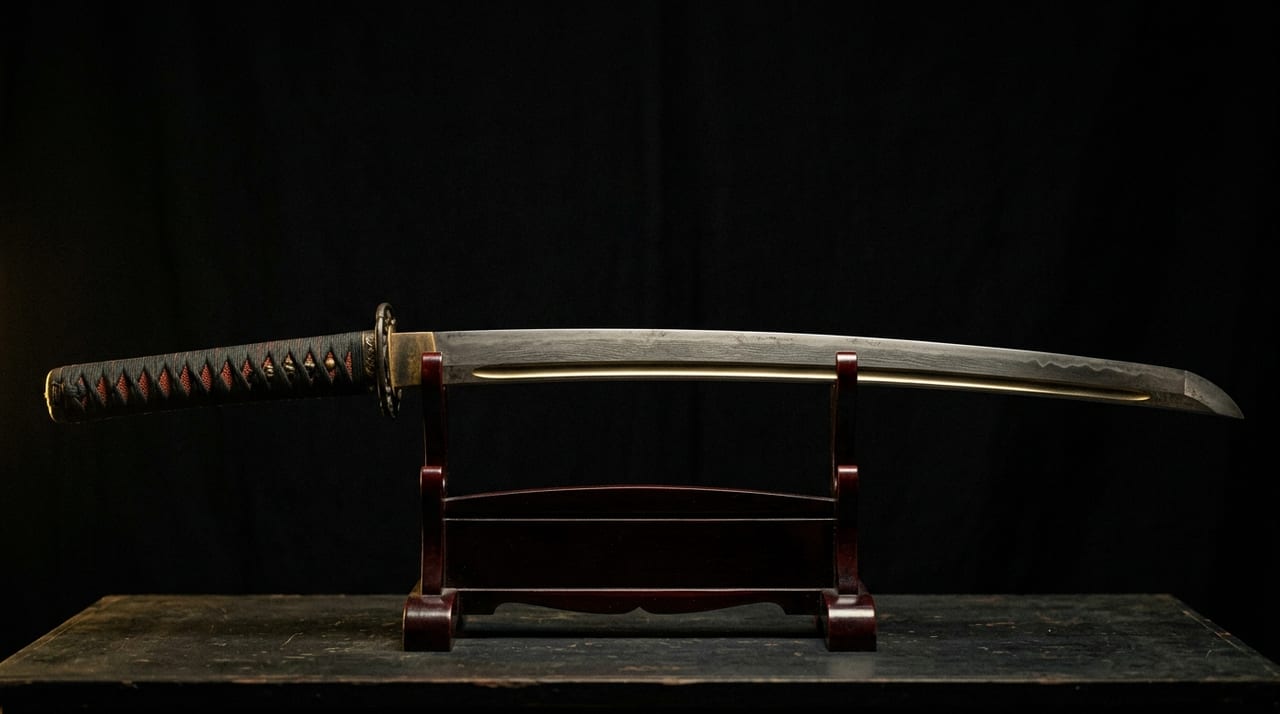
Ken: Types of Shinto and Buddhist Ritual Swords and the Cultural Significance of 'Divine Swords'
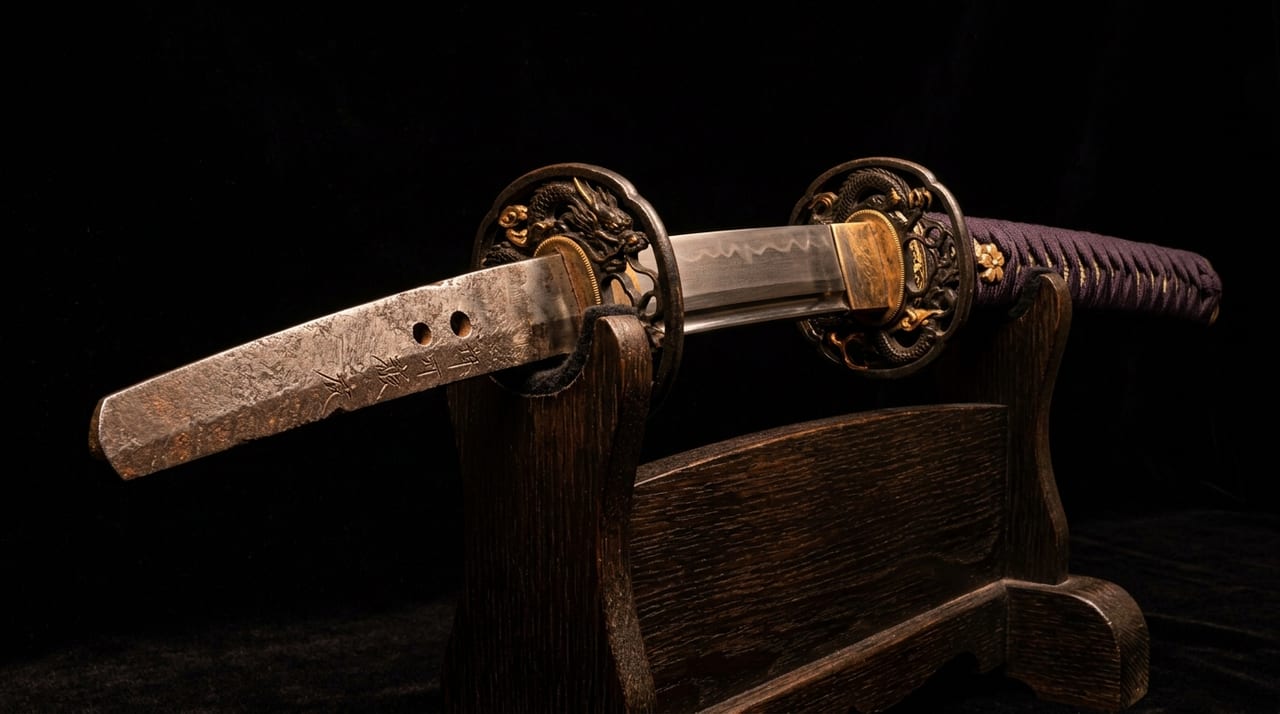 * Image is for illustrative purposes only.
Table of Contents
Shinto and Buddhism: The Deep Relationship with Japanese Swords
In Japanese religious culture, the sword carries sacred significance beyond being a mere weapon. In Shintoism, swords are enshrined before the gods as vessels (yorishiro) in which deities dwell, and in Buddhism, they are implements (jimotsu) of the Vidyaraja and bodhisattvas, embodying the spiritual world of fierce aspects (funnu-so).
The Three Imperial Regalia and the Kusanagi Sword
One of the Three Imperial Regalia passed down through Japan's imperial line is the Kusanagi Sword (kusanagi no tsurugi), a divine blade that appears in Japanese mythology and is considered the most sacred sword to be inherited upon imperial succession. It is currently enshrined at Atsuta Shrine (Nagoya) and is not open to the public. The Kusanagi Sword is said to be of chokuto (straight-blade) form, differing in shape from the curved Japanese swords of later periods.
The History of Sword Donations to Shrines
The practice of donating swords to shrines (hōnō) continues from ancient times, with daimyo, military commanders, and commoners presenting swords to shrines for purposes such as prayers for victory, wishes for long military fortune, and gratitude to the gods. Over time, donated swords came to be valued more for their artistic merit than practical use, and in modern times, the production of donated swords by renowned sword makers continues.
Major repositories of shrine-donated swords:
- Kasuga Taisha (Nara): Houses numerous ancient swords designated as National Treasures and Important Cultural Properties
- Kashima Shrine (Ibaraki): Donated swords of the ancient blade lineage known as Kashima chokuto
- Ise Shrine (Mie): Continues the tradition of donating swords during the Shikinen Sengu ceremony
Fudo Myoo and the Kurikara Sword
The Buddhist Fudo Myoo holds the Kurikara Sword (kurikara ken) in his right hand, wreathed in flames. This sword features a dragon (kurikara dragon) coiled around it, and is depicted as a symbol of cutting through earthly desires with the flames of wisdom.
The typical form of the Kurikara Sword features openwork carvings of a dragon on a double-edged, straight-bladed sword form characteristic of Japanese swords, and swords made as Buddhist implements possess high artistic and craft value. Modern Japanese sword makers also create Kurikara Swords as Buddhist art.
Key Points for Appreciating Sacred Swords
When viewing sacred swords housed in shrines and museums, the following points deepen one's understanding.
- Form: Whether straight-bladed or double-edged—the lineage of ancient swords
- Metal fittings: The precision of gold and silver inlay and openwork carving
- Provenance: Records of the person who donated it, the era, and the purpose
- Condition: How rust and discoloration from long-term storage are handled (some shrines preserve rather than restore)
The Futsunomitama Sword and Isonokami Shrine
The Futsunomitama Sword (Futsunomitama-no-Tsurugi), one of Japan's three sacred swords alongside the Kusanagi, is enshrined at Isonokami Shrine in Tenri, Nara Prefecture. This divine sword is the sacred object of Futsunomitama no Ōkami, the main deity of Isonokami Shrine, and since it was moved to the sacred precinct at Isonokami Furu during the reign of the 10th Emperor Sujin, it has rested deep within the earth. Following an excavation survey of the sacred precinct directed by Chief Priest Suga Masatomo in 1874 (Meiji 7), it was brought to light, and has since been enshrined in the shrine's sanctuary. As it is not open to the public, the general public cannot directly verify its detailed form even today.
The Shichishi Sword—A National Treasure of Isonokami Shrine
Another important sword in Isonokami Shrine's collection is the Shichishi Sword (shichishitō), a National Treasure. This iron sword measures 74.8 cm in overall length, and its most distinctive feature is its unusual form: three branch blades are created on each side of the blade body, for a total of six, staggered at different levels. Rather than a weapon for actual combat, it is believed to have been a ritual and diplomatic treasure. The ridge of the blade bears more than 60 characters of gold inlay inscriptions on both sides, and the prominent theory based on interpretation of these characters is that it was made in Baekje in 369 CE and was presented by the Baekje king to the Wa king. However, there are various interpretations of the inscriptions, and research into the manufacturing date continues. It is believed to correspond to the "Shichishi Sword" mentioned in the Nihon Shoki in the entry for the 52nd year of Empress Jingu's regency.
The Sanko Sword—The Wisdom Sword of Esoteric Buddhism
Distinct from Shinto sacred swords, we should understand the Sanko Sword (sanko ken) that originates in Buddhist esoteric teachings. The Sanko Sword is a ritual implement held by Fudo Myoo and the Bodhisattva Manjushri, symbolizing a keen blade of wisdom that cuts through the three poisons of greed, anger, and delusion. In form, it is a double-edged straight blade, characterized by the handle terminating in three prongs (the pointed form of the three-pronged ritual implement). As a ritual tool used in esoteric Buddhist blessing ceremonies, fine examples of this implement are preserved in temple treasuries.
Iconographic Features of the Kurikara Sword
A supplement to the aforementioned Kurikara Sword: the form of the Kurikara Dragon King, wreathed in blazing flames and coiled around the sword, is itself considered the incarnation of Fudo Myoo, and is also known as "Kurikara Myoo" or "Kurikara Fudo," serving as an independent object of worship. As the samaya form (symbolic representation) of the sword, the Kurikara Sword is one of the most important implements in Fudo Myoo imagery overall, and when sword makers create a Kurikara Sword as a Buddhist art object, the typical form is to express the dragon on the sword body itself through openwork carving or three-dimensional sculpture.
Contemporary Significance of Shrine Donations
Even in modern times, the tradition of renowned sword makers creating donated swords for shrines continues. The donated swords preserved at such places as Kasuga Taisha (Nara), Kashima Shrine (Ibaraki), and Ise Shrine (Mie) occupy an important position as cultural properties that exemplify the pinnacle of sword-making technique of each era. The donated swords created by modern sword makers serve as "contemporary sacred swords," supporting sword culture from both the perspectives of technique transmission and religious significance.