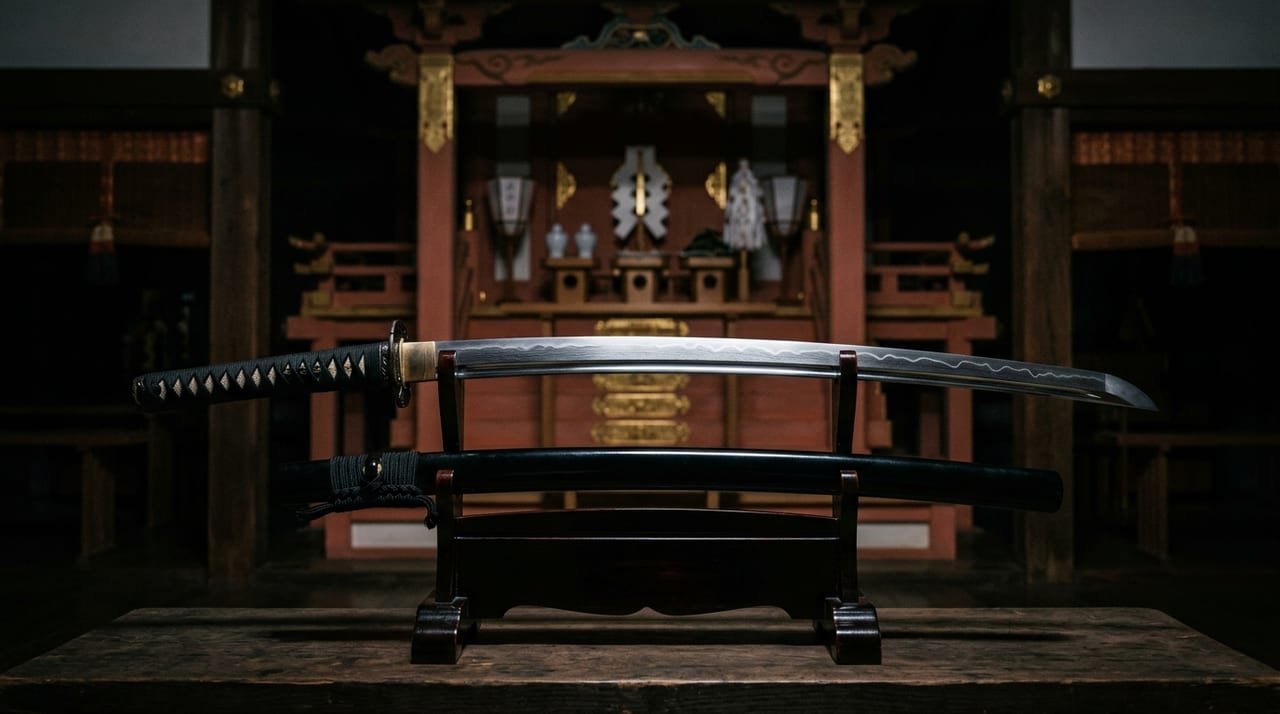
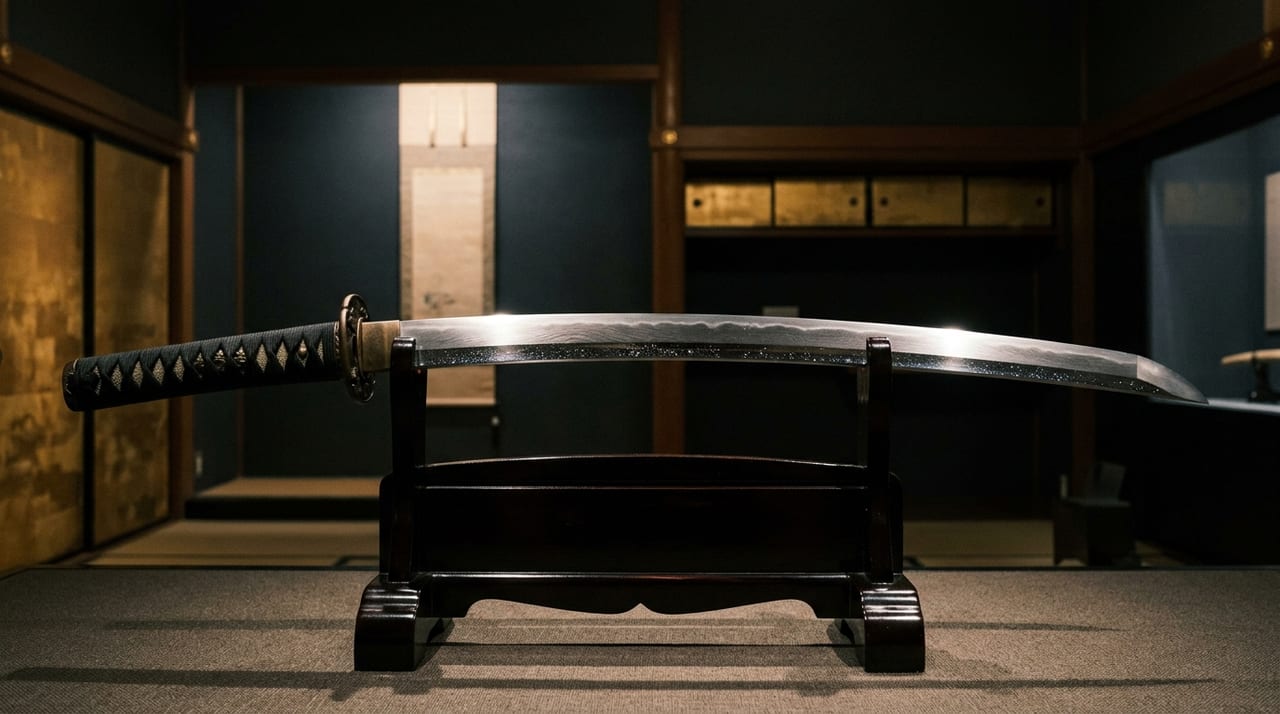
The Tegai School — Lineage of the Robust Yamato-den Transmitted from Tōdai-ji, One Pillar of the Yamato Five Schools
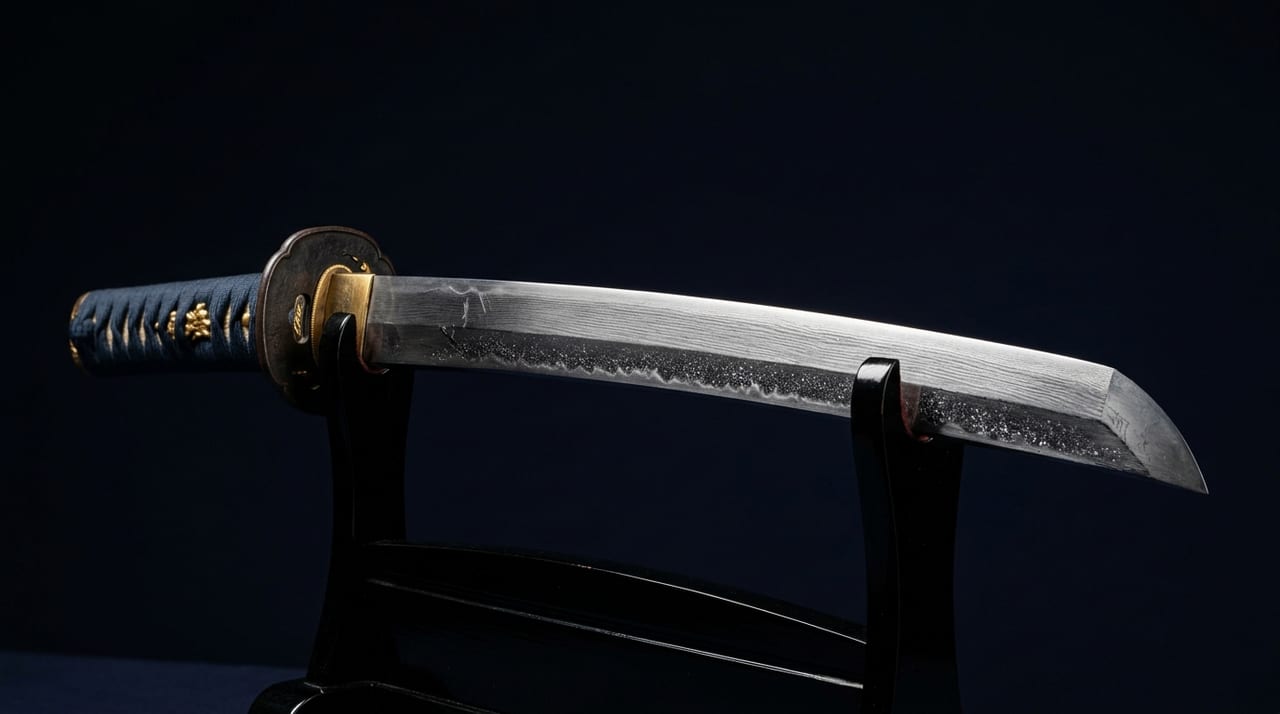 * Image is for illustrative purposes only.
Table of Contents
What Kind of Swordsmith Group Was the Tegai School?
The Tegai School (Tegai-ha) is one of the five great swordsmith groups of Nara, collectively known as the Yamato Five Schools. The Yamato Five Schools refers to the Senjuin School, the Taima School, the Hōshō School, the Shikkake School, and the Tegai School — all bearers of Yamato-den who developed by basing themselves at Nara's temples and shrines.
The name of the Tegai School is said to derive from the Tegai Gate (Tegaimon, also written as the "Tegai Gate"), located to the northwest of Tōdai-ji. The swordsmiths are said to have established their workshops near this gate to carry out their kaji work, and the fact that they conducted sword-making in close proximity to the religious and cultural authority of Tōdai-ji also influenced the prestige of the school.
The representative tōkō is Kanenaga. Kanenaga is considered the central tōkō of the Tegai School, said to have been active from the late Kamakura period into the early Nanbokuchō period, and is highly regarded among sword researchers as a masterwork of extant Yamato-den.
Characteristics of the Tegai School's Jigane and Hamon
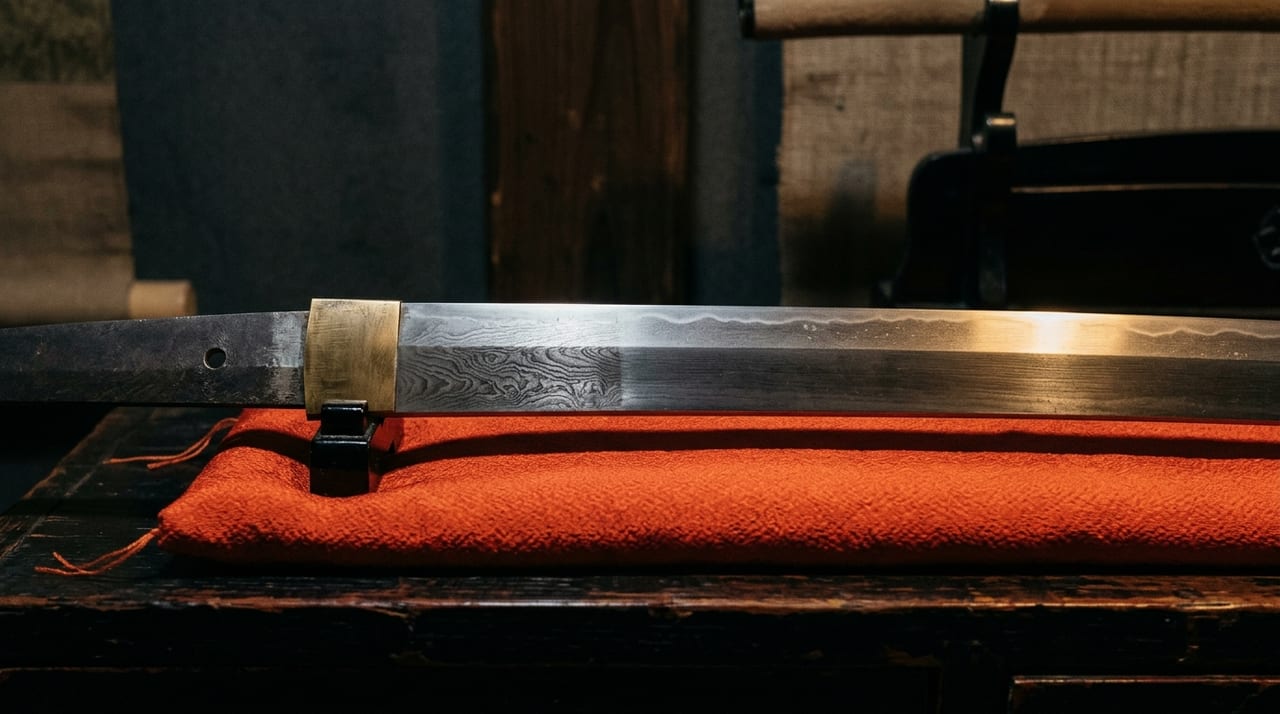
A characteristic of Yamato-den in general is masame kitae-hada. Masame kitae-hada refers to the form of the jigane in which the wood-grain pattern of the kitae-hada is aligned vertically in a fibrous manner, clearly distinct from the itame of Bizen or the large-pattern hada of Sōshū. The Tegai School has an especially pronounced tendency toward this masame, and the texture of the jigane, while understated, has a taut quality.
As for the hamon, the fundamental form is suguha, or suguha in character with a slight notare. The nie is deeply worked, and the appearance of thick grains of nie lined up along the cutting edge gives a robust impression. The bōshi returns straightforwardly in most cases, in a small and compact form. The jigane may show "bō utsuri," which is cited as a reference indicator in kantei as a typical pattern of Yamato-den.
The nakago shape is often either "kurijiri" (chestnut-shaped heel) or yasurime of the "katte-sagari" type, known as a finishing style particular to the Tegai School among the Yamato Five Schools.
The Style of the Representative Tōkō Kanenaga
Kanenaga is regarded as the de facto founder of the Tegai School, and extant works are preserved in major Japanese Sword Museums and private collections in Japan. Works by Kanenaga are often referred to as Tegai Kanenaga, and are characterized by a particularly robust jigane and deeply worked nie even within Yamato-den.
While there are works with the imposing Nanbokuchō-style construction of shallow sori, wide mihaba, and thick kasane, there also exist small-scale tantō examples that retain the refined Kamakura-period form, and researchers debate the possibility that multiple tōkō succeeding the name "Kanenaga" were active across the span from the Kamakura to Nanbokuchō periods.
The Position of the Tegai School Within the Yamato Five Schools
Each of the Yamato Five Schools has its own base temple or shrine, but in terms of style they share the common characteristics of Yamato-den while possessing subtle differences. Whereas the Senjuin School is said to have the oldest lineage and is characterized by a plain jigane, the Tegai School left many works showing technical refinement from the late Kamakura through the Nanbokuchō period.
Just as the Taima School takes its name from its association with Taimadera and is known for a plain and solid style, the Tegai School's geographical and cultural ties to Tōdai-ji — the greatest temple in Nara — held important significance in the establishment of the swordsmith group's authority and in the transmission of technique. Yamato-den tends to prize the quality of materials and the reliability of forging technique over the decorative showiness of Sōshū-den, and the Tegai School is an embodiment of that ideal.
Sue-Tegai — Transmission into the Muromachi Period
The lineage of the Tegai School did not end with the Kamakura and Nanbokuchō periods; it was carried on into the Muromachi period by a group of tōkō known as Sue-Tegai (Late Tegai). Works of Sue-Tegai are often assessed as falling one step behind the peak of the late Kamakura through Nanbokuchō period in terms of jigane refinement; nevertheless, the backbone of Yamato-den — masame forging and suguha-style hamon — is firmly maintained, and solid, practical works made to meet the utilitarian demands of the Muromachi period remain.
Since their market valuation is modest compared to works from the Kamakura and Nanbokuchō periods, they can be a realistic option for beginners who wish to study the characteristics of Yamato-den firsthand. Even within kantei attributed as "Tegai," the fact that evaluation and price range differ greatly by period is essential foundational knowledge for anyone trying to read valuations.
Appreciating and Acquiring Tegai School Works Today
In today's sword market, genuine works (zaimei pieces) of the Tegai School are rare, and works with secure provenance circulate primarily through major sword auctions and established sword dealers. Whether a kanteisho exists — and what it contains, having passed NBTHK examination — is the primary criterion for identifying genuine works.
When appreciating these works, it is best to focus observation on the dense, compact quality of the jigane with masame kitae-hada and on the quality of the deeply worked nie along the suguha. To eyes accustomed to the showy chōji hamon of Bizen, it may at first appear plain, but through repeated exposure to Tegai School works one comes to sense the high level of forging technique particular to Yamato-den and its honesty toward materials. Actively viewing Yamato-den works held in the Japanese Sword Museum and regional art museums, and cultivating one's eye and knowledge, is the surest path to a deep understanding of the Tegai School.
Checkpoints When Acquiring
Many works attributed to the Tegai School are mumei, and not a few are pieces from which the mei on the nakago has been lost through suriage. For this reason, they commonly circulate in the market in a form such as "mumei, attributed to Tegai," with the school inferred through examination by an appraisal body. When considering a purchase, the following three points should be confirmed.
- The type and content of the kanteisho. Even among works attributed to Tegai, market evaluation varies by examination category, so accurately reading what the document states is the starting point.
- The soundness of the jigane. Because masame forging has the tendency for flaws to run vertically along the forging grain, one should confirm with multiple photographs taken from different angles of light that the jigane has not become whitish and fatigued.
- The activity within the hamon. Suguha may appear monotonous at first glance, but there is a large difference in quality depending on the presence or absence of activities such as the grain of nie, sunagashi, and kinsuji, and this is also the basis for price differences.
Since these elements include factors that are difficult to judge from photographs alone, if there is a work of interest it is advisable to request additional close-up images and an explanation of condition from the seller before purchase. Leaving doubts unresolved before buying is the most important pitfall to avoid when choosing a sword of a particular school.