The Structure and Uses of the Nagamaki: The Reality of a Long-Handled Sword That Flourished from the Nanbokuchō to the Sengoku Era
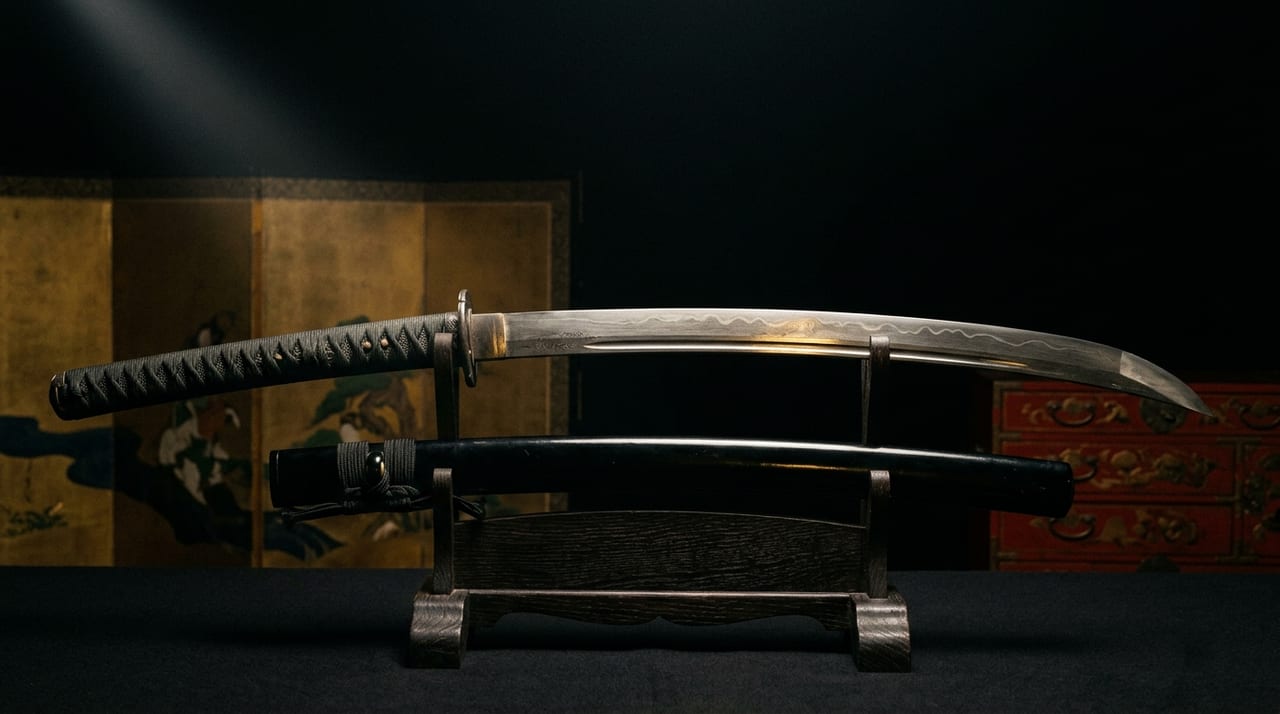 * Image is for illustrative purposes only.
Table of Contents
Nagamaki: An Anomaly in the History of Japanese Swords
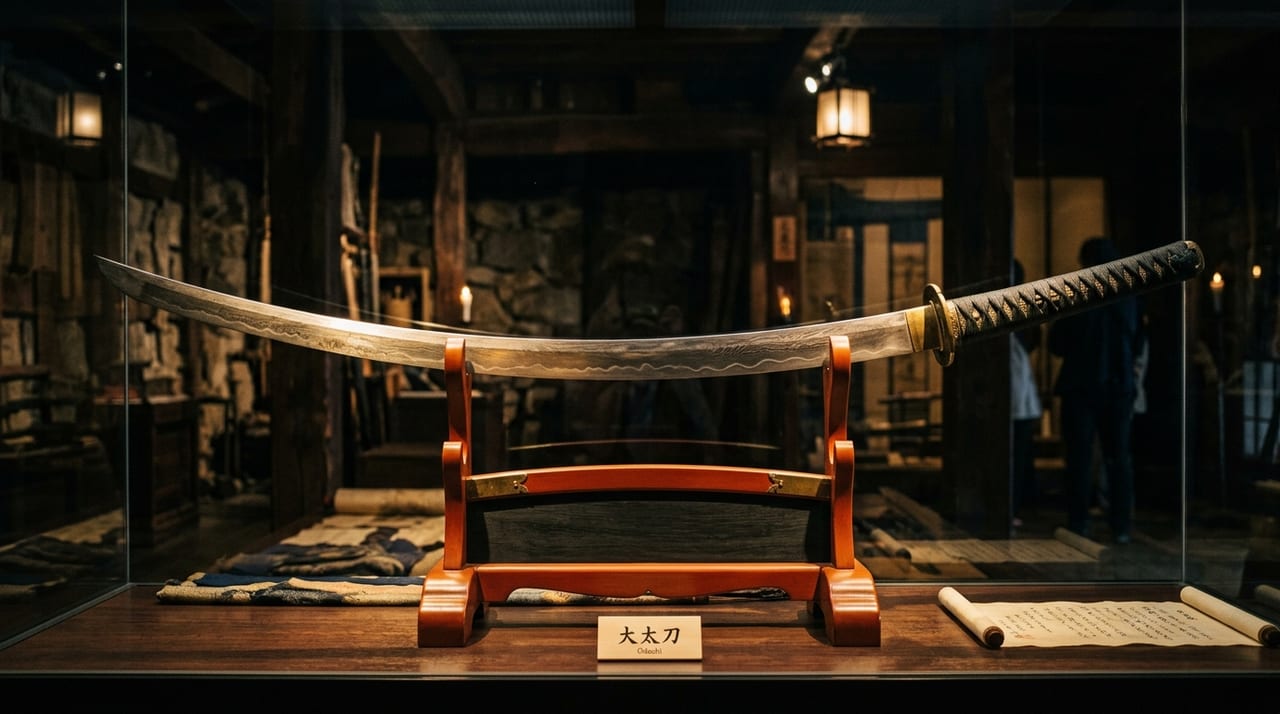
The nagamaki is a sword form of rare shape even within the history of Japanese swords. It has an unusually long blade that greatly exceeds that of an ordinary uchigatana, combined with an extraordinarily long tsuka (hilt), giving it a strangely proportioned appearance. The nagamaki saw active use in real combat from the Nanbokuchō period through the Sengoku era — why was it created, and on what battlefields was it needed? Its true nature is something that profoundly challenges our understanding of Japanese swords.
Structural Peculiarities
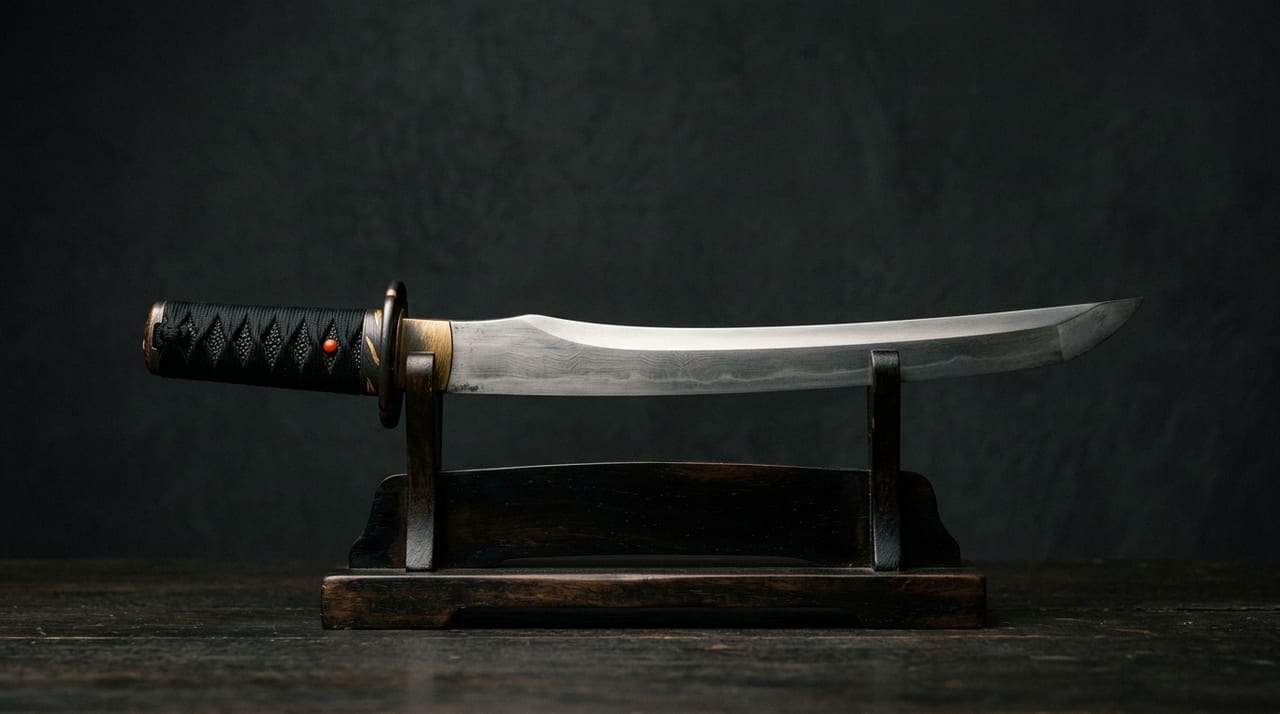
The defining characteristic of the nagamaki lies in the breakdown of its overall length. The blade length greatly exceeds that of a standard uchigatana (approximately 65–75 cm), sometimes reaching over 80 cm. Even more remarkable is the length of the tsuka. An ordinary uchigatana has a tsuka of about 20–30 cm, but it is not uncommon for the nagamaki's tsuka to extend to 60 cm or more. As a result, the total length exceeds 1 m 50 cm, making it an oddly formed sword of unusual proportions.
This proportion was no accident; it is thought to have been one answer to the weapons-design philosophy of the Nanbokuchō period. A longer blade widens the effective range in close combat. A longer tsuka makes one-handed operation easier and suits attacks from horseback. The nagamaki was the result of pursuing an "all-purpose sword" capable of serving against both infantry and cavalry on battlefields where the two were intermixed.
Historical Background: From Nanbokuchō to the Sengoku Era
The period in which the nagamaki was most active spans roughly 130 years, from Ashikaga Takauji's overthrow of the Kenmu Restoration (1336) to the Ōnin War (1467). This era was a time of transition from group cavalry warfare — combining mounted archery and hand-to-hand combat — to infantry warfare centered on ashigaru foot soldiers.
In the early Nanbokuchō period, the dominant style of fighting was still for mounted warriors to cut down enemies from horseback. At that time, the conventional uchigatana had too short a blade for mounted attacks to function effectively. This created the need to extend both blade and tsuka to the extreme, maximizing reach from horseback. This was the primary reason for the nagamaki's birth.
But as the era progressed, tactics changed. Entering the Sengoku period after the Ōnin War, large-scale formation warfare by massed ashigaru became the norm. In this context, the nagamaki came to be confined to formation commanders and elite retainers as "a weapon that strongly favored individual skill." In other words, the nagamaki was a transitional weapon of the period bridging cavalry warfare and infantry warfare.
Practical Use on the Battlefield
Handling the nagamaki is extremely difficult. Because both the blade and tsuka are abnormally long, horizontal swinging attacks are nearly impossible. Instead, the primary motions are tucking the tsuka under the arm and striking downward from above, or slashing diagonally. These movements closely resemble the techniques for wielding a spear or naginata.
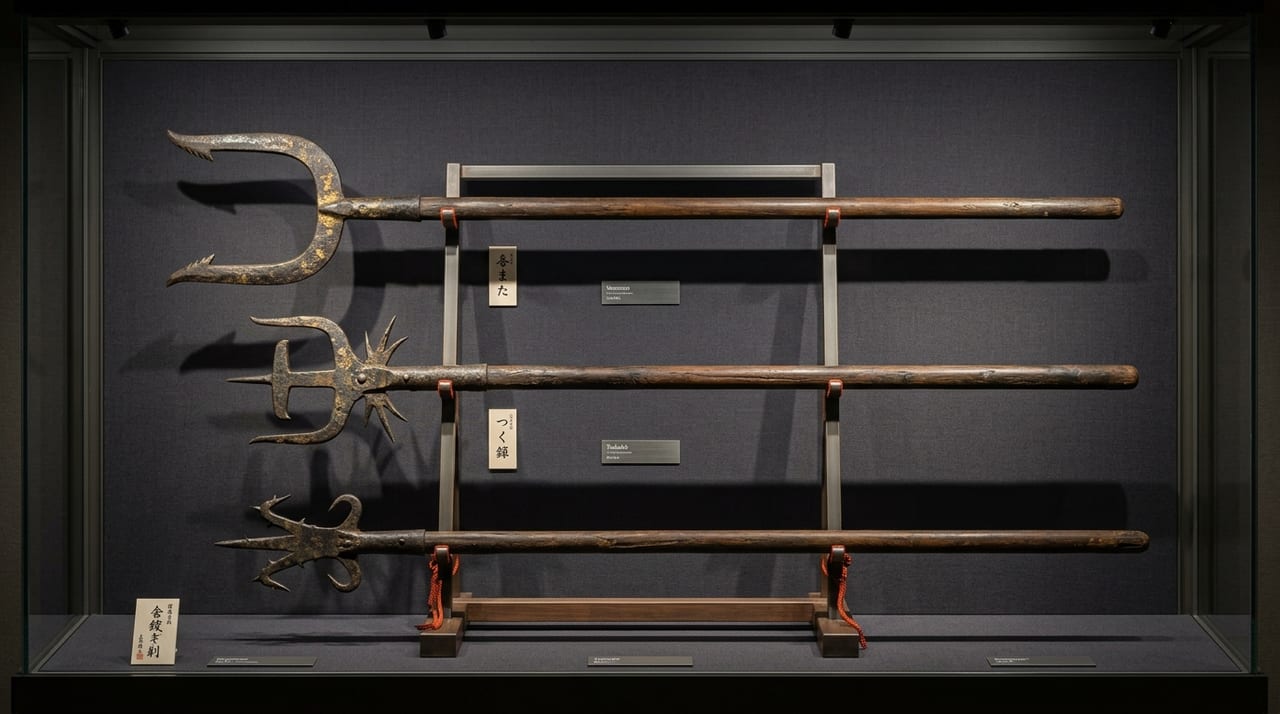
From this manner of use, one can infer that the nagamaki was in fact "a weapon designed on a tactical philosophy closer to a spear or naginata than to a sword." Indeed, in Sengoku-period weapon classifications, the nagamaki was sometimes treated as a "variant of the spear."
On horseback, the nagamaki was particularly effective. By making use of the tsuka's length, a mounted warrior could extend a deep reach toward enemies on the ground. On the other hand, once dismounted and engaged in infantry combat, it became rather a hindrance. For this reason, warriors equipped with the nagamaki were thought to be "combatants specialized exclusively in mounted warfare," playing a limited role within the overall army.
Surviving Nagamaki
Nagamaki are few in number. Even among items designated kokuhō (National Treasure) or Important Cultural Property, they can be counted on one hand, and they almost never appear in the inventory of general art museums or sword dealers. Virtually all nagamaki surviving in Japan are kotō handed down by distinguished warrior families or temples and shrines. Based on mei (signatures) used to estimate their period of manufacture, the vast majority date from the mid-Nanbokuchō period (mid-14th century) to the early Sengoku period (early 16th century). This overlapping timespan speaks to the nagamaki's historical role.
Why Did the Nagamaki Decline?
As the Sengoku period advanced, the nagamaki fell out of use rapidly. The main reason was the rapid change in tactics.
The first factor was the spread of formation warfare centered on ashigaru. In the collective battles of spear-bearing ashigaru, the optimal weapon was the spear, and weapons relying on individual skill, such as the nagamaki, were placed at a disadvantage in group combat.
The second factor was the decline of cavalry warfare itself. Following Oda Nobunaga's large-scale deployment of firearms at the Battle of Nagashino (1575), the effectiveness of conventional cavalry warfare declined rapidly. Nagamaki attacks from horseback also became meaningless against firearms.
The third factor was the improvement of the uchigatana. Entering the Edo period, the balance of blade and tsuka became standardized to what is now the Japanese sword (approximately 2 shaku 3 sun [about 68 cm]), and a more manageable and more stable uchigatana became the mainstream weapon of the Japanese warrior class.
As a result, the nagamaki held its place as a mainstream weapon only for a brief period from the late 15th to the early 16th century, after which it came to be treated as an exceptional and limited-use weapon.
The Nagamaki's Evaluation in the Modern Era
In contemporary sword research, the nagamaki is being reappraised as "a relic symbolizing the tactical evolution of the Nanbokuchō period." The transition from cavalry warfare to infantry warfare, and the revolutionary transformation brought about by the advent of firearms — the nagamaki was "one instance of trial and error" that arose throughout that entire process.
Aesthetically, the nagamaki expresses the desire of swordsmiths for "transcendence." The pursuit of extremes — "longer" and "larger" — went on to develop into the ōdachi and nodachi that appeared later. The nagamaki is an "experimental masterpiece" in the history of sword craftsmanship.