Zen and the Sword — The Role of the Sword in the Spiritual Cultivation of the Warrior Class and the Philosophical Background of Ken-Zen Ichinyo
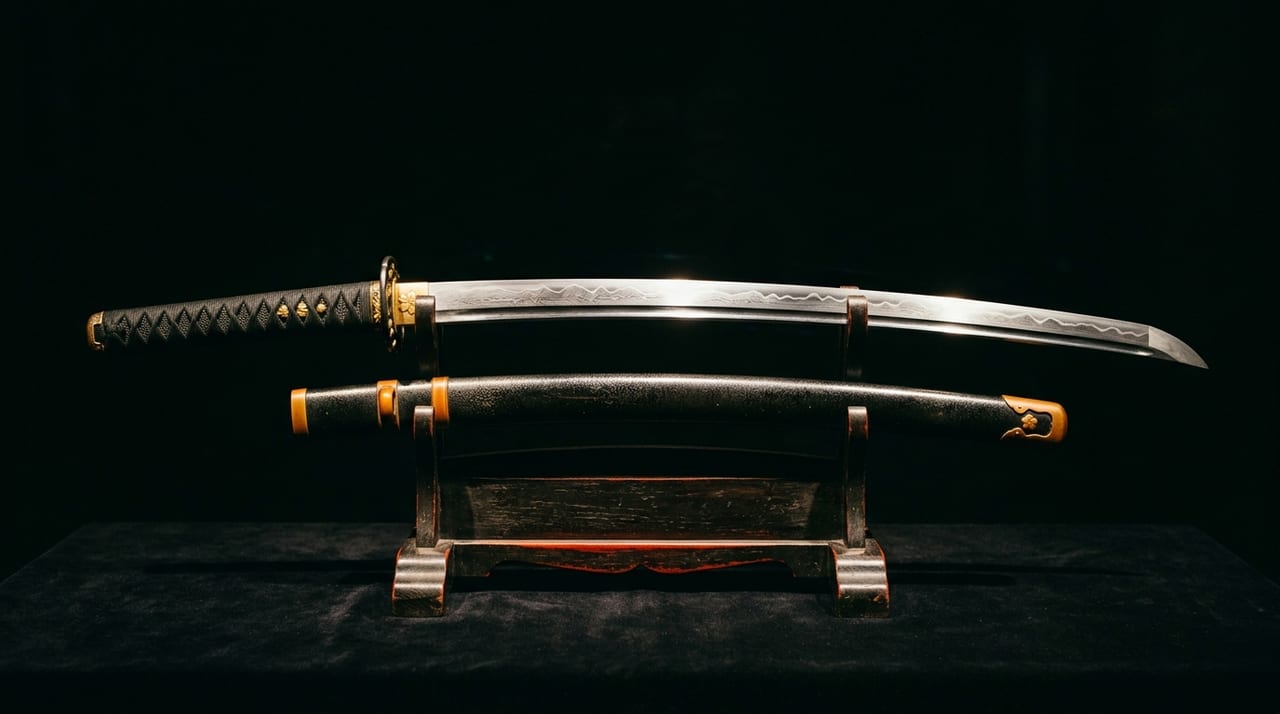 * Image is for illustrative purposes only.
Table of Contents
What Is Ken-Zen Ichinyo?
Ken-zen ichinyo refers to the idea that the ultimate attainment of swordsmanship and Zen enlightenment are fundamentally one and the same. This concept took shape as Zen Buddhism spread through warrior society from the late Kamakura period through the Muromachi period, and by the Edo period it had been established as the foundational philosophy of many sword schools. The notion that learning the sword is equivalent to forging one's own mind is deeply inscribed in the spiritual norms of the samurai.
The relationship between Zen temples and the warrior class traces back to the Kamakura period. Senior figures of the shogunate, including the Hōjō clan, took refuge in Zen monks who had crossed from Song-dynasty China, and Zen's influence reached into the samurai's view of life and death. The state of mushin — the condition of immediate response beyond deliberate thought — that is prized in Zen training corresponds to the ideal of munen musō sought in swordsmanship. The physical training of one who holds the sword was continuous with the Zen discipline of concentrating on "this very moment."
The Yagyū Shinkage-ryū and the Philosophy of Setsunintō and Katsujinken
The Yagyū Shinkage-ryū (Yagyū Shinkage school), which flourished in the early Edo period, is one of the schools that most clearly articulated a fusion with Zen. In the Heihō Kadensho written by Yagyū Munenori (1571–1646), swordsmanship is not treated as mere technical theory; instead, the attainment of "reaching the Way through strategy" is expounded upon repeatedly.
The dual concepts of setsunintō and katsujinken form the philosophical core of this school.
| Concept | Meaning |
|---|---|
| Setsunintō (the sword that kills) | The sword that, through misuse of technique, harms the opponent |
| Katsujinken (the sword that gives life) | The sword accompanied by mastery of the mind, which governs the opponent's will and prevents conflict before it arises |
The paradoxical assertion that the highest form of martial power lies in resolving a situation without crossing blades resonates with the Zen logic of "non-duality."
Yagyū Munenori deepened his friendship with the Zen master Takuan Sōhō and directly integrated Zen teachings into swordsmanship. The text Fudōchi Shinmyōroku, said to have been written by Takuan and addressed to Munenori, discusses mental attachment in swordsmanship and the attainment of "immovable wisdom," and it continues to be cited today as the literary foundation of ken-zen thought.
Miyamoto Musashi's View of Strategy and the Symbolism of the Sword
Miyamoto Musashi (c. 1584–1645), known as the founder of the Niten Ichi-ryū, recorded the relationship between the sword and the spirit from his own unique perspective in the Gorin no Sho, which he wrote in his final years. Musashi's thought does not foreground Zen as such, yet as seen in the words "keep your mind upright and do not distort the Way," he regarded the forging of the spirit and the forging of technique as inseparable.
The "chapter of ku (emptiness)" that Musashi presents as the ultimate attainment indicates a formless state transcending technique and form as the destination of the sword. This is structurally similar to the Zen concept of ku, suggesting that Musashi had been exposed to Zen-like thinking. Behind the practical innovation of the two-sword style, there ran a vertical doctrine of cultivation: surpassing the ittō-ryū (mastery of technique) to arrive at ku.
Why the Sword Is the Mirror of the Spirit
The sword, beyond its function as a weapon, was also a symbolic mirror reflecting the samurai's mental state. In the etiquette of the warrior class during the Edo period, the very manner in which one handled the sword was considered an expression of one's character. Each of the following gestures functioned as a way of making visible the inner discipline of the person who carried the sword.
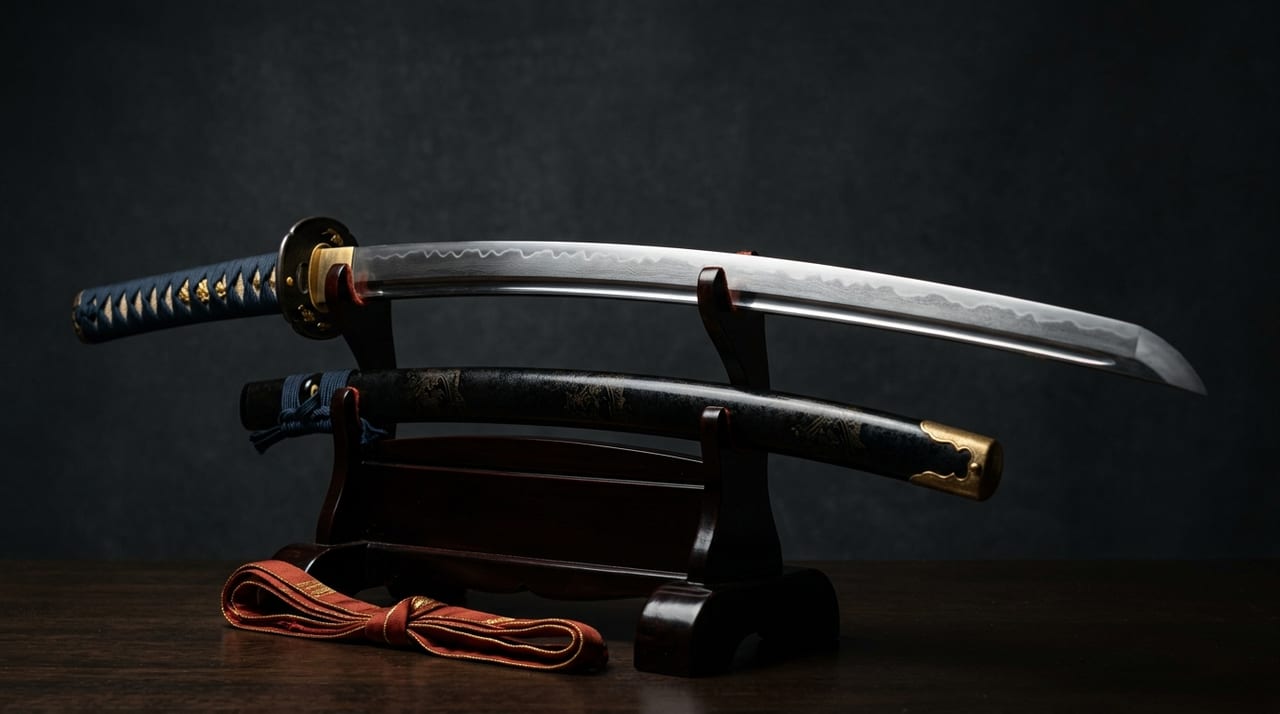
- The placing of the sword on its stand
- The comportment when drawing the sword from the saya (scabbard)
- The custom of being mindful of how the sword is pointed in the presence of others
To wear the sword daily meant wrapping the body in a tension of constant confrontation with death. The Zen attitude of training to "perceive the matter of life and death" and the existential condition of the sword-bearing samurai share a great deal of common ground. For the samurai, the sword was simultaneously proof of life and a symbol of readiness for death.
The Inheritance of Ken-Zen Thought in the Modern Era
In kendō today, the ideal that "kendō is a Way that cultivates human beings" remains at its core, and the nurturing of etiquette, self-discipline, and concentration is valued alongside technical strength. The statement of kendō's philosophy set forth by the All Japan Kendo Federation explicitly includes the words "the path of human formation through the discipline of the principles of the sword," and the traditional thought of ken-zen ichinyo is thus carried forward in a contemporary form.
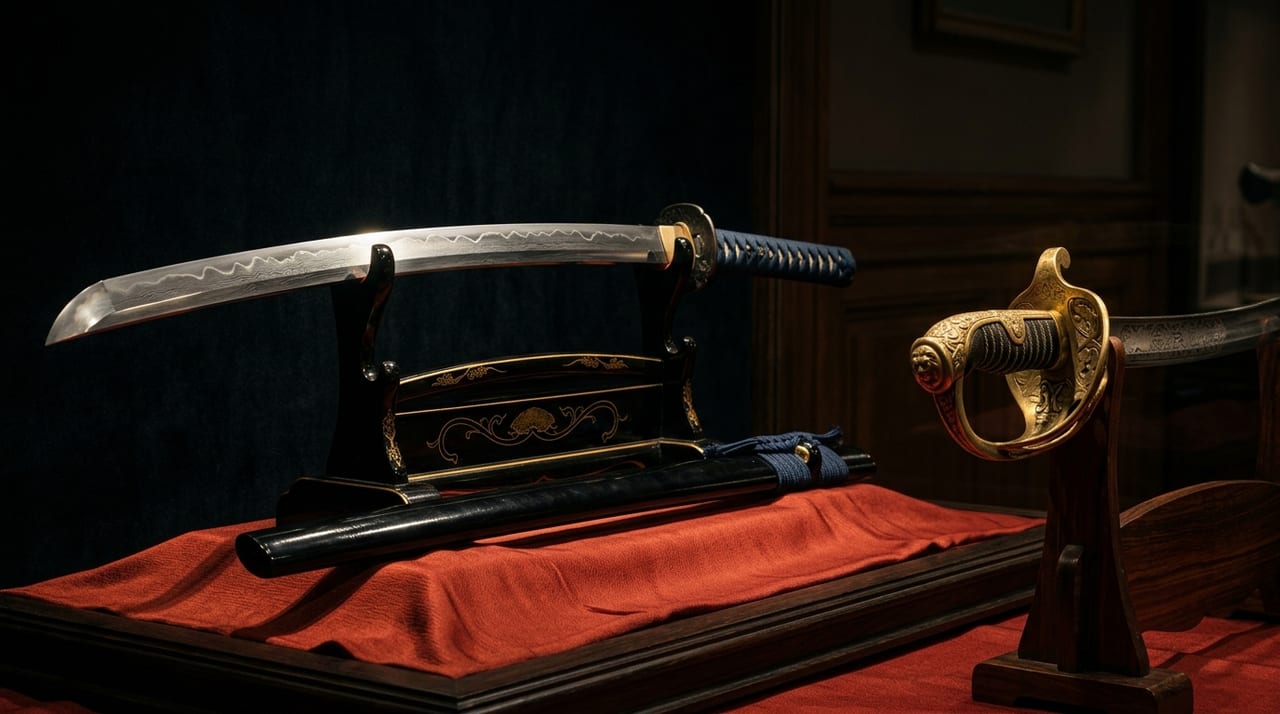
Even in the world of kantō (sword appreciation) and appraisal, where one deals directly with nihontō, there is an atmosphere of spiritual seeking in the quiet, attentive posture one adopts when facing a sword. When a togishi (polisher) or tōshō (swordsmith) says they are "taught by the sword," a Zen-like context of self-reflection through the implement is latent in those words. The act of appreciating a sword as a work of art is not unrelated to the historically accumulated tradition of spiritual cultivation.
Time Spent with the Sword — Appreciation as a Quiet Practice
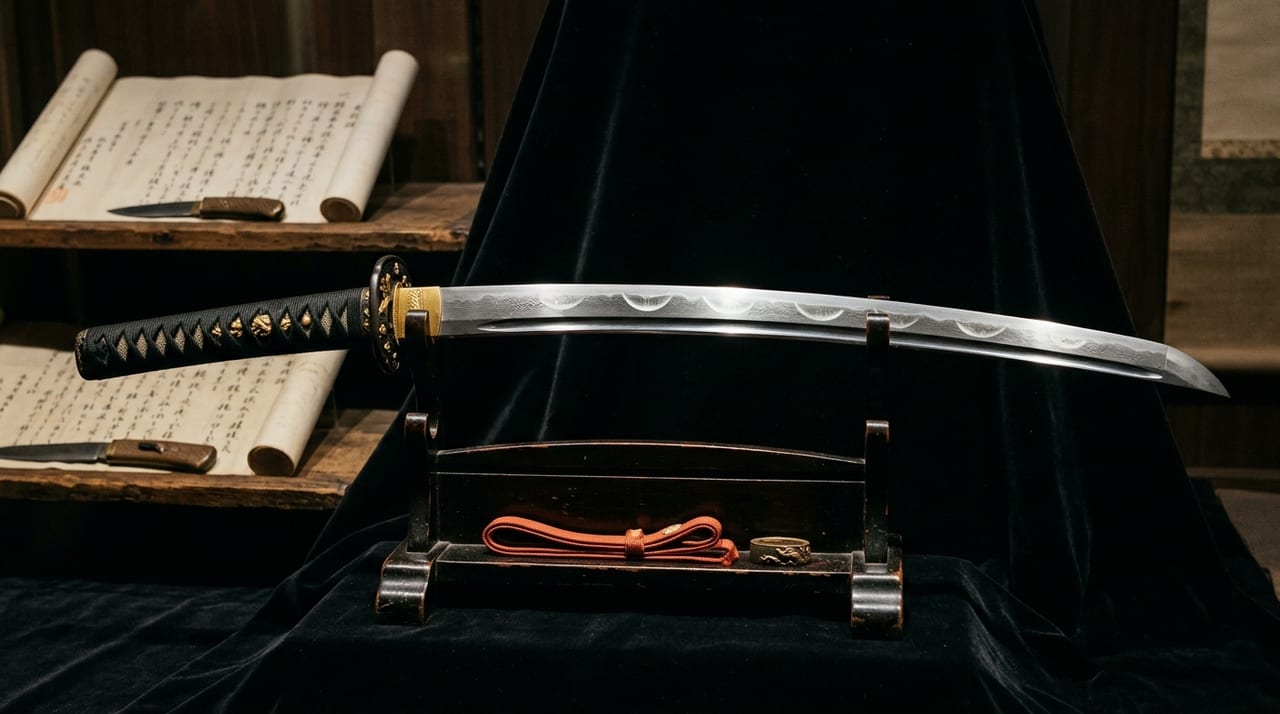
The philosophy of ken-zen ichinyo does not belong only to those who wield the sword. Its spiritual quality lives on in the act of appreciating a single sword. The basic etiquette of sword appreciation holds that one should straighten one's posture, keep one's lips closed so as not to breathe on the blade, and handle the sword reverently with both hands. These comportments themselves function as a preparation of the mind for immersing oneself in the object.
The time spent slowly tilting the blade under a light and following with one's eyes the texture of the jigane (steel of the blade surface) and the movements of the hamon (temper line) is nothing other than the experience of setting aside distracting thoughts and concentrating on "here and now." In a modern age overflowing with information, a quiet moment spent facing a single sword may well be the most accessible way to re-experience the tradition of spiritual cultivation that samurai found in the sword over hundreds of years.
Having a sword at hand and gazing at it day after day can become, beyond mere ownership of a work of art, a practice of settling one's own mind. The contemporary meaning of the term ken-zen ichinyo may, unexpectedly, reside precisely in those quiet everyday moments.