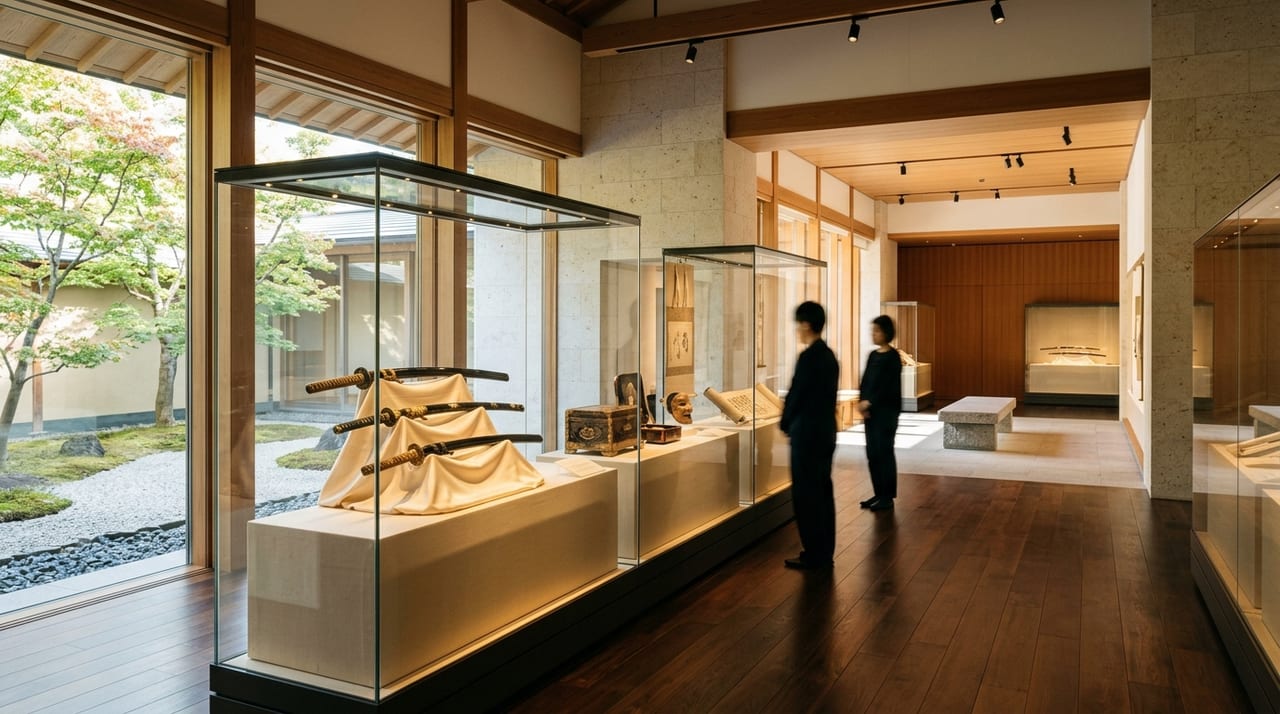
 * Image is for illustrative purposes only.
Jingū Chōkokkan (Ise Shrine)
神宮徴古館(伊勢神宮)
Overview
A Museum Preserving the Treasures of the Shrine
Jingū Chōkokkan opened in 1909 (Meiji 42) as a museum dedicated to collecting and displaying materials related to the rituals, culture, and history of Ise Shrine (Inner Shrine and Outer Shrine). Each time the Shikinen Sengū (twenty-year transfer ceremony) is conducted and new regalia and sacred treasures are prepared for the predecessor shrine, the old sacred treasures are placed in this museum. Among its approximately 13,000 holdings, the majority are deeply connected to the Shikinen Sengū. Ise Shrine, which enshrines Amaterasu Ōmikami, revered as Japan's supreme deity, and this museum, established to preserve and transmit that sacred tradition, stand as unique institutions conveying Japan's Shinto culture and the spirit of craftsmanship.
Shikinen Sengū and Dedicated Swords
The Shikinen Sengū of Ise Shrine is a religious practice without parallel in the world: every twenty years, the shrine buildings are rebuilt and sacred treasures and regalia are renewed. Among the sacred treasures specially created for this ceremony is the "Mitachi" (sacred sword)—a tachi forged by sword smiths in service to the Shrine in accordance with ancient tradition and enshrined as part of the sacred form itself. The Mitachi transferred to Chōkokkan as former sacred treasures are not merely works of craftsmanship but sacred ritual implements, offering precious evidence that the origin of the Japanese sword is deeply connected to Shinto. The museum also preserves swords and blades donated by successive emperors, imperial family members, and warrior clans, which attest to the history of the Japanese sword functioning as a symbol of religious and political authority.
The Beauty of Sacred Treasures
Chōkokkan's collection encompasses far more than swords and blades—it includes regalia (sokutai and karainu robes), furnishings (sacred mirrors, jewels, and halberds), divine horse implements, and construction tools, encompassing all items connected to the Shrine's rituals. All of these pieces were created using the finest materials and techniques, representing the pinnacle of Japanese traditional craftsmanship. The exhibition is organized around the history of the Shikinen Sengū, allowing visitors to directly experience how Japanese craftsmanship has been inherited and developed within the Shrine's unique temporal rhythm of renewal every twenty years.
Integration with Shrine Visits
Jingū Chōkokkan is located within walking distance of the Inner Shrine (Kōtaijingū) and stands alongside the Jingū Agricultural Museum near the Oharai-chō and Okage Yokochō areas. Visiting in conjunction with a pilgrimage to Ise Shrine allows for a deeper understanding of the pilgrimage's meaning. The Shikinen Sengū Exhibition Hall offers video presentations of the transfer ceremony's full scope, and by exploring these interconnected facilities, visitors gain a multifaceted understanding of Ise's shrine culture.
Highlights
- Mitachi (Sacred Swords) from Former Shikinen Sengū Treasures—Sacred sword treasures of the Shrine renewed every twenty years. The Mitachi, forged in accordance with ancient tradition, stand as unique testimony to the profound connection between the Japanese sword and Shinto.
- Swords Dedicated by Successive Emperors and Warrior Clans—A collection of swords donated by emperors, imperial family members, and successive samurai rulers. These demonstrate the central role swords have played as symbols of political and religious authority.
- Regalia and Sacred Treasures Related to Shikinen Sengū—A comprehensive display of the finest traditional craftsmanship connected to Ise Shrine's rituals, including sokutai and karainu robes, sacred mirrors, jewels, and halberds.
- The Continuity of Japanese Craftsmanship—The Shrine's preparation techniques, continuously renewed every twenty years for over 1,300 years. A living testament to how Japan's traditional techniques have been transmitted and refined through generations.
- Organic Integration with Ise Pilgrimages—Visiting after paying respects at the Inner Shrine enables a significantly deeper understanding of Ise Shrine's history and the meaning of its rituals. Conveniently located adjacent to Oharai-chō and Okage Yokochō.
* Opening hours and exhibitions are subject to change. Please check the official website before visiting.