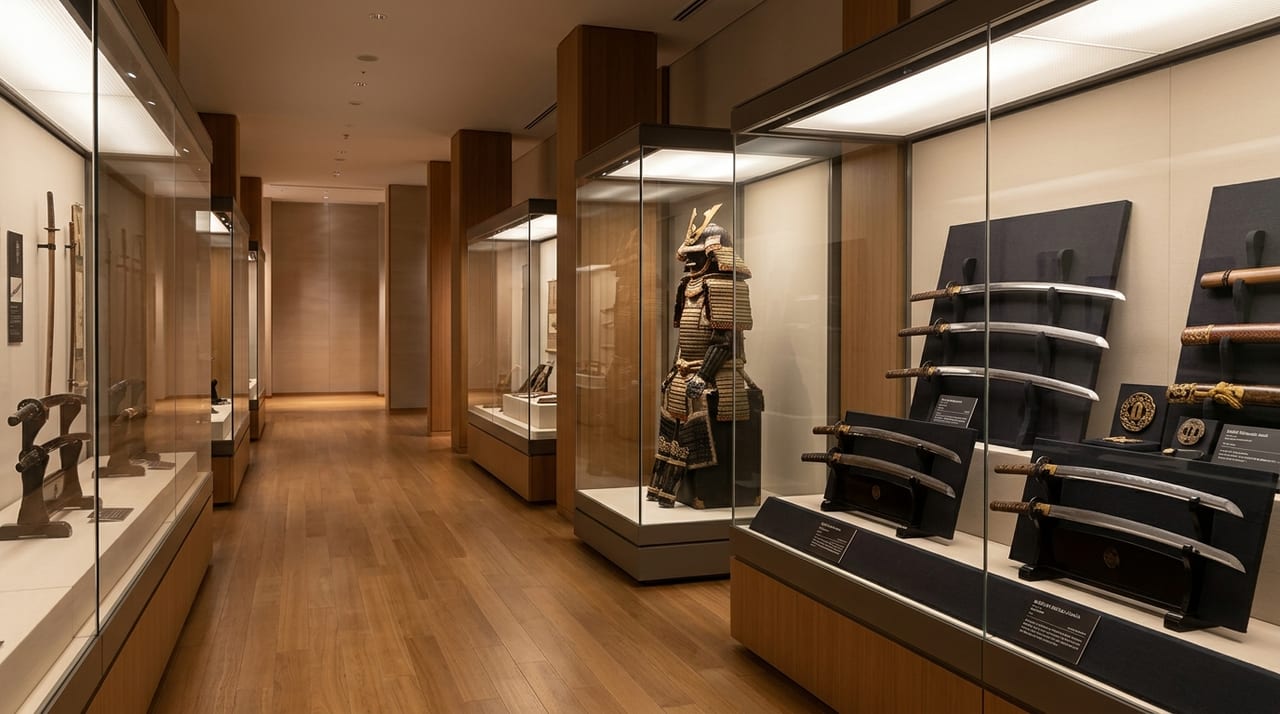
 * Image is for illustrative purposes only.
Hiroshima Prefectural Museum of History
広島県立歴史博物館
- Location
- Fukuyama, Hiroshima Prefecture (Fukuyama Castle Park)
- Access
- About 400 m west of the Fukuyama Castle exit (North Exit) of Fukuyama Station on the JR Sanyo Main Line and Fukuen Line. About 20 minutes by car from the Fukuyama-Higashi and Fukuyama-Nishi interchanges on the Sanyo Expressway, and about 15 minutes from the Fukuyama SA Smart Interchange. Fukuyama Castle (National Historic Site) and the Fukuyama Castle Museum are both within walking distance. A municipal parking lot is located on the north side of the museum (paid; visitors receive one hour free).
- Opening Hours
- 9:00–17:00 (admission until 16:30) ※Closed Mondays (if a national holiday, closed the following weekday); closed for New Year holidays
- Admission
- Adults 320 yen / University students 230 yen / Free for ages 65 and over and preschool children (special exhibitions priced separately)
Overview
The Museum and Kusado Sengenchō
The Hiroshima Prefectural Museum of History opened in Fukuyama in 1989 (Heisei 1). It is the comprehensive history museum of Hiroshima Prefecture. Its main distinguishing feature is the systematic display of artifacts from the Kusado Sengenchō Site, a medieval "phantom city" ruin at the mouth of the Ashida River. Kusado Sengenchō was a commercial river-port town that flourished from the Kamakura to the Muromachi periods. Edo-period local records say it was destroyed by a flood in 1673 (Kanbun 13). It is often called "Japan's Pompeii." The large body of artifacts recovered from its excavation vividly conveys everyday life among ordinary people in medieval Japan. The museum has reconstructed one section of the Kusado Sengenchō townscape at full scale and displays the many artifacts designated as Important Cultural Properties, arranged by use.
Sword Culture of Bingo Province
The eastern part of Hiroshima Prefecture was known by its old provincial name, Bingo Province (Bingo no kuni). It was an important sword-producing region bordering Bizen Province, in eastern Okayama Prefecture. In Bingo, a group of swords called "Mihara-mono" was made centered on Mihara from the late Kamakura period into the early Edo period. Masaie, regarded as the founder of the Mihara-mono, was a smith of the late Kamakura period. Bingo had long been an estate of several major temples in Yamato, so the Mihara-mono were strongly influenced by Yamato smiths. Many of them have high shinogi ridges and straight-temper (suguha) blades. Works from the Kamakura to Nanboku-chō periods are called Ko-Mihara (Old Mihara). Works from the early to middle Muromachi period are called Mihara (Naka-Mihara, or Middle Mihara). Later works are called Sue-Mihara (Late Mihara). Around the time of the Ōnin War, the Mihara-mono were known as swords that cut well. The Hiroshima Prefectural Museum of History has covered Bingo sword culture in planned exhibitions such as "Geibi no Tōken."
Permanent Exhibitions and Collections
The museum's permanent exhibitions consist of the following. The general history gallery "Following the History of the Seto Inland Sea" traces the historical connections of the Seto Inland Sea, including Kusado Sengenchō, from ancient times to the present. The Kusado Sengenchō gallery, "Kusado Sengenchō Brought Back to Life," presents the site. The early modern culture gallery presents "Kan Chazan Related Materials," designated as an Important Cultural Property, and the "Moriya Hisashi Collection," one of the largest map collections in Japan. The collection includes medieval historical documents, such as letters from Mōri Motonari and Mōri Terumoto.
Excavations and Artifacts from Kusado Sengenchō
Large-scale excavations were carried out intermittently at the Kusado Sengenchō Site for about 30 years beginning in 1961. In addition to a large number of artifacts such as household tools, about 4,000 medieval wooden tablets (mokkan) were also found. These artifacts were designated as the Important Cultural Property "Artifacts from the Kusado Sengenchō Site, Hiroshima Prefecture." They are displayed by use category at the museum.
The Mōri and Asano Clans and Hiroshima's Warrior Culture
Hiroshima Prefecture was ruled by two major warrior houses from the medieval to the early modern period. During the Sengoku period, Mōri Motonari unified the Chūgoku region through skillful diplomacy and strategy, and his territory became the base for the Mōri clan's rule over ten provinces. In the Edo period, after the Battle of Sekigahara, Fukushima Masanori was stripped of his domain. In 1619 (Genna 5), Asano Nagaakira was enfeoffed in his place. The Asano clan then governed the Hiroshima Domain, with 420,000 koku, until the Meiji Restoration.
Comparing the Sword-Producing Regions of Bizen and Bingo
Bizen Province, which borders Bingo (today southeastern Okayama Prefecture), is known worldwide as Japan's largest sword-producing region. A major sword industry centered on Osafune continued from the medieval period. In contrast, the Mihara-mono of Bingo are known for a style strongly influenced by Yamato smiths. Comparing swords from these two neighboring provinces shows clearly how Japanese swords differ by region.
Planned Exhibitions and Regional Partnerships
The museum holds several planned exhibitions each year, mainly on themes related to the history and culture of Bingo Province. Planned exhibitions focused on swords have included "Geibi no Tōken: A Cultural History of Swords" and the special exhibition "Evangelion and Japanese Swords Exhibition." Fukuyama has rich cultural resources, including Fukuyama Castle (National Historic Site), the Fukuyama Castle Museum, and the historic landscape of Tomonoura. Visitors can enjoy cultural tourism that combines these sites with the museum. The museum is also within day-trip range of both Hiroshima City and Okayama City.
Highlights
- Bingo Mihara-mono ── Works by the smith group of Bingo Mihara, founded by Masaie of the late Kamakura period. Known for high shinogi ridges and straight-temper blades influenced by Yamato smiths, and featured in planned exhibitions such as "Geibi no Tōken" as part of Bingo's sword culture
- Letters from Mōri Motonari and Mōri Terumoto ── Medieval documents held by the museum from the Mōri clan, which unified the Chūgoku region. Primary sources that convey the history of Hiroshima during the Sengoku period
- Important Cultural Property "Artifacts from the Kusado Sengenchō Site, Hiroshima Prefecture" ── Household tools, wooden tablets, and other artifacts from this river-port town of the Kamakura to Muromachi periods, displayed by use category
- Kan Chazan Related Materials and the Moriya Hisashi Collection ── The Important Cultural Property "Kan Chazan Related Materials" and one of Japan's largest map collections, both presented in the early modern culture gallery
- Full-scale reconstruction of Kusado Sengenchō ── One section of the medieval river-port townscape rebuilt at full scale, recreating an early-summer evening in the Muromachi period, offering a sense of medieval commercial life
* Opening hours and exhibitions are subject to change. Please check the official website before visiting.