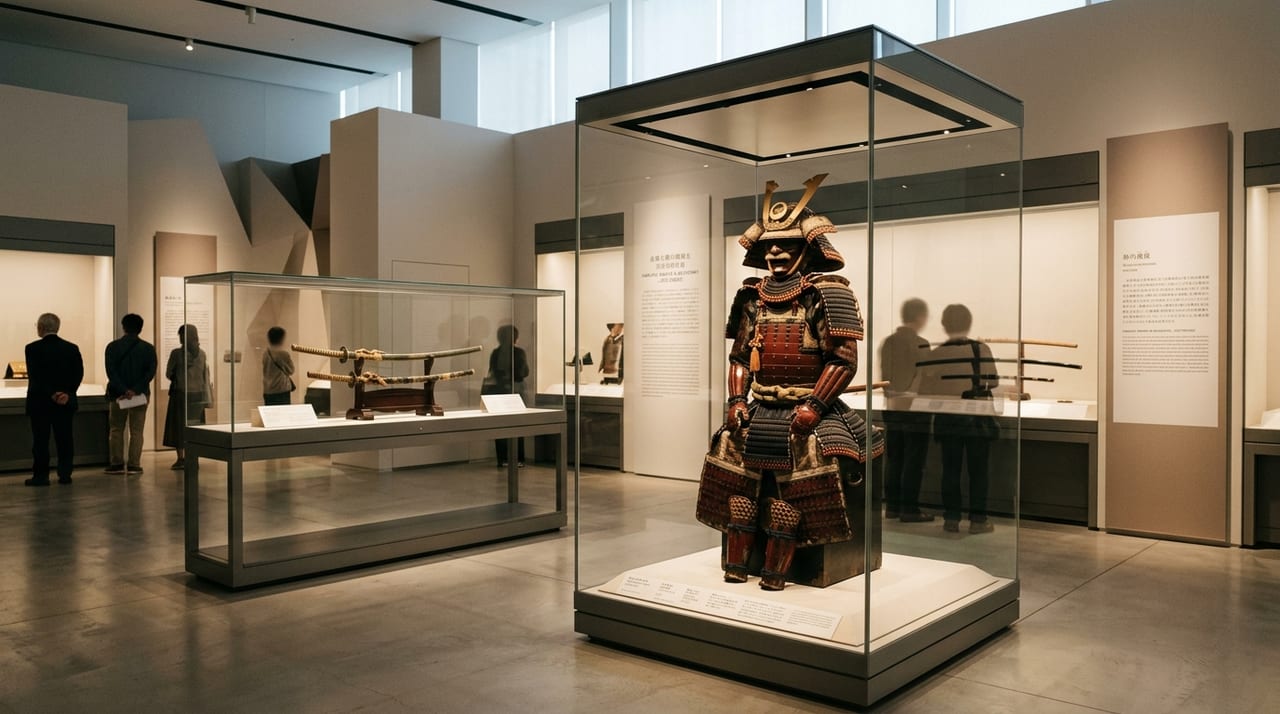
 * Image is for illustrative purposes only.
Izumo Taisha Shinkoden Treasure Hall
出雲大社 宝物殿(神祜殿)
Overview
The Izumo Taisha Shinkoden (神祜殿, "Hall of Divine Blessing") is the treasure hall of Izumo Taisha, one of Japan's oldest and most venerated Shinto shrines. Established in 1981 on the shrine's sacred grounds in Izumo City, Shimane Prefecture, the hall preserves and displays several hundred objects drawn from the shrine's centuries-long accumulation of divine treasures (shinpo) and offerings — including National Treasure and Important Cultural Property class artifacts.
The collection's single most celebrated object is the National Treasure "Akino Shika Makie Tebako" (秋野鹿蒔絵手箱, "Autumn Field and Deer" maki-e box), a toiletry box dated to the early Kamakura period and designated a National Treasure on March 29, 1952. Decorated in the maki-e technique with a design of deer running through an autumn field, the box exemplifies the refined lacquerware craftsmanship of the early Kamakura period. Among the shrine's treasures it holds a special place, and among historians of Japanese lacquerware it is regarded as one of the defining masterworks of the era.
The Shinkoden's sword and arms collection reflects the long practice by which regional lords, warriors, and devout worshippers dedicated swords, naginata, armor, and horse fittings to the shrine as expressions of reverence to Okuninushi-no-Mikoto, the principal deity of Izumo Taisha. Votive swords spanning from the late Heian through the Edo period trace the full arc of sword morphology — from the gentle curvature of early tachi to the refined proportions of later katana — offering a uniquely shrine-centered perspective on Japanese sword culture that differs from the courtly or samurai-warrior contexts more often represented in specialized sword museums. Several pieces bear Important Cultural Property designation. The collection also includes short swords (tantō), naginata, and arrowheads (yanone), conveying the breadth of martial culture associated with the shrine.
Historical documents, shrine maps, and religious implements preserved in the hall shed light on Izumo Taisha's institutional relationships with courtiers, warrior clans, and the imperial house from the Heian through Edo periods — providing context for the votive sword donations and their political and devotional significance.
Visiting the Shinkoden in conjunction with the broader Izumo Taisha precincts amplifies the experience considerably: the main hall (honden, a National Treasure, the tallest shrine building in Japan), the giant shimenawa straw rope of the Kaguraden, and the surrounding sub-shrines form a sacred landscape unmatched in Shinto architecture. The neighboring Shimane Museum of Ancient Izumo (established by the prefecture on adjacent land) provides deep archaeological context for the region, making Izumo City one of Japan's most rewarding destinations for anyone interested in the intersection of ancient history, Shinto culture, and the Japanese sword.
Highlights
- National Treasure 'Aka-urushi Gin Takamaki-e Tebako' — pinnacle of Heian lacquerware
- Votive swords, naginata, and arms from the Heian through Edo periods (includes Important Cultural Properties)
- Uniquely shrine-centered perspective on Japanese sword culture as devotional offering
- Integrated visit with Izumo Taisha main hall (National Treasure) and sacred precincts
- Adjacent to the Shimane Museum of Ancient Izumo for combined archaeology and history study
- Rich holdings of historical documents and ritual implements related to Okuninushi worship
* Opening hours and exhibitions are subject to change. Please check the official website before visiting.