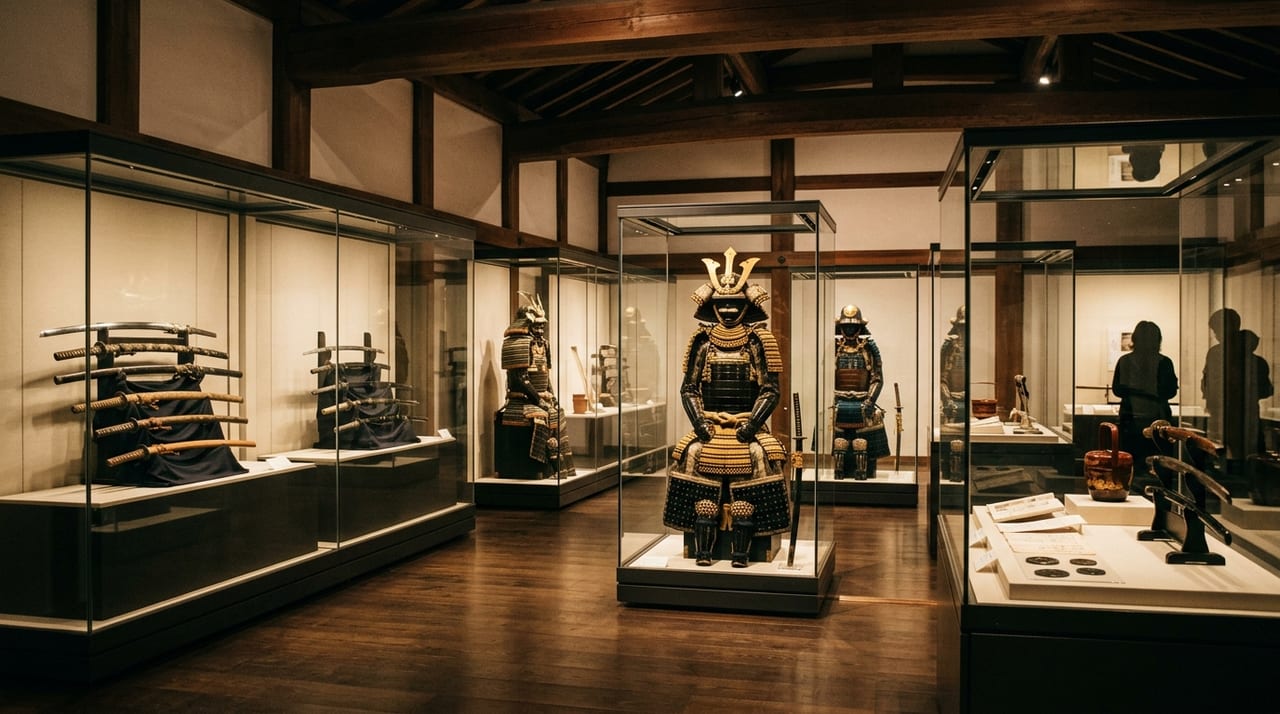
 * Image is for illustrative purposes only.
Itsukushima Shrine Treasure Museum
厳島神社宝物館
Overview
The Sacred Realm Floating on the Sea and Dedicated Swords
Itsukushima Shrine, situated on Miyajima Island in the Seto Inland Sea, is the head shrine among approximately 500 Itsukushima shrines throughout Japan. It is said to have been founded in the first year of Emperor Suiko's reign (593), and the current shrine buildings underwent extensive reconstruction by Taira no Kiyomori in the late Heian period. The vermillion shrine buildings and grand torii gate, constructed as if floating upon the sea, are counted among the 'Three Great Views of Japan' (Nihon Sankei) and are world-renowned for their scenic beauty. In 1996 (Heisei 8), the shrine was registered as a UNESCO World Heritage Site. The museum houses swords, armor, illustrated scrolls, and sacred treasures donated by successive rulers including the Taira clan, the Mori clan, and the Asano family (lords of Hiroshima domain), forming a precious collection of cultural properties that convey the long history of the shrine and the deep faith of its patrons.
History of Dedicated Swords
The history of sword donations to Itsukushima Shrine is ancient, with records of offerings by samurai, nobility, and imperial family since the Heian period. Particularly significant are the sword collections said to have remained after the fall of the Taira clan, which are revered alongside the 'Heike Sutra' and have been transmitted to the present as sacred treasures indicating the grandeur of the shrine buildings constructed by Taira no Kiyomori and his son Taira no Shigemon. The collection includes swords said to have been dedicated by Mōri Motonari following his victory at the Battle of Itsukushima (1555), conveying the profound devotion of the Mori clan, who as the dominant power in the Chugoku region deeply revered Itsukushima Shrine. During the Edo period, the Asano family, lords of Hiroshima domain, continued to make donations, and items such as swords, armor, and horse tack demonstrating samurai status were added to the museum's collection.
Major Holdings
Among the museum's representative holdings are swords designated as Important Cultural Properties. Notably, the National Treasure 'Tachi by Tomonari' is a masterwork by Tomonari, a renowned craftsman of the Ko-Bizen school from the late Heian period. Its elegant tachi form and ground steel with striking wavy hamon patterns exemplify the origins of Bizen sword craftsmanship. The collection also includes multiple ancient swords spanning the Heian through Muromachi periods, demonstrating the importance of Itsukushima Shrine in the history of Japanese swords. By viewing these swords together with illustrated scrolls and documents such as the Heike Sutra and Itsukushima paintings, visitors can experience a microcosm of Japanese history where Heian aristocratic culture and samurai culture intersect.
Integration with Miyajima Tourism
A visit to Itsukushima Shrine and viewing the museum form the core experience of Miyajima tourism. The shrine's landscape changes dramatically with the tides: at high tide, the buildings appear to float on the sea, and at low tide, visitors can walk to the grand torii gate. The museum is located within the shrine grounds, offering a rare environment where visitors can view National Treasures and Important Cultural Properties within the sacred atmosphere of the shrine. The convenient ferry access from Miyajima-guchi, taking approximately 10 minutes, is also appealing, making it ideal for day trips from Hiroshima city.
Highlights
- Collection of Swords Donated by the Taira, Mori, and Asano Families — Dedicated swords from successive rulers spanning the late Heian through Edo periods. A sword collection linked to pivotal moments in Japanese history, including blades dedicated by Mōri Motonari following his victory at the Battle of Itsukushima (1555).
- National Treasure 'Tachi by Tomonari' — A masterwork by Tomonari of the Ko-Bizen school from the late Heian period. Its elegant tachi form and ground steel with striking hamon patterns exemplify the origins of Bizen sword craftsmanship.
- Collection of Ancient Swords from the Heian to Muromachi Periods — A group of ancient blades treasured at Itsukushima Shrine since the Heian through Muromachi eras. A collection of masterworks demonstrating Itsukushima Shrine's significance in Japanese sword history.
- Viewing Alongside the Heike Kyo — Experience the intersection of Heian aristocratic and samurai culture by viewing swords together with Japan's most exquisite illuminated sutra, the Heike Kyo, in the same museum space.
- Viewing Within a UNESCO World Heritage Site — A unique environment where visitors can experience the fusion of Japanese shrine architecture and sword culture, with the vermillion shrine buildings and grand torii gate floating on the sea as the backdrop.
* Opening hours and exhibitions are subject to change. Please check the official website before visiting.