 * Image is for illustrative purposes only.
Takeda Shrine Treasure House
武田神社宝物殿
Overview
Takeda Shrine and Treasure House: Overview
Takeda Shrine is a Shinto shrine dedicated to Takeda Shingen (1521–1573), a Sengoku-period daimyo of Kai Province (present-day Yamanashi Prefecture), and is located on the site of Tsutsujigasaki Villa, which Shingen used as his headquarters throughout his life. Although founded in 1917 (Taishō 6), the reverence for Takeda Shingen, who led the mightiest military force under the banner of "Furinkazan" (Wind, Forest, Fire, Mountain), is profound not only among Yamanashi residents but throughout Japan among warlord enthusiasts and history lovers. The Treasure House, located within the shrine grounds, houses and displays precious artifacts passed down through the Takeda family—including swords, armor, ancient documents, and ceremonial vessels—and stands as one of the finest facilities for understanding the true nature of Takeda Shingen, one of the greatest warlords of the Sengoku period.
Swords Connected to the Takeda Clan
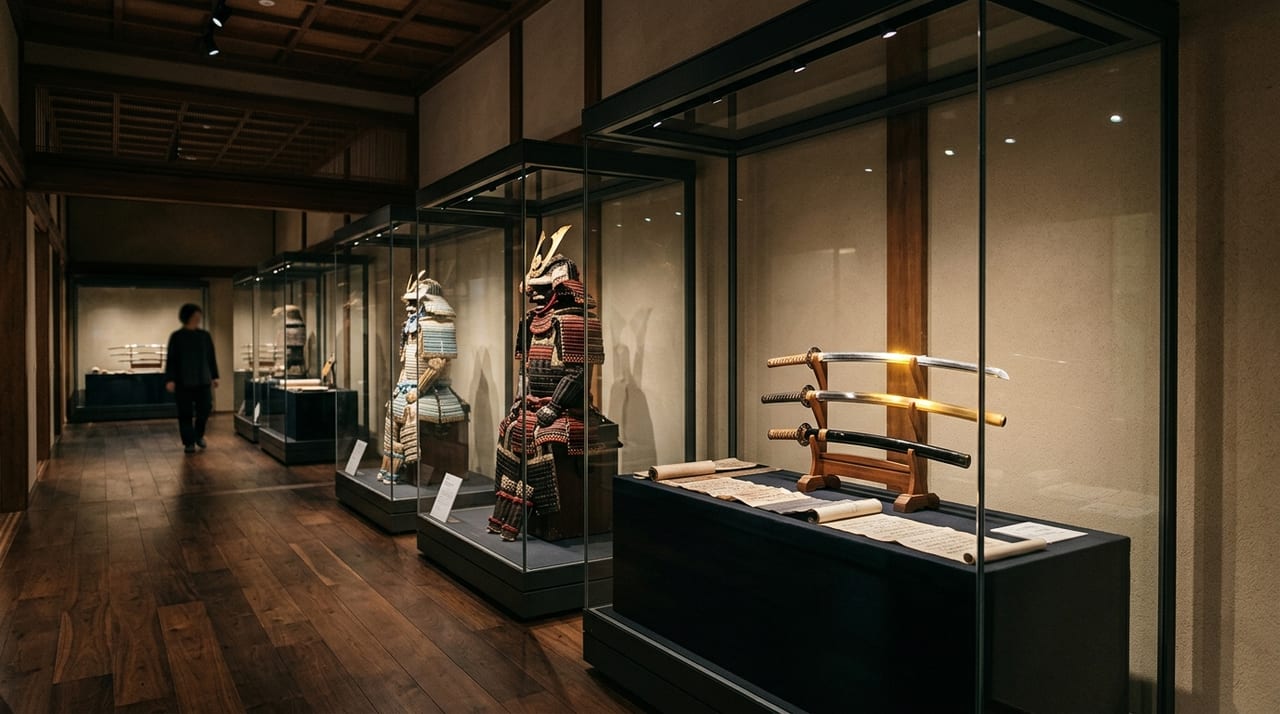
The crown jewel of the Treasure House is the collection of swords passed down through the Takeda family. The surviving examples of tachi, katana, and tantō reportedly wielded by Takeda Shingen are renowned throughout Japan as the weapons of the Sengoku's mightiest warrior. Sword smiths of Kai Province (Yamanashi) have long been renowned for their practical, robust hada and hamon, meeting the demands of samurai who served the Takeda forces. The heirloom blades said to have been favored by Shingen as his personal swords embody both his overwhelming military might and his mythologized image as a general—captivating not only sword connoisseurs but a broad spectrum of visitors.
Armor and the "Furinkazan" Banner
Among the Treasure House's most striking displays are Takeda Shingen's armor (including replicas and reconstructions) and the "Furinkazan" military banner, inscribed with the lines from Sun Tzu's Art of War: "Swift as the wind, quiet as the forest, fierce as fire, immovable as a mountain." This banner is one of the most iconic symbols in Japanese Sengoku history, embodying both Shingen's aspect as a brilliant strategist and his military prowess. The display of armor and weapons is invaluable as documentation of the Takeda army's combat effectiveness and aesthetic refinement. Particularly noteworthy are the exhibits reflecting the style of the "Akayoke"—elite units whose armor was unified in red, a force said to have been favored by Shingen.
Tsutsujigasaki Villa Ruins and Kofu Tourism
The Takeda Shrine grounds preserve remains of Tsutsujigasaki Villa—including earthen ramparts, moats, and stone walls—creating a historical space where visitors can experience the atmosphere of a Sengoku-period castle-residence simply by strolling the grounds. Kofu City clusters numerous Takeda Shingen-related historical sites and facilities, including a statue of Shingen, Kofu Castle (now Maizuru Castle Park), and the Yamanashi Prefectural Museum (which houses extensive Takeda clan materials). A full day allows visitors to immerse themselves in Kofu's Sengoku history. From Tokyo's Shinjuku Station, the JR Chuo Line express trains "Azusa" and "Kaiji" reach Kofu Station in approximately 1 hour 30 minutes—making it an easy day trip from the greater Tokyo area. A popular return route includes visits to Katsunuma's Koshu wine estates or Isawa hot springs.
Highlights
- Takeda Shingen's Heirloom Blade Collection—Surviving examples of tachi, katana, and tantō said to have been favored by one of the Sengoku period's mightiest generals. Experience the robust excellence of blades forged by Kai smiths and the legendary image of Shingen the warlord.
- "Furinkazan" Banner and Takeda Armor—Japan's most celebrated military standard, embodying Sun Tzu's Art of War. Displays of armor and weapons showcasing the elite strength and aesthetic unity symbolized by the "Akayoke" (red-armored elite units) of the Takeda forces.
- Tsutsujigasaki Villa Ruins (earthen ramparts, moats, stone walls)—The site of Takeda Shingen's lifetime headquarters, preserved within the shrine grounds. A rare historical site where visitors can experience the atmosphere of a Sengoku castle-residence built in the "castle-centered hall" style.
- Combination with Yamanashi Prefectural Museum and Kofu Castle—A one-day Kofu historical route visiting Takeda Shingen-related sites and facilities throughout the city. Popular itineraries also include Koshu wine estates and Isawa hot springs.
- 90 minutes from Tokyo Shinjuku Station—Direct access via JR Chuo Line express trains "Azusa" and "Kaiji" to Kofu Station. Rising in popularity as the most accessible Sengoku warlord pilgrimage site from the greater Tokyo area.
* Opening hours and exhibitions are subject to change. Please check the official website before visiting.