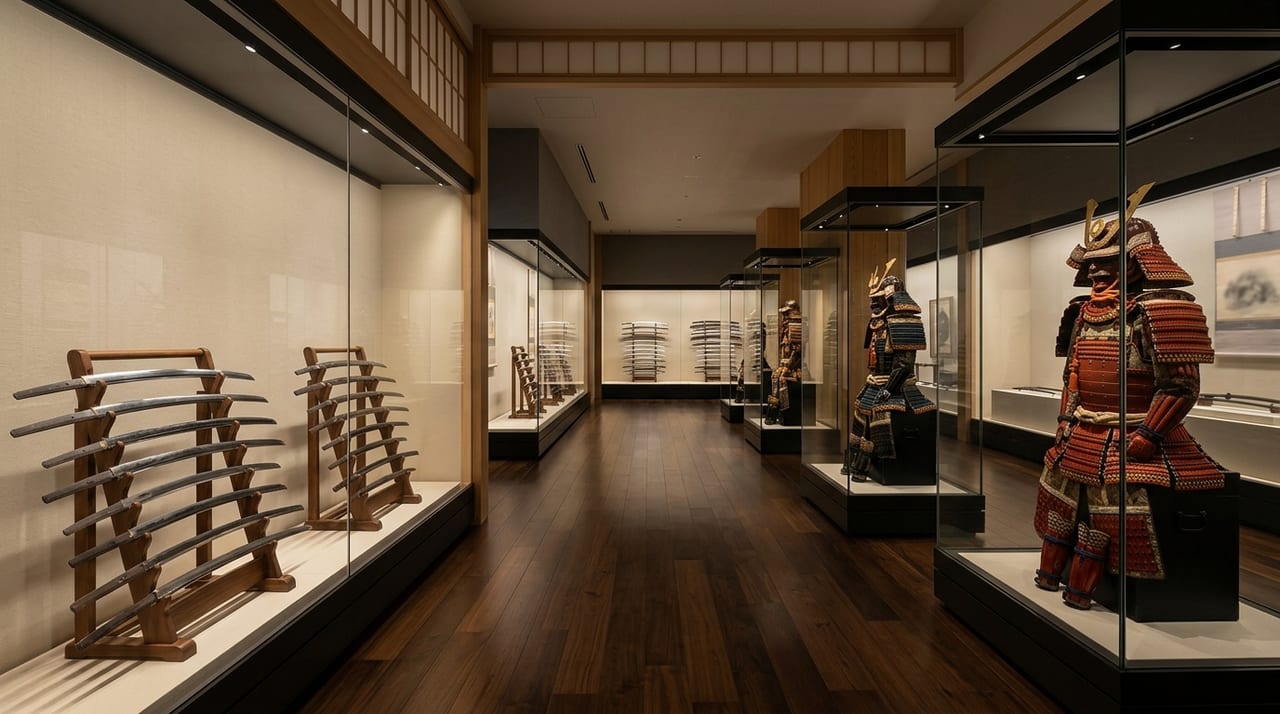
 * Image is for illustrative purposes only.
Sendai City Museum
仙台市博物館
Overview
Sendai Museum: The Date Clan's Homeland
Sendai City Museum stands on a verdant hilltop adjacent to the ruins of Sendai Castle (Aoba Castle). Since its opening in 1961 (Showa 36), it has served as a central institution dedicated to preserving the history and culture of Sendai, a castle town under the Date clan's rule of 620,000 koku. As the name of the Japanese sword sales website 'TOUKENZA' suggests, Sendai—the spiritual homeland of TOUKENZA—is a repository of katana culture where the legacy of the Date clan, beginning with the One-Eyed Dragon Masamune Date, remains vividly preserved. The Sendai Domain, ruled by the Date clan, was the largest daimyo house in the Tohoku region, and the quality and quantity of its katana and armor collections rank among the finest of any regional museum in Japan.
Masamune Date and the Katana
Masamune Date (1567–1636) was a daimyo who ruled the Tohoku region from the Sengoku through early Edo periods. His dramatic life has inspired countless works of literature, film, and games. Masamune was proficient in martial arts and possessed deep knowledge of katana. The 'Shokudaikiri Mitsutada' is a celebrated blade reputedly forged by Mitsutada, founder of the Bizen Osafune school, and associated with Masamune. Its name derives from the dramatic legend that Masamune used it to cut down a retainer along with a candlestick stand. The Shokudaikiri Mitsutada later passed to the Tokugawa of Mito, and survived a turbulent history that included being charred in wartime; it is currently preserved and displayed by the Tokugawa Museum. The 'Dai-Kurikara,' another blade transmitted through the Date family and featuring a carving of the Kurikara dragon, is likewise well known as a katana (uchigatana). Its appearance in Touken Ranbu has made it widely recognized among younger audiences.
Overview of Collections
Sendai City Museum holds approximately 90,000 items, primarily donations and deposits from the Date clan. Among these, roughly 130 are designated Important Cultural Properties—an exceptional concentration for a regional municipal museum. The sword collection centers on katana and wakizashi that were actually worn by successive Date daimyo as their personal sidearms (sashiryō), encompassing a broad range of periods and schools from Sengoku-period tachi to superior Edo mid-period blades. Among the armor, the jet-black European-style helmet (nanban-kabuto) reputedly worn by Masamune is particularly renowned; its innovative design reflects Masamune's progressive aesthetic sensibility.
Records of the Keicho Embassy to Europe
Among Sendai City Museum's globally distinguished holdings are materials related to the Keicho Embassy to Europe. In 1613 (Keicho 18), Masamune Date, alongside the Christian missionary Luis Sotelo, dispatched an embassy led by his retainer Tsunenaga Hasekura to King Philip III of Spain and Pope Paul V in Rome. This diplomatic mission represented an unprecedented attempt for a regional Tohoku daimyo to negotiate directly with Europe's highest powers; the records have been inscribed in the UNESCO Memory of the World list by both Japan and Spain. The opportunity to view precious primary documents at close range—including Tsunenaga Hasekura's portrait painted in Spain and the embassy's voyage records—is an experience unique to Sendai City Museum.
Continuity with Sendai Castle Ruins
The museum is situated adjacent to the main citadel ruins of Sendai Castle (Aoba Castle), and from the observation platform visitors can survey both the city of Sendai and the Pacific Ocean. An equestrian statue of Masamune Date stands in the ruins of the inner citadel, evoking the spirit of the One-Eyed Dragon who once gazed upon the realm with authority. The cultural zone extending from the castle ruins through the museum to Tohoku University's former humanities campus in Katahira and the zelkova-lined Jotzenji Avenue offers sufficient attractions to merit a leisurely day-long exploration.
Connection to TOUKENZA
TOUKENZA is a website specializing in Japanese katana, based in Sendai. The Date clan's katana culture as presented by Sendai City Museum resonates deeply with the tradition, beauty, and spiritual essence that TOUKENZA cherishes. TOUKENZA is proud to contribute its part to the continuous flow of katana culture that endures today in the land of Sendai once governed by Masamune.
Highlights
- Date Clan Sword and Armor Collections—Centered on katana and wakizashi actually worn as personal sidearms by successive Date daimyo, spanning from Sengoku-period tachi to superior Edo-period blades. The jet-black European-style helmet (nanban-kabuto) reputedly worn by Masamune is not to be missed.
- Records of the Keicho Embassy to Europe (UNESCO Memory of the World)—Primary documents, including Tsunenaga Hasekura's portrait painted in Spain and voyage records, that testify to Masamune Date's pioneering diplomatic engagement with Europe.
- Masamune Date-Related Displays—Comprehensive exhibitions centered on the life of the One-Eyed Dragon Masamune, including connections to famous blades featured in Touken Ranbu, such as Shokudaikiri Mitsutada and Dai-Kurikara.
- Adjacent to Sendai Castle Ruins (Aoba Castle)—Exploring the museum and castle ruins together offers a three-dimensional experience of Date clan history. The equestrian statue of Masamune in the inner citadel ruins and the panoramic views of Sendai and the Pacific Ocean are essential viewing.
- Approximately 90,000 items, including roughly 130 Designated Important Cultural Properties—An exceptionally rich collection for a regional municipal museum. Special exhibitions consistently offer high-quality presentations.
* Opening hours and exhibitions are subject to change. Please check the official website before visiting.