 * Image is for illustrative purposes only.
Chidō Museum
致道博物館
Overview
Chidō Museum Overview
The Chidō Museum is a comprehensive museum of the history, culture, and folk traditions of the Shōnai region, centered on a collection of armor, swords, and fine art inherited through generations by the Sakai family, former lords of the Shōnai Domain (now Tsuruoka, Yamagata Prefecture). Founded in 1950 (Showa 25), it functions as an open-air museum with approximately 28,000 square meters of grounds dotted with multiple heritage buildings, including the former Nishidagawa District Government Office (a Meiji-era Western-style administrative building and Important Cultural Property), the former Tsuruoka Police Station, and the former Sakai Family Residence of Tadatsugu, the first lord of the Shōnai Domain. The name "Chidō" derives from the domain school "Chidōkan" (now Chidōkan in Tsuruoka), perpetuating the samurai spirit of valuing scholarship, martial arts, and propriety.
Swords and Armor of the Sakai Family Lineage
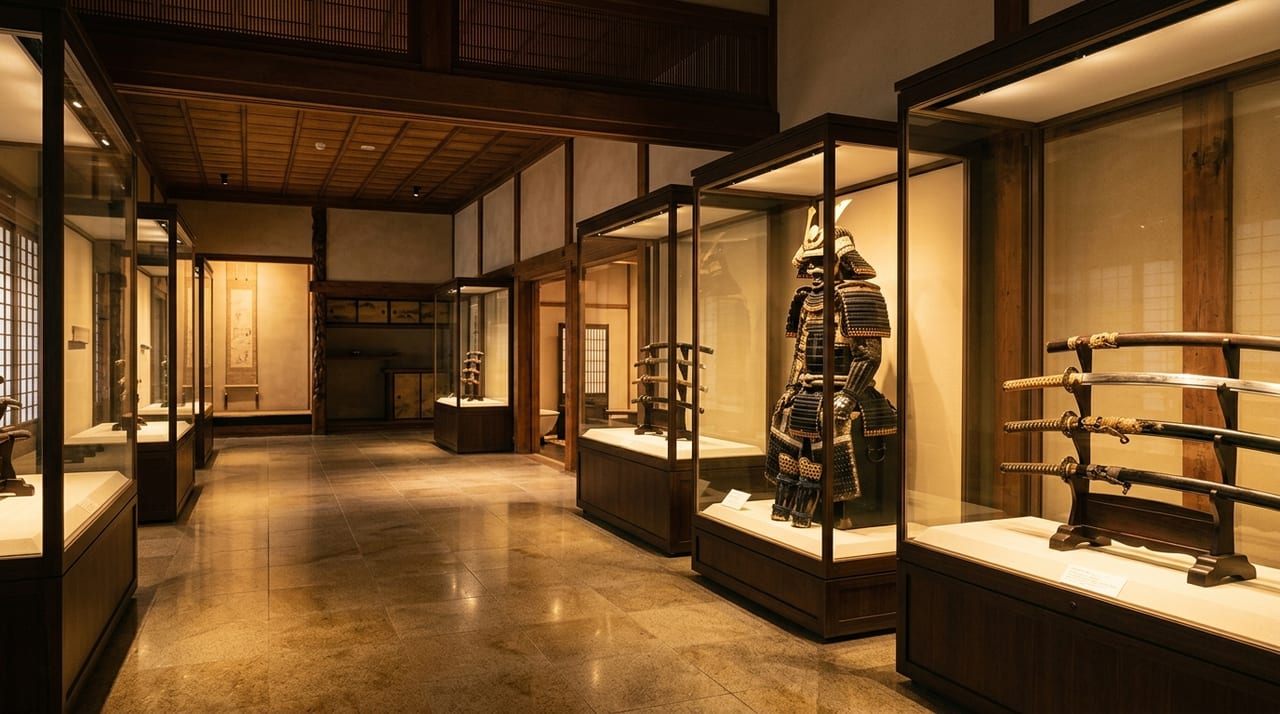
The core of the museum's armor collection is a precious group of swords, cuirasses, and martial equipment passed down through generations of the Sakai family, lords of the Shōnai Domain. The Sakai family descends from Sakai Tadatsugu, a chief retainer of Tokugawa Ieyasu, and was a prominent fudai daimyo (hereditary vassal daimyo) that ruled the Shōnai Domain with 140,000 koku, later 170,000 koku, throughout the Edo period. Their proximity to the Tokugawa shogunate resulted in the inheritance of prestigious swords and armor presented by the shogun, and these collections hold great value as cultural evidence of their deep connection to the shogunate. In particular, the numerous cuirasses and armor designated as Important Cultural Properties are highly regarded by scholars of martial equipment nationwide as masterworks representing the samurai culture of the Tōhoku region.
Swordsmiths and Sword Culture of Shōnai
The Shōnai region (present-day Shōnai Plain, Yamagata Prefecture) has long cultivated its own distinctive regional culture against a background of rich rice-farming traditions. Local swordsmiths known as "Dewa swordsmiths" were active in Shōnai, meeting the demands of the Sakai domain's samurai. The museum preserves works by these local swordsmiths of Shōnai, offering a valuable opportunity to study the regional characteristics of sword-making in Tōhoku and Dewa Province. The Shōnai Domain in the late Edo period was known as the last major daimyo domain fighting for the shogunate against the new government forces (Satsuma-Chōshū armies), and the museum holds an extensive collection of documents related to the Tōhoku front of the Boshin War.
Heritage Buildings and Shōnai Tourism
One of the museum's greatest attractions lies not only in its displayed artifacts but also in the multiple heritage buildings scattered throughout its grounds. The former Nishidagawa District Government Office (built in Meiji 14, 1881, and designated an Important Cultural Property) is renowned in architectural history as one of the finest examples of Meiji-era Western-style architecture. The shoin-style Japanese rooms and gardens of the former Sakai Family Residence allow visitors to experience the refined lifestyle of an Edo-period daimyo. Tsuruoka is also known as the setting of the film "Departures" and is Yamagata Prefecture's premier tourist destination. A visit to Tsuruoka combined with Shōnai's rich food culture overlooking the Japan Sea—including Shōnai rice, Dadacha beans, Shōnai persimmons, and Japan Sea seafood—offers the ultimate experience of Tōhoku's samurai and culinary traditions.
Highlights
- Swords, Cuirasses, and Armor of the Sakai Family Lineage (Important Cultural Properties)—A collection of masterwork swords and cuirasses inherited by the Sakai family, lords of the Shōnai Domain, including prestigious gifts from the shogun. The finest expression of Tōhoku's samurai culture, demonstrating the deep bond with the Tokugawa family.
- Local Swordsmith Collection of Shōnai and Dewa—Works by local swordsmiths preserving Dewa sword-making culture. A valuable collection for studying the regional characteristics of sword craftsmanship in Tōhoku.
- Primary Sources from the Boshin War and Tōhoku Front—Documents from the Shōnai Domain during the Boshin War, when it resisted the new government forces until the end. A deep understanding of Tōhoku's Sengoku and late Edo period history from the Shōnai perspective.
- Multiple Heritage Buildings including the Former Nishidagawa District Government Office—An open-air museum with the Important Cultural Property Former Nishidagawa District Government Office (built in Meiji 14) and the Former Sakai Family Residence scattered across approximately 28,000 square meters of grounds to explore.
- Combination with Shōnai's Food Culture and Hot Springs—A recommended one-night Tōhoku trip combining Shōnai's cuisine and hot springs, including Shōnai rice, Dadacha beans, Shōnai persimmons, Japan Sea seafood, and Yunohama Hot Springs.
* Opening hours and exhibitions are subject to change. Please check the official website before visiting.