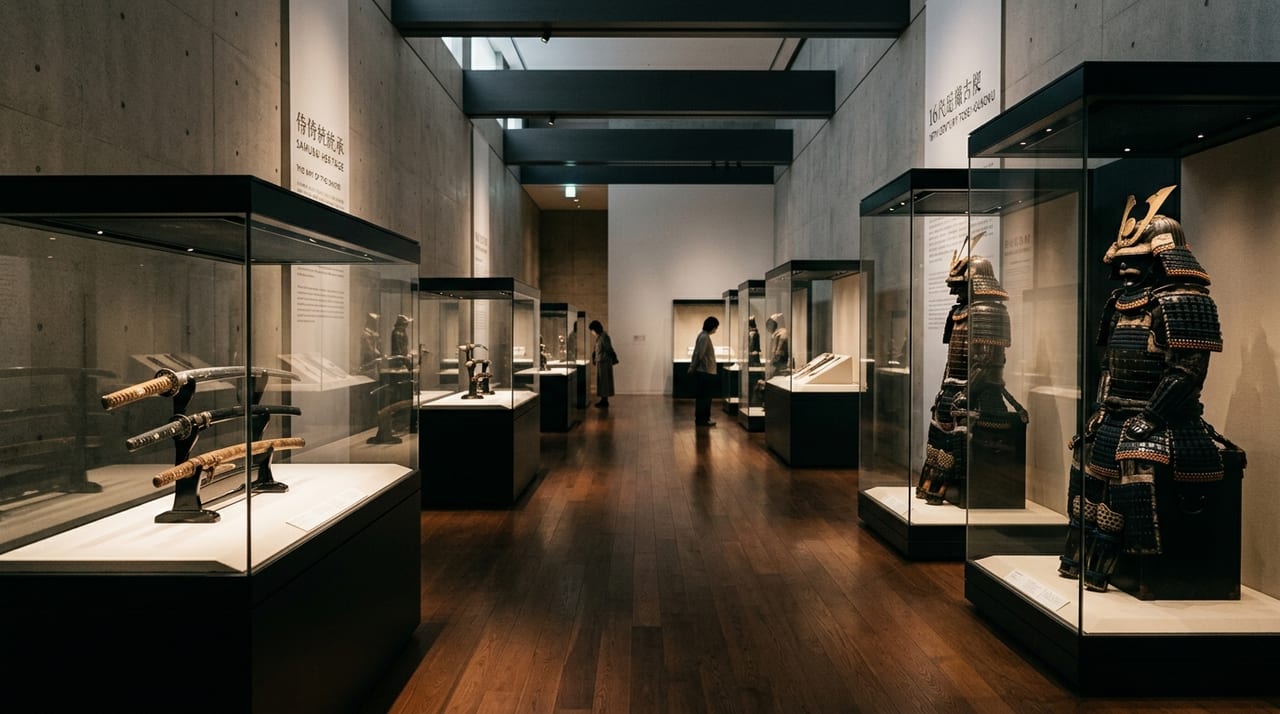
 * Image is for illustrative purposes only.
Kochi Castle History Museum
高知城歴史博物館
- Location
- Otemon, Kochi City, Kochi Prefecture
- Access
- Approx. 10 min by Tosaden tram from Kochi Station (transfer at Harimaya-bashi) to 'Kochi-jo-mae' stop, then walk. By car: approx. 15 min from Kochi IC on the Kochi Expressway. The museum is directly in front of Kochi Castle's Otemon gate. Paid parking available nearby.
- Opening Hours
- 9:00–18:00 (Sundays open from 8:00; entry to exhibition rooms until 17:30) ※ Closed 12/27–1/1
- Admission
- Age 18 and over 500 yen (800 yen during special exhibition periods) / high-school students and younger free
Overview
Museum Overview and Background of Its Opening
The Kochi Castle History Museum is a relatively new museum, having opened in 2017 (the 29th year of the Heisei era) in front of the Ōtemon gate of Kochi Castle. Its collection, however, numbers approximately 67,000 items, and it systematically holds and displays first-rate materials such as daimyo equipment, armor, swords, and historical documents that were passed down to the Tosa domain lords, the Yamauchi clan. The Yamauchi clan, as outside lords (tozama daimyō), governed the Tosa domain of a little over 200,000 koku. From the first lord, Yamauchi Kazutoyo, who entered Tosa after the Battle of Sekigahara, they ruled Tosa for more than 250 years until the Meiji Restoration. Tosa (present-day Kōchi Prefecture) also became one of the central stages of the late Edo period and the Meiji Restoration, and it produced many of the leading figures of the Meiji Restoration, including Sakamoto Ryōma, Iwasaki Yatarō, and Itagaki Taisuke. As a facility that introduces the legacy of the Yamauchi clan and the history of Tosa comprehensively, the Kochi Castle History Museum serves as the core of the region's historical identity.
The Yamauchi Clan's Sword Collection
Although an outside lord house, the Yamauchi clan placed importance on dignity and devoted effort to collecting and appreciating famous swords across generations. The first lord, Yamauchi Kazutoyo, was granted all of Tosa as a reward for his contribution to the Tokugawa side at the Battle of Sekigahara. Having long served as a prominent retainer of Toyotomi Hideyoshi, he was strongly influenced by the sword culture of the Toyotomi era. Among the swords passed down to the Yamauchi clan are many famous blades with clearly documented provenance, and the collection includes swords of diverse origins: those received from the shogunal house, those exchanged as gifts with other daimyo, and those made by the swordsmiths attached to the Tosa domain. As for Tosa swordsmiths, records remain of smiths who served the Tosa domain in the Edo period, and works with regional character produced by smiths retained by a local daimyo are one of the features.
Swords of the Bakumatsu–Meiji Restoration Period and Sakamoto Ryōma
What sets the Kochi Castle History Museum apart from other daimyo-house museums is that the role the Tosa domain played during the turbulent era of the late Edo period and the Meiji Restoration was far greater than that of other domains. One after another, figures such as Sakamoto Ryōma, Nakaoka Shintarō, Takechi Hanpeita, Gotō Shōjirō, and Itagaki Taisuke emerged from Tosa and were active on the front stage of politics and military affairs from the late Edo period into the Meiji era. Sakamoto Ryōma in particular remains popular to the present day as a symbolic figure of the Japanese image of swords, and materials concerning the swords Ryōma possessed draw strong interest from sword enthusiasts. The museum's unique exhibition value lies in its ability to show, from the Tosa perspective, how the role of swords changed in the late Edo period, and what meaning swords held amid the flow from the era of sonnō jōi (revere the emperor, expel the barbarians) to armed overthrow of the shogunate and then to Civilization and Enlightenment.
Visiting Kochi Castle Together with the Museum
Kochi Castle, completed in 1611 (the 16th year of Keichō), is one of the few castles in the country where the donjon (tenshukaku) and the palace (Honmaru Goten) survive. It is the only castle in Japan where both the donjon and the palace survive, and it is designated as a National Important Cultural Property. The museum stands in front of the Ōtemon gate, and visiting the castle together with the museum is recommended. The combination of enjoying the view of the Kōchi City streetscape from the donjon, experiencing the living spaces of the lords of the time in the Honmaru Goten, and viewing the Yamauchi clan's sword collection at the museum is highly regarded as the course that offers the deepest experience of the warrior culture of the Tosa domain.
Tosa's Warrior Culture and the ichiryō gusoku
In Tosa, a unique warrior group known as the ichiryō gusoku is well known. The ichiryō gusoku were a status group of half-farmers and half-warriors who farmed in peacetime and fought as warriors in times of emergency. They were a product of the unique Tosa military system developed by Chōsokabe Motochika. Their armor and swords were stored in a scattered manner in farming villages, and they formed the popular warrior culture of Tosa. In the General Exhibition Room I of the Kochi Castle History Museum, the history of Tosa from the Chōsokabe era is introduced under the title "From Chōsokabe to Yamauchi, and Then to Kōchi Prefecture." The warrior culture of the Tosa domain was a unique one in which the connection to the center represented by the Yamauchi clan and the tradition of local warriors from the Chōsokabe era intersected in a complex way, and it offers an indispensable perspective for understanding the diversity of Japan's warrior culture.
Chōsokabe Motochika and Tosa's Sword Culture
Chōsokabe Motochika, who controlled Tosa during the Sengoku period and unified all of Shikoku, is an important figure in Tosa's warrior culture who preceded the Yamauchi clan. His rule organized the ichiryō gusoku system and shaped all of Tosa, including farmers and warriors, into a powerful military organization. From the perspective of the spread of swords, his rule had distinctive features that set it apart from other Sengoku daimyo. The Kochi Castle History Museum holds the Chōsokabe Land Survey Registers (Chōsokabe Jikenchō) (National Important Cultural Property), the land survey registers covering all of Tosa carried out by Chōsokabe Motochika and Morichika, father and son, and displays them by rotating a few volumes at a time. The turbulent history of Motochika's struggle to unify Shikoku, Toyotomi Hideyoshi's invasion of Shikoku, and Morichika's participation on the Western army side at the Battle of Sekigahara, which led to the loss of his domain, is also a history that produced many swords and armor and also caused many to be lost.
Special Exhibitions and Research on the Bakumatsu and Meiji Restoration
Since its opening, the Kochi Castle History Museum has also been highly regarded as a base for research on the late Edo period and the Meiji Restoration. Special exhibitions related to Tosa heroes such as Sakamoto Ryōma, Nakaoka Shintarō, and Takechi Hanpeita have been held continuously. Academic research is also being vigorously pursued, and the decipherment and publication of Yamauchi clan documents has received high praise from early modern historians. As the foremost research center for swords and warrior culture in Shikoku, it is a facility where new discoveries and exhibitions are expected in the future.
Highlights
- Swords Passed Down in the Yamauchi Clan — Famous swords and armor handed down in the Yamauchi clan, lords of the Tosa domain. A daimyo collection with clear provenance, including items received from the shogunal house and works by domain-attached swordsmiths
- Chōsokabe Land Survey Registers (Chōsokabe Jikenchō) (National Important Cultural Property) — Land survey registers covering all of Tosa, carried out by Chōsokabe Motochika and Morichika, father and son. They were inherited by the Yamauchi clan and were also used as the basic land registers of Tosa in the Edo period
- From Chōsokabe to Yamauchi — A general historical exhibition introducing Tosa's history, continuing from the Chōsokabe era, when the half-farmer, half-warrior ichiryō gusoku were maintained, through the Yamauchi clan's Tosa domain, and on to Kōchi Prefecture
- The Only Castle in Japan Where Both the Donjon and Palace Survive — Kochi Castle is the only castle in Japan where both the donjon and the palace survive. Visiting the museum and the castle together lets you experience Tosa's warrior culture in its deepest form
- Swords of the Bakumatsu–Meiji Restoration Period — From sonnō jōi to Civilization and Enlightenment. Learn, from the Tosa perspective, about the bakumatsu, the historic turning point in which swords changed from weapons into symbols of the era
* Opening hours and exhibitions are subject to change. Please check the official website before visiting.