 * Image is for illustrative purposes only.
Matsuyama Castle Ninomaru Historic Garden and Matsuyama Castle Tenshu Treasure Hall
松山城二之丸史跡庭園・松山城天守宝物館
Overview
Overview of Matsuyama Castle
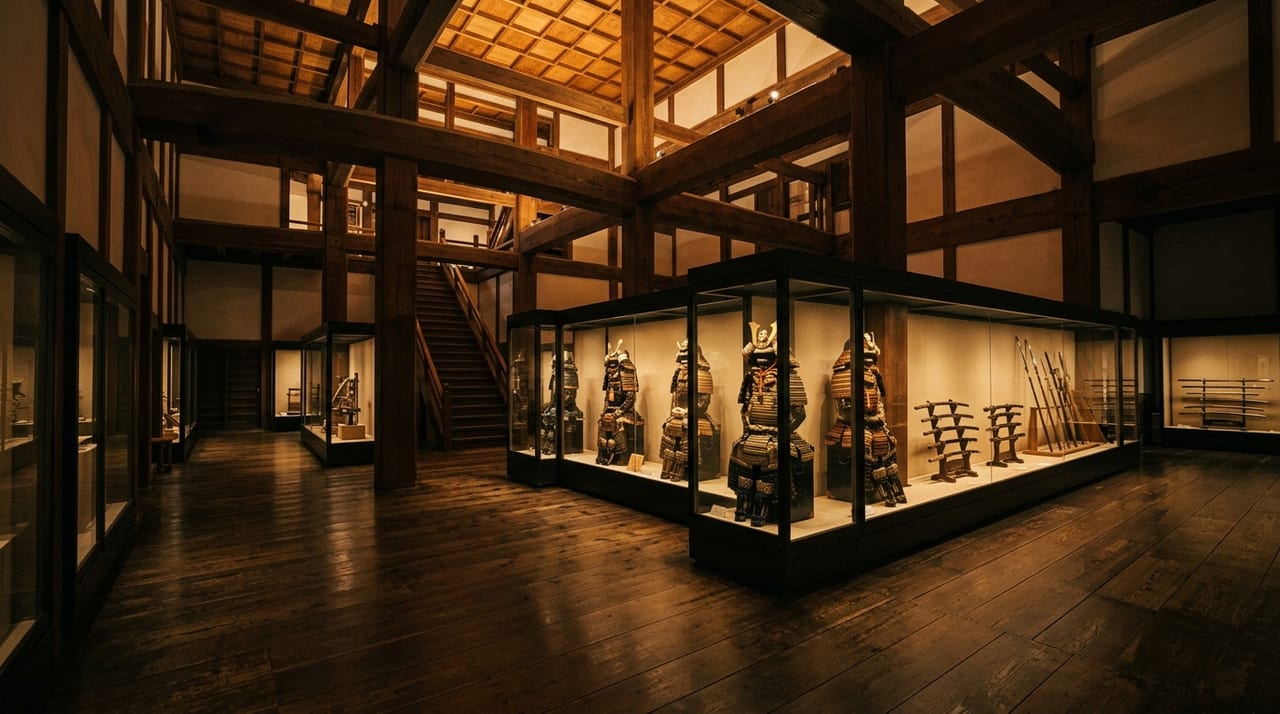
Matsuyama Castle is a castle featuring a complex of interconnected tenshu towers that represents Shikoku's finest architecture. Its construction was begun in Keichō 7 (1602) by Katō Yoshiaki and, following the Kumatsu Matsudaira clan's entry in Kan'ei 12 (1635), served as their domain residence through the Meiji Restoration. The tenshu, small tenshu, south corner tower, north corner tower, and corner towers remain standing, and it is designated as a National Important Cultural Property as one of the twelve extant tenshu in Japan. The Treasure Hall within the tenshu displays swords, armor, weapons, and ancient documents passed down through successive Matsuyama domain lords of the Kumatsu Matsudaira clan, preserving the samurai culture of Iyo to the present day.
Sword Collection
The swords housed in the Matsuyama Castle Tenshu Treasure Hall are centered on the personal swords and treasured blades of successive Kumatsu Matsudaira domain lords. The first Matsuyama domain lord, Matsudaira Sadayuki, held high family rank as the nephew of Tokugawa Ieyasu (son of Matsudaira Sadakatsu); the many renowned blades worn by the warrior retainers under his command speak to the close ties with the Tokugawa house. The collection centers on Bizen and Sōshū tradition blades, with multiple superior new-sword period pieces also held, demonstrating throughout the Edo period the high level of Matsuyama domain's samurai culture. An exhibition facility within the Ninomaru Historic Garden (former Matsuyama domain residence garden) offers detailed views of domain administration documents and furnishings.
Armor and Weapons
The armor section features a substantial collection of early to middle Edo period armor passed down through the Kumatsu Matsudaira clan, displaying prestigious suits that attest to their relationship with the Tokugawa shogunal house. Particularly noteworthy is the group of armor assembled as unified dress for daimyō processions—a precious resource that preserves the magnificence of great processions to the present day. The sword fittings collection also includes finely crafted koshirae by metalworkers in Tokugawa employ, allowing appreciation of the finest Edo period metalwork.
Views from the Tenshu
The greatest appeal of Matsuyama Castle lies in the panoramic views from the standing tenshu—Matsuyama city, the Seto Inland Sea, and the mountains of Iyo. From the summit of Katsuyama mountain at 132 meters elevation, on clear days the distant islands of the Seto Inland Sea come into view, allowing visitors to experience the perspective of the domain lords who surveyed all of Iyo Province from this vantage. A one-day journey that combines a lift or ropeway ascent, tenshu tour, exploration of the castle town and Dōgo Hot Spring, and a soak at Japan's oldest hot spring represents the finest of Shikoku tourism.
Highlights
- Kumatsu Matsudaira clan sword collection—personal swords and treasured blades of successive Matsuyama domain lords. Includes Bizen and Sōshū tradition ancient blades and superior new-sword period works. A distinguished collection exemplifying the connection to the Tokugawa shōgunal house.
- Edo-period armor and weapons collection—unified-dress armor sets of the Kumatsu Matsudaira clan. Preserves the grandeur of daimyō processions, with finely crafted sword fittings by Tokugawa-patronized metalworkers as notable features.
- One of Japan's twelve surviving tenshu—Matsuyama Castle Tenshu (Important Cultural Property)—featuring interconnected towers that preserve early Edo-period architecture. The panoramic views of Matsuyama city and the Seto Inland Sea from the tenshu's upper levels are spectacular.
- Ninomaru Historic Garden exhibition facility—displays domain administration records and furnishings within gardens at the former Matsuyama domain residence. Combines garden exploration with elegant appreciation of historical artifacts.
- Combination with Dōgo Hot Spring—tram access to Dōgo Hot Spring Main Hall, Japan's oldest hot spring (National Important Cultural Property), in about 10 minutes. A premier cultural tourism route across Shikoku pairing Matsuyama Castle with Dōgo Hot Spring.
* Opening hours and exhibitions are subject to change. Please check the official website before visiting.