 * Image is for illustrative purposes only.
Fukuyama Art Museum
ふくやま美術館
- Location
- Fukuyama, Hiroshima Prefecture
- Access
- A 5-minute walk from the north exit of Fukuyama Station (JR Sanyo Shinkansen and Sanyo Main Line). The station is served by the Nozomi Shinkansen, with convenient access: approximately 3 hours 20 minutes from Tokyo, and about 1 hour from Osaka. Fukuyama Station is a rare station nationwide located directly adjacent to the castle—exiting the ticket gates, Fukuyama Castle rises immediately before you. The museum is situated on the western side of Fukuyama Castle Park. A recommended cultural walking route connects Fukuyama Castle Keep → Fukuyama Art Museum → Fukuyama Literature Museum. Tomonoura is accessible by bus in approximately 30 minutes, and Onomichi by JR in about 20 minutes. For local dining, be sure to try Fukuyama's signature tai-meshi (sea bream rice) and uzumi (a local specialty with hidden flavors).
- Opening Hours
- 9:30–17:00 (last admission 16:30)
- Admission
- Adults 310 yen (special exhibitions charged separately)
Overview
Museum Overview
A municipal art museum located within Fukuyama Castle Park, serving as a cultural hub in eastern Hiroshima Prefecture. Since its opening in 1988 (Shōwa 63), it has been known for a collection centered on modern and contemporary art, while also placing emphasis on exhibitions about the history and samurai culture of Bingo Province (present-day eastern Hiroshima Prefecture).
Sword Exhibitions
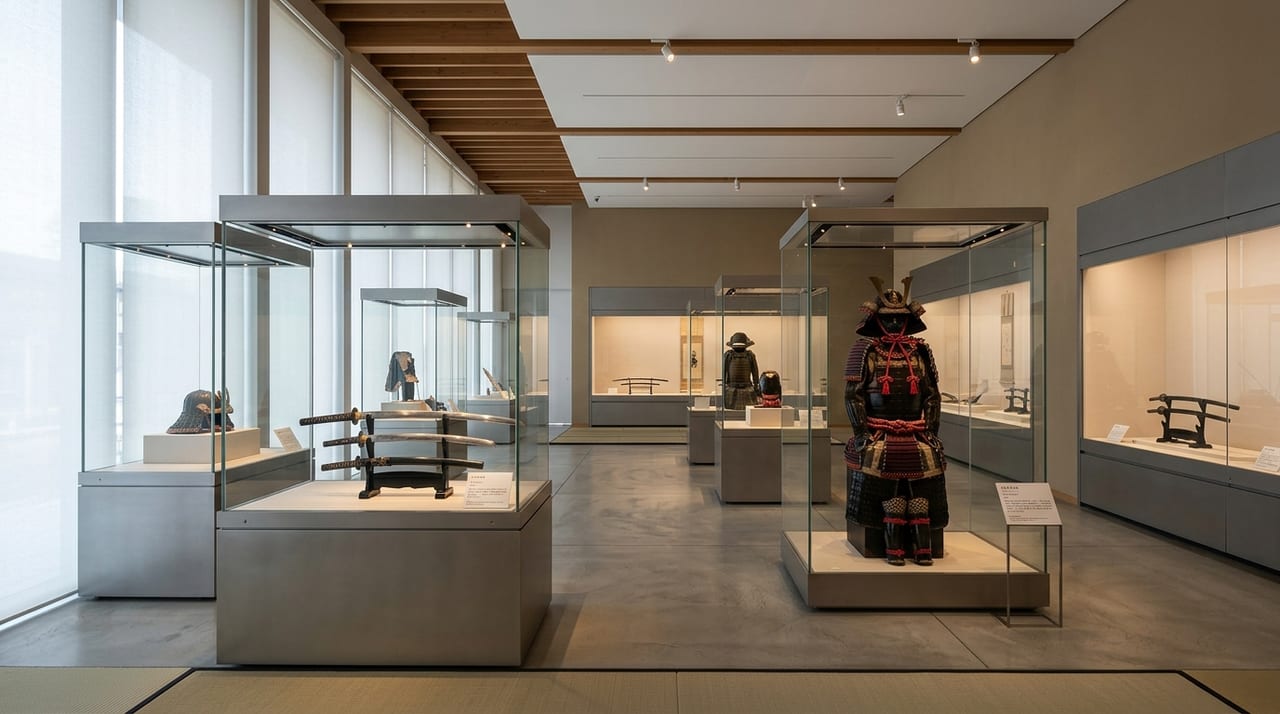
As the neighboring province of Bizen Province (Okayama Prefecture), Bingo has been a region of sword production since ancient times. Among Bingo's swordsmiths, the Mihara school, active from the Kamakura to the Muromachi period, is especially important, and smiths such as Masaie and Masahiro were active within it. The Mihara school is widely known under the name ‘Mihara Masaie,’ and established a distinctive style in Mihara, Bingo. Its style is characterized by calm sugu-ha temper lines influenced by the Yamato tradition, and its high practical quality made it favored by many samurai. In November 2018 (Heisei 30), the museum received a donation of 14 swords from the Komatsu Yasuhiro Collection (7 National Treasures, 6 Important Cultural Properties, and 1 Especially Important Sword), and holds National Treasures including ‘Tachi, signed Chikushū-jū Sa (Kōsetsu Saemonji)’ and ‘Tantō, signed Kunimitsu (Meibutsu Aizu Shintōgo).’ The number of National Treasure Japanese swords held here is second only to the Tokyo National Museum, and on par with the Tokugawa Art Museum.
Crafts
Exhibitions of armor and swords passed down from the Abe clan, lords of Fukuyama Domain (a prestigious fudai daimyo family that produced heads of the Rōjū council), are sometimes held. The Abe clan was a leading fudai daimyo house that supported the Tokugawa shogunal house, and high-quality armor befitting its family status has been passed down to the present. Special exhibitions sometimes feature the Abe clan's daimyo furnishings and displays related to the history of Fukuyama Domain in the late Edo period (Bakumatsu), providing a valuable opportunity to learn about the region's samurai culture.
Historical Materials
The museum is also known for its collection of 20th-century European art, centered on Italy, and is a multifaceted museum where visitors can appreciate Eastern and Western art under one roof. The open spatial design of the entrance hall and exhibition rooms that incorporate natural light provide a comfortable viewing environment.
Educational Functions
The adjacent Fukuyama Castle underwent major renovation in 2022 to commemorate the 400th anniversary of its construction, and reopened. It is a rare castle in Japan located in close proximity to a Shinkansen station, and its north-facing iron-plate cladding has attracted attention as the only one in the country. Visiting together with the museum in the Fukuyama Castle keep allows visitors to enjoy both the castle and the swords.
Cultural Development
Fukuyama is a mild city facing the Seto Inland Sea, with good access to sightseeing destinations such as Tomonoura (a scenic harbor town that prospered as a port where ships waited for the tide, and is also said to have served as a model for the setting of Hayao Miyazaki's Ponyo on the Cliff by the Sea) and Onomichi (famous as a city of slopes and as a city of films). As a base for a trip to fully enjoy the historical culture of Bingo and the natural beauty of the Seto Inland Sea, Fukuyama Art Museum is an ideal place to stop by.
Highlights
- Famous swords of the Komatsu Yasuhiro Collection — 14 swords donated in 2018, including ‘Kōsetsu Saemonji’ and ‘Aizu Shintōgo,’ among them 7 National Treasures and 6 Important Cultural Properties
- Armor exhibitions from the Abe clan, lords of Fukuyama Domain — high-quality armor and swords that reflect the status of this prestigious hereditary daimyo house, which produced heads of the Rōjū council; sometimes shown in special exhibitions
- Location adjacent to Fukuyama Castle — enjoy both the castle and the swords together with the museum in the Fukuyama Castle keep, which was renovated in 2022 to commemorate the castle's 400th anniversary
- Special exhibitions introducing regional samurai culture — held on locally rooted themes such as the history of Bingo, the Abe clan's daimyo furnishings, and Fukuyama Domain in the late Edo period (Bakumatsu)
- 20th-century European art collection — a multifaceted exhibition composition, including works centered on Italy, allowing visitors to appreciate Eastern and Western art under one roof
* Opening hours and exhibitions are subject to change. Please check the official website before visiting.