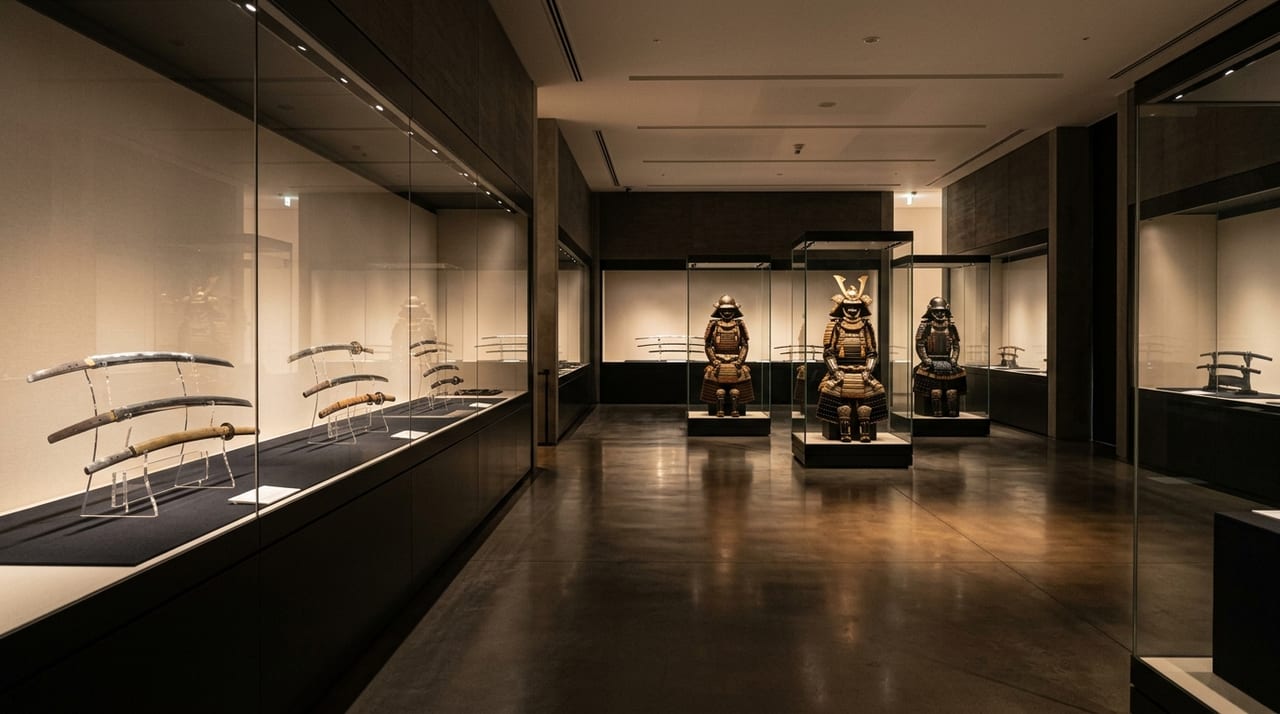
 * Image is for illustrative purposes only.
Bizen Osafune Japanese Sword Museum
備前長船刀剣博物館
- Location
- Setouchi, Okayama
- Access
- About 7 minutes by taxi from Osafune Station on the JR Akō Line (about 15 minutes by the sightseeing scheduled bus on weekends and public holidays), or about a 20-minute walk from Kagato Station. About 20 minutes by car from the Bizen IC on the San'yō Expressway, or about 30 minutes from the San'yō IC. About 30 minutes from Okayama Station to Osafune Station on the JR Akō Line. Taxis may not always be waiting at the station, so advance booking is recommended. Parking available. Crowds are expected on forging demonstration days (the second Sunday of every month), so early visits are recommended. Bizen ware kilns are also scattered around the area, and combining a visit with Inbe, the village of Bizen ware, for a tour of Okayama's traditional crafts makes an appealing route.
- Opening Hours
- 9:00–17:00 (last admission 16:30). Closed Mondays (if a holiday, closed the following day), the day after national holidays, New Year holidays (12/28–1/4), and during exhibition changes
- Admission
- Adults 500 yen / high-school and university students 300 yen / junior-high students and younger free
Overview
Museum Overview
This specialized sword museum stands in Osafune, renowned as the largest production center in the history of Japanese swords. It opened in 1983 as the Osafune Town Museum and was built as the first public museum in Japan to permanently display swords. Bizen Province (present-day southeastern Okayama Prefecture) was blessed with high-quality iron sand, granitic whetstones, and abundant water from the Yoshii River. From the late Heian period through the Muromachi period it flourished as Japan's largest sword-producing region. Master smith groups that shine brilliantly in the history of Japanese swords emerged from this land, including the Osafune school, the Ichimonji school, the Hatakeda school, and Yoshioka Ichimonji.
History of Bizen Osafune
The museum's exhibits cover the history of Bizen swordsmithing from the kotō period to the modern sword. Visitors can view up close a collection centered on Bizen swords, including the National Treasure "Tachi, unsigned, Ichimonji (Sanchōmō)", which Setouchi City purchased in 2020. The splendid chōji-midare hamon peculiar to the Bizen tradition, the beauty of the utsuri, and the sculptural beauty of blades that combine practicality and artistry at a high level will captivate even those who are not sword enthusiasts.
Swordsmithing Techniques
A defining feature of this museum is that it has an actual forge (bellows hut) on its grounds. Active swordsmiths make Japanese swords using traditional forging techniques, and visitors can watch the process up close at forging demonstrations held on the second Sunday of every month. The roar and sparks of tamahagane heated to about 1,300 degrees being hammered out with a large hammer have an overwhelming power that video never conveys. In addition to the forge, the facility includes workshops for sword polishers, shirasaya scabbard makers, and hilt wrappers, so visitors can experience the full sequence of steps until a Japanese sword is completed.
Workshops and Shop
Experience workshops, such as those for making paper knives and small knives, are also held. The Fureai Bussankan (local products shop) on the grounds sells Japanese swords and sword-related goods.
Highlights
- Collection of famous Bizen-tradition blades: centered on Bizen swords, including the National Treasure "Tachi, unsigned, Ichimonji (Sanchōmō)". Appreciate the splendid chōji-midare hamon and the utsuri unique to the Bizen tradition
- Demonstrations of traditional forging by active swordsmiths (held on the second Sunday of every month): watch up close the powerful forging scene as tamahagane heated to about 1,300 degrees is hammered out with a large hammer (viewing by reservation)
- Tours of sword polishing, shirasaya making, and hilt-wrapping workshops: a comprehensive workshop facility where you can experience the full sequence of steps until a Japanese sword is completed, alongside the handiwork of craftspeople in each field
- Exhibition of Osafune sword materials and ancient documents: explains the history of Osafune, which flourished as Japan's largest sword-producing region from the late Heian period to the Muromachi period, with abundant materials
- Fureai Bussankan (local products shop) on the grounds: Japanese swords and sword-related goods available for purchase
* Opening hours and exhibitions are subject to change. Please check the official website before visiting.