Regional Revitalization Agreements in the Japanese Sword Industry — The Forefront of Production-Area Branding and Municipal Cooperation
 * Image is for illustrative purposes only.
Table of Contents
New Collaboration Between Sword-Producing Regions and Municipal Governments
In recent years, municipalities that encompass nihontō production areas have been investing in "production-area brand strategies" aimed simultaneously at preserving traditional industries and promoting tourism. In historically significant sword-producing regions such as Bizen (Okayama Prefecture), Seki (Gifu Prefecture), and Satsuma (Kagoshima Prefecture), city, town, and prefectural governments are forming tripartite agreements with sword dealers, tōshō (swordsmiths), and tourism associations to broadcast the regions' reputations both domestically and internationally. These agreements go beyond mere tourism promotion to address support for training successor tōshō and the stabilization of supplies of locally sourced materials such as tamahagane and iron sand.
Behind these developments is a growing interest among nihontō buyers and enthusiasts in production-area information — specifically, "where and by whose hands a sword was forged." A sword is both a work of art and a historical craft object, and the provenance of the production area and the state of transmission of traditional techniques are considered indispensable elements for understanding the value of a work. When municipal governments and the industry collaborate to disseminate information, it also helps lay the groundwork for buyers to engage with works with confidence.
Building the Bizen Sword Brand — Okayama Prefecture's Initiatives
Bizen-den is Japan's largest sword-producing area, with a history stretching back to the Kamakura period, and the phrase "Bizen mono" has long been synonymous with quality. Entering the 2020s, Okayama Prefecture and Bizen City established the "Bizen Sword Promotion Council." Its membership includes tōshō (swordsmiths), togishi (polishers), tsuba (hand guard) craftsmen, and tsuka-maki (hilt-wrapping) specialists based in the city, and prefectural subsidies are used to carry out joint promotional activities and overseas exhibition projects.
The agreement rests on three pillars.
- Consideration of a "Bizen Sword Certification System": A mechanism for affixing certification labels to swords forged in the production area to prevent false claims of provenance. Modeled on Europe's AOC (controlled designation of origin), it is expected to improve credibility in overseas markets if realized.
- Development of "Tōshō Workshop Tourism": A reservation-based program through which tourists can visit tōkō (swordsmiths') workshops, mediated by the municipal government.
- Securing successors: A program is being piloted that combines relocation-promotion subsidies to partly cover housing and living expenses for aspiring apprentices from outside the prefecture.
The trust that the place name Bizen has accumulated over its long history is an asset that cannot be substituted by the skill of any single tōshō. What the council aims for is to cultivate the brand of individual tōshō and the regional brand of "Bizen" as two wheels of a single vehicle, and its characteristic approach of preparing a receptive structure for the entire region in response to the industry-wide challenge of a shortage of successors is noteworthy.
Differentiation from the Seki Cutlery Industry — The Strategy of Seki City, Gifu Prefecture
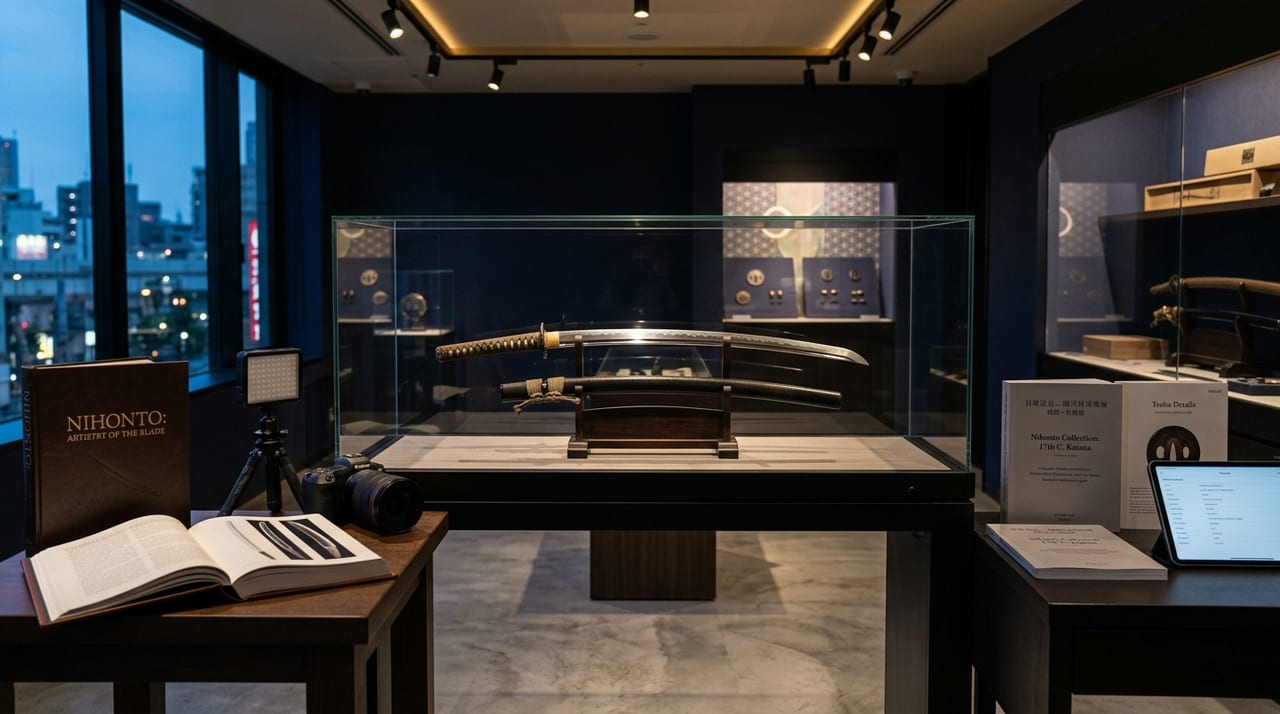
Seki City is also known for its modern cutlery industry — kitchen knives, scissors, and the like — but it also holds an identity as a historically significant sword-producing area. The city holds the "Seki no Hamono Matsuri" every autumn, operating tōshō demonstrations, polishing experiences, and kotō exhibitions as an integrated whole, adopting a two-stage strategy that draws in both sword enthusiasts and general tourists.
Of recent note is inbound tourism targeting specifically for swords. Subsidies have been invested in training production-area guides in English, Chinese, and French, and experiential programs are being developed to help foreign visitors understand "why Seki is a sword-producing area" in historical context. In collaboration with sword dealers, an initiative has begun in which established sword dealers in the city offer limited sales of shintō bearing a "Produced in Seki Certificate," successfully adding premium value.
What makes Seki City's strategy interesting is its use of the brand power of the modern cutlery industry — a separate sector — to drive rediscovery of nihontō as a historical asset. The design of a pathway that uses the city's renown as a cutlery town as an entry point to guide visitors toward sword culture is an approach that other production areas may find worth emulating.
The Revival of Satsuma-den — The Agreement Between Kagoshima Prefecture and the Satsuma Sword Craftsmen's Association
Satsuma-den, centered on the Naminohira school, maintained its distinctive forging methods, but rapidly declined after the Meiji-era Sword Abolishment Edict (Haitōrei). Kagoshima Prefecture launched the "Satsuma Tōkō Training Program" in the 2010s, and through annual subsidies to tōshō and the free loan of production equipment it is gradually moving away from a state of zero successors.
A distinguishing feature of the municipal agreement is that it foregrounds the production area's "narrative." The following have been developed as tourism resources, with linked measures aimed at raising awareness of Satsuma swords.
- Swords favored by Saigō Takamori
- The historical connection to Jigen-ryū kenjutsu
- The Shimazu clan's official tōkō system
A dedicated Satsuma sword corner has been set up at the Kagoshima City tourist information center, and it approaches foreign tourists in combination with a hands-on replica sword experience corner.
The case of Satsuma-den is attracting attention as an example demonstrating that even a production area that once came close to dying out can be revived through sustained administrative support and the excavation of its historical background. From other production areas too, voices are heard expressing a desire to use its institutional design for successor training as a reference.
The Commercial Value and Challenges of Production-Area Brands
The name of a production area also contributes to the ease of evaluating and describing a sword. Works from production areas with clear provenance, such as Bizen and Mino, provide buyers with more material for judgment, and they are frequently introduced in overseas catalogs with the production-area name attached.
On the other hand, there are many challenges.
- In designing a certification system, the definition of "where it was forged" is difficult to establish, and the treatment of cases where the tamahagane production area (Shimane) differs from the forging area (Bizen) remains unresolved.
- The benefits of regional agreements are in many cases limited to tōshō resident within the city, and there are aspects that lack flexibility — for example, young tōshō considering relocation from outside the production area must satisfy residency requirements before they can benefit from the system.
Furthermore, it is important to note that a production-area brand is, after all, only one piece of information supplementing a work's provenance, and does not guarantee the authenticity or quality of individual works. As a production area's renown grows, there is also the pointed risk of misleading labeling and advertisements designed to cause misidentification through the misuse of production-area designations, and voices within the industry call on trade associations to establish guidelines for production-area labeling.
The Future of Production-Area Brand Strategies
Note that nihontō are not among the "Traditional Crafts" designated by the Minister of Economy, Trade and Industry (Ministry of Economy, Trade and Industry, "Traditional Crafts"). Particularly since the mid-2020s, amid a weaker yen, foreign investors' interest in nihontō has grown further, and production-area brands may serve as a differentiating factor in international markets as "proof of authenticity."
Initiatives in which the sword industry and municipal governments form agreements as equal partners, simultaneously advancing successor training, brand building, and tourism promotion, have the potential to become a model case for Japan's traditional craft industry as a whole. Whether sword dealers, tōshō, and the administration can share a common vision will likely determine the fate of these production areas over the next ten years.
Key Points to Keep in Mind When Purchasing or Viewing
As production-area brand initiatives spread, what matters for readers who actually purchase or view nihontō is the perspective of separating the narrative of the production area from the evaluation of the work itself. The renown of the production area and the backing of the region are important elements for conveying a work's appeal, but they must be understood as information distinct from the evaluation of the authenticity, condition, and workmanship of individual works.
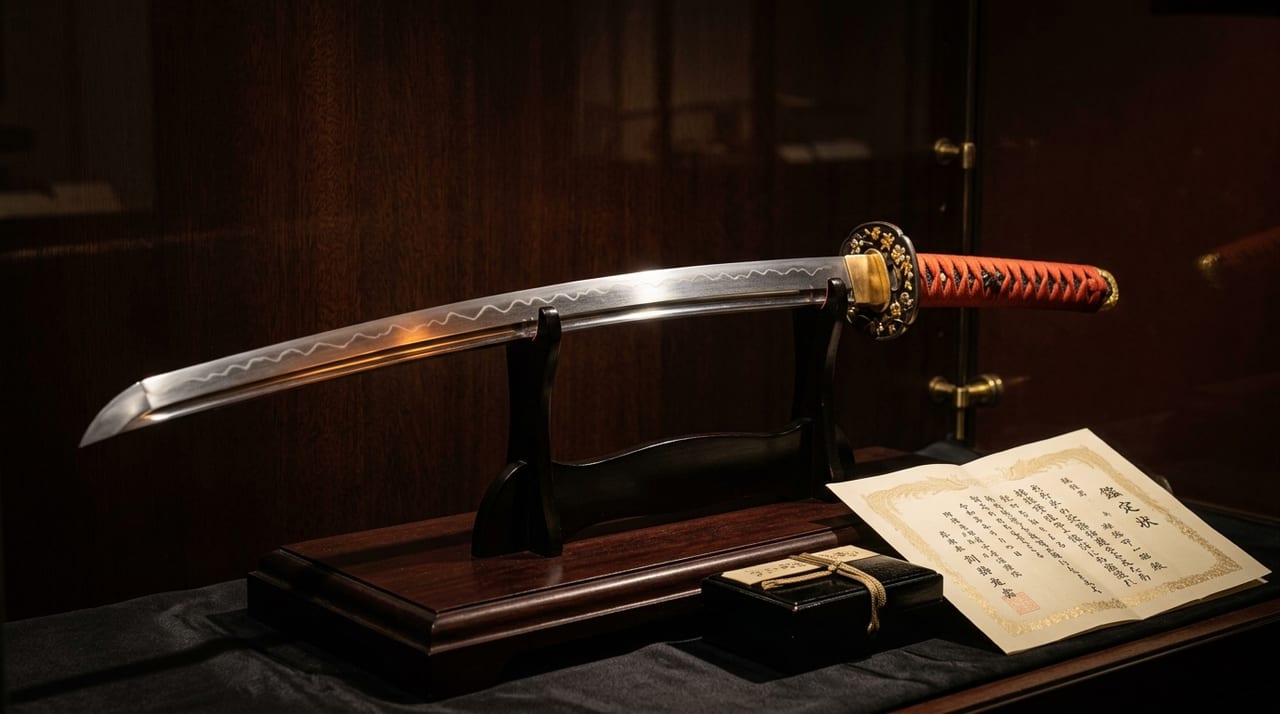
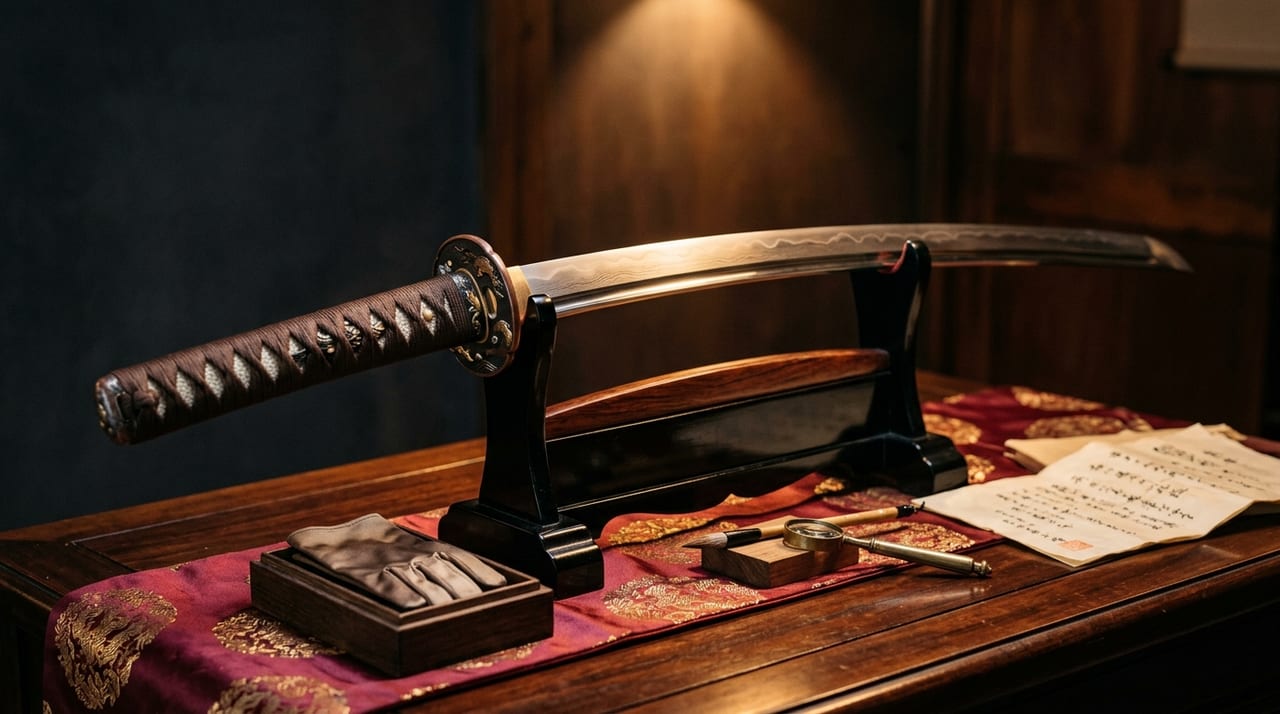
The fundamental starting point for confirming the authenticity and quality of a work is whether or not a kanteisho (appraisal certificate) issued by the NBTHK (Society for the Preservation of Japanese Art Swords) is present. An NBTHK kanteisho is issued following expert examination of the blade's workmanship and estimation of its period and maker, and is positioned as a third-party evaluation independent of any production-area municipal agreement or promotional activity. Enjoying the historical background and narrative discussed in production-area brand initiatives while basing the purchasing decision itself on objective information such as a kanteisho will lead to sword selection without regret.
Additionally, tōshō workshop visits and production-area events hosted by municipal governments and councils are opportunities to deepen understanding not only of the sword itself but of the surrounding techniques such as the forging process, polishing, and koshirae (mounting). Using production-area initiatives as an entry point to encounter the multilayered value of nihontō as a craft object is itself one way to enjoy them.