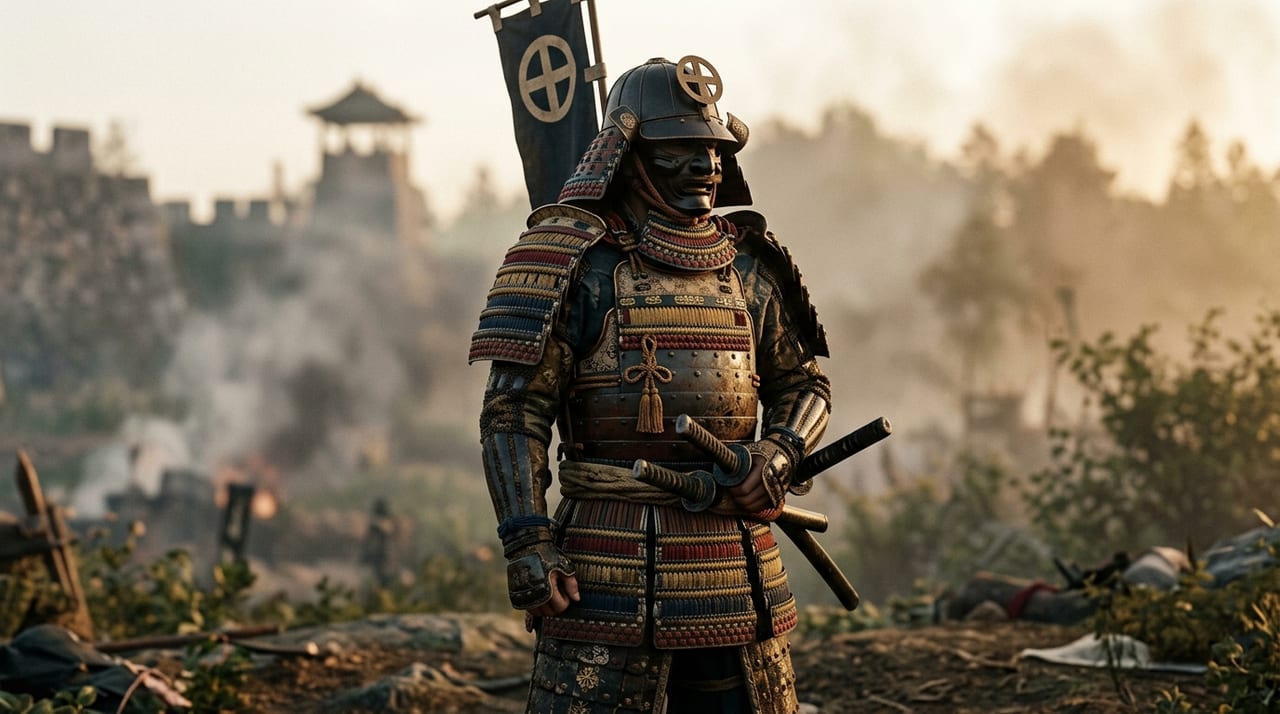
 * Image is for illustrative purposes only.
Saigō Takamori
西郷隆盛
The Last Samurai — Commander of the Final Battle Where Japanese Swords Clashed in War
Description
The Three Great Nobles of the Restoration
Born in Bunsei 10 (1828) in the castle town of Kagoshima in Satsuma Province, Saigō Takamori is counted, together with Kido Takayoshi and Ōkubo Toshimichi, among the Three Great Nobles of the Restoration, and he is the greatest protagonist of the Meiji Restoration. After working on domain reform as a samurai of the Satsuma Domain, he devoted himself during the turbulent late Edo period to the conclusion of the Satchō Alliance and to the Restoration of Imperial Rule. In his talks with Yamaoka Tesshū and Katsu Kaishū, Saigō's broad vision and personal dignity were also on display, and they realized the peaceful surrender of Edo Castle, saving Edo, a city of a million people, from the ravages of war. After the establishment of the Meiji government, he took a central role in the new government as General of the Army and Councillor (sangi), and he lent his strength to the promotion of modernization policies such as the abolition of the han system.
The Political Upheaval and Withdrawal from Government
The political upheaval of Meiji 6 (1873) fundamentally changed Saigō's life. Saigō insisted on going himself as an envoy to diplomatic negotiations with Korea, but Iwakura Tomomi, Ōkubo Toshimichi, and others opposed him and argued for putting domestic governance first. Saigō, defeated in the upheaval, resigned his posts as Councillor and Commander of the Imperial Guard and returned home to Kagoshima. After returning, Saigō established the Shigakkō (private schools) and taught martial arts and learning to the young Satsuma samurai. These Shigakkō went on to nurture the people who would form the core of the later Satsuma (Seinan) Rebellion. Saigō had no attachment to power, and he had returned to a simple life in which he loved farming and enjoyed hunting with dogs.
The Satsuma (Seinan) Rebellion: The Final Battle of the Samurai
In February 1877, the Satsuma samurai rose in revolt against the government's suppression of the Shigakkō students, and Saigō, carried up to the summit, became the commander-in-chief of the rebellion. This Satsuma (Seinan) Rebellion was the last large-scale uprising in Japan to resist the dissolution of the samurai class, and it is recorded in history as the last large-scale battle in which Japanese swords were used in actual combat. The Satsuma samurai faced the new army created by the Meiji government's conscription system with swords and trained martial arts. Particularly in the fierce fighting at Tabaruzaka, both sides closed the distance and fought hand to hand, and a terrible battle erupted in which Japanese swords and bayonets clashed. This battle is handed down to later generations as a place that shows the last brilliance of the samurai spirit.
The Japanese Sword and the End of the Samurai Spirit
Most of the Japanese swords used by the Satsuma samurai in the Satsuma (Seinan) Rebellion were works forged by swordsmiths employed by the Satsuma Domain, or swords procured from various regions at the end of the Edo period. The Satsuma swords were called Satsuma shintō and were known for their sturdy construction focused on actual combat and their sharp cutting edge. However, no matter how excellent a Japanese sword was, it could not withstand modern guns and cannon. On 24 September 1877, Saigō was struck by a bullet in the final decisive battle at Shiroyama, and he asked Beppu Shinsuke to act as his second and met a magnificent end. With Saigō's death, the era of the samurai who fought with swords in Japan effectively came to an end.
The Meiji Government and the Sword Abolishment Edict
In Meiji 9 (1876), before the Satsuma (Seinan) Rebellion, the government issued the Sword Abolishment Edict (Haitōrei), prohibiting the carrying of swords by anyone other than military personnel and police officers. The samurai's dissatisfaction with this edict was also one of the causes of the outbreak of the Satsuma (Seinan) Rebellion. The Sword Abolishment Edict was a historic turning point that transformed Japanese swords from practical weapons into artworks and spiritual symbols. Ironically, the arrival of an era in which swords could not be worn under the Sword Abolishment Edict led to Japanese swords being re-evaluated as pure works of art and cultural property, which in turn led to the establishment of sword art after the Meiji period.
Keiten Aijin: Saigō's Spirit and View of Swords
Saigō's motto was 'Keiten Aijin' ('Revere Heaven, Love People'), a phrase meaning to revere heaven and love people. This philosophy, which placed the highest value not on military force but on the strength of the spirit, resonates deeply with the view of swords that Japanese swords are spiritual symbols that transcend mere weapons. Although he was praised as a hero of the Restoration, Saigō's tragic end, in which he raised the banner of revolt against the system he had himself built, is deeply engraved in the hearts of the Japanese as embodying the contradiction between the spirit of bushidō and the modern nation-state.
Notable Swords
- Satsuma shintō (tachi and uchigatana forged for actual combat by swordsmiths employed by the Satsuma Domain. Beloved by Satsuma samurai for their sturdy construction and sharp cutting edge)
- Swords of the late Edo period (swords by famous smiths from various regions, worn by the Satsuma samurai who took part in the Satsuma (Seinan) Rebellion. The last samurai swords to clash with bayonets in the fierce fighting at Tabaruzaka)