The History of Japanese Sword Specialist Magazines — The Role and Transformation of the Industry Information Infrastructure Built by Tōken Bijutsu and Tōken Shunjū
 * Image is for illustrative purposes only.
Table of Contents
The Birth of Japanese Sword Specialist Magazines — Democratization of Knowledge and Industry Formation
The history of magazines dedicated to nihontō has its origins in the journals of sword enthusiast associations from the Meiji and Taishō periods. After the Sword Abolishment Edict (Haitōrei) of 1876, nihontō lost their status as weapons and were redefined as works of art and craft; in the course of that transformation, building an information infrastructure to pass sword culture on to the next generation became an urgent priority.
With the aim of sharing information among enthusiasts and disseminating appraisal knowledge, sword preservation societies in various regions began publishing journals in the early twentieth century. These were the forerunners of today's specialist magazines, carrying records of sword-making techniques, compilations of tōkō directories, and market information for collectors. The publication of specialist magazines held cultural significance in committing to print the sword knowledge that had until then been transmitted orally from person to person, and in delivering it to a wider readership.
The Role of Tōken Bijutsu — Journal of a Public-Interest Foundation
Tōken Bijutsu, the journal of NBTHK (Nihon Bijutsu Token Hozon Kyokai), is known as one of the most authoritative publications among nihontō specialist magazines. NBTHK developed into the central organization for the protection of sword culture in the postwar period, and its journal likewise became a standard reference for the industry.
The defining character of Tōken Bijutsu lies in its combination of appraisal articles and scholarly historical research. The detailed commentary on origami-certified swords published in every issue functioned for collectors as a reference for actual appraisal standards and became an indispensable source for systematically learning the distinctive characteristics, jigane, and hamon patterns of individual tōkō.
Tōken Bijutsu also served as the medium through which the results of jūyō bunkazai (Important Cultural Property) and Jūyō Tōken examinations were announced to the industry. The lists and commentary on swords that passed examination had an indirect influence on price formation in the market as well, demonstrating that specialist magazines functioned as market infrastructure beyond being mere reading matter.
The Market Information Function of Tōken Shunjū — Transaction Data and Price Formation
Tōken Shunjū was a commercial sword specialist magazine that stood alongside Tōken Bijutsu as one of the two pillars of the field, and it was characterized by a stronger focus on the market and trading. The publication carried the following types of information, fulfilling the function of a market information journal for the industry.
- Auction hammer prices
- Inventory listings from sword dealers
- Intermediary information for private transactions
What made Tōken Shunjū particularly valued within the industry was its contribution to cultivating a shared sense of market pricing. Sword prices are determined by the following combination of factors, making objective grasp of market values difficult.
- Mei (signature)
- Condition
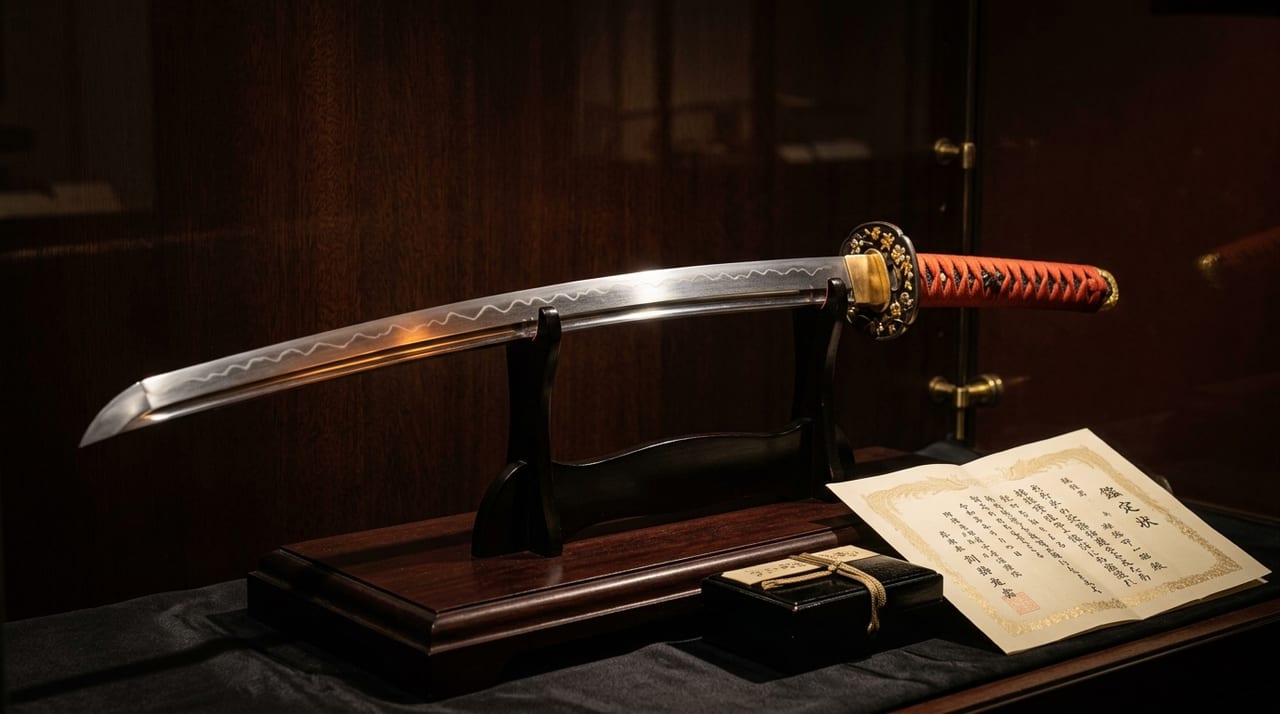
- Presence or absence of a kanteisho (appraisal certificate)
- Period
By continuously publishing transaction examples, the magazine enabled the industry as a whole to develop a common sense of prevailing prices and contributed to greater transparency in transactions.
Even after it ceased publication, back issues of Tōken Shunjū have continued to circulate among industry insiders as reference material, used as primary sources when researching market prices for specific periods.
The Standardization Function of Specialist Magazines in Appraisal Knowledge
One of the greatest contributions specialist magazines made to the industry was the standardization of appraisal knowledge. Sword appraisal had previously relied heavily on esoteric transmission between master and pupil, and disparities in knowledge were stark. By regularly publishing explanatory articles on appraisal, specialist magazines accumulated and made public that knowledge in printed form, raising the overall level of the industry.
Particularly influential were articles on "appraisal points" organized by individual tōkō. Articles explaining the characteristics of a specific tōkō's jigane, hamon, and blade shape with accompanying photographs became the standard teaching material for beginners learning the distinguishing features of different tōkō systematically. Knowledge that had previously been accessible only through oral transmission was now shared through text and images, opening wider the doors to appraisal.
Specialist magazines also served as a forum for sharing information on the problem of forgeries. Information about falsely signed swords and later-period forgeries circulating within the industry was published in the journals, allowing collectors and sword dealers to acquire the knowledge needed to avoid losses. This function has been carried over to online media in the present day.
The Digital-Age Shift — The Decline of Print and the Move to the Web
From the 2000s onward, the spread of the internet transformed the nature of sword specialist magazines at a fundamental level. Information that had previously been obtainable only through specialist magazines began circulating free of charge via websites, blogs, and social media, and the relative value of paid print publications declined.
The aging of the subscriber base also emerged as a serious problem. As the core layer of sword enthusiasts aged and younger new readers were not recruited in sufficient numbers, circulation figures for specialist magazines trended steadily downward. With the fixed costs of paper production, printing, and distribution weighing heavily, the decline in circulation became a commercial burden.
Some specialist magazines attempted to respond by transitioning to digital editions or e-books, but this gave rise to the problem that established print readers did not adapt well to digital formats. Many specialist magazines fell into financial difficulty, and closures and suspensions followed one after another.
The Diversification of Sword Media in the Present Day
In contemporary sword information, web media, YouTube videos, and social media are taking over an ever-greater share of the role previously filled by specialist magazines. Cases of tōkō and togishi (polishers) disseminating information directly on social media have multiplied, and consumers now have opportunities to engage directly with the production environment. From the perspective of the democratization of information this is a welcome development, but it leaves challenges in terms of ensuring the quality of that information.
In an environment where anyone can publish information, misinformation and inaccurate knowledge also spread easily. There is a demand for an alternative to the "editorial and expert review and correction function" that specialist magazines fulfilled, and public-interest bodies such as NBTHK and university researchers are expected to take part in web media as those who will assume that role.
Although the format of print specialist magazines has contracted, the role of these publications as a knowledge infrastructure for the sword industry continues in altered form. The fusion of digital approaches and traditional knowledge holds the potential to generate a new form of specialist magazine that will support the transmission of sword culture to the next generation.