A Viewing Guide to Nihontō Exhibitions and Tōshō Exhibitions — Practical Knowledge and Major Exhibition Events Nationwide for Deeply Enjoying Nihontō at Exhibitions
 * Image is for illustrative purposes only.
Table of Contents
Types and Characteristics of Nihontō Exhibitions
Venues where nihontō are displayed can be broadly divided into three categories. The first is permanent exhibitions and special exhibitions at museums and art galleries. The second is new masterwork sword exhibitions and appraisal exhibitions organized by NBTHK (Society for the Preservation of Japanese Art Swords). The third is workshop exhibitions and solo exhibitions organized by individual tōkō and tōshō. The viewing perspective differs for each, and so does the way to enjoy them.
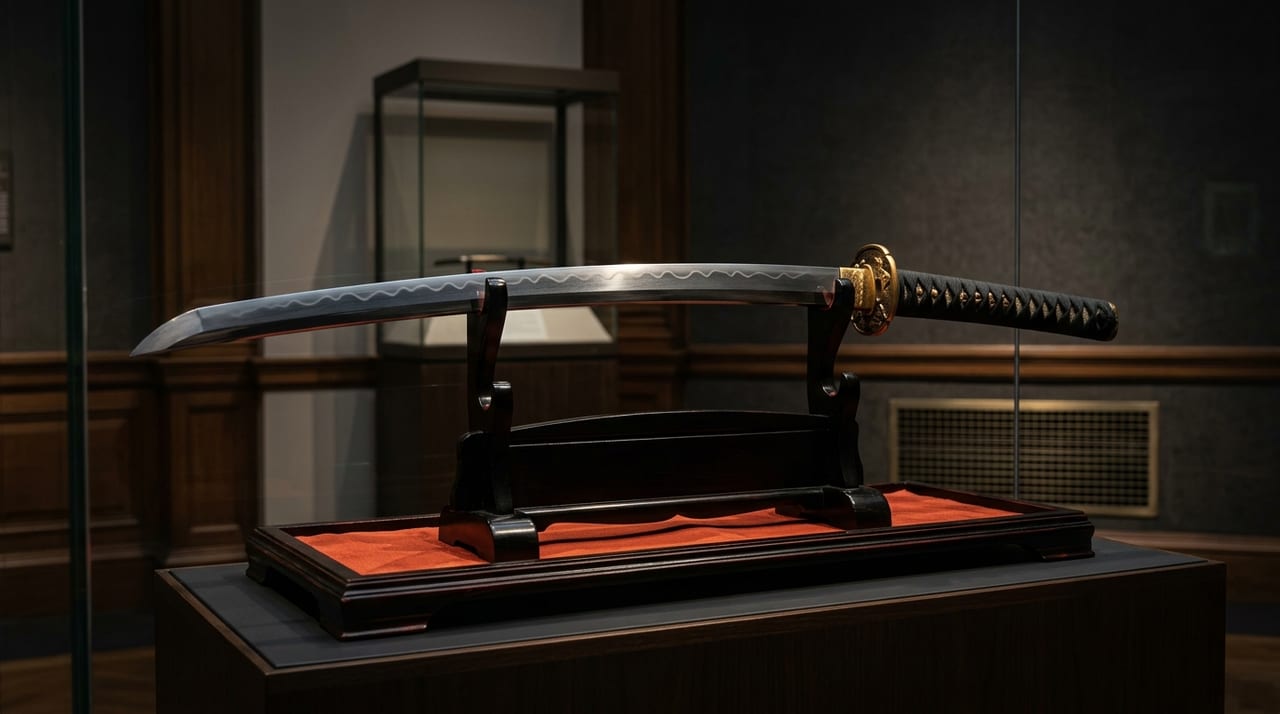
Special exhibitions at museums are an opportunity for kokuhō (National Treasure) and jūyō bunkazai (Important Cultural Property)-class famous swords to gather in one place, and the greatest attraction is the chance to see swords that are normally not open to the public. The Tokyo National Museum, the Kyoto National Museum, and the Japanese Sword Museum (Sumida Ward) are known as the major venues.
The new masterwork sword exhibition organized by NBTHK features the latest works of contemporary tōshō as its main attraction, and is popular among sword enthusiasts as an opportunity to see living sword-forging techniques up close. The nationwide new masterwork sword exhibition held every autumn, and regional appraisal exhibitions organized by prefectural branch chapters, are held throughout Japan.
Workshop exhibitions and solo exhibitions by individual tōkō and tōshō may not be large in scale, but they are a precious opportunity to exchange words directly with the creator themselves. Being able to hear from the creator about the intent behind a sword and their technical innovations is an experience that cannot easily be obtained from museum exhibitions alone, and such venues tend to have a low barrier to entry even for people encountering swords for the first time.
Basic Viewing Etiquette at Exhibitions
The points to look for differ between viewing a nihontō through a display case and having the opportunity to hold it in one's hands (using white cotton gloves or wiping paper).
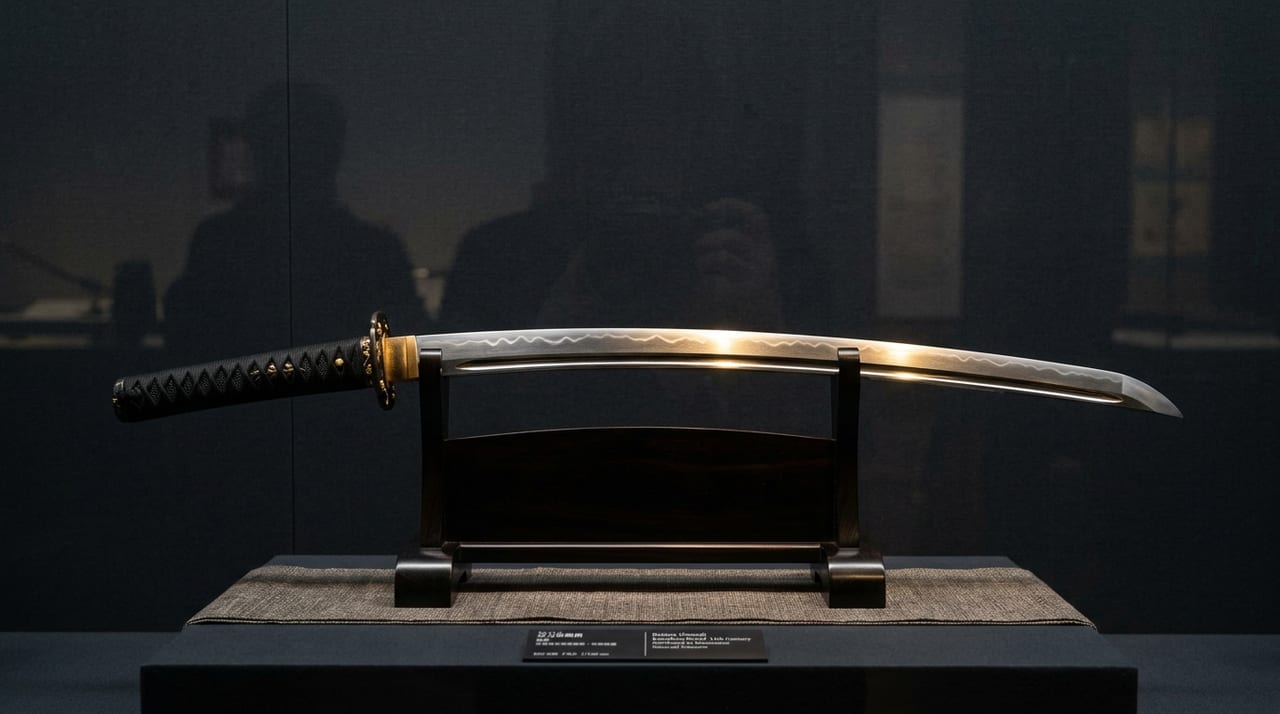
When viewing through a case, the angle of the lighting is decisive. To see the hamon, it is ideal to have light shining from diagonally above, and most exhibitions set their lighting at this angle. Moving one's head position gradually to avoid the glass reflections and searching for the angle at which the hamon stands out most is the skillful way to view. Bringing a monocular (loupe) makes it easier to confirm details of the jigane and the granularity of the hamon. Whether or not bringing one in is permitted varies by venue, so confirming in advance is reassuring.
When there is an opportunity to hold the sword, holding the blade in front of one's body with the edge facing upward and angling it with the cutting edge away and the mune close makes the working of the jigane easier to see. Building the habit of moving one's gaze from the kissaki to the nakago while checking the overall balance will naturally cultivate one's powers of observation. Take care when handling the blade so that breath does not reach it and fingerprints are not left.
Narrowing Down What to Look For — Three Points for Making Effective Use of Viewing Time
At an exhibition where time is limited, trying to see everything leads to fatigue and a tendency to miss the essential parts. Narrowing things down to the following three points is efficient.
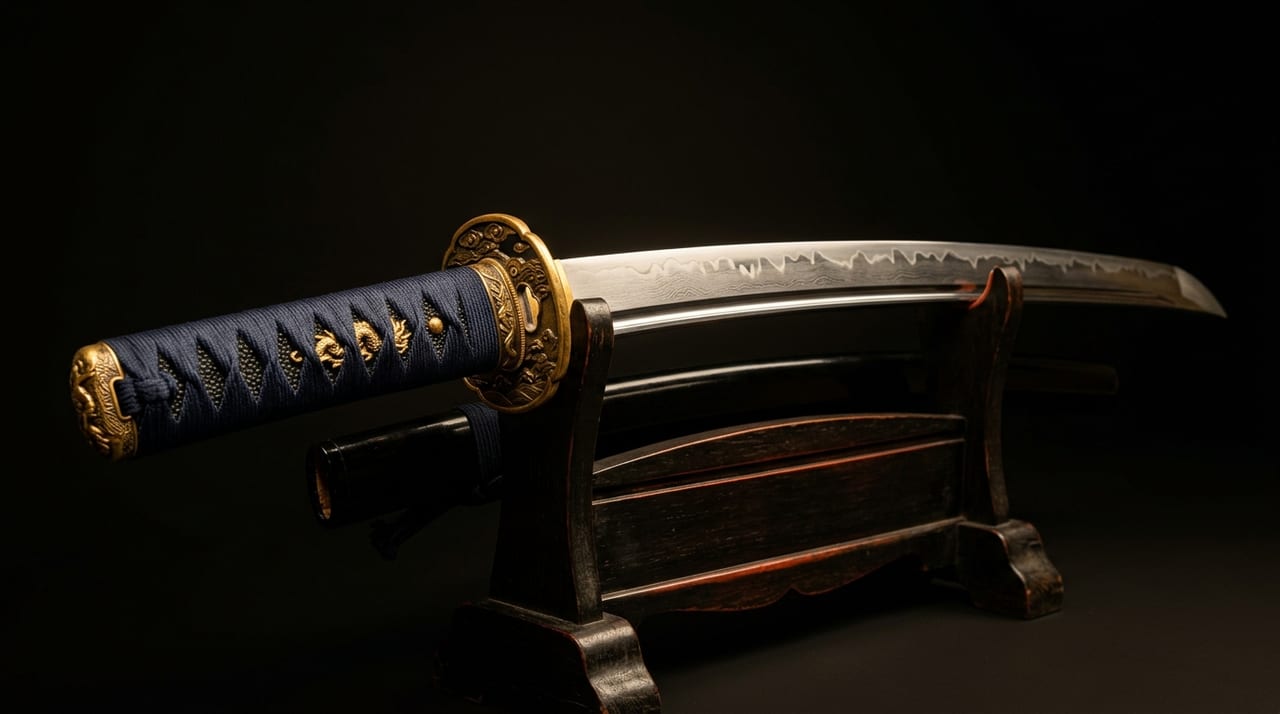
1. Types and Working of the hamon Committing the basic categories of hamon to memory beforehand — suguha, chōji, gunome, midareba, and so on — makes comparing them against the real thing enjoyable. Being further aware of the difference between a hamon with strong nie and one with a finely detailed nioiguchi adds depth to one's appreciation.
2. Kitae-hada of the jigane Confirm the types of kitae-hada — itame, masame, mokume, ayasugi-hada, and so on — against the real thing. This "hada" is the trace of orikaeshi tanren and is an important clue to the tōkō's skill and the quality of the material.
3. Kissaki and nakago The shape of the kissaki (ko-kissaki, chu-kissaki, o-kissaki, inonokubi kissaki) is an important indicator for dating a sword. Checking the nakago together with whether a kanteisho is present, and comparing the patterns of the mei and yasurime against the entries in the kanteisho, cultivates a basic eye for appraisal.
Calendar of Major Nationwide Nihontō Exhibition Events
Year-round / Permanent
- Japanese Sword Museum (Tokyo, Sumida Ward): operated by NBTHK (Society for the Preservation of Japanese Art Swords). Holds 4 to 6 special exhibitions per year in addition to the permanent display.
- Tokyo National Museum (Ueno): kokuhō (National Treasure) and jūyō bunkazai (Important Cultural Property) swords are on permanent display in the regular exhibition galleries.
- Kyoto National Museum: nihontō and tōsōgu are on display year-round.
Annual Events
- Nationwide New Masterwork Sword Exhibition: held every October to November at the Japanese Sword Museum. The latest works of contemporary tōkō can be viewed all in one place.
- Contemporary Sword Craftsmen Exhibition (Tokyo): an exhibition where sword craftsmen — saya makers, togishi, metalworkers, and others — gather in one place.
- Regional appraisal exhibitions organized by each branch chapter: held throughout Japan year-round.
Notable Spots by Region Unique nihontō exhibitions are also held at regional facilities such as Bizen Ichimonji no Sato (Setouchi City, Okayama), Seki City (Seki Traditional Swordsmith Museum, Gifu), and Okuizumo (tatara-related facilities, Shimane). Planning a trip to visit the production regions will deepen one's understanding of the exhibition content particularly well.
In recent years, there have been more cases where the content of special exhibitions tours regional art museums, and cases where advance reservations are required specifying a date and time. As changes may occur in both the exhibition period and venue, it is certain practice to check the latest event information on the organizer's official website and official social media before visiting.
Practical Checklist Before Going to an Exhibition
To prevent missing things or making a wasted trip, here is a summary of points to confirm before setting out.
- Checking open and closed days: Museums and art galleries often have closed days on certain days of the week or during changeover periods between exhibitions. Confirm in advance that the visit date does not fall on a closed day.
- Checking photography rules: Even at venues where photography is permitted, the use of flash and tripods and video recording may be restricted. Follow the notices at the venue entrance and official guidance.
- What to bring: In addition to a monocular, a notepad and writing implement for researching works of interest later are convenient. If one takes home a catalogue or pamphlet, there is no need to stop inside the venue to take notes for long periods.
- Time of visit: The period just after opening and just before closing tend to be relatively calm times to view. This is a useful guide when one is concerned about crowds.
Basic Guide to Reading a Kanteisho
A kanteisho issued by NBTHK states the rating arrived at as the result of a review. Typical rating names include Hozon Tōken, Tokubetsu Hozon Tōken, Jūyō Tōken, and Tokubetsu Jūyō Tōken, and the system is such that the higher the rating, the stricter the appraisal criteria become. When viewing works at an exhibition, paying attention to which rating a work has been appraised at, together with the mei and period information written in the caption, adds another axis to one's appreciation.
When considering a purchase, always confirm whether a kanteisho is present and which organization issued it. For works that come with a kanteisho, the judgment of a specialist body regarding the mei, period, and provenance is presented, which serves as a reassuring factor even for people handling nihontō for the first time.
Etiquette for Questions to Curators and Tōshō
At new masterwork sword exhibitions and workshop exhibitions, there are occasions when opportunities to ask questions directly to curators and tōkō themselves are provided. Summarizing what one wishes to ask in notes beforehand allows one to focus on the key points even within limited time. It is also important to be considerate and not linger too long in front of display cases, so as not to interfere with other visitors' viewing. When conversations or photography at the venue lead to social media posts, being considerate about the appearance of works and related persons in the content and confirming the posting rules established by the organizer is reassuring.
Preparation for Enjoying Exhibitions Even More
Many exhibitions allow one to check the list of exhibited works in advance. When a catalogue is available, it can be used not only for obtaining on the day but also for review afterwards. Becoming a member of the Japanese Sword Museum often brings benefits such as early viewing and discounts, making it highly cost-effective for enthusiasts who visit regularly.
After an exhibition, rereading the catalogue one has purchased and supplementing one's knowledge about the period, school, and tōkō of the swords seen makes the next viewing richer. Accumulating the cycle of "see → research → see again" is the most reliable path to cultivating one's eye for nihontō.
When gathering information on tōkō whose works or style one has taken a liking to, TOUKENZA's online collection is also a useful reference. Using the knowledge gained at the exhibition as a starting point, comparing and examining works online should deepen one's understanding even further.