Swords and Court Ritual from the Late Nara Period to the Heian Relocation Era — The Transformation of Sword Culture Shaped by the Transfer of Power to Heijōkyō, Nagaokakyō, and Heiankyō
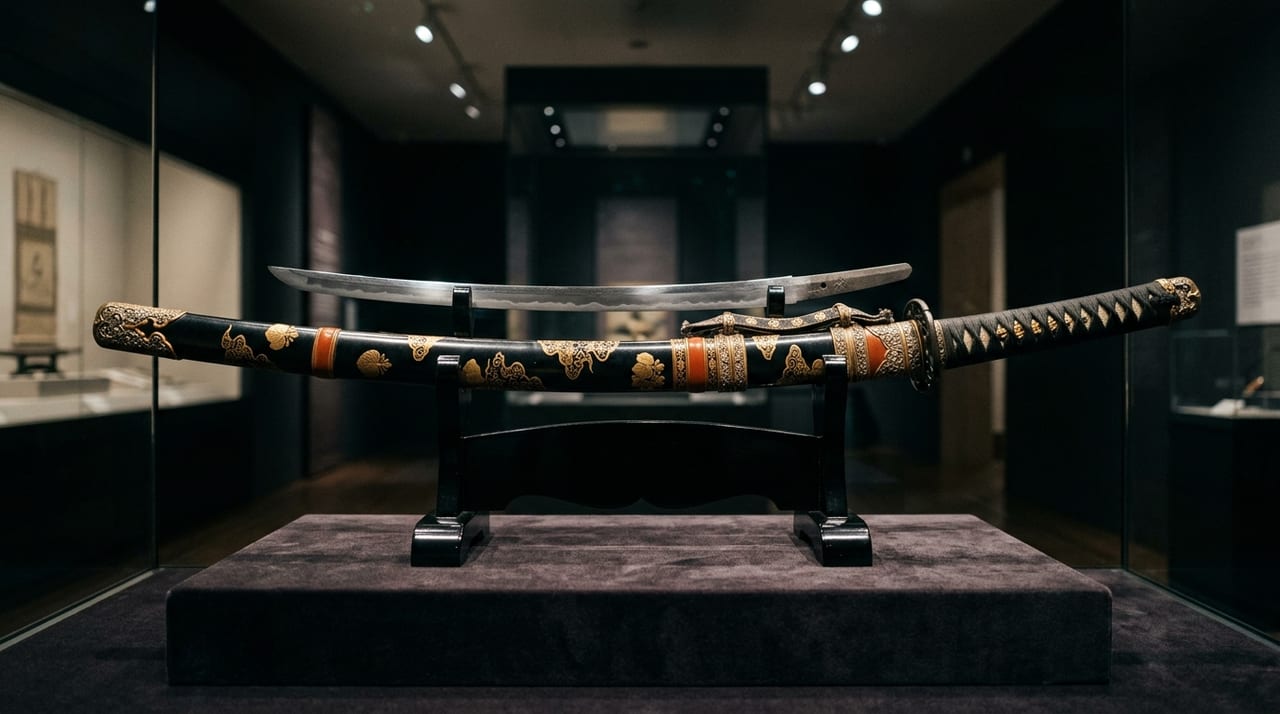 * Image is for illustrative purposes only.
Table of Contents
Political Turmoil in the Late Nara Period and the Role of Swords
The late Nara period (770s) was an era of political turmoil in the imperial court, exemplified by the Dōkyō affair, and also a time of political reform under Emperors Kōnin and Kanmu. An important fact when discussing sword culture of this period is that the "state-controlled sword management system" established by the ritsuryō system had begun to waver.
Under the ritsuryō system, bows and arrows, swords, and armor were managed as state-owned weapons under the jurisdiction of the kokushi (provincial governors), and the ranks permitted to carry swords freely were clearly restricted. In the late Nara period, armed buildup by regional clans advanced and the central management system was gradually becoming a hollow formality. This divergence between the system and reality led to the early stirrings of warrior culture in the early Heian period.
The swords of that era were predominantly chokutō (straight swords) that still bore a strong stylistic influence from the continent (Tang China and Silla), and the swords worn by nobles and government officials basically belonged to this lineage. The management of weapons by the kokushi was an integrated system tied to the tax structure and the organization of military units, and the fact that swords themselves were treated as assets to be accounted for by the state cannot be overlooked. Under this management system, there was little room for personal discretion in the production, possession, or wearing of swords, and the later cultural practice of an individual owning and appreciating a single sword had not yet taken root.
Sword Culture during the Nagaokakyō Relocation Period (784–794)
The year 784, when Emperor Kanmu decided to relocate the capital to Nagaokakyō, marks the eve of a turning point in the history of Japanese swords. The court at Nagaokakyō (near present-day Muko City and Nagaokakyō City) lasted about ten years, but during this brief period of relocation, signs of change appeared in the relationship between court ritual and weapons.
Of particular note is the intensification of campaigns against the Emishi. The forces of Ki no Kosami, who suffered a crushing defeat at the Battle of Isawa at the hands of Aterui in 789 (Enryaku 8), were criticized for problems with their equipment. This prompted debate over military reform and heightened interest in the shape and quality of swords. It is said to be one of the distant causes of the shift toward curved blades, as swords that were lighter and easier to handle than the heavy chokutō came to be sought for lengthy expeditions.
The setbacks on the Emishi front are thought to have served not merely as military failures, but as an impetus for the court to become conscious of the actual combat suitability of swords. Until then, chokutō had a strongly ceremonial and authoritative character, and their design had not prioritized ease of handling and durability in actual combat. Through the upheaval of the Nagaokakyō period, the question of what made an effective sword in combat led to the subsequent search for curved blades. The background of the court repeatedly relocating the capital in a short span of time was also influenced by such military tension and financial burdens, and sword culture was not unrelated to this political instability.
The Heiankyō Relocation (794) and the Reorganization of Sword Ritual
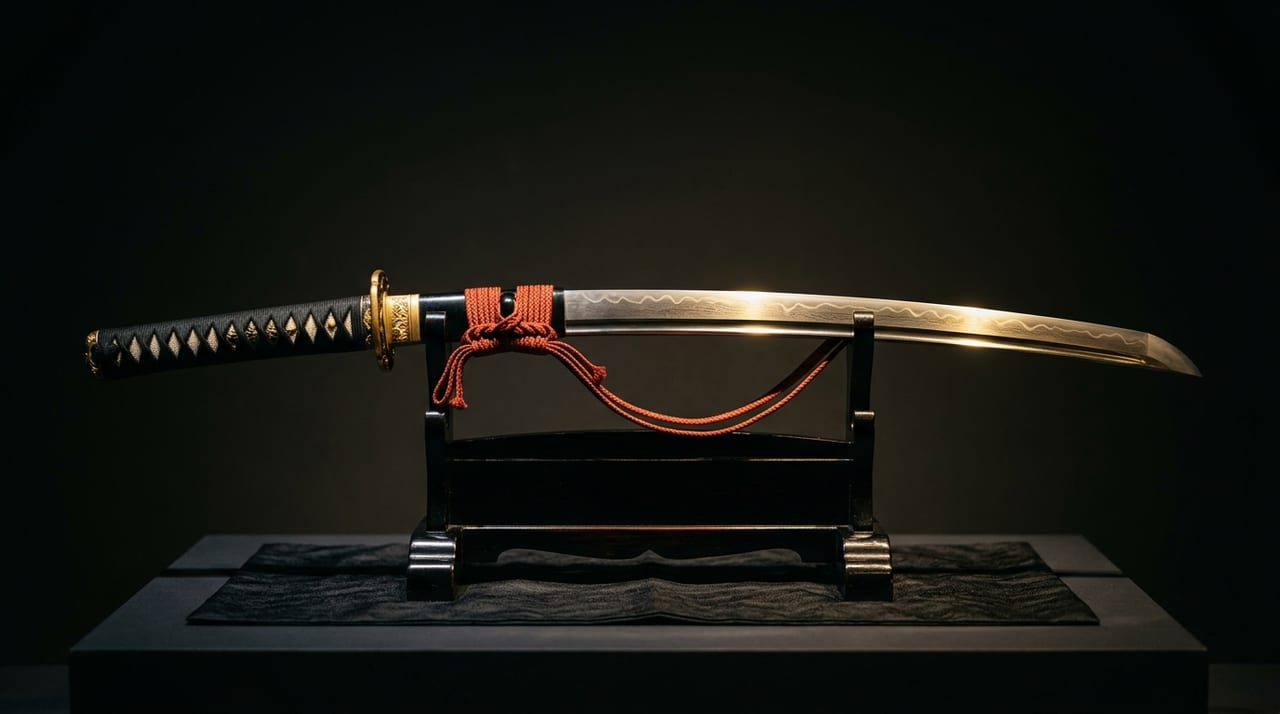
After the relocation to Heiankyō in 794, the Kanmu court proceeded to systematize court ritual. Swords were positioned as important implements in ritual, and this was also a period in which the forms of ritual swords — such as the o-tatewaki and the sword of the Naishidokoro — were established.
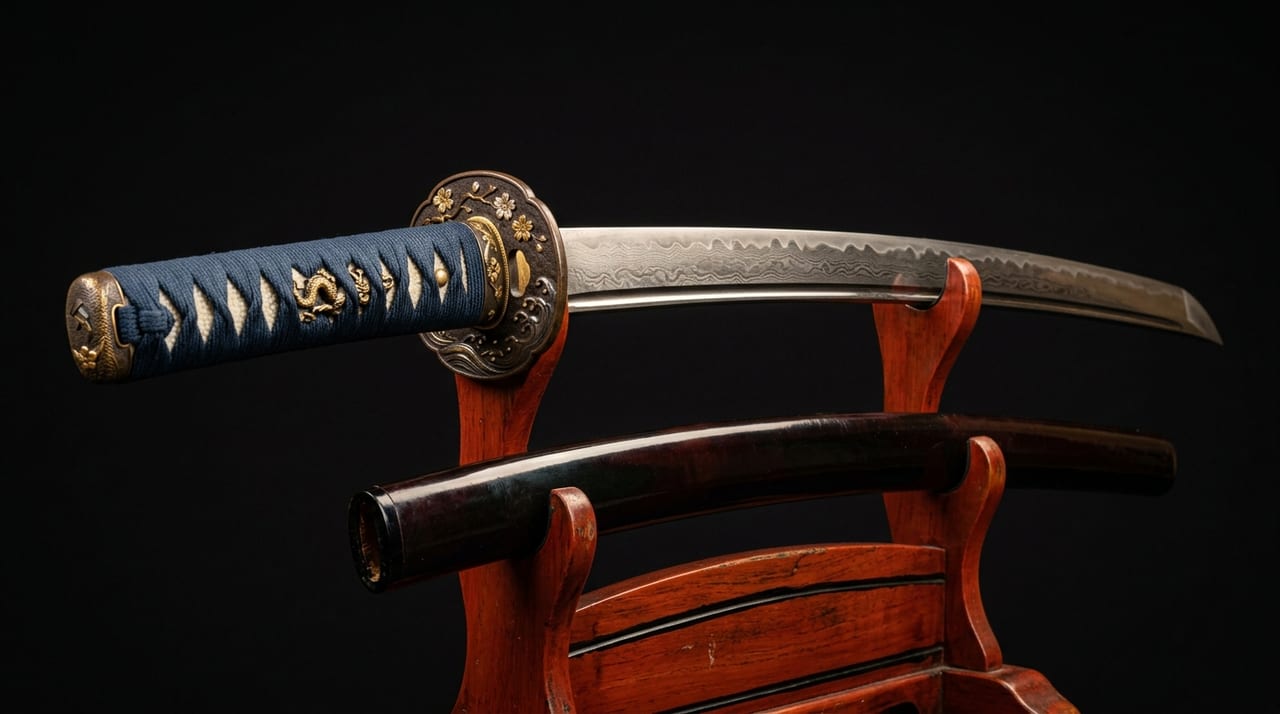
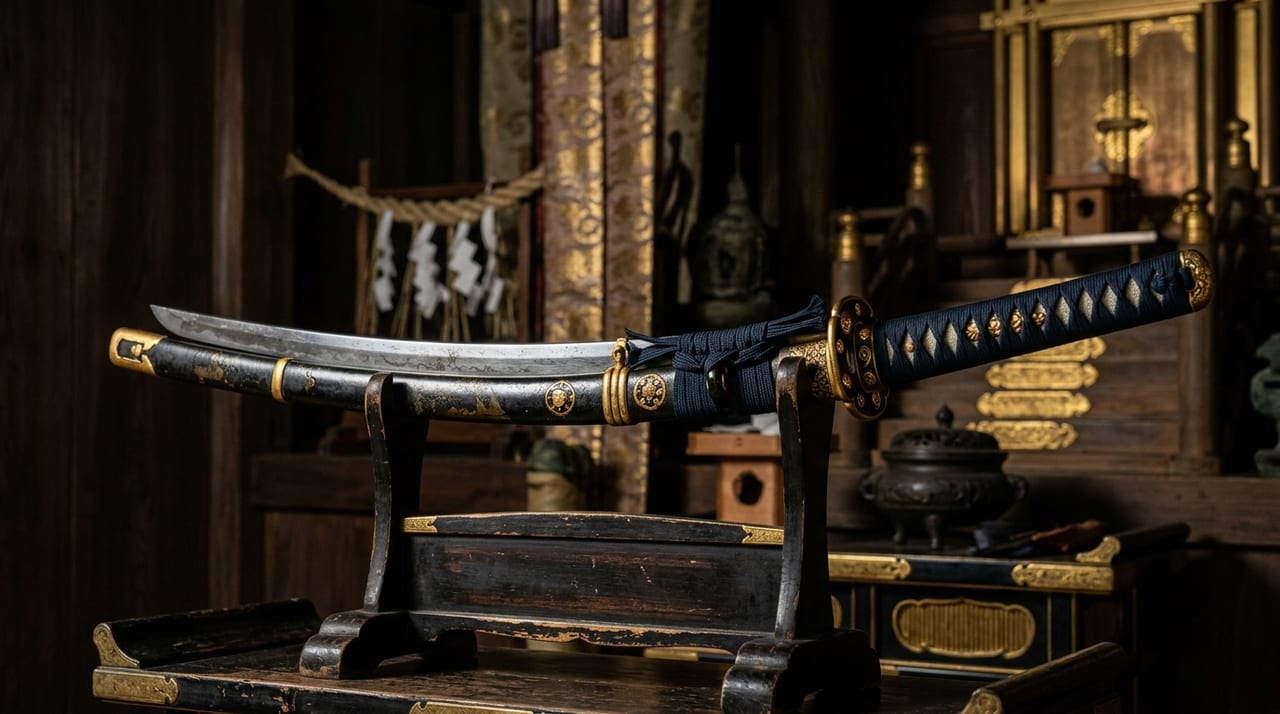
Ritual swords developed along a separate lineage from practical swords, with decorative quality being emphasized. Among the Nara-period swords preserved in the Shōsōin are kazari-tachi (decorated tachi) and kuro-urushi-tachi (black lacquer tachi) decorated with gold and silver, which have a strong character as refined works of craft influenced by the continent (Tang China and Silla). This lineage of ritual swords became the foundation of tachi culture in the Heian court.
Ritual swords also functioned as instruments for making the authority of the emperor visible and were worn at important state ceremonies related to enthronement. Such swords required a level of perfection as works of decorative art, and continental techniques were often used in the decoration of the saya and tsuka. In contrast to practical swords as instruments of military force, ritual swords as symbols of authority — this dual character is a defining feature of sword culture in this era. The two were initially clearly separated, but in later ages the practical combat sword also became an object of aesthetic pursuit, and the origins of the uniquely Japanese value of the "fusion of utility and beauty" can be found in this period.
The Eve of the Transition from Straight Swords to Curved Swords
In the early Heian period (early 9th century), chokutō (jōkotō) were still the mainstream, but it is thought that the transition to curved swords began in this period. There are various theories about the factors behind the transition, including the following.
- The need for a shape suited to drawing cuts in mounted combat
- Contact with curved swords from the continent (influence of Balhae and Tang China)
- Improvement in steel quality through the development of tatara ironmaking technology
A type of sword drawing particular attention as an artifact of the early Heian period is the warabite-tō. This sword, whose pommel curves back like a warabi (bracken fern) shoot, has been excavated in large numbers from sites in the Tōhoku region, and the prevailing interpretation holds that it is an early form of curved sword that arose through contact with the Emishi. Whether the warabite-tō is a direct ancestor of the later tachi is debated, but it is evidence showing that diverse sword forms coexisted in the early Heian period.
This transition is thought to have been a gradual process over a long period in which chokutō and curved swords coexisted, rather than something that happened overnight. Because the character of the sword required differed by region and purpose, the pace at which shapes changed is considered to have varied between central ritual swords and regional combat swords. The integrated craftsmanship of hilt and blade seen in the warabite-tō is not unrelated to the later development of techniques for joining the nakago and blade in Japanese swords, and one should understand that the trial and error of this era laid the technical foundation for later generations.
Swordsmiths and the Production System of This Period
The tōkō of the Nagaokakyō and Heiankyō periods were incorporated into a state-organized group of tōshō called the Tōbe and production was carried out under state management. The system under which individual tōkō could freely produce and sell their work did not emerge until a somewhat later era, and the swords of this period essentially had the character of state-produced goods.
In the regions, tatara ironmaking was developing under the control of local clans, and the groundwork was being laid for the emergence of regional kaji independent of the centrally managed official tōkō. The development of these regional kaji would later become the foundation of the Gokaden (Yamashiro, Yamato, Sōshū, Bizen, and Mino).
While the production system run by the state-managed Tōbe promoted uniformity of technique and style, it also had the aspect of leaving little room for regional innovation. From the late Nara period through the early Heian period, the centralized production system gradually loosened and the number of cases in which regional clans and temples and shrines maintained their own kaji groups increased, and this is thought to have led to the later diversification of sword schools. The structure of this period — in which two production axes, central and regional, coexisted — can be said to have prepared the preconditions for the systematization into lineages and schools of tōkō that came into full swing from the mid-Heian period onward.
The sword culture of the Heian relocation era occupies a transitional position between "continental chokutō culture" and "Japan's own curved sword culture," and though it tends to be overlooked, it is an era division that should be understood as an important inflection point in the history of Japanese swords.
Surviving Artifacts and Points to Note in Appreciation and Collecting
Surviving examples of swords from the late Nara period through the Heian relocation era are extremely limited, and apart from the ritual swords transmitted in the form of the Shōsōin treasures, most can only be confirmed in the form of archaeologically excavated artifacts such as the warabite-tō. Accordingly, the opportunity for an individual to own or appreciate a single sword representative of this era is virtually nonexistent in practice, and the basic approach to deepening one's understanding is through museum and archival exhibitions or research reports.
When collecting and appreciating swords, it is useful to maintain a genealogical perspective on how the sword culture of this transitional period connected to later eras. The changes of this period — the transition from chokutō to curved swords, the differentiation between ritual swords and combat swords, the expansion from the state-run system to regional kaji — all serve as the foundation for understanding sword culture in later ages. Even when evaluating a single sword, a deeper appreciation becomes possible by taking into account from which era and from what kind of institutional and cultural background it was born.