The Transition from Naginata to Spear — The Technical and Tactical Reasons Behind the Change of the Leading Close-Combat Weapon in the Early Sengoku Period and Their Practical Distinction in Battle
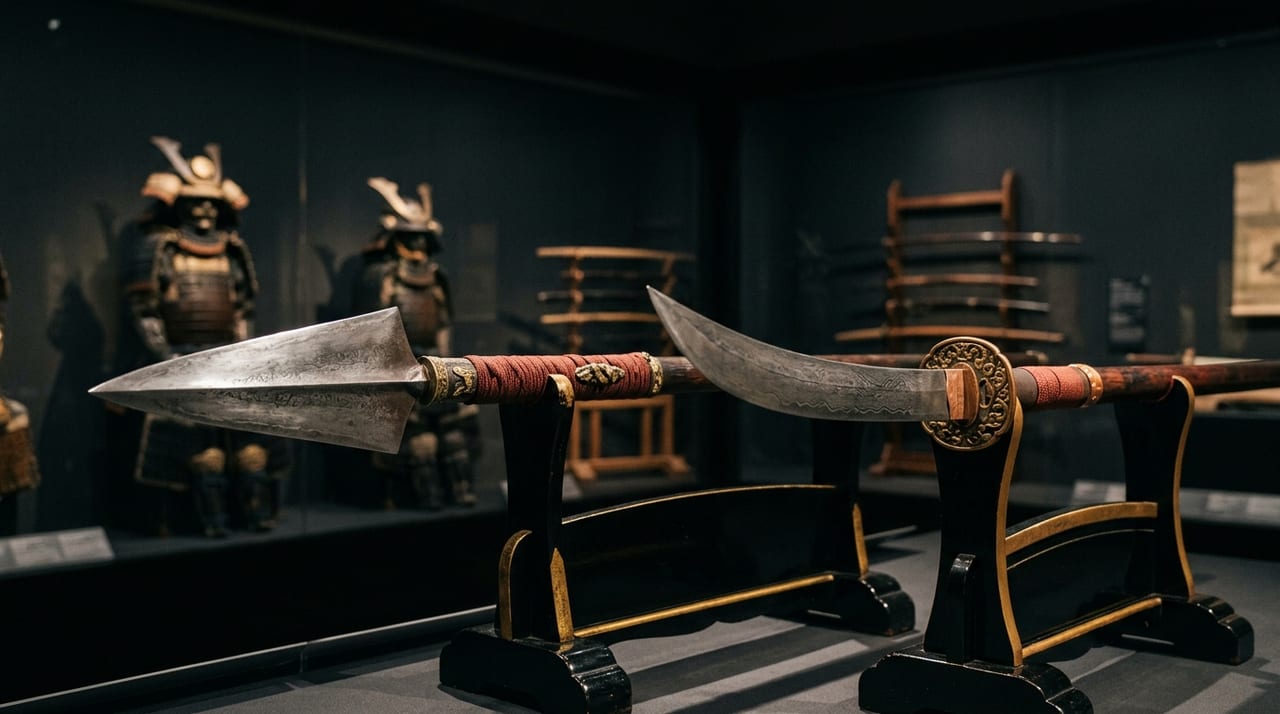 * Image is for illustrative purposes only.
Table of Contents
The Naginata at Its Peak — The Principal Weapon from the Late Heian through the Kamakura and Nanbokuchō Periods
The era in which the naginata shone as the leading weapon on Japanese battlefields extended from the late Heian period through the Nanbokuchō period (14th century). The naginata, a curved blade mounted at the end of a long shaft, proved its worth as a slashing weapon that targeted the legs of mounted warriors and swept wide arcs while pivoting the body.
The war tales depicting the Genpei War contain many scenes of fierce single combat with the naginata, and — as the legend of Benkei collecting a thousand tachi on a bridge illustrates — it was recognized by common people as the representative weapon of the age.
By the Kamakura period, naginata techniques were included in the warrior class's training curriculum, and during the turbulent Nanbokuchō period the tactic of infantry warriors charging in groups with naginata had been established. Large naginata (onaginata) of this period with a nagasa exceeding one meter were not uncommon, making them advanced weapons that demanded physical strength and skill.
The shaft of the naginata was made from hard wood such as oak, and the blade had a characteristic shape that widened toward the kissaki end. This shape made it possible to harness the centrifugal force of a sweeping strike to deliver a powerful blow. On the other hand, handling it required a corresponding degree of core strength and expertise, and even within the limited warrior class, those who had mastered naginata technique commanded particular respect.
The combat situations in which the naginata excelled included the following.
- Anti-cavalry combat targeting the legs of mounted warriors
- Defensive fighting in spaces with restricted passageways, such as castle interiors and temples
- Maintaining reach in the chaos of fighting multiple opponents at once
The Turning Point of the Mid-Muromachi Period — Why the Spear Rose to Prominence
The signs of a change of the leading weapon on the battlefield became clear around the Ōnin War (1467–1477). Multiple intertwined factors drove this transition.
Factor 1: The Transformation of Group Tactics The greatest factor was the mass appearance on the battlefield of lightly equipped foot soldiers of non-warrior origin known as ashigaru. It was difficult to train ashigaru who had received no formal martial arts instruction in the advanced techniques of naginata handling, and the spear, which could be wielded with the simpler motion of a "thrust," offered the advantage of being deployable in combat after only a short period of training.
Factor 2: The Production Cost and Accessibility of the Spear Producing a naginata required the advanced skill of forging a blade with a pronounced sori, whereas the triangular-sectioned spear tip (yariho) was a relatively simple shape that could be mass-produced. In the mass-mobilization system of the Sengoku period, the mass-producibility of weapons was a strategically important factor, and the superiority of the spear stood out.
Factor 3: The Increased Efficiency of Long-Shafted Weapons The long-shafted spear was a weapon optimized for simultaneous charges in close formation. The tactic of charging with a dense formation of spears known as yaribusuma was effective even against mounted warriors, and was actively adopted by Sengoku daimyo as a group tactic that did not depend on individual skill.
That said, the changeover of the leading weapon from naginata to spear did not happen overnight. In large-scale pitched battles on open plains, a coordinated simultaneous charge using yaribusuma proved overwhelmingly effective. On the other hand, in narrow passageways of castles and temples and in localized engagements that tended to devolve into melee fighting, the naginata's ability to dominate a wide reach with its sweeping motion remained effective, and the two weapons coexisted for some time, each used according to circumstances.
| Comparison Item | Naginata | Spear |
|---|---|---|
| Basic motion | Sweeping slashing strike | Linear thrust |
| Difficulty of mastery | Requires advanced technique and core strength | Can be learned in a relatively short period |
| Primary wielders | Trained warriors | Groups centered on ashigaru |
| Preferred combat style | Defense in confined spaces; melee fighting | Group charges on open plains |
The Naginata's Survival Strategy — Conversion and Change of Purpose
Although the naginata had ceded the leading role to the spear, it did not disappear entirely. From the mid-Sengoku period onward, the naginata survived mainly in two forms.
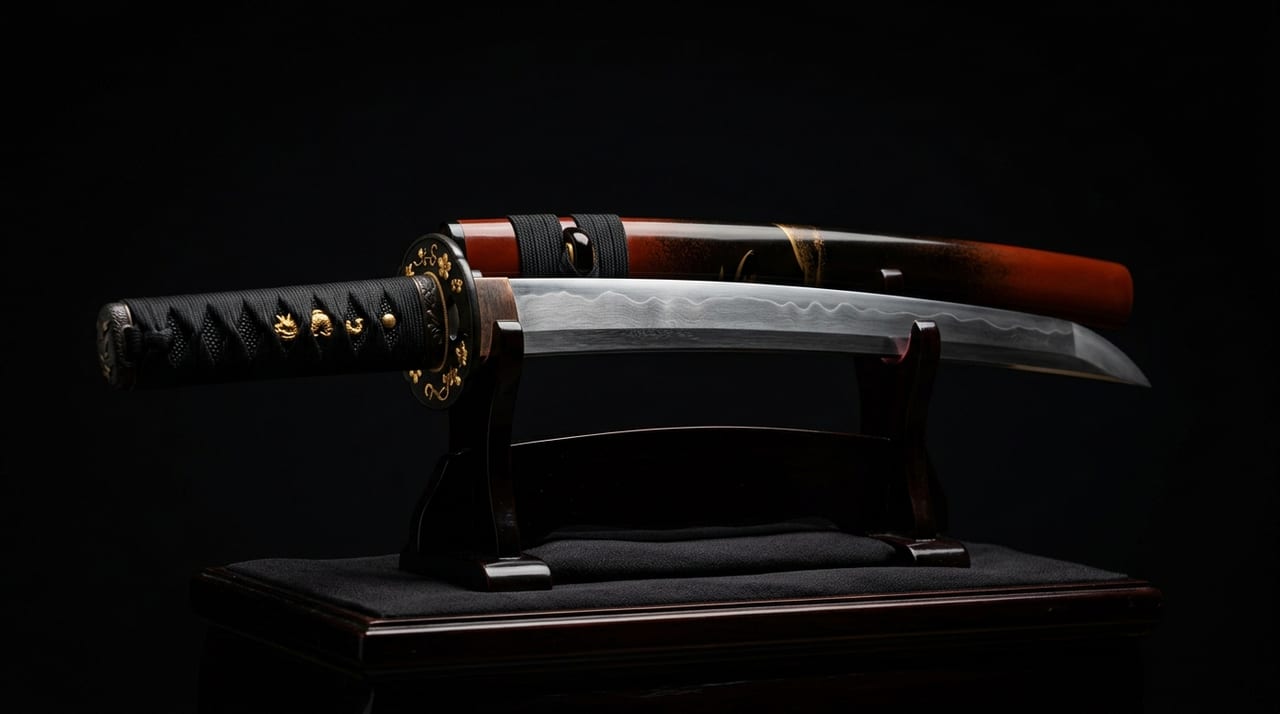
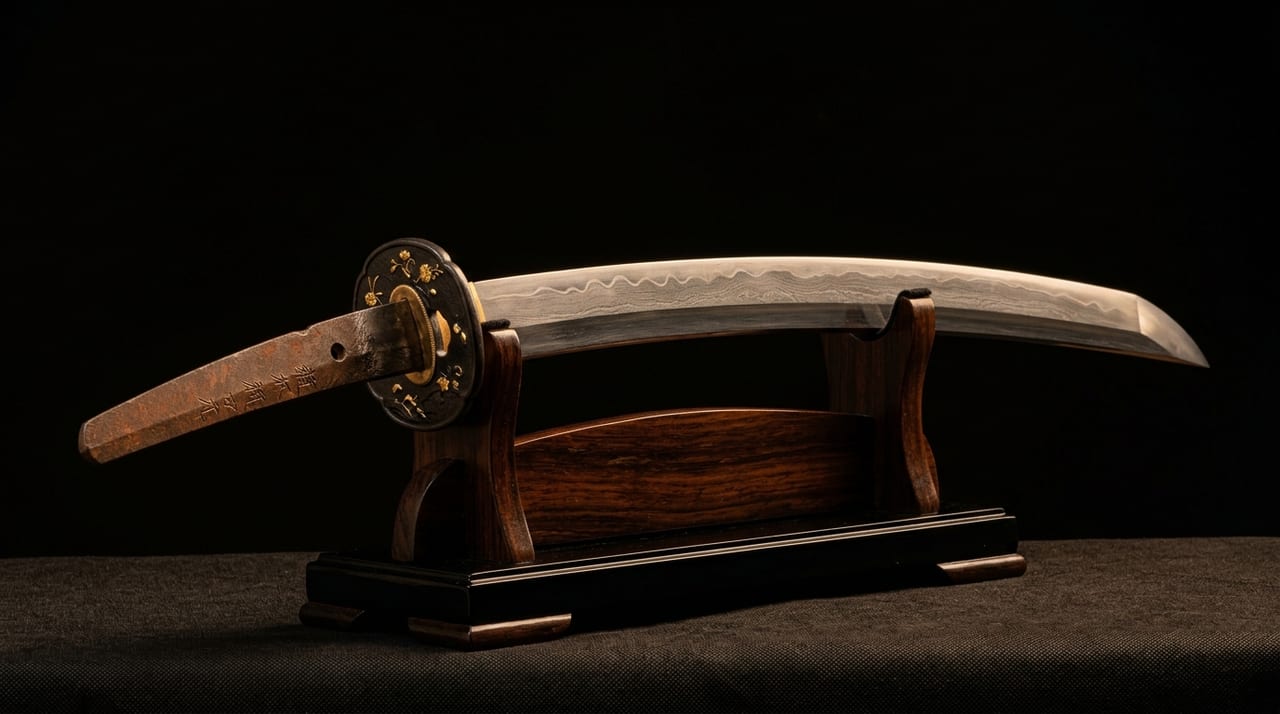
The first was a conversion known as naginata naoshi. The technique of shortening the shaft of an old naginata and reusing it as a sword (uchigatana) or wakizashi became widespread. Blades produced through naginata naoshi have a distinctive sori and hamon, and many works identified as naginata naoshi still survive today in the field of sword appraisal.
Naginata naoshi blades often retain traces of the original naginata's sori in the nakago, and points such as the relatively small difference between the motohaba and sakihaba and the hi running all the way close to the nakago are known as key observations in sword appraisal. Surviving examples of zaimei naginata in their original form are rare, and the very fact that they have been transmitted to the present day in the transformed guise of naginata naoshi speaks to how weapons of the time were used to their fullest.
The second was a shift to religious and ceremonial uses. Shrines and temples continued to use the naginata as a weapon for self-defense and religious rites, and in particular the custom of providing a young woman of the warrior class with a single naginata as part of her trousseau continued into the Edo period. This is the origin of naginata culture as a women's martial art, which continues through to the modern practice of naginatadō.
The cultural legacy transmitted by the naginata includes the following.
- Continued use as a weapon for protection and religious rites at shrines and temples
- Practice as self-defense and a cultured pursuit for women of the warrior class
- Transformation into a sword blade in the form of naginata naoshi
Varieties and Differentiation of the Spear — Diversification in the Sengoku Period
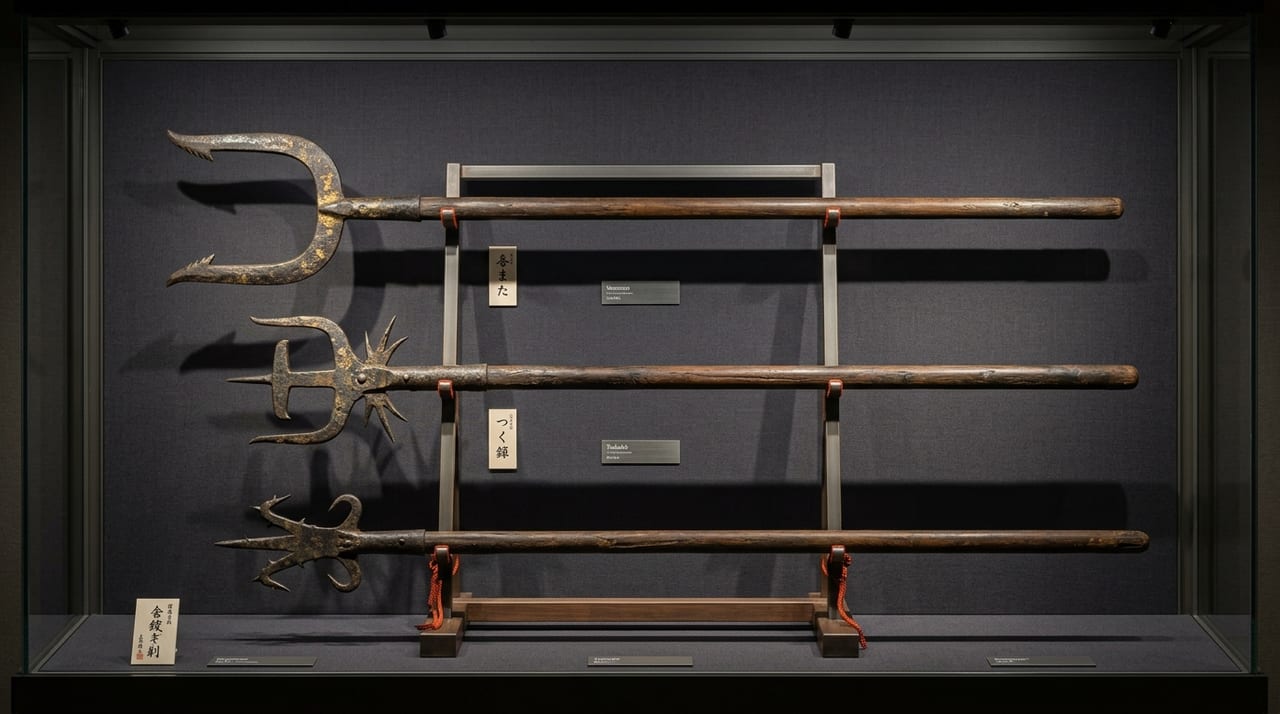
As the age of the spear arrived, diversification of shapes according to intended use occurred. The triangular-sectioned plain spear (suyari) was the basic form, but variations became plentiful, including the katakama yari, jūmonji yari, Kikuchi yari, and sasaho yari.
The katakama yari is said to have been favored by Katō Kiyomasa; the famous spear Nihongō is known for having been won in a drinking bout from Fukushima Masanori by Mori Tahei, a retainer of the Kuroda clan, and is currently housed in the Fukuoka City Museum. It was also during the Sengoku to Azuchi-Momoyama periods that famous generals' beloved spears became legendary. The spear was elevated from a mere expendable item for foot soldiers to a display weapon expressing the individuality of a commander.
The length of the spear's shaft and the shape of its tip were chosen according to the tactical philosophy of the clan or school to which one belonged. When close-formation group charges were prioritized, a suyari of a manageable length was preferred; when individual martial merit was emphasized, there was a tendency to choose complex shapes such as the jūmonji yari, which could catch and entangle an opponent's weapon. Even from the shape of a spear tip alone, one can read what its owner valued most.
The Naginata and Spear after the Edo Period
After the establishment of the Edo shogunate, demand for the spear and naginata as combat weapons declined sharply. However, the practice of ceremonial spear-bearing in daimyo processions continued, and the "procession bearing spears" survived as an important ceremony signifying a daimyo's rank until the Bakumatsu period.
The naginata continued to live on in the training halls of warrior households as a required subject for women of the warrior class, and from the Meiji era onward was adopted as part of girls' school education, continuing to the present day. Spear techniques have been handed down as a martial art, but not to the same extent as naginatadō, and today only a very small number of schools such as Hōzōin-ryū Sōjutsu maintain a living tradition.
The reason fewer naginata survive compared to uchigatana and spears is that, in addition to many having been converted into naginata naoshi, demand for them in actual combat contracted at an early stage. When appreciating or collecting swords, bearing this background in mind allows one to understand more deeply the weight of history carried by a single naginata naoshi blade.
The changeover of the leading weapon from naginata to spear reflected not merely the superiority of one weapon over another but a fundamental transformation in the form of warfare, embodying a turning point in both the military and cultural dimensions of Japanese society.