Internships and Workplace Experience in the Nihontō Industry — The Reality of Workshops Opening Their Doors to Young People in Swordsmithing, Polishing, and Sword-Fitting Crafts, and the Current State of Skill Transmission
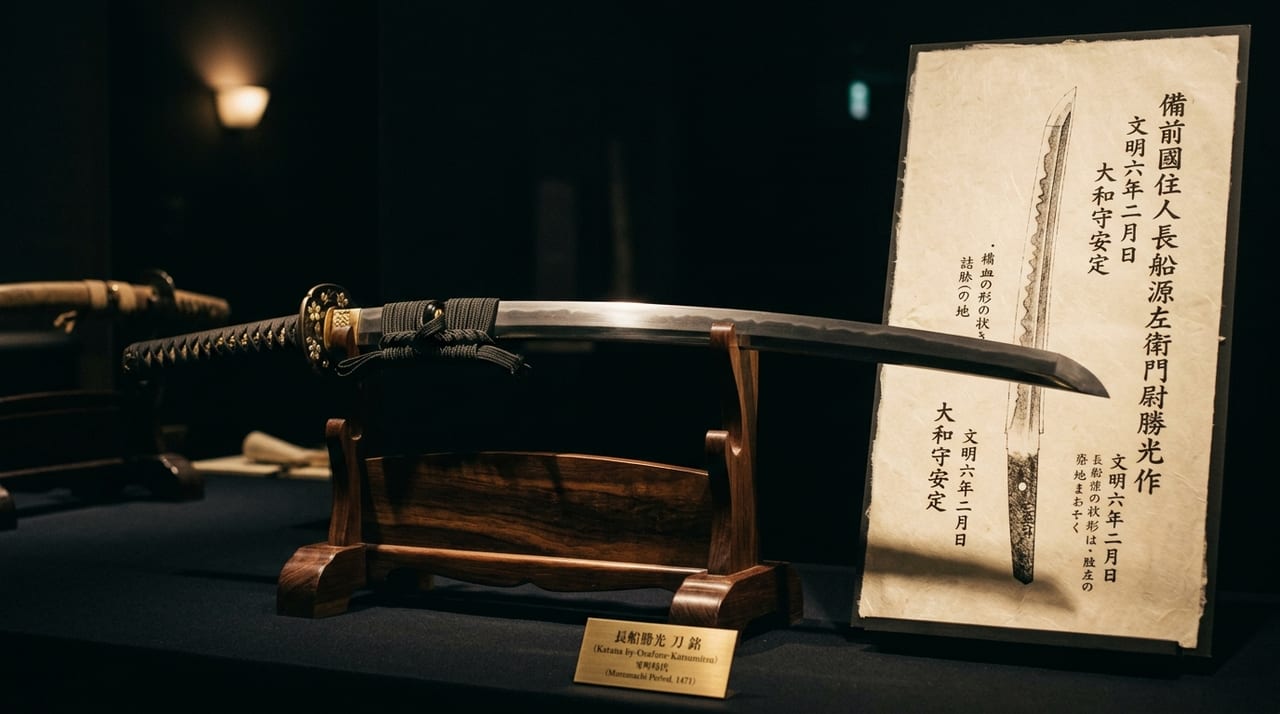 * Image is for illustrative purposes only.
Table of Contents
A "Gateway of Experience" Opens to the World of Nihontō Craftspeople
The nihontō has long been one of the most closed-off worlds in traditional craft. Becoming an apprentice to a tōshō required a personal connection or introduction to a master, and even those who simply wanted to see the work from the outside found it difficult to get close. In recent years, however, winds of change have begun to blow through the nihontō industry. A growing number of workshops have started to offer internship and workplace experience programs aimed at young people and working adults.
Behind this trend lies the serious problem of a shortage of successors. Not only in sword forging, but across every sword-fitting specialty — togishi, sayashi, tsukamakishi, and tsuba craftspeople — "where to find the next practitioners" is a shared challenge. Across the nihontō industry as a whole, workplace experience is being rediscovered as a more open means of finding talent.
The range of participants is diverse. Motivations vary widely: students with an interest in traditional craft, working adults considering a career change to handwork, and enthusiasts who apply simply out of interest in nihontō. Many workshops, rather than aiming to turn every participant into an apprentice, position these sessions primarily as an opportunity to give people a firsthand understanding of nihontō as a living craft.
Sword-Forging Experience — A Day Spent at the Forge
The format of kaji experience programs varies by workshop, but most adopt a half-day to full-day program in which participants get a genuine feel for the workflow, rather than a purely observational session in which they swing a hammer a few times. Concretely, participants experience operating the bellows (fuigo), learning the timing for adding charcoal, and training to read the temperature of iron from its color. Some workshops let participants actually try striking iron with a hammer while standing beside the tōshō and following instructions.
These experiences function not as mere tourism but as a means of understanding, through one's own body, the difficulty and depth of the craft. Actually feeling the atmosphere of the workplace also serves as a first step before considering apprenticeship.
Since the work involves a high-temperature forge and flying sparks, it is standard practice for workshops to lend protective gear such as aprons, gloves, and safety goggles. Participants are also commonly advised to wear long-sleeved tops and long trousers made of flame-resistant materials and to minimize exposed skin. Session lengths vary by workshop, and whether participants actually attempt the hammering stage or remain mostly observational is up to each workshop's own policy.
Togishi, Sayashi, Tsukamakishi — Multiple Crafts Opening Their Doors
Sword-forging experiences are relatively well known, but cases of togishi, sayashi, tsukamakishi, and other sword-fitting craftspeople offering experience programs are fewer. In recent years, however, programs have been tried such as "a basic togi experience using whetstones" with a togishi, and "observational work to feel the texture of woodworking" at a sayashi's workshop.
In togishi experiences in particular, seeing up close the differences in grit between various whetstones and the quiet work of polishing a blade with water is said to leave a strong impression on young participants. The togishi's work, in contrast to the tanren of swinging a hammer, is quiet work performed while sitting in seiza before the whetstone.
In tsukamakishi experience programs, participants feel the difference between same (ray skin) and silk or cotton thread by touch, and try the basic motion of winding thread in a diamond pattern. Tsukamakishi themselves say that experiencing the difficulty of winding evenly leads to a deeper respect for the craft.
Since these experiences do not involve the high temperatures and physical demands of sword forging, they tend to be accessible regardless of age or physical condition. Because the work centers on extended periods of seiza and fine detailed handwork, some workshops inform participants in advance that "the work is primarily seated," so that they can form a clear image beforehand.
The Challenges and Efforts of the Receiving Side
There is naturally a burden on the craftspeople who accept workplace experience participants. In the case of tōshō, preparations are required for forge safety management, safe handling of tools, and insurance-related matters. There is also the reality that "output temporarily decreases" because the normal work pace is disrupted during experience sessions.
The points that workshops keep in mind when accepting participants include the following.
- Accident prevention when handling fire and bladed tools (preparing protective gear, demarcating work areas)
- How to absorb the slowdown in work pace during sessions and its impact on delivery schedules
- Adjusting explanations to account for differences in each participant's physical condition and experience
- Clarifying in advance the difference between a workshop experience and a full apprenticeship (live-in training)
The last point is particularly important: the commitment required for a few hours or a day of experience is entirely different from that of an apprenticeship in which one builds skills over a period of several years. Workshops make a point of explaining at the time of application that a workshop experience does not itself guarantee employment or apprenticeship.
While accepting experience participants places a burden on workshops, it also creates opportunities to share knowledge of the industry and to encounter potential successors. Some workshops charge a participation fee, which both supplements the workshop's income and serves as a filter for gauging participants' seriousness.
Establishing more formal internship systems would require partnership agreements between workshops and schools or vocational colleges, but at present most efforts remain at the level of individual workshops.
The Process and Mindset for Participating in a Workshop Experience
For those interested in workplace experience in the nihontō industry, the starting points for gathering information are the websites and social media posts of individual workshops, as well as referral pages run by local governments and traditional craft associations. Most workshops do not accept participants year-round but recruit for limited periods, avoiding their busiest seasons. The general approach is to contact a workshop of interest as early as possible and apply through a reservation system.
Points to confirm and prepare before participating include the following.
- Clothing (items that minimize exposed skin, such as long-sleeved tops and long trousers; flame-resistant materials are recommended)
- Each workshop's rules on photography and the extent to which participants may handle works and tools
- Session length and whether breaks are included, and what to bring on the day (towel, drinks, etc.)
- Whether time is provided for questions and career consultations
On the day of the experience, following the craftsperson's instructions at every step involving blades or fire is the fundamental prerequisite for safety, and participants are expected to refrain from touching tools at their own discretion. Many workshops set aside time after the session for participants to share impressions and ask questions, and some say it is also possible to consult about apprenticeship or future career paths on the spot.
What the Opening of the Nihontō Industry Means
The opening of the nihontō craftspeople's world to experience and observation carries significance beyond a mere talent-recruitment strategy. Making craft skills visible is also an act of public education, conveying to society as a whole the fact that nihontō are still being made as a living craft in the present day. Opportunities for the next generation to experience firsthand the fact that new swords are being born by someone's hands at this very moment — not as artifacts sleeping in a museum — are of immense value.
Even within the community of nihontō enthusiasts, it is said that there is a difference in depth of understanding between those who have seen a craftsperson's workshop firsthand and those who have not. Workplace experience and internships can be said to serve an educational role in broadening the base of collectors and enthusiasts.
The choice to "open" a closed world is not easy. However, there is a growing recognition within the industry that this change is, if anything, inevitable if traditional craft is to pass on its lifeline to the next generation. There are hopes that the sight of young people stepping into the world of nihontō craftspeople will become established as a new form of Japanese cultural transmission.