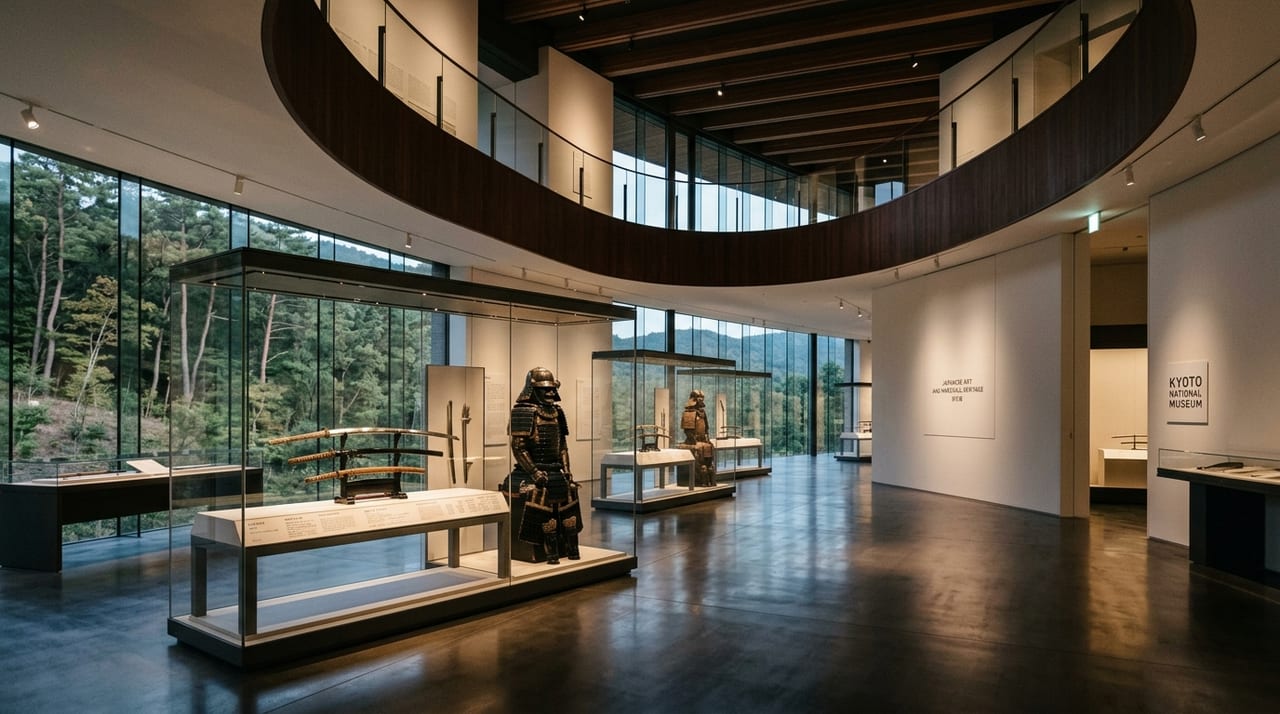
 * Image is for illustrative purposes only.
Kyushu National Museum
九州国立博物館
Overview
Museum Overview and Founding
The Kyushu National Museum is Japan's fourth national museum, following Tokyo, Kyoto, and Nara, and opened in 2005 (Heisei 17) in Dazaifu City, Fukuoka Prefecture. Operating under the fundamental concept of "understanding the formation of Japanese culture through the lens of cultural exchange with Asia," it serves as a comprehensive facility for displaying and researching Japanese culture from the perspective of exchange with East and Southeast Asia, and has garnered considerable attention throughout the nation. Located along the approach to Dazaifu Tenmangū, the building is a streamlined large-scale structure built on the slope of a tree-covered hill, with an innovative design by architect Kisho Kurokawa that has sparked considerable interest. The museum's main entrance is connected via escalators and moving walkways ascending the slope on the Tenmangū side, and the circulation design integrated with nature provides visitors with a monumental experience. The Cultural Exchange Exhibition Room displays approximately 700 cultural properties at all times, and including periodic display rotations, vast numbers of cultural properties can be viewed throughout the year.
Japanese Swords from the Perspective of Asian Exchange
The Kyushu National Museum holds special significance in the display and study of Japanese swords precisely from the perspective of Asian exchange. The development of the Japanese sword was based on iron-working culture, metallurgical techniques, and swordsmanship transmitted from the continent, and was created through the fusion of Japan's unique aesthetic sensibility and technological innovation—a perspective that aligns with the core of the museum's approach. Kyushu is the land where continental culture first made landfall, and the transition from the iron implements of the Yayoi period through the straight swords of the Kofun period to the curved swords of the Heian period is precisely the product of technological accumulation that took place in Kyushu. The museum's permanent "Cultural Exchange Exhibition Room" demonstrates this continuity between continental iron-working culture and the development of the Japanese sword in multiple ways through comparative display of materials from the continent, peninsula, and Japanese archipelago. The opportunity to witness swords and blades that came from China and Korea and the process through which they evolved uniquely in Japan is an experience unique to the Kyushu National Museum within Japan.
Content of Sword and Armor Collections
As a national museum, the Kyushu National Museum maintains its own collection while also preserving and displaying numerous Important Cultural Properties and National Treasures under the jurisdiction of the Cultural Affairs Agency. Regarding swords, the museum features rich displays with a unique perspective not seen in other museums, including works by swordsmiths with connections to Kyushu, materials demonstrating the evolution of swords from ancient to medieval times, and comparative displays with continental swords and weapons. Special exhibitions sometimes realize large-scale sword exhibitions by borrowing National Treasures and Important Cultural Property swords from each location through cooperation with the Tokyo, Kyoto, and Nara national museums. In the permanent exhibition's "Culture of Valor" section, the evolution of armor and swords across the Kamakura, Muromachi, Sengoku, and Edo periods, and the differences in armament among warrior clans throughout Kyushu are visually demonstrated, allowing visitors to learn concretely from actual materials about the differences in military culture among the Shimazu clan of southern Kyushu, the Ōtomo clan and Ryuzoji clan of northern Kyushu.
Kyushu Swordsmiths and Sword-Making Centers
Kyushu is one of Japan's important centers for Japanese sword production, with outstanding swordsmiths particularly produced in Chikuzen Province (present-day northern Fukuoka Prefecture), Bungo Province (present-day Oita Prefecture), Hizen Province (present-day Saga and Nagasaki prefectures), and Satsuma Province (present-day Kagoshima Prefecture). Bungo Yukihira is known as a master craftsman of the early Kamakura period, and his style, while simple, is powerful and represents the very origin of Kyushu sword-making. In the Edo period, the first and second generations of Tadayoshi of Hizen Province established an independent genre called "Hizen swords" (肥前刀), which, while based on the Bizen tradition, were widely celebrated for the unique beauty of their ground steel. In Satsuma, the lineage of the Satsuma clan's official swordsmiths, such as Motohei and Naminohira Yukiyasu of Satsuma Province, was inherited and nurtured unique warrior culture alongside the Satsuma-Jigen school. The Kyushu National Museum features rich displays introducing the lineage and works of swordsmiths from throughout Kyushu alongside regional history, allowing visitors to grasp the full scope of Kyushu sword culture.
Coordination with Dazaifu and Surrounding Environment
The museum is located adjacent to the grounds of Dazaifu Tenmangū, and can be visited together with the shrine dedicated to Sugawara no Michizane, the kami of learning and culture. The treasure hall of Dazaifu Tenmangū also preserves donated swords and armor, and by visiting both the museum and the treasure hall together, one can deeply experience Kyushu's sword-related beliefs and culture. The picturesque environment of the Tenmangū approach with its umegae-mochi shops and souvenir stores enhances the appeal of Dazaifu as a cultural tourist destination, and with easy access from Fukuoka City, it attracts numerous tourists and researchers throughout the year. The route from Nishi-Tetsu Dazaifu Station walking along the Tenmangū approach to the museum provides visitors with a profound cultural experience.
Special Exhibitions, International Exchange, and Educational Activities
The Kyushu National Museum holds multiple special exhibitions annually, and international exhibitions through cooperation with museums in Asian countries are also conducted. Special exhibitions on swords and armor are particularly popular, and in the past, exhibitions assembling National Treasures and Important Cultural Property masterwork swords in one place have been held, drawing sword enthusiasts from throughout the nation. Exchange exhibitions with museums in Korea and China are also held regularly, and the museum's unique perspective on East Asian weapons and armor culture provides visitors with fresh stimulation. Educational programming is also extensive, including appreciation workshops and armor-wearing experience opportunities. On the research front, ongoing academic investigations into the history of cultural exchange in Kyushu and Asian regions continue, and their results are widely disseminated through academic journals and exhibition catalogs.
Highlights
- Asian exchange perspective on Japanese swords — unique among Japanese museums in examining blades through continental iron-working heritage and cross-cultural comparison
- Kyushu sword traditions — the Bungo school and Hizen school (Tadayoshi line), displayed with regional warrior history
- Major special exhibitions of National Treasure and Important Cultural Property swords — assembled through collaboration with Japan's other national museums
- Adjacent to Dazaifu Tenmangū — Japan's most important Tenmangū shrine, enabling a combined cultural visit covering sword dedications and Kyushu warrior history
- International East Asian sword comparison — regular exchange exhibitions with Korean and Chinese museums offering a uniquely comparative view of East Asian blade culture
* Opening hours and exhibitions are subject to change. Please check the official website before visiting.