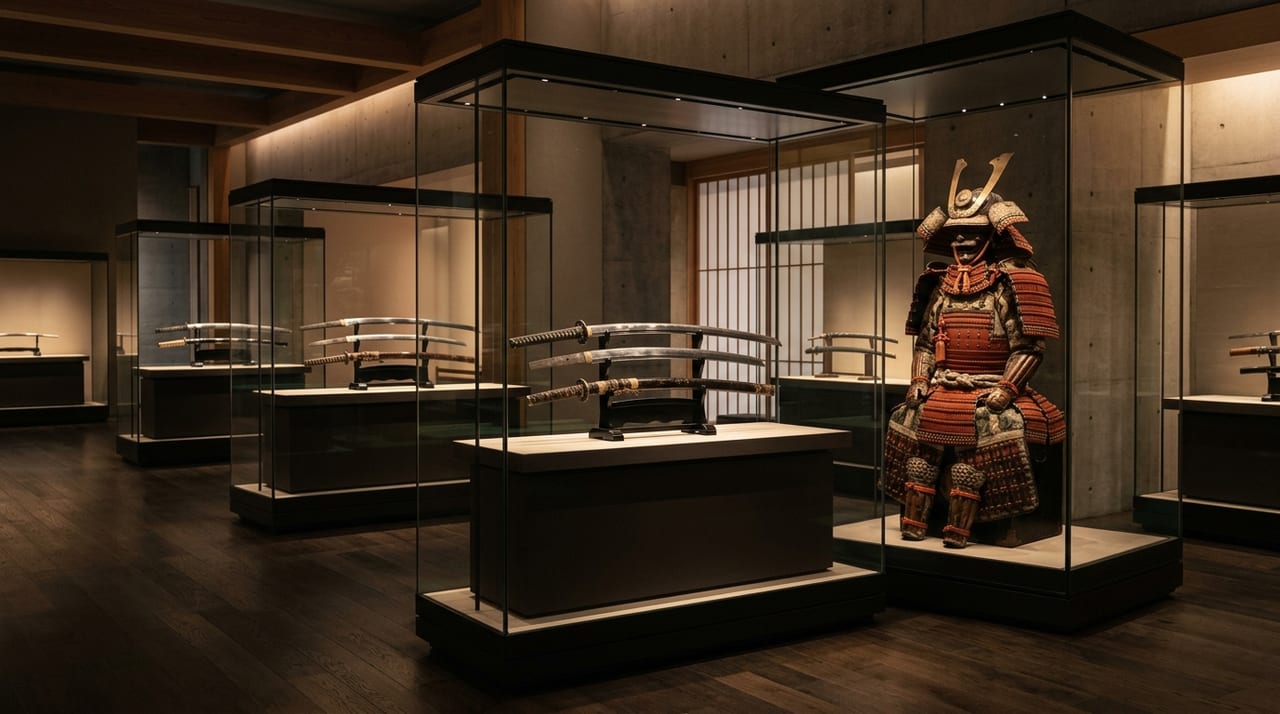
 * Image is for illustrative purposes only.
Iwate Prefectural Museum
岩手県立博物館
Overview
Iwate Prefectural Museum is the comprehensive prefectural museum of Morioka City, covering the natural history, archaeology, history, and ethnology of Iwate Prefecture (the historic provinces of northern Mutsu and Rikuchū). From the perspective of Japanese sword culture, the museum's most significant holdings relate to the Nambu clan — one of Japan's longest-reigning samurai families, who governed northern Iwate from the Kamakura period until the Meiji Restoration, a tenure of approximately 700 years.
The Nambu Morioka domain sword collection reflects the accumulated connoisseurship of a major Tōhoku daimyo house across multiple centuries. Tachi and uchigatana by smiths of successive eras were transmitted through the Nambu family and represent a distinctive regional dimension of nihonto collection and patronage.
Iwate is also the setting of the Zenkunen and Gosannen Wars (11th century), battles in which Minamoto no Yoshiie (Hachiman Tarō) played a defining role. This conflict was pivotal in shaping the warrior class and the early development of the tachi as a battlefield weapon — context the museum's archaeological and historical exhibits illuminate from a Tōhoku perspective.
The region's celebrated metalworking tradition — represented above all by Nambu tekki (Nambu cast iron, including the famous Nambu tetsubin iron kettles) — provides an adjacent cultural context for understanding the iron-working craft continuum that encompasses sword-making. The museum's integrated presentation situates nihonto culture within the full arc of Iwate's material history.
Highlights
- Nambu clan (Morioka domain) swords and arms — collection from one of Japan's longest-tenured samurai families
- Site of the Zenkunen and Gosannen Wars — Minamoto Yoshiie's campaigns and the formative era of the tachi
- Comprehensive Tōhoku warrior culture display — systematic presentation of Nambu and Date clan history in Iwate
- Craft continuum with Nambu tekki — sword iron culture in the context of Iwate's celebrated cast-iron metalworking
- Integrated natural, folk, and archaeological museum — nihonto culture within the full sweep of Iwate history
- Paired with Morioka Castle ruins — a natural cultural stop within Morioka's historic center
* Opening hours and exhibitions are subject to change. Please check the official website before visiting.