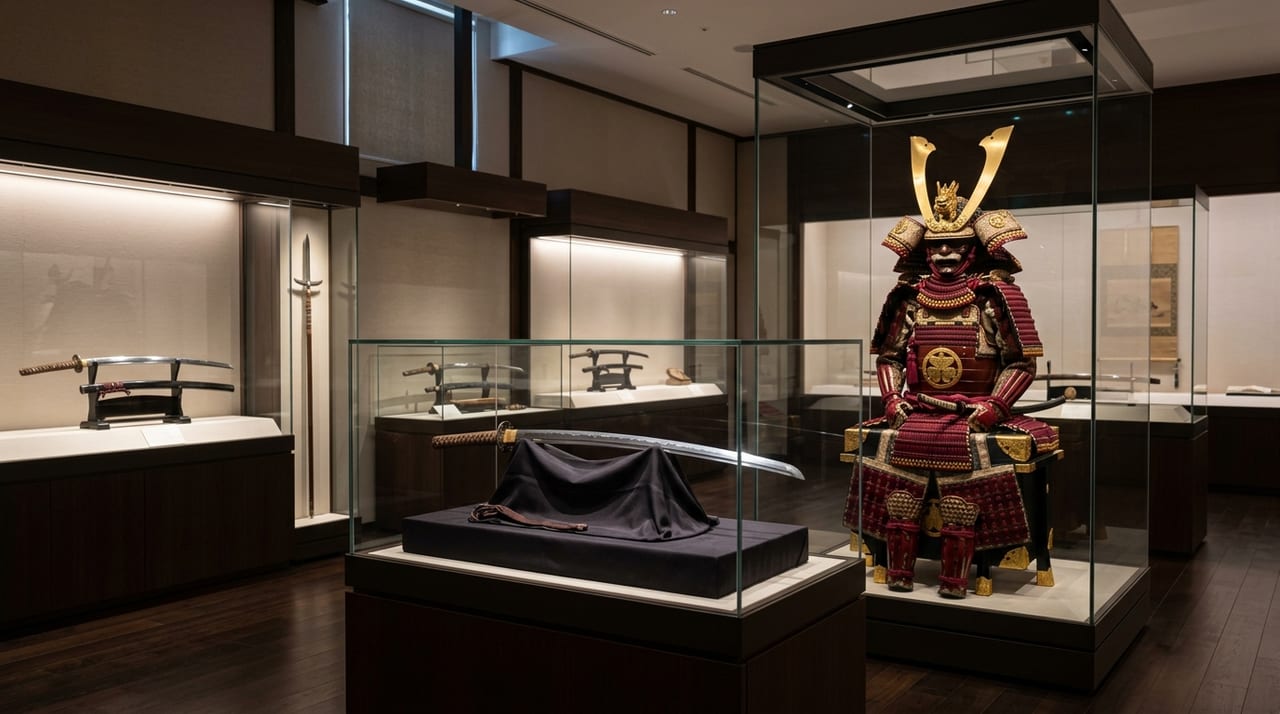
 * Image is for illustrative purposes only.
Yonezawa Uesugi Museum
米沢市上杉博物館
Overview
Museum Overview
The Yonezawa Uesugi Museum is a history museum that opened in 2001 (Heisei 13) in Yonezawa, the castle town of the Uesugi clan, which produced outstanding commanders such as Uesugi Kenshin, Kagekatsu, and Takayama. Uesugi Kenshin was one of the strongest military commanders of the Sengoku period, known as the "Dragon of Echigo" and the "God of War," an unparalleled military genius celebrated for his confrontations with Takeda Shingen in the Battle of Kawanakajima. His personal artifacts span from swords and armor to weapons, letters, and war flags, and this museum is the only institution in Japan to display them all together, making it a pilgrimage site for history enthusiasts and sword collectors across the nation.
Swords Associated with Kenshin
The museum houses numerous swords and weapons associated with Uesugi Kenshin and the Uesugi clan. Among the renowned blades said to have been treasured by Kenshin is the National Treasure tachi "Mumei Ichimonji (Yamatorige)," a masterpiece of the Ichimonji school from Bizen Province. However, Yamatorige is currently owned by Setouchi City, Okayama Prefecture, and is on display at the Bizen Osafune Sword Museum (acquired by Setouchi City in 2020). Swords and weapons inherited by the Uesugi family are preserved at this museum and the Keizhoden Hall of Uesugi Shrine, continuing to transmit the martial culture of this renowned Sengoku clan to the present day.
Armor and Weapons
Armor and weapons said to have belonged to Uesugi Kenshin have also been passed down through generations. Among them, the Important Cultural Property "Iro-iro Odoshi Haramaki" (Colorfully Laced Cuirass) held at Keizhoden Hall is recognized as a masterpiece representing Uesugi clan armor. Armor and weapons of Kagekatsu and Naoe Kanetsugu are also preserved, and visitors can view up close the authentic "Ai Helmet" (Kanetsugu's helmet crest bearing the character for 'love'), which gained nationwide fame following the 2009 NHK taiga drama 'Tenchijin' and continues to draw devoted fans.
Cultural Properties of the Uesugi Clan
While the Uesugi were a martial clan, they also possessed refined cultural sophistication. The museum houses paintings, calligraphy, tea ceremony implements, and Noh costumes, including the National Treasure "Rakuchū Rakugai-zu Byōbu" (Scenes In and Around Kyoto, folding screens) painted by Kanō Eitoku, allowing visitors to experience the full scope of the Uesugi clan's balance of martial and cultural accomplishments. A tour of Yonezawa encompassing Uesugi Shrine, Matsuigasaki Park, and the Uesugi clan mausoleum offers an excellent journey to deeply understand the samurai culture of northeastern Japan.
Highlights
- National Treasure tachi 'Mumei Ichimonji (Yamatorige)' — The renowned sword most beloved by Uesugi Kenshin. A masterpiece of the Ichimonji school of Bizen Province, this magnificent tachi exceeds 80 cm in blade length. It was purchased by Setouchi City, Okayama Prefecture in 2020 and is currently on display at the Bizen Osafune Sword Museum.
- Important Cultural Property 'Iro-iro Odoshi Haramaki' (Colorfully Laced Cuirass; held at Keizhoden Hall, Uesugi Shrine) — A masterpiece representing Uesugi clan armor. Among Sengoku-era armors, it is exceptionally well-preserved and conveys the martial culture of the Uesugi family.
- 'Ai Helmet' of Naoe Kanetsugu — Display of the authentic piece. Kanetsugu's armor is renowned for its helmet crest bearing the character for 'love.' It became widely famous throughout Japan following the NHK taiga drama 'Tenchijin' and continues to attract numerous visitors.
- National Treasure 'Rakuchū Rakugai-zu Byōbu (Uesugi Version)' — Painted by Kanō Eitoku. Among Japan's finest folding screen paintings, it depicts 16th-century Kyoto with exquisite detail, exemplifying the Uesugi clan's cultural refinement despite their status as military commanders.
- Integrated tour including Uesugi Shrine, Matsuigasaki Park, and the Uesugi clan mausoleum — Yonezawa, with its museum, shrine, and mausoleum concentrated within the castle ruins park, is a historical treasure trove where visitors can efficiently explore sites associated with the Uesugi family.
* Opening hours and exhibitions are subject to change. Please check the official website before visiting.