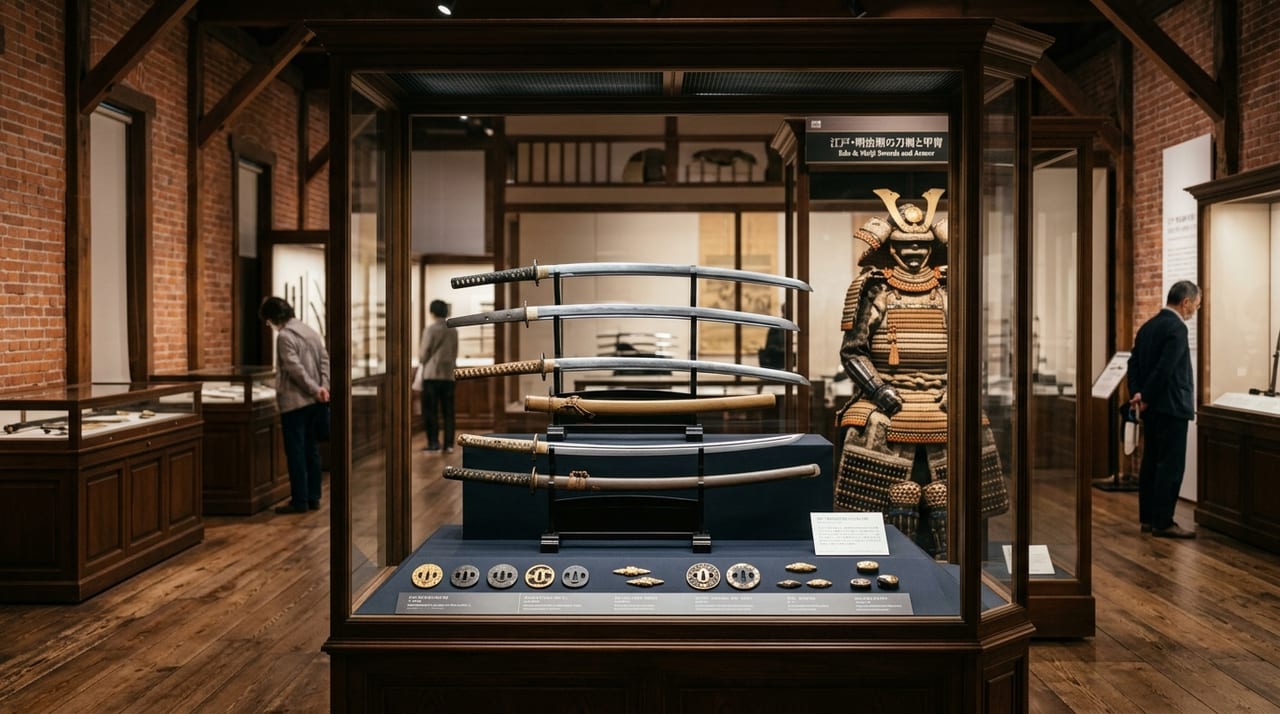
 * Image is for illustrative purposes only.
Ishikawa Prefectural History Museum
石川県立歴史博物館
- Location
- Kanazawa, Ishikawa Prefecture
- Access
- From Kanazawa Station on the Hokuriku Shinkansen line, take a Hokutetsu route bus from the Kenrokuen (East) exit and get off at Dewamachi, then walk about 5 minutes. Alternatively, get off at Hirosaka / 21st Century Museum (bus stop) and walk about 8 minutes. From Kanazawa Station, a taxi takes about 10–15 minutes. From Kenroku-en (Zuishinzaka entrance), it is about a 3-minute walk, and the museum is located near the Ishikawa Prefectural Museum of Art. From Tokyo Station, take the Hokuriku Shinkansen Kagayaki to Kanazawa Station, about 2 hours 30 minutes. From Osaka Station, take the Thunderbird limited express and the Hokuriku Shinkansen (change at Tsuruga) to Kanazawa Station. By car, take the Hokuriku Expressway and exit at Kanazawa-nishi IC or Kanazawa-Morimoto IC; the drive takes about 20–30 minutes. Free parking (45 spaces) is available.
- Opening Hours
- 9:00–17:00 (last admission 16:30) Closed during New Year holidays
- Admission
- Adults 300 yen / university students 240 yen / 65 and over 240 yen / high-school students and younger free (special exhibitions charged separately)
Overview
Overview and Architectural Appeal
The Ishikawa Prefectural History Museum occupies three red-brick buildings built between Meiji 42 (1909) and Taishō 3 (1914) as the arsenal of the Kanazawa Army Ordnance Depot. After the war they were used by the Kanazawa College of Art, and they now form one of Kanazawa's leading cultural facilities. The three buildings were designated Important Cultural Properties of Japan in 1990 (Heisei 2), and the following year they received the Architectural Institute of Japan Prize. The museum opened in 1986 (Shōwa 61) when the Ishikawa Prefectural Local History Museum relocated here. A 2015 (Heisei 27) renovation gave the buildings the nickname "Ishikawa Akarenga (Red Brick) Museum." The permanent exhibition presents the history of Ishikawa from prehistoric times to the modern era, along with the festivals of Kaga and Noto.
The Kaga Domain and Kashū Swords
The Kaga Domain, held by the Maeda family with an assessed yield of 1 million koku, prospered throughout the Edo period as the largest domain after the Tokugawa shogunate. Its economic strength and cultural inclinations produced refined craft traditions in metalwork, lacquerware, ceramics, and Noh. In swordmaking, the Kashū swords made in the Kaga region are well known. The tradition reached its peak with Sanekage of the Nanboku-chō period and Fujishima Tomoshige, who moved from Echizen, as its forerunners, and with Kanewaka, who moved from Mino and dominated the field in the Edo period. The domain's protection of local smiths also contributed to this peak. The museum holds swords by the first-generation Kanewaka, including a katana signed Kashū-jū Kanewaka zō. At the spring 2022 (Reiwa 4) special exhibition, the Dai Kashū-tō Exhibition (Great Kashū Swords), it presented about 100 Kashū swords along with koshirae and documentary materials.
Modern Exhibits
The modern section of the permanent exhibition, "The Modern State and Ishikawa Prefecture," includes military uniforms and soldiers' handbooks from the Meiji period, as well as military mail from the Russo-Japanese War period. Exhibits are rotated periodically.
Links with Kanazawa's Cultural Facilities
The museum is located in Honda-no-mori Park, close to Kenroku-en. It serves as a core stop on the Kanazawa cultural zone circuit, which also includes the Ishikawa Prefectural Museum of Art (with the Maeda Ikutokukai Sonkeikaku Bunko Annex), the 21st Century Museum of Contemporary Art, Kanazawa, and the Kanazawa City Nakamura Memorial Museum. Kanazawa, the castle town of the million-koku Kaga Domain, is a rare city where Edo-period samurai culture and modern Western culture coexist to a degree seldom found elsewhere. The old red-brick arsenal and the surrounding buildings show most vividly the layered history of the city. Since the opening of the Hokuriku Shinkansen, travel time from Tokyo has dropped sharply to about 2 hours 30 minutes, and interest in Kanazawa as a sightseeing destination, known as "Little Kyoto" and the "castle town of the million-koku Kaga Domain," has risen rapidly.
Highlights
- Kashū sword collection: holds a katana by the first-generation Kanewaka (signed Kashū-jū Kanewaka zō). The spring 2022 Dai Kashū-tō Exhibition presented about 100 Kashū swords
- Modern exhibits: the permanent exhibition "The Modern State and Ishikawa Prefecture" displays Meiji-period military uniforms and soldiers' handbooks, Russo-Japanese War military mail, and more (exhibits rotate)
- Red-brick architecture designated as Important Cultural Properties: three former army arsenal buildings built 1909–1914 (Meiji 42–Taishō 3) and repurposed. Viewing exhibits inside historic buildings that are also a Kanazawa landmark is a unique experience
- Adjacent to the Ishikawa Prefectural Museum of Art and Kenroku-en: a core facility of the Kanazawa cultural zone. A "Kaga Hyakumangoku castle town stroll" that takes in the Ishikawa Prefectural Museum of Art, Kanazawa Castle Park, and Kenroku-en in one day is well suited to a visit
- Two hours 30 minutes from Tokyo by Hokuriku Shinkansen: a core Kanazawa sightseeing spot whose popularity has surged with improved access. It fits a sightseeing course combined with the 21st Century Museum of Contemporary Art, Kanazawa, the Nakamura Memorial Museum, and Higashi Chaya district
* Opening hours and exhibitions are subject to change. Please check the official website before visiting.