 * Image is for illustrative purposes only.
Atsuta Shrine
熱田神宮
Overview
Overview of the Shrine
This is one of Japan's most venerable shrines, with a history of a little over 1,900 years since its founding, enshrining the Kusanagi no Tsurugi, one of the Three Sacred Treasures, as its goshintai (object of worship). The Kusanagi no Tsurugi, recorded in the Kojiki and Nihon Shoki, is a divine sword that emerged from the tail of Yamata no Orochi when Susanoo no Mikoto slew it, and it is known through the myth that Yamato Takeru no Mikoto carried it on his eastern campaign. The Kusanagi no Tsurugi itself is enshrined in the innermost sanctuary and is said to be a supreme sacred treasure that not even the Emperor is permitted to view. Yet it is precisely this existence that makes Atsuta Jingū a sacred site of Japanese swords.
Treasure Hall and Kusanagi-kan
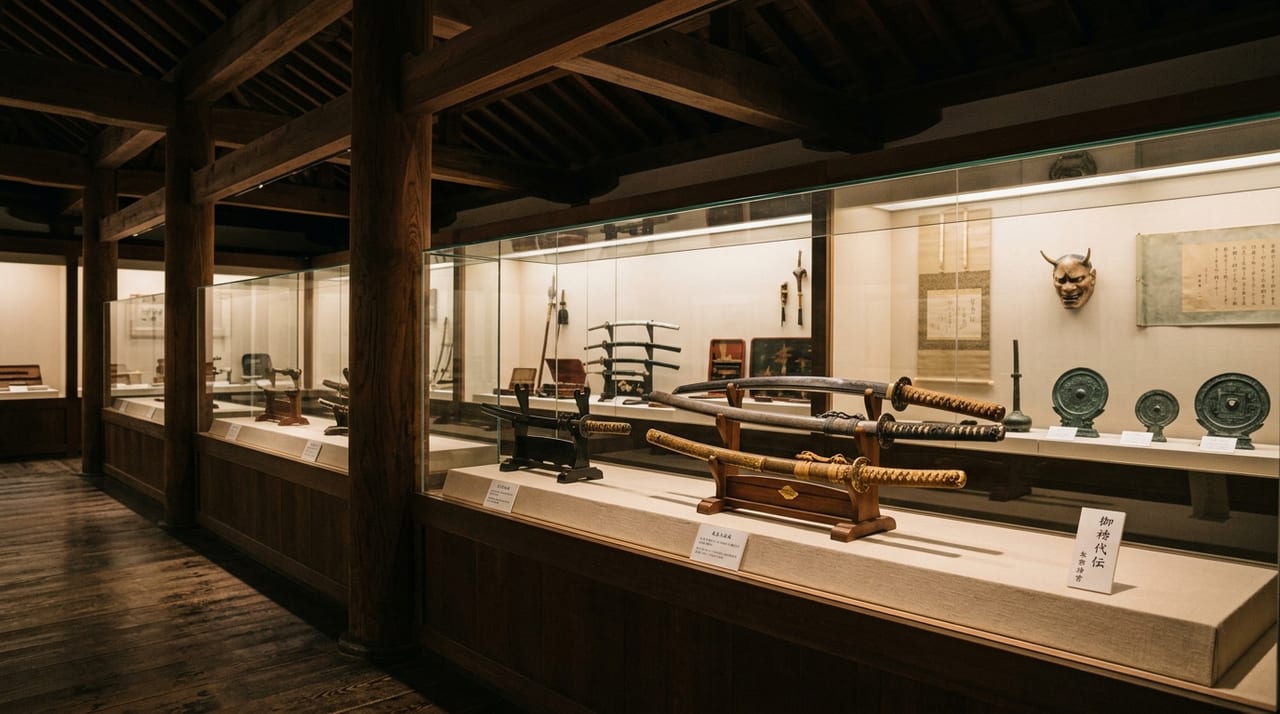
The Treasure Hall houses a large collection of famous swords and sword fittings that warlords and nobles have dedicated since ancient times. The National Treasure, tantō signed "Rai Kunitoshi" and dated "a day in the 11th month of Shōwa 5," is a dated tantō made in the fifth year of Shōwa (1316) by Rai Kunitoshi, a master smith of the Rai school. It is a first-rate work demonstrating Rai Kunitoshi's high level of skill. The collection also includes many swords designated as Important Cultural Properties, and some 450 famous swords that have been dedicated are displayed in sequence at Kusanagi-kan, "Treasury of Swords," which opened in 2021. In addition to swords, ancient bronze mirrors, bugaku masks, and paintings are also on display, allowing visitors to experience the long history of Atsuta Jingū.
Highlights of the Grounds
The precincts are enveloped in a vast grove of about 190,000 m², where a camphor tree over a thousand years old exudes a serene atmosphere. Points of interest in the grounds include the Nobunaga-bei (an earthen wall said to have been dedicated by Oda Nobunaga in gratitude for his victory at the Battle of Okehazama), the detached shrine Hakken-gū, Shimizu-sha, and many more. Although it is located in central Nagoya, once you step onto the grounds, a sacred space opens up where the city's din seems almost unreal. After worship, visit the Treasure Hall and appreciate the dedicated swords while contemplating the legend of the Kusanagi no Tsurugi. This is a one-of-a-kind sacred site where the bond between Japanese swords and Shinto can be experienced most profoundly.
Local Specialties
Within the grounds is a renowned shop serving Miya Kishimen, so there is no shortage of options for a meal after worship. Nearby there are also many well-known restaurants for hitsumabushi, a Nagoya specialty.
Highlights
- Kusanagi no Tsurugi (goshintai, not open to the public), one of the Three Sacred Treasures. The divine sword that Susanoo no Mikoto obtained from the tail of Yamata no Orochi, which, according to myth, Yamato Takeru no Mikoto carried on his eastern campaign. A supreme sacred treasure that not even the Emperor is permitted to view
- National Treasure, tantō signed "Rai Kunitoshi" and dated "a day in the 11th month of Shōwa 5": a masterpiece dated tantō by Rai Kunitoshi, master smith of the Rai school. A first-rate work that condenses the craftsmanship and aesthetic sensibility representative of the Yamashiro tradition of the late Kamakura period
- Dedicated sword collection of the Treasure Hall: houses many famous swords and sword fittings dedicated by warlords and nobles since ancient times. Some 450 dedicated famous swords are displayed in sequence at Kusanagi-kan, "Treasury of Swords"
- Historic highlights of the grounds: Nobunaga-bei (thanksgiving for victory at the Battle of Okehazama), a camphor tree over a thousand years old, the detached shrine Hakken-gū, Shimizu-sha, and more. The roughly 190,000 m² sacred precinct is a space that is hard to believe exists in the city center
- Experience the deep bond between Japanese swords and Shinto: a spiritual experience unlike any other, appreciating the dedicated swords while contemplating the legend of the Kusanagi no Tsurugi
* Opening hours and exhibitions are subject to change. Please check the official website before visiting.