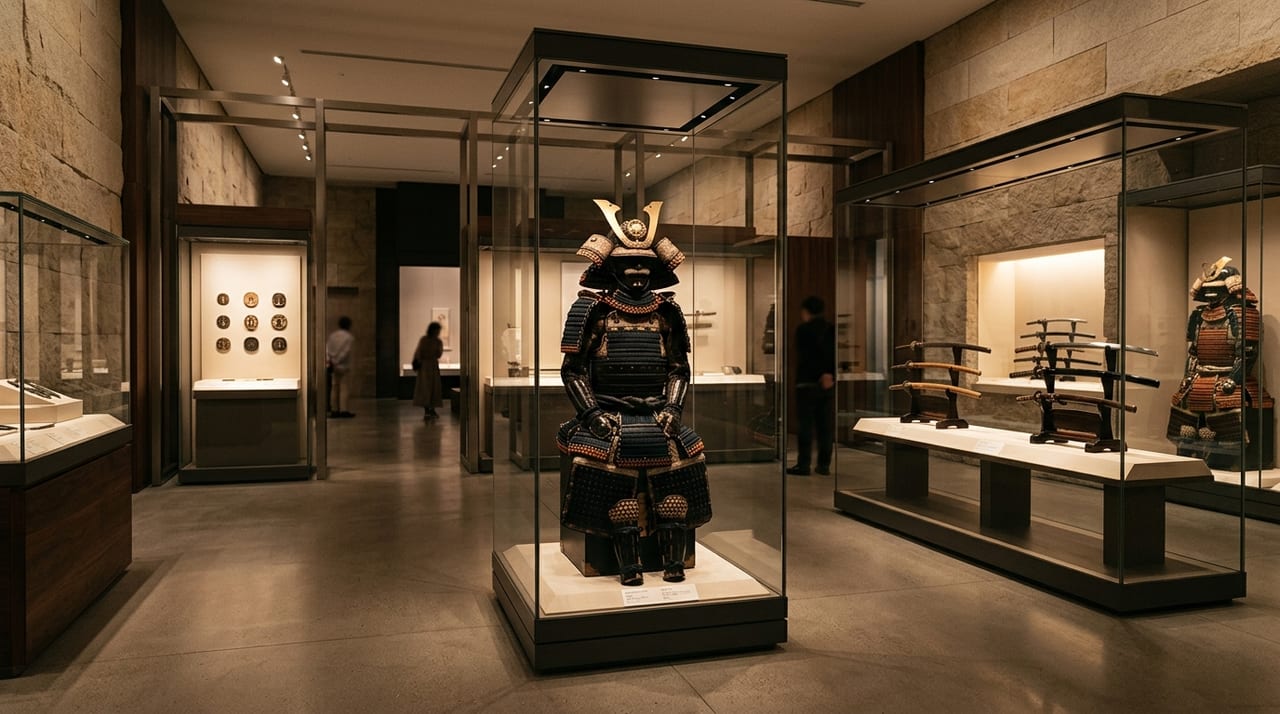
 * Image is for illustrative purposes only.
Nagoya City Museum
名古屋市博物館
Overview
Overview of the Museum
Nagoya City Museum is a municipal comprehensive museum that opened in 1977 (Shōwa 52). It presents the history, culture, archaeology, and folklore of the Nagoya, Owari, and Mikawa regions, and it is one of the largest history museums in the Chūbu region. Owari and Mikawa, which produced the Three Great Unifiers (Oda Nobunaga, Toyotomi Hideyoshi, and Tokugawa Ieyasu), are among the most important regions in Japanese political history, and the museum's collection reflects the richness of that history. Among its swords, the museum holds the Important Cultural Properties 'Tachi, signed Yukihira saku', 'Tachi, signed Unshō', and 'Tachi, signed Kuniyasu'.
Historical Materials Associated with the Three Great Unifiers
Oda Nobunaga and Toyotomi Hideyoshi, from Owari (western Aichi), and Tokugawa Ieyasu, from Mikawa (eastern Aichi), are the most important figures who shaped Japan's Sengoku and early modern history. The Nagoya City Museum holds documents associated with the Three Great Unifiers, including Oda Nobunaga shuinjō, Toyotomi Hideyoshi shuinjō, and the written oath of Matsudaira Ieyasu.
Owari Swordsmiths and Sword Culture
Aichi Prefecture has long been a region where sword production thrived. Owari Province (present-day Nagoya area) is also near places associated with Mino swordsmiths such as the Shizu school and Seki no Magoroku. Mikawa Province (present-day Toyohashi and Okazaki area) was home to swordsmiths active in Okazaki. Swords handed down from the Owari Tokugawa family, one of the Gosanke (Mito, Owari, and Kii), are held by the Tokugawa Art Museum in Higashi Ward, and visiting both is recommended.
Renovation and Reopening
The Nagoya City Museum has been closed for a major renovation since October 2023. It held a pre-opening exhibition from 5 September to 1 November 2026, and it will close again before a grand opening on 15 April 2028. Its access by subway from Nagoya Station, the gateway to Nagoya, the central city of the Chūbu region, is also an appealing feature.
Highlights
- Documents associated with the Three Great Unifiers (Oda Nobunaga, Toyotomi Hideyoshi, and Tokugawa Ieyasu): Oda Nobunaga shuinjō, Toyotomi Hideyoshi shuinjō, the written oath of Matsudaira Ieyasu, and other historical materials related to the Three Great Unifiers, who emerged from Owari and Mikawa
- Important Cultural Property tachi: 'Tachi, signed Yukihira saku', 'Tachi, signed Unshō', and 'Tachi, signed Kuniyasu' are in the collection
- Cultural route with Nagoya Castle and the Tokugawa Art Museum: a tour of cultural facilities to experience Nagoya as the castle town of the Three Great Unifiers, and a core Nagoya sightseeing spot that is easy to reach by subway
* Opening hours and exhibitions are subject to change. Please check the official website before visiting.