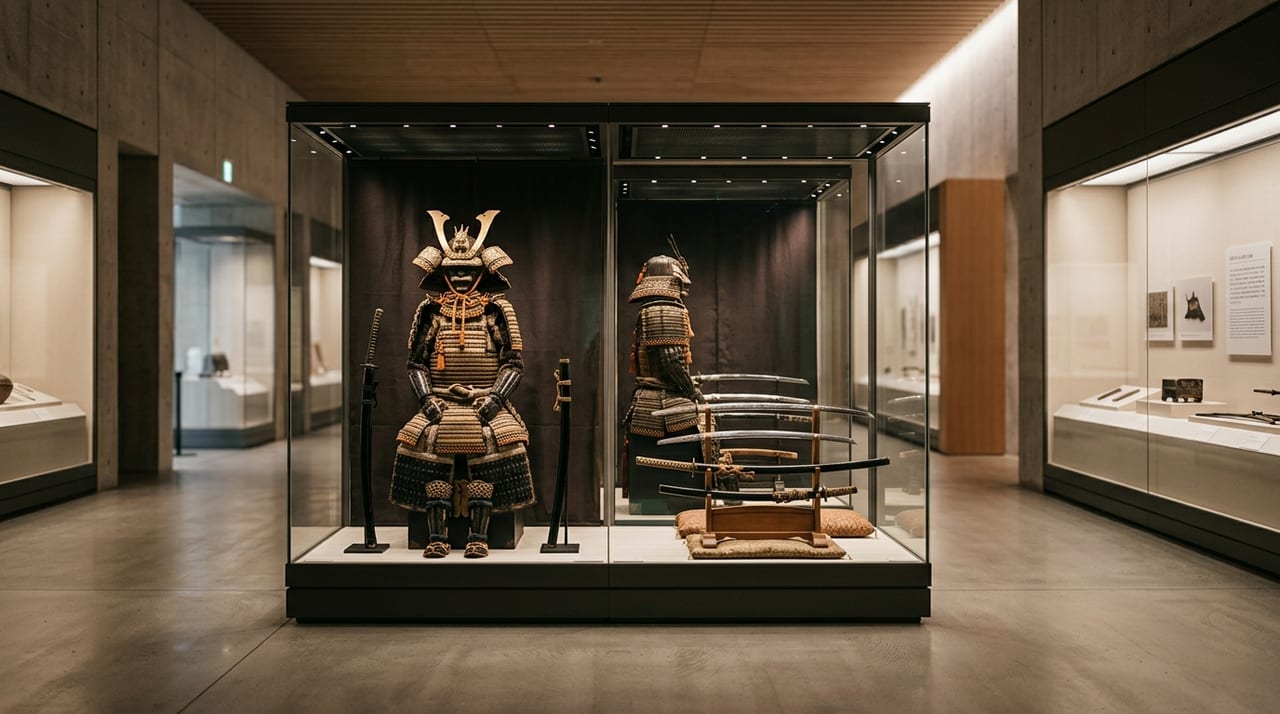
 * Image is for illustrative purposes only.
Gifu Sekigahara Battlefield Memorial Museum
岐阜関ケ原古戦場記念館
Overview
The Battle of Sekigahara and Overview of the Museum
On September 15, 1600 (Keichō 5), the “Battle of Sekigahara” was fought on this ground, a clash later recorded in Japanese history as the decisive battle that determined the fate of the realm. The Gifu Sekigahara Battlefield Memorial Museum is a full-scale museum that Gifu Prefecture opened in October 2020 (Reiwa 2). The Eastern Army (Tokugawa Ieyasu) and the Western Army (Ishida Mitsunari), some 160,000 troops in all, clashed in this battle, which was decided in barely half a day and laid the foundation for the Edo shogunate, which lasted more than 260 years thereafter. Sekigahara Town is a rare place where its historic battlefield still survives within the rural landscape as monuments and campsites associated with the warlords, and the museum functions as its core facility.
Exhibits
The second-floor exhibition galleries present the Battle of Sekigahara from its origins to its conclusion, using original materials including the Sekigahara Battle Folding Screen, armor and weapons, excavated artifacts, and letters. They also cover how the battle was later remembered and the history of preserving the historic sites. Many of the exhibits were transferred from the neighboring Sekigahara Town History and Folklore Learning Center (formerly the Sekigahara Town Historical Folklore Museum).
Experiential Exhibits
One of the museum's defining features is its experiential exhibits. On the first floor, the floor-mounted giant screen “Ground Vision” offers a bird's-eye view of the course of events leading to the Battle of Sekigahara. In a theater with an elliptical screen measuring 4.5 m high and 13 m wide, visitors can watch reenactment footage of the battle accompanied by effects of wind, vibration, light, and sound. In the second-floor Sengoku Experience Corner, visitors can handle weapons that closely resemble the real thing and try on a jinbaori for photos. The fifth-floor observation deck is fully glazed for 360 degrees and offers a panoramic view of the town of Sekigahara and the sites where the armies were deployed.
Historic Battlefield Fieldwork
Around the museum, historic sites connected with the Battle of Sekigahara lie scattered within walking distance, including Sasaoyama (site of Ishida Mitsunari's campsite), Momokubiyama (Tokugawa Ieyasu's first campsite), and Matsuoyama (site of Kobayakawa Hideaki's campsite). Brochures for touring the battlefield and historic sites are available at the Wide-Area Tourist Information Corner on the first floor. Visitors can experience the battle that decided the fate of the realm by walking the battlefield on foot. In spring, the cherry trees lining the area are beautiful, and in autumn, monuments standing amid expansive rural fields evoke a particular historical atmosphere. Gifu, Nagoya, and Osaka are all easily reached by Shinkansen or conventional lines, which makes the area convenient and ideal for a day-trip history tour.
Highlights
- Ground Vision and Theater: a giant floor screen and a large screen with wind, vibration, light, and sound effects recreate the decisive battle. The Sengoku Experience Corner also lets visitors handle lifelike weapons
- Battlefield fieldwork: the campsites of major warlords such as Sasaoyama, Momokubiyama, and Matsuoyama are scattered within walking distance of the museum. Walk the land where the fate of the realm was decided
- Original materials from the Battle of Sekigahara: the Sekigahara Battle Folding Screen, armor, excavated artifacts, and letters introduce the battle from its origins to its conclusion. Gain a deep understanding of the political and military history from the late Sengoku period to the early Edo period
- Convenient access from Gifu, Nagoya, and Osaka: easily reached by the Tōkaidō Shinkansen and the JR Tōkaidō Main Line. An ideal base for a day-trip history tour
* Opening hours and exhibitions are subject to change. Please check the official website before visiting.