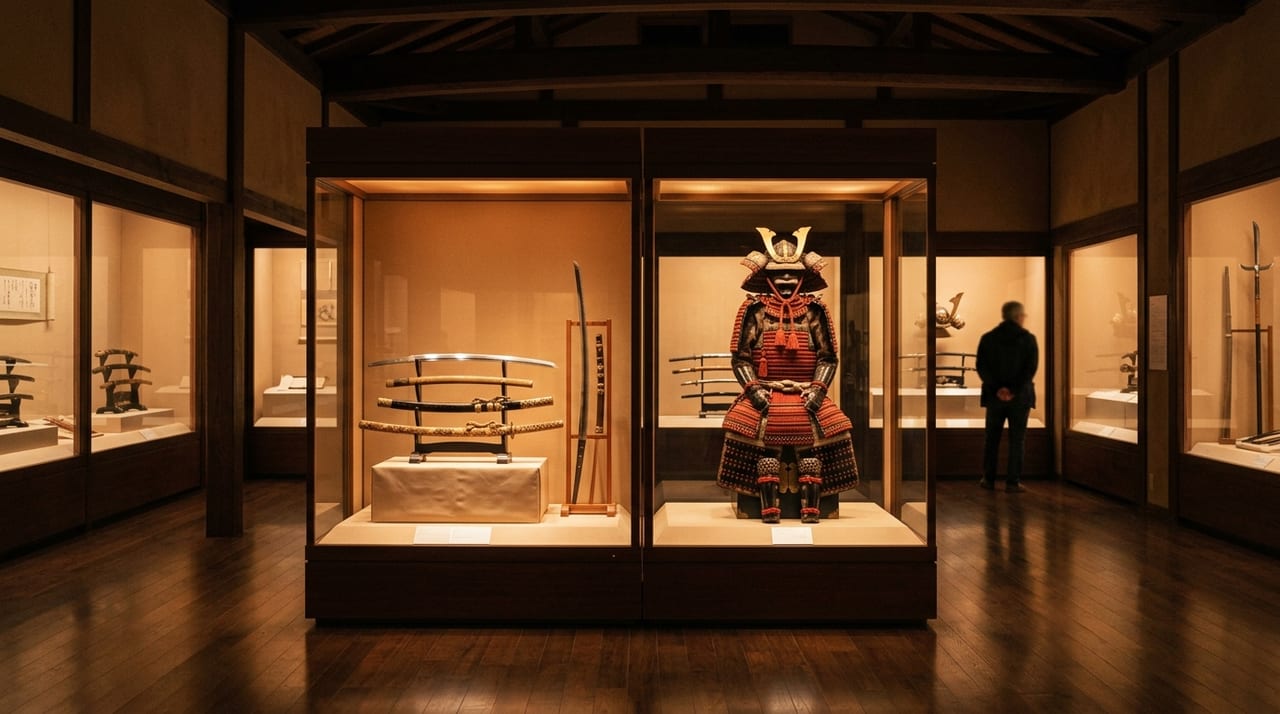
 * Image is for illustrative purposes only.
Tokugawa Art Museum
徳川美術館
Overview
Museum Overview
A hall representing Japanese daimyo culture, housing and displaying a major collection of daimyo treasures handed down to the Owari Tokugawa family, the foremost of the Tokugawa branch houses (go-sanke). Founded in 1935 (Shōwa 10) by the 19th head of the family, Marquis Tokugawa Yoshichika, to publicly present the family's heirlooms. The collection comprises approximately 10,000 items, including 9 National Treasures and 59 Important Cultural Properties, and comprehensively covers the items that illustrate daimyo life, such as armor, tea ceremony utensils, noh costumes, calligraphy and paintings, and furnishings.
Sword Collection
The sword collection is one of the finest in Japan in both quality and quantity. Beginning with the Monoyoshi Sadamune (Important Cultural Property), which Tokugawa Ieyasu treasured, and the Namazuo Tōshirō (by Awataguchi Yoshimitsu), which was passed down to the Owari family as a relic of Ieyasu, the many famous swords preserved by successive lords carry the martial tradition of the Tokugawa into the present day. The Important Cultural Property "Tachi, signed Rai Kunitoshi, the 23rd day of the 10th month of Shōwa 4 (1315)" is extremely valuable as a dated, signed work by the master smith Rai Kunitoshi of the Rai school, and clearly displays the refined style of the Yamashiro tradition. The collection also includes celebrated swords such as the National Treasure tanto "Gotō Tōshirō," making it a dream lineup for sword enthusiasts.
Sword Fittings and Craftsmanship
The display of sword fittings and mountings is extensive, and visitors can view up close the formal tachi and uchigatana mountings that are unique to daimyo households. Visitors can fully appreciate the finest craftsmanship surrounding the sword, including the precise metalwork of the fittings and the makie decoration on the scabbards. Special sword exhibitions and planned exhibits held several times a year sometimes display treasures that are normally not open to the public, so please check the exhibition schedule on the official website in advance.
Tale of Genji Scroll Paintings
One of the greatest highlights is the National Treasure "Tale of Genji Scrolls." It is internationally known as the oldest surviving Genji monogatari emaki, and the privilege of viewing this treasure of Heian court culture alongside the swords is an experience unique to the Tokugawa Art Museum. The adjacent Japanese garden, "Tokugawa-en," is a famous pond-and-stroll garden that offers scenery throughout the four seasons.
Highlights
- Important Cultural Property "Tachi, signed Rai Kunitoshi, the 23rd day of the 10th month of Shōwa 4 (1315)" — a dated, signed masterpiece by the master smith of the Rai school in the Yamashiro tradition. It shows the refined style of the late Kamakura period and is extremely important both academically and as Rai Kunitoshi's representative work
- Namazuo Tōshirō (by Awataguchi Yoshimitsu) — a wakizashi used by Toyotomi Hideyori. It was burned in the Summer Siege of Osaka, re-tempered on the order of Tokugawa Ieyasu, and is a famous sword with an eventful history
- Monoyoshi Sadamune (Important Cultural Property) — named after the anecdote that whenever Ieyasu went into battle carrying this sword, he was certain to win. It was made by Sadamune, the master smith of the Sōshū tradition
- Display of outstanding sword fittings and mountings — formal tachi and uchigatana mountings handed down in the Owari Tokugawa family, and precise metalwork tsuba, kozuka, kogai, and menuki can be viewed. The lavish scabbards by makie artists are also a highlight
- Approximately 10,000 daimyo items, including the National Treasure Tale of Genji Scrolls, tea ceremony utensils, noh costumes, and armor. A comprehensive collection that lets visitors experience the full scope of samurai culture
* Opening hours and exhibitions are subject to change. Please check the official website before visiting.