Osafune Chōgi: The Nanboku-chō Bizen Smith Who Fused Bizen and Sōshū Traditions
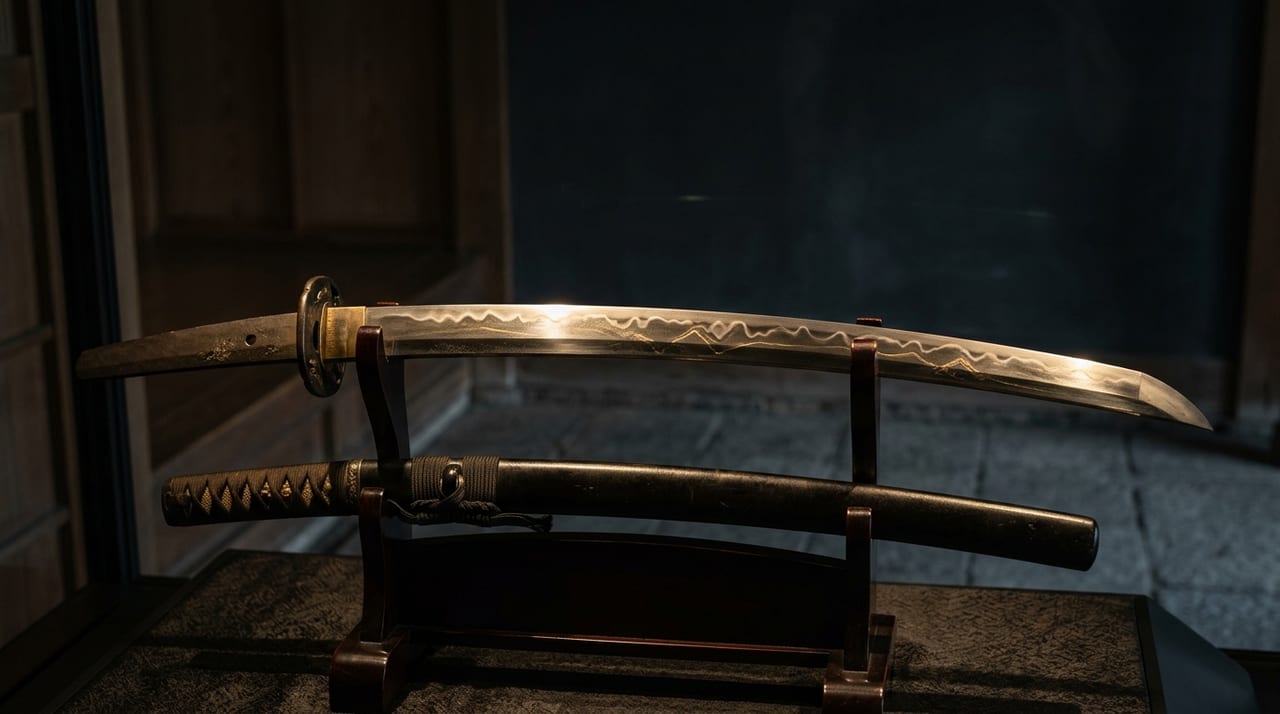 * Image is for illustrative purposes only.
Table of Contents
In Osafune, Bizen Province during the Southern and Northern Courts period (in present-day Setouchi City, Okayama Prefecture), there lived an unusual master swordsmith who, despite being a Bizen smith, was praised as "the Bizen swordsmith least like Bizen." This was Chogi (chōgi, also read as "osafune nagayoshi"). His signature was cut with the two characters "Chogi," and his body of work shines with unique brilliance within the framework of the Bizen tradition.
The Southern and Northern Courts period (1336–1392) was an age of turmoil in which the imperial court split into north and south, and large-scale conflicts persisted nationwide. As warfare intensified, demand for swords surged, and Osafune in Bizen Province prospered as a major supply center. Swords of this era were characterized by a broad-bladed, robust form that showed keen awareness of real combat, and Chogi was one of the smiths who strongly reflected the spirit of this turbulent age.
Osafune School Smiths Who Formed a Separate Lineage from the Mainstream
The Osafune school is traditionally understood to have its main lineage traced from Mitsutada as the founder, continuing through Nagamitsu, Kagemitsu, and Kanemitsu. However, Chogi is positioned as a swordsmith in a separate lineage from this main line. His period of sword-making generally corresponds to the mid-Southern and Northern Courts period, centered on the Jōji and Ōan eras of the late fourteenth century. He founded his own school to become the progenitor of the Chogi lineage, counting among his pupils Kanenaga, Nagamori, and Morinaga. In later times, he was also counted as one of the "Ten Sages of Masamune," said to have gathered under the great Soshu tradition master Masamune.
The Soden Bizen Style—Fusion of the Bizen and Soshu Traditions
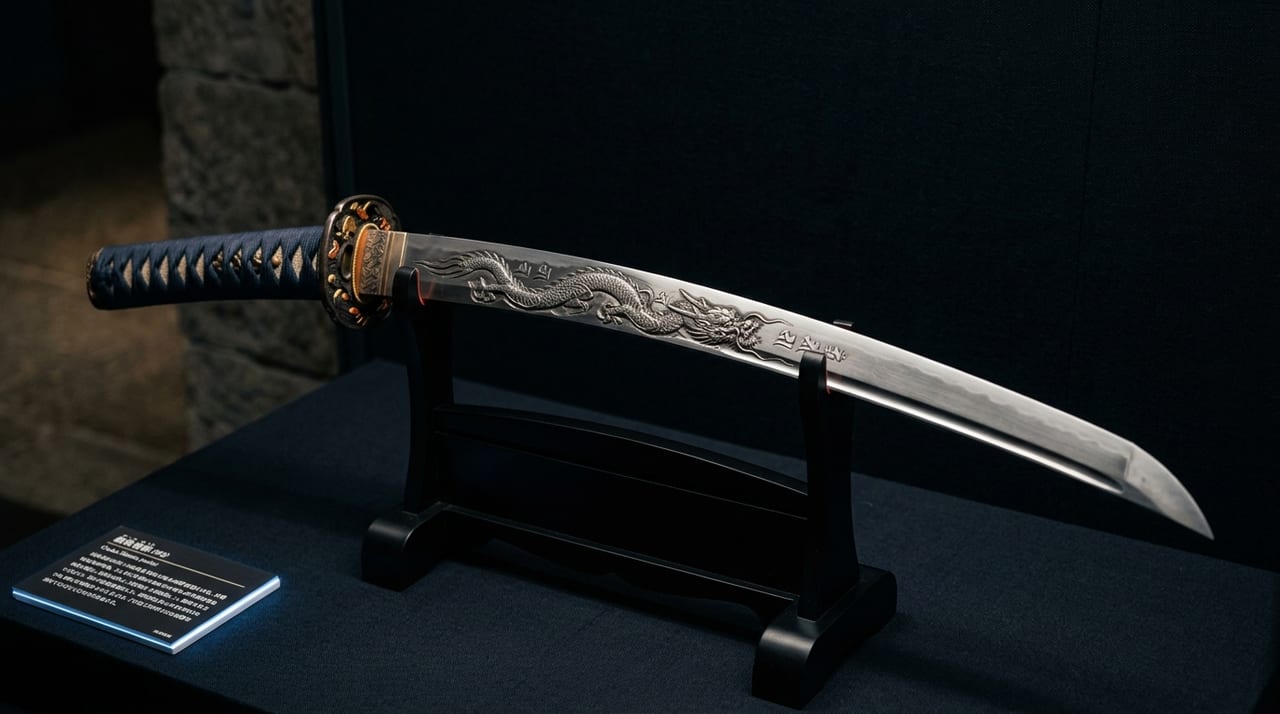
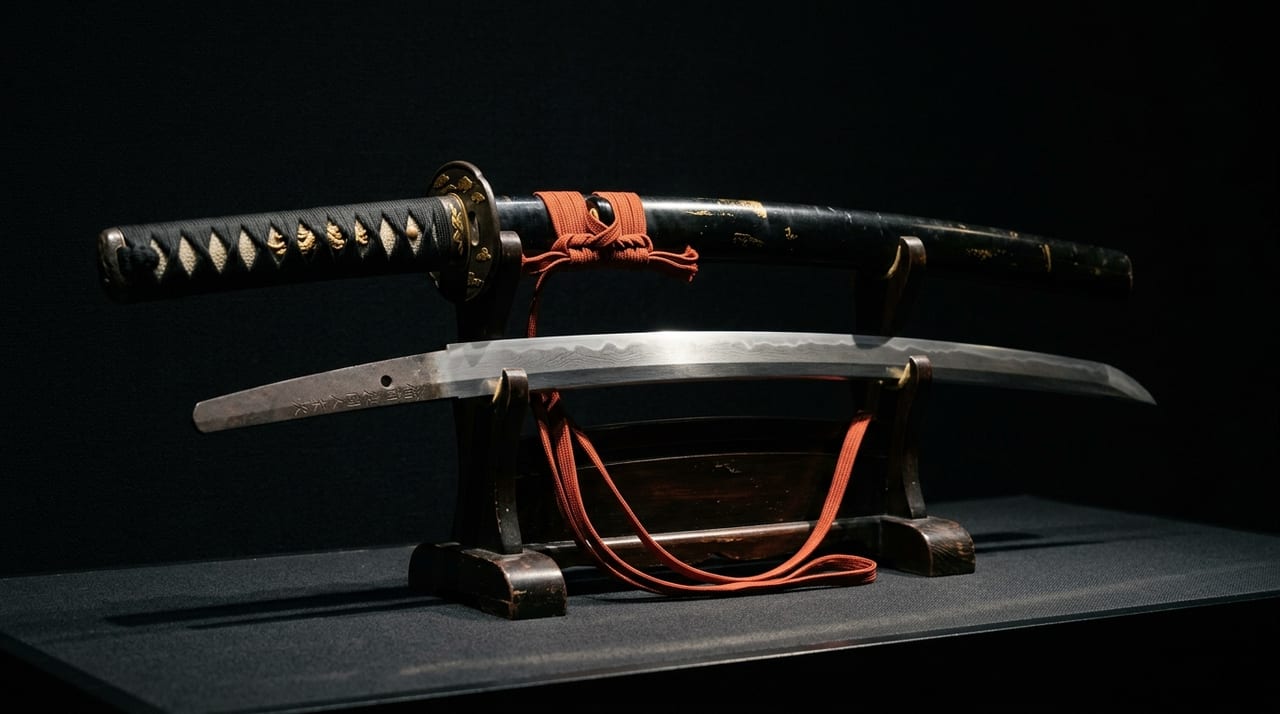
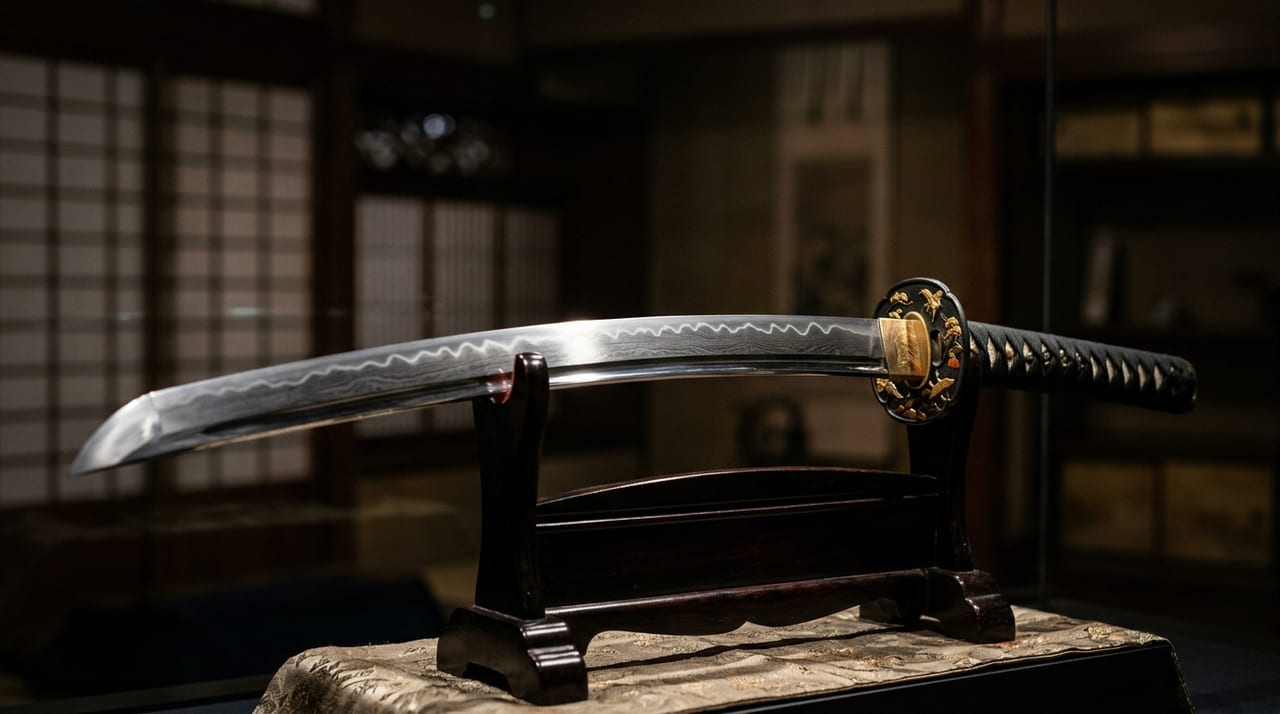
Essential to discussing Chogi's style is the "Soden Bizen" technique. This refers to a body of work that maintains the traditional methods of the Bizen tradition while boldly incorporating the vigorous nie activity characteristic of the Soshu tradition. Chogi's swords are distinguished by a robust, broad-bladed tachi form typical of the Southern and Northern Courts period, terminating in a large kissaki, and are characterized by jigane typically showing board-grain (itame) texture with strong jiganie, with many examples lacking prominent utsuri.
The hamon is based primarily on notare, interspersed with gunome, featuring varied patterns including large gunome with open waist and ear-shaped configurations of paired gunome. The nie is thick, with prominent kinsuji and sunagashi visible in the blade, and ashi and ha are well-developed. The yōshi shows irregular patterns with a sharp return, with many examples featuring deep returns. This body of work, which fuses the jigane of the Bizen tradition with the nie activity of the Soshu tradition, represents Chogi's true essence.
The circumstances behind the emergence of Soden Bizen are believed to include the following:
- During the Southern and Northern Courts period, swordsmiths from various regions exchanged knowledge, and Soshu tradition techniques spread widely among smithing groups nationwide.
- Chogi, positioned in a separate lineage from the Osafune mainstream, was in a position to experiment with new approaches unbound by existing conventions.
- Against the backdrop of this turbulent age, feudal lords sought not merely the refinement of the Bizen tradition but the powerful nie activity characteristic of the Soshu tradition.
The Tale Inscribed in the Masterpiece "Honzaku Chogi"
Among Chogi's signed works, the most renowned is the Important Cultural Property "Sword with Signature Honzaku Chogi." This blade, now housed in the Tokugawa Art Museum in Nagoya, was originally an unsigned sword whose signature had been lost through polishing. However, in later times, the renowned smith Horikawa Kunihiro, at the request of the Shimotsuke warlord Nagao Akinaga, inscribed a lengthy attribution in Tenshō 18 (1590), preserving its provenance to the present day. Known as a representative work with a broad, robust form and a boldly irregular hamon in a large pattern, this blade testifies to how highly warlords of the late Sengoku period valued Chogi's swords.
Another Important Cultural Property, "Tachi with Signature Bizen Province Osafune Resident Chogi," is housed in the Kaisen-dō Public Interest Incorporated Foundation (Yamagata Prefecture). It features small board-grain jigane with fine nie, hamon of interspersed gunome and notare, with well-developed ashi and ha, and deep nioi with small nie interspersed. The yōshi shows irregular patterns with a sharp return. Signed tachi by Chogi himself are extremely rare, making this specimen an invaluable reference work for understanding Chogi's style.
Equals to Kanemitsu—Two Luminary Smiths of the Southern and Northern Courts Period
Chogi is ranked alongside Kanemitsu, who inherited the main Osafune lineage, as a master swordsmith representing the Southern and Northern Courts period in Bizen. While Kanemitsu is characterized as having a serene style, Chogi is praised for his vigorous approach, with a distinctive artistic identity that fully assimilated the Soshu tradition standing out notably. Through their technical mastery and brilliant hamon, "Kanemitsu and Chogi" are often mentioned together, positioning both as the twin peaks of Bizen swordsmithing in this turbulent age. Comparing these two smiths, who despite being born in the same Osafune region developed contrasting styles, offers insight into the breadth encompassed within the Bizen tradition as a single school.
Summary—What the Chogi School Left to Posterity
Many copies emulating Chogi's style were produced in later ages, and the Soden Bizen technique became established as an indispensable concept in discussing Bizen swords of the Southern and Northern Courts period. Ranked highly in terms of cutting ability, Chogi was venerated in later times as a master swordsmith of superior rank. Chogi's swords, which embody the contradiction of maintaining the Bizen tradition while adopting the vigor of the Soshu tradition, may be seen as a mirror reflecting the turbulent age of the Southern and Northern Courts itself.
When appreciating Chogi's works, focusing on the strong jiganie on the board-grain jigane, the varied hamon that blends notare with gunome, and the kinsuji and sunagashi activity visible in the thick nie makes it easier to sense how the Bizen and Soshu traditions contend within a single blade. For those wishing to deepen their understanding of Chogi's style, please also refer to the Chogi entry.