Rai Kuniyuki and the Kokuhō "Akashi Kuniyuki" — The Tōkō Handed Down as Founder of the Rai School and the Sole Kokuhō Tachi
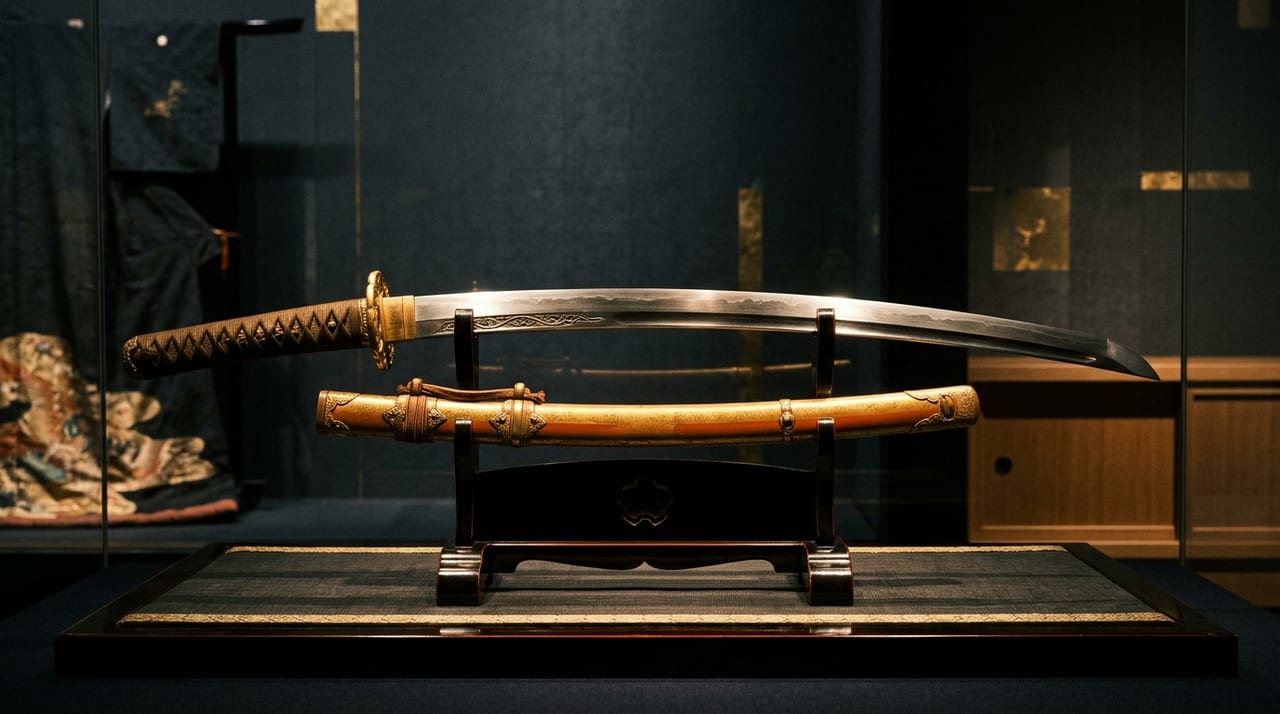 * Image is for illustrative purposes only.
Table of Contents
Rai Kuniyuki is a tōkō handed down as the founder of the distinguished Rai School of Yamashiro Province (present-day Kyoto Prefecture). While the names Rai Kunitoshi and Rai Kunimitsu are widely known, Kuniyuki, who stands at the starting point of that lineage, has few surviving works and is rarely discussed. In this article, we limit ourselves to content that can be confirmed in official sources — including the Agency for Cultural Affairs' Database of Nationally Designated Cultural Properties and explanations from the Japanese Sword Museum — to organize what is known about Rai Kuniyuki and his representative works.
The Tōkō Handed Down as Founder of the Rai School
The Japanese Sword Museum introduces Kuniyuki as a tōkō "handed down as the founder of the distinguished Rai School of Yamashiro Province." The Rai School is considered a school that flourished from the mid-Kamakura period through the Nanbokuchō period with Kuniyuki as its founder, and Okayama Prefecture sources offer the same explanation.
What deserves attention here is the phrasing "handed down as founder." Official sources do not venture into Kuniyuki's dates of birth and death or his blood relationship with Kunitoshi. Since stating a parent–child relationship definitively cannot be said to follow the sources, this article too stays with "handed down."
The overall lineage of the Rai School is often discussed in contrast with the Awataguchiha of the same Yamashiro region, and reading about both together makes it easier to grasp the positioning.
- What Is the Awataguchiha — A Complete List of the Distinguished Tōkō of Kyoto-Yamashiro Who Produced Onimaru Kunitsuna and Tōshirō Yoshimitsu
- Rai Kunimitsu — The Treasure of the Yamashiro Rai School in the Late Kamakura Period
Basic Information on the Kokuhō "Akashi Kuniyuki"
The only work by Rai Kuniyuki designated as a kokuhō is the tachi with mei Kuniyuki (Rai), bearing the appellation "Akashi Kuniyuki." The Japanese Sword Museum notes that "this is the sole kokuhō designation among this smith's works."
| Item | Details |
|---|---|
| Name | Tachi with mei Kuniyuki (Rai) |
| Appellation | Akashi Kuniyuki |
| Classification | Kokuhō (craft, Kamakura period) |
| Designation | Jūyō bunkazai May 25, 1937; kokuhō March 31, 1953 |
| Length | Just under 2 shaku 5 sun 2 bu (approx. 76.6 cm) |
| Owner | NBTHK (public interest foundation) |
| Provenance | Passed down through the Akashi Matsudaira family of Harima Province (Hyogo Prefecture) |
The appellation "Akashi" derives from this tachi having been passed down through the Matsudaira family of Akashi in Harima Province. It is currently introduced as part of the collection of the Japanese Sword Museum.
Points of Interest Cited by the Agency for Cultural Affairs and the Japanese Sword Museum
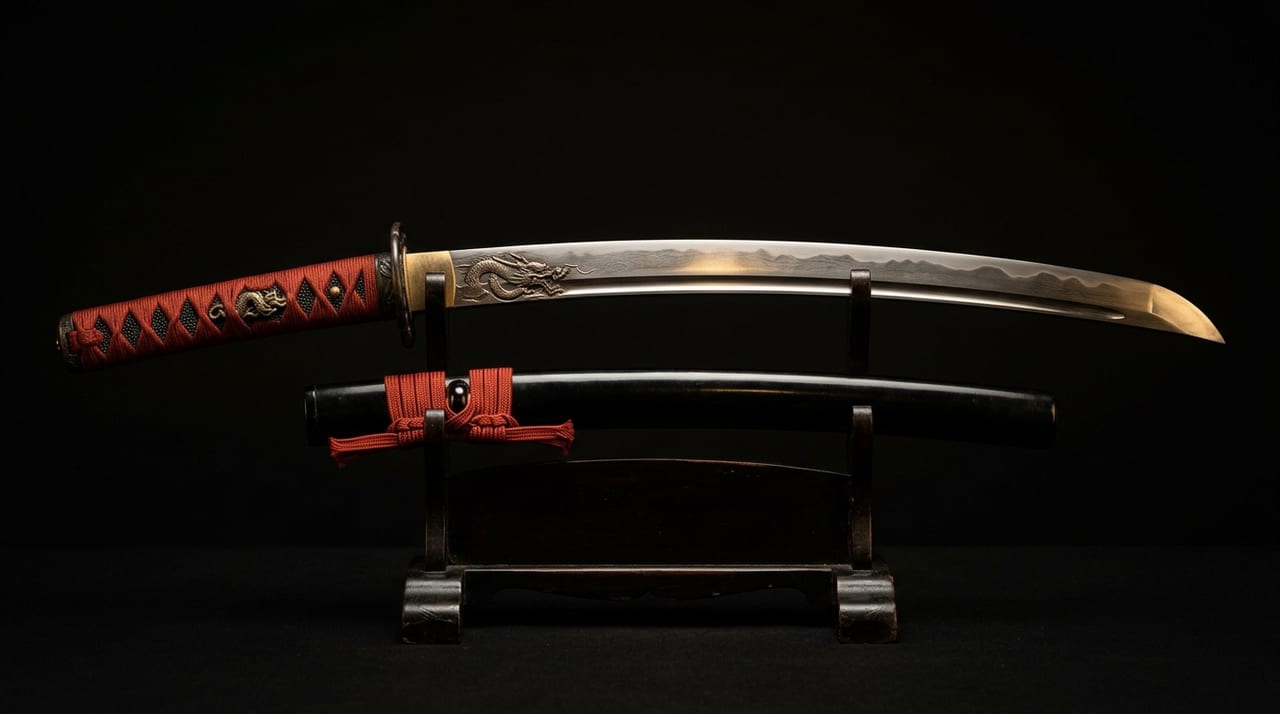
The Agency for Cultural Affairs' explanation describes this tachi as "a work by Rai Kuniyuki that well represents his style, with healthy jigane and hamon." It further states that "carving other than a bō-hi is rare in this smith's works."
The Japanese Sword Museum's explanation cites the following points.
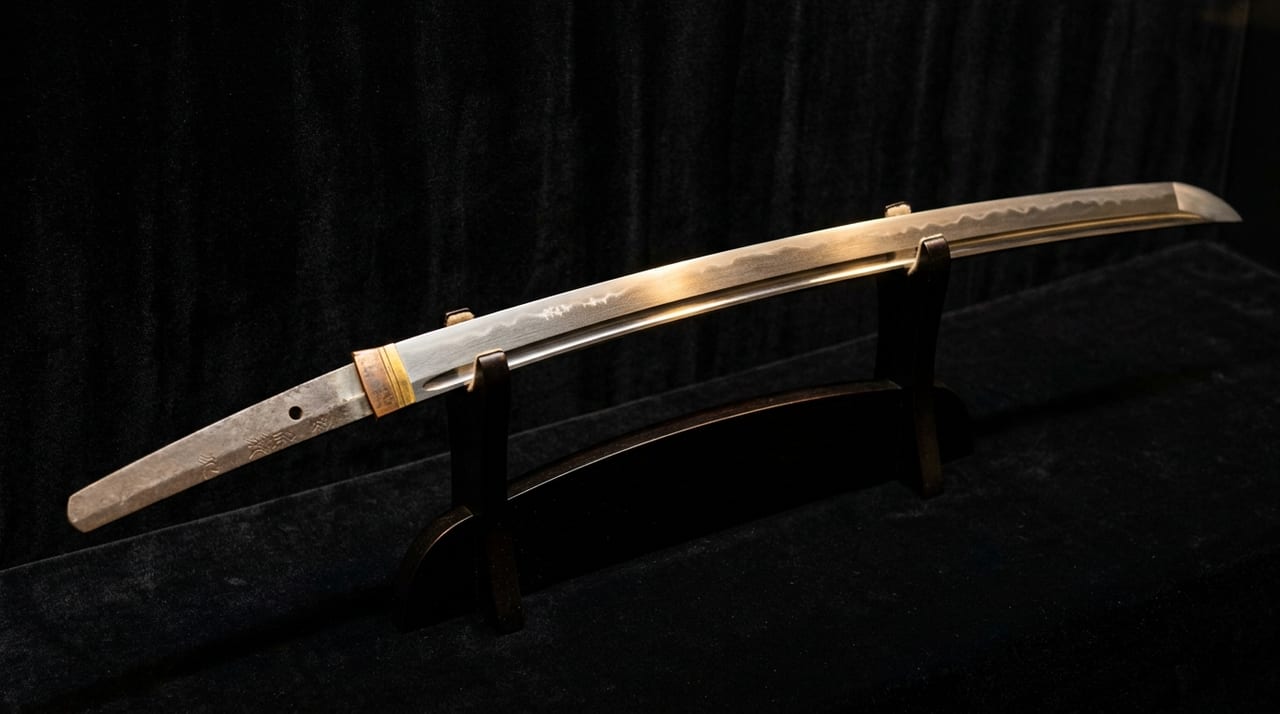
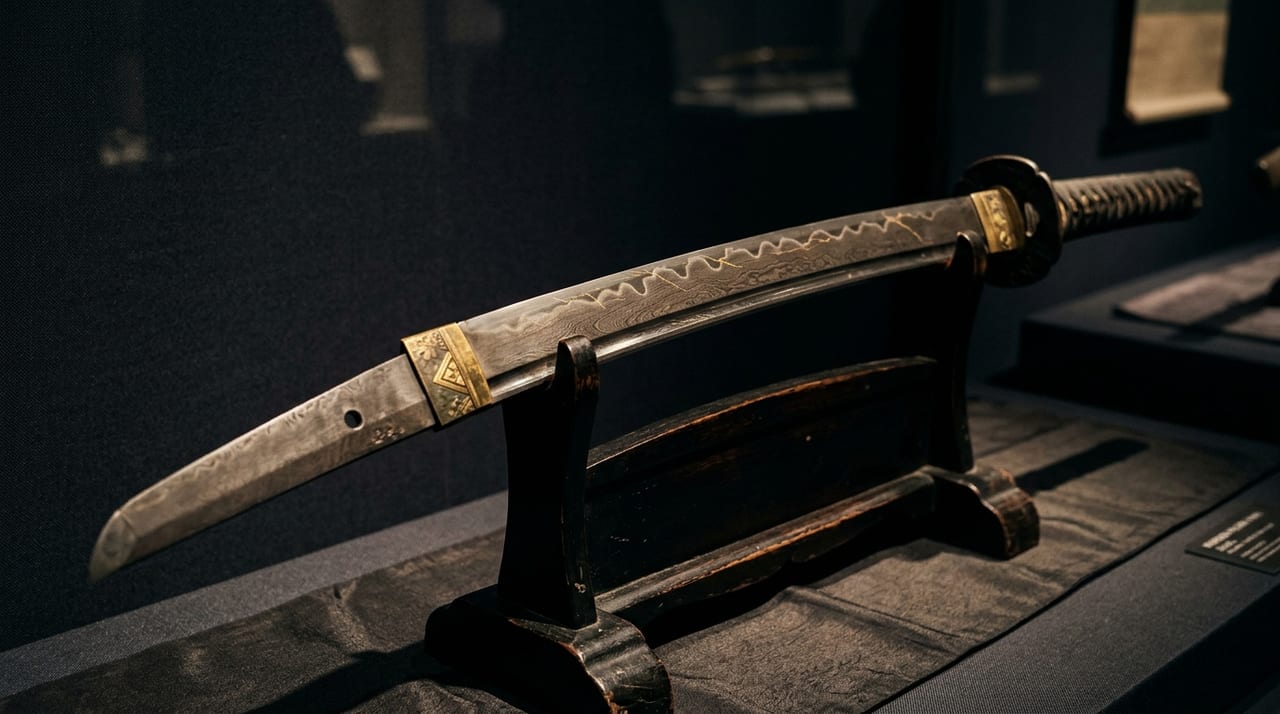
- It shows the typical style of the Rai School, including a wa-sori profile and lustrous jigane
- It possesses an exceptionally refined elegance
- The relief carving of a hichū sankozuken near the base is also unusual
The sankozuken carving is a design engraved within the hi. In addition to appreciating the jigane and hamon, the presence or absence of carving is a clue for identifying the individual character of each blade.
The Jūyō Bunkazai Tachi with Mei Kuniyuki
Among Kuniyuki's works, there is also a tachi with mei Kuniyuki designated as a jūyō bunkazai. According to Okayama Prefecture sources, it was designated on April 6, 1929 (Shōwa 4), is owned by Sakura Shrine in Tsuyama City, and is currently kept at the Okayama Prefectural Museum. Its nagasa is approximately 70 cm.
Since precise measurements vary in their notation from source to source, it is advisable to verify the original source when citing figures.
Caution Regarding Another "Kuniyuki" with the Same Name
The name "Kuniyuki" does not belong to one person alone. The tachi by Kuniyuki, considered the founder of the Taima school, is also a kokuhō owned by the same NBTHK, designated on March 20, 1954. This is a tōkō of a different lineage from Rai Kuniyuki.
Rather than judging by the mei "Kuniyuki" alone, confirming whether the character for "Rai" is appended, and which school it has been designated under, is the basic step for avoiding confusion.
How to Distinguish the Period from Rai Kunitoshi
Some works by Rai Kunitoshi bear date inscriptions. The jūyō bunkazai tachi with mei "Rai Kunitoshi, the 1st day of the 3rd month of Einin 5" (designated in Shōwa 6; length 101.4 cm) carries a date of Einin 5 in its mei. The Agency for Cultural Affairs' cultural heritage database describes this tachi as an exceptionally large work by Rai Kunitoshi, handed down in the Aso family as the sword used by Aso Koretake, son of Aso Korezumi, and famous under the name "Hotarumaru" (Cultural Heritage Database, "Tachi, mei Rai Kunitoshi / Einin 5, 3rd month, 1st day"). However, this tachi appears on the Agency for Cultural Affairs' list of nationally designated cultural properties whose whereabouts are unknown, and its current location is not known.
For Kuniyuki's own dated inscriptions, no statement that can be confirmed in official sources can be found. Therefore, rather than discussing the chronological relationship between Kuniyuki and Kunitoshi by era names, distinguishing between "Kuniyuki, handed down as the founder of the Rai School" and "Kunitoshi, whose dated works are certain" is more faithful to the sources.
Official Sources Referenced
- Japanese Sword Museum Collection (Tachi with mei Kuniyuki (Rai))
- Database of Nationally Designated Cultural Properties — Tachi with mei Kuniyuki /
- Database of Nationally Designated Cultural Properties — Tachi by Kuniyuki of the Taima School
- Okayama Prefecture Source (Jūyō Bunkazai Tachi with Mei Kuniyuki)
Summary
Rai Kuniyuki is a rare tōkō who is handed down as the founder of the Rai School, yet has only a single kokuhō-designated work — the "Akashi Kuniyuki." Knowing the three characteristics — the wa-sori profile, the lustrous jigane, and the relief carving of a sankozuken within the hi — deepens one's appreciation when viewing tachi of the Yamashiro-den.
If you have become interested in the style of the Yamashiro-den or the Rai School, please browse the photographs of sword profiles and jigane in the online catalog (sword listing). For any questions, please contact us via the inquiry form.