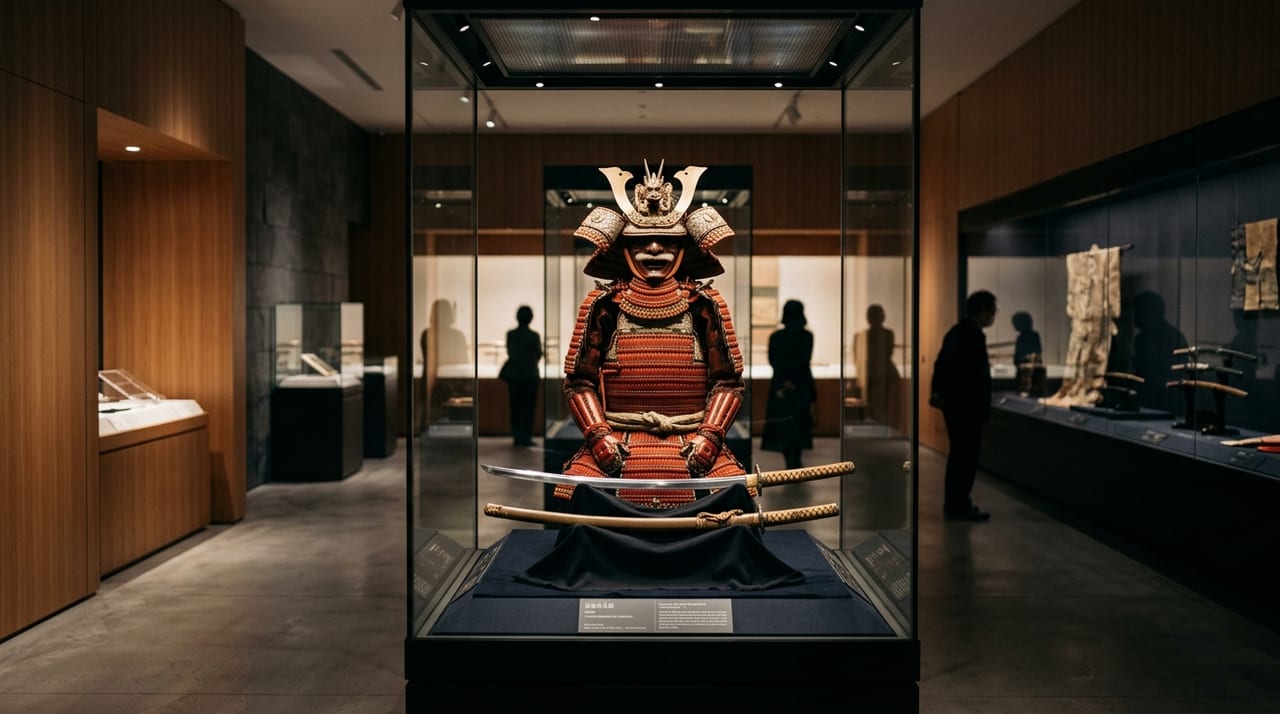
 * Image is for illustrative purposes only.
Kaga Honda Museum
加賀本多博物館
- Location
- Kanazawa, Ishikawa Prefecture
- Access
- Take a local bus from JR Kanazawa Station and get off at "Dewamachi," then walk about 5 minutes. Within walking distance of Kenrokuen and Kanazawa Castle Park. Adjacent to the Ishikawa Prefectural History Museum.
- Opening Hours
- 9:00–17:00 (admission until 16:30) / Closed Thursdays December–February, New Year holidays (12/29–1/3), closed during exhibition changeover periods
- Admission
- Adults 400 yen / university students 300 yen / high-school students and under free
Overview
The Kaga Honda Museum is a private museum presenting the arms, furnishings, and historical documents handed down within the Kaga Honda family, which hereditarily held the office of toshiyori (senior councilor) of the Kaga domain. Formerly known as the Hanrō Honda Collection Hall, it is a rare example among Japanese collections of samurai materials, in that its core consists of a single body of materials passed down not to a daimyo house itself but to a chief retainer house of a daimyo.
The Kaga Honda Family
The Maeda house of Kaga ruled over the "Kaga Hyakumangoku" domain spanning the provinces of Kaga, Noto, and Etchū, the largest tozama daimyo of the Edo period. At the top of its retainer corps were the houses holding the toshiyori office, known as the eight houses (hakka), and the Kaga Honda family was the house granted the highest stipend among them, fifty thousand koku. A fief of this scale was on par with that of an independent daimyo, which illustrates the weight the Honda family held in domain government.
The founder of the family, Honda Masashige, was the second son of Honda Masanobu, known as a strategist and counselor to Tokugawa Ieyasu. After moving between several houses, Masashige entered Maeda service, where he took a central part in establishing the domain administration. Items said to have been used by Masashige are included among the family's heirlooms, allowing the lineage of Tokugawa's hereditary vassals to be traced through physical materials as it entered the core of a great outside domain.
The Collection — Swords, Armor, Spears, and Horse Tack
The core of the collection consists of arms actually used by successive heads of the house. In addition to swords and spears, armor and helmets are preserved, along with items bestowed by the Maeda house, paintings and calligraphy, lacquerware, and historical documents.
The horse tack collection is also a distinctive feature, including not only saddles and stirrups but also rare materials such as horseshoes (kutsu) and hair-wrapping threads (kamimaki-ito). Unlike an art museum that appreciates swords alone, the fact that swords, spears, armor, and horse tack survive together as the "combat equipment of a single house" defines the character of this museum, making it a valuable place to understand the Japanese sword within the equipment system of warrior society.
Building and Location
The museum is located in Honda-no-Mori in Dewamachi, Kanazawa City. This area was once the vast residential grounds of the Honda family and still bears their name. The building is a Meiji-era red brick structure, and together with the Ishikawa Prefectural History Museum it forms an area where cultural facilities are concentrated. It is within walking distance of Kenrokuen and Kanazawa Castle Park, making it possible to walk continuously through both the political space of the Kaga domain and the residential space of its retainers.
Highlights
- A collection of arms handed down in the Honda family, the chief councilors of Kaga with fifty thousand koku. Rare in Japan as a collection passed down to a retainer house rather than a daimyo house itself
- Swords and spears are complemented by armor and helmets, allowing the fighting equipment of a single samurai house to be understood as a system
- A horse tack collection that includes saddles and stirrups as well as rare materials such as horseshoes and hair-wrapping threads
- The founder, Honda Masashige, was the second son of Honda Masanobu, counselor to Tokugawa Ieyasu. The process by which the Tokugawa hereditary bloodline entered the core of a great outside domain can be traced through actual objects
- Housed in a Meiji-era red brick building in Honda-no-Mori, the former residential grounds of the Honda family, adjacent to the Ishikawa Prefectural History Museum
* Opening hours and exhibitions are subject to change. Please check the official website before visiting.