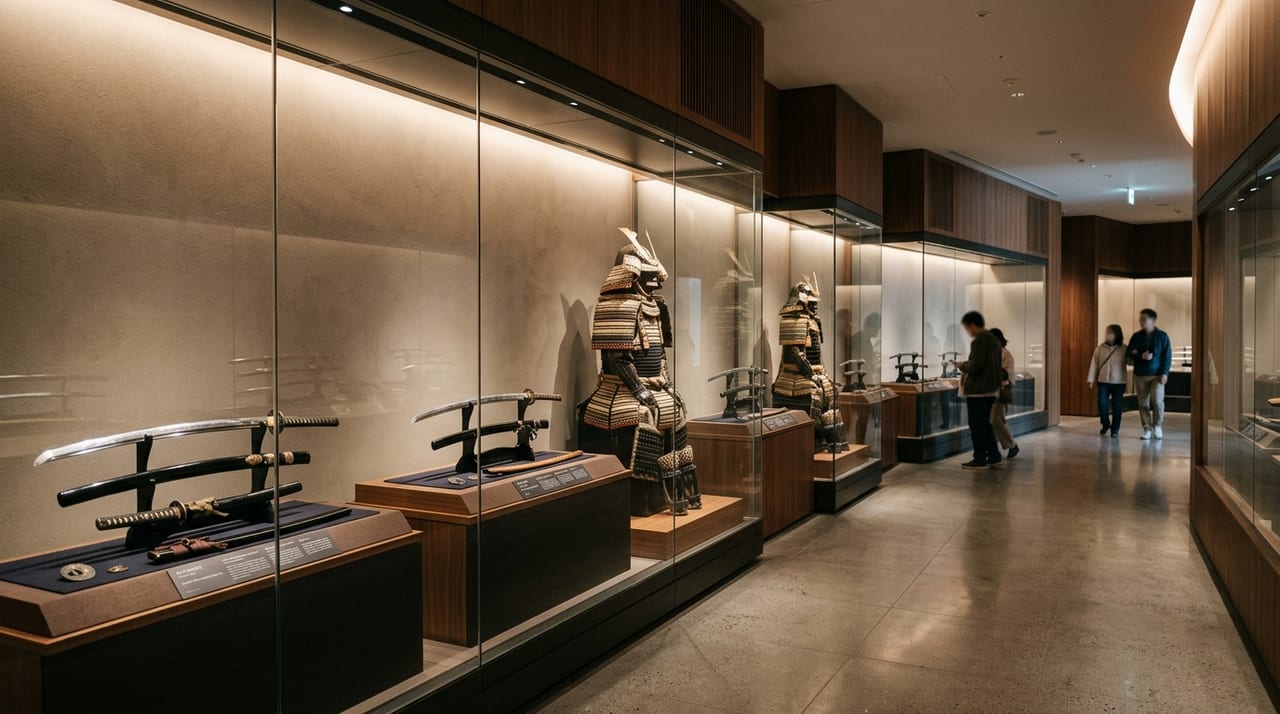
 * Image is for illustrative purposes only.
Seki Traditional Swordsmith Museum
関鍛冶伝承館
Overview
Seki and Its Swords
Seki, the heart of the Mino tradition, has more than 700 years of swordsmithing history. This specialized facility carries the tradition of swordsmith craft into the present. Seki is said to have originated in the Kamakura period, when Motoshige, the founding patriarch of swordsmithing, moved to the area and began forging swords. In the Muromachi period, Seki produced many master smiths whose names are engraved in the history of Japanese swords, including Magoroku Kanemoto, famed as "Seki no Magoroku," and Izumi-no-kami Kanesada, who was called "Nosada." At its peak, more than 300 swordsmiths were active, and they mass-produced practical swords to meet the demand of Sengoku-period warlords. Seki swords, described as "unbreakable, unbending, and sharp-cutting," earned tremendous trust among the samurai.
Passing Down the Swordsmith Craft
The museum's exhibits present the history and techniques of Seki swordsmithing in full. On the first floor, the sword exhibition room displays Japanese swords by Seki's representative smiths, including Magoroku Kanemoto and Izumi-no-kami Kanesada, and also introduces the history of Seki swordsmithing and materials related to sword fittings. Visitors can learn about the togari-gunome hamon unique to the Mino tradition and the features of practical sword construction, alongside the actual swords. The first floor also has video presentations and a demonstration area where swordsmiths and sword craftsmen perform live demonstrations. On the second floor, modern cutlery products such as scissors and kitchen knives, as well as a knife collection by custom knife makers, are on display.
Special Exhibitions
Hamono Matsuri, the Seki Cutlery Festival, held every October, is the largest event in Seki, and the traditional Japanese sword forging demonstrations are a spectacle worth seeing. The sight of swordsmiths in white robes forging tamahagane before the shrine conveys to the present day that sword forging was once a sacred ritual. During the festival, many cutlery bargain sales and sword-related events are held, and cutlery and sword enthusiasts gather from across the country.
Cultural Outreach
Swordsmiths continue to work in Seki today, and the traditional techniques of Japanese swords are being handed down. In modern times, Seki is also known as one of the world's three great cutlery centres (alongside Solingen in Germany and Sheffield in the United Kingdom), and it is a rare city where tradition and innovation coexist.
Highlights
- Display of swords by Magoroku Kanemoto ("Seki no Magoroku") and Izumi-no-kami Kanesada, representing the Mino tradition — Appreciate the true essence of the Mino tradition, which combines the sharpness of practical swords with beauty
- Systematic explanation of 700 years of Seki swordsmithing and forging techniques — Detailed presentation, through actual materials, video, and panels, of the lineage of Seki swordsmithing said to begin with Motoshige in the Kamakura period
- Seki swordsmithing skills conveyed through video, materials, and exhibits — The first floor has a video presentation and a demonstration area for swordsmiths and sword craftsmen
- Traditional Japanese sword forging demonstrations at Hamono Matsuri every October — Swordsmiths in white robes forging swords before the shrine are a solemn sight and a spectacle. Many cutlery bargain sales and related events as well
- Modern cutlery culture of Seki, one of the world's three great cutlery centres — Introduces Seki's cutlery industry, often mentioned alongside Solingen and Sheffield, and displays modern cutlery products and knife collections on the second floor
* Opening hours and exhibitions are subject to change. Please check the official website before visiting.