Types and Forms of Votive Swords (hōnōtō)—The Ritual Structure of Blades Dedicated to Shrines and Temples, with Examples of Important Extant Works
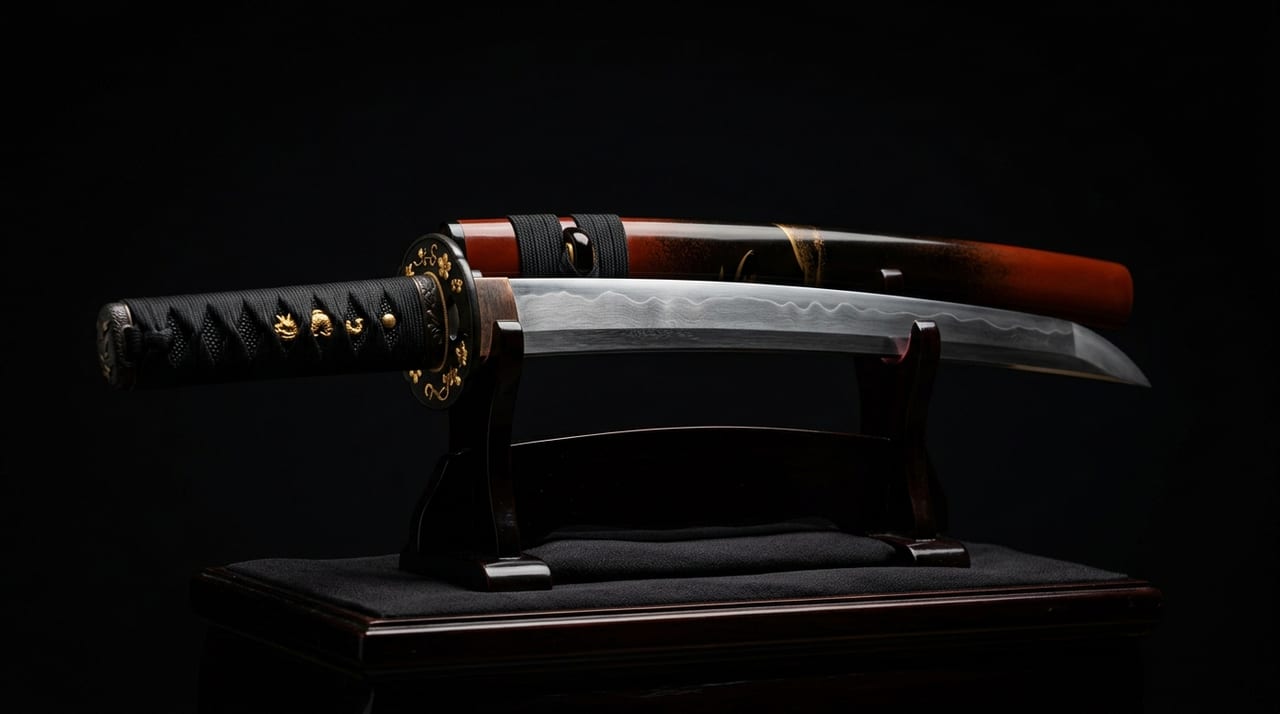
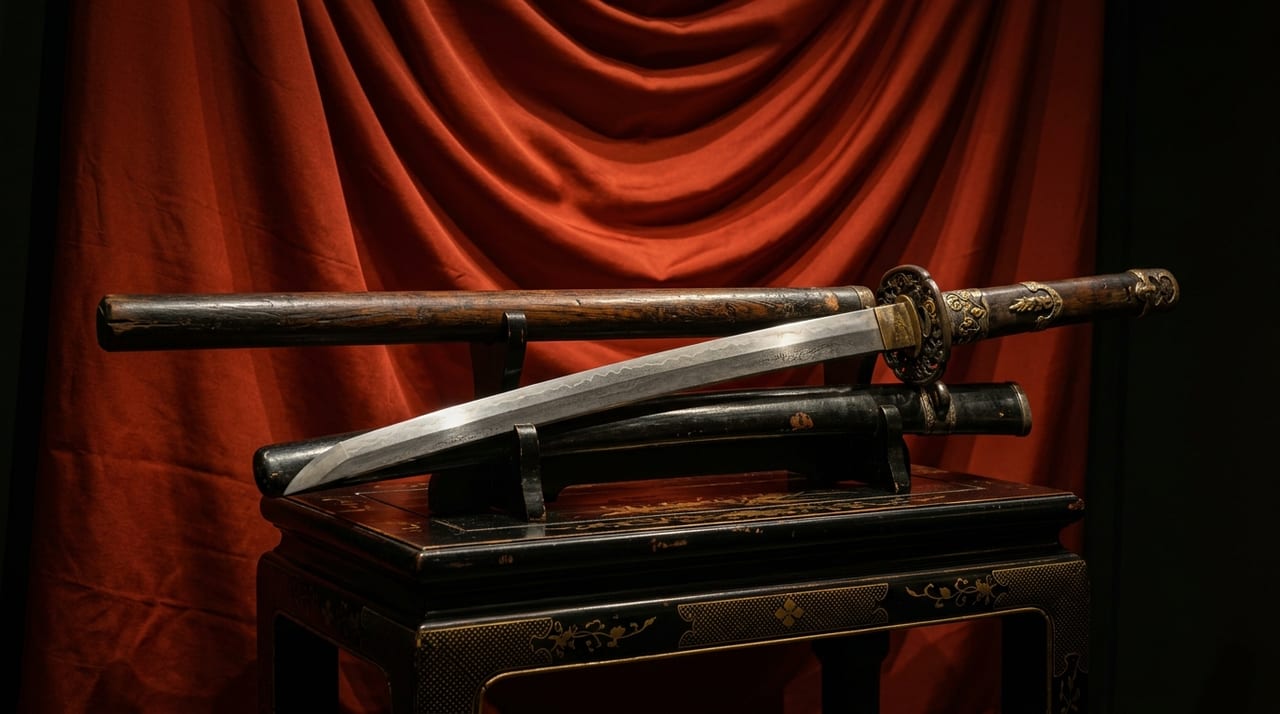 * Image is for illustrative purposes only.
Table of Contents
Japan's shrines and temples have long maintained the practice of dedicating swords to the divine. Warriors would offer blades in prayer for victory in battle, or as expressions of gratitude—this tradition of "votive swords (hōnōtō)" stands as evidence that swords were recognized not merely as weapons, but as vessels imbued with sacred power. This article systematizes the types, forms, and ritual significance of votive swords, and introduces important examples of hōnōtō that survive to the present day.
What are votive swords—the intersection of swords with Shinto and Buddhism
Votive swords are a collective term for "swords created or dedicated for the purpose of being offered to the kami and Buddhas." Their origins reach back to antiquity, maintaining continuity with the swords interred in burial mounds (kofun) from the Kofun period—swords buried alongside the dead. The "gilt-bronze mounted great swords (kintousou-tachi)" and "ring-pommel great swords (kantou-tachi)" unearthed from kofun are interpreted as objects intended to convey sacred power through their placement in graves.
Under the Asuka and Nara periods' ritsuryo legal system, the imperial court established a formal practice of presenting swords as "ritual offerings (heihaku)" to major shrines. At renowned shrines such as Ise Jingu, Kasuga Taisha, and Iwashimizu Hachimangu, numerous swords dedicated by successive emperors, shoguns, and daimyo remain in existence, with many currently designated as National Treasures or Important Cultural Properties.
Main types of votive swords
Votive swords can be classified into various categories according to their dedicatory purpose, the status of the dedicant, and period.
1. Goshintai-tou (swords as divine bodies)
These are blades enshrined in the innermost sanctuary—the inner sanctum of the shrine—as vessels to which the kami descends. Typically invisible to ordinary worshippers, they are handled only by Shinto priests. The goshintai-tou is "the symbol of the kami" itself; its spiritual and ritual significance takes precedence over aesthetic evaluation as a sword.
In form, they are often straight swords (ancient-style blades) or older tachi-type blades. By maintaining ancient styles, they express the "antiquity and purity" in which the divine spirit dwells.
2. Victory and prayer dedication swords
Swords dedicated by military commanders before and after battles. They come in two types: "prayer dedication," offered before deployment to pray for "martial fortune and long life," and "thanksgiving dedication," offered to show gratitude for victory. Common during the Kamakura and Muromachi periods, they demonstrate the "covenant between sword and kami" that characterized samurai society.
Their form varied according to the dedicant's rank and resources, though those from military commanders typically took the form of substantial tachi with formal fittings. Swords dedicated by Sengoku daimyo often included masterpieces by renowned swordsmiths, and many are carefully preserved today as shrine treasures.
3. Honou-tachi (ceremonial votive swords)
Tachi-form votive swords arranged according to ritual formality. These include both swords forged specifically for dedication ("dedication forging") without practical use in mind, and swords originally made for practical use that were later offered to shrines.
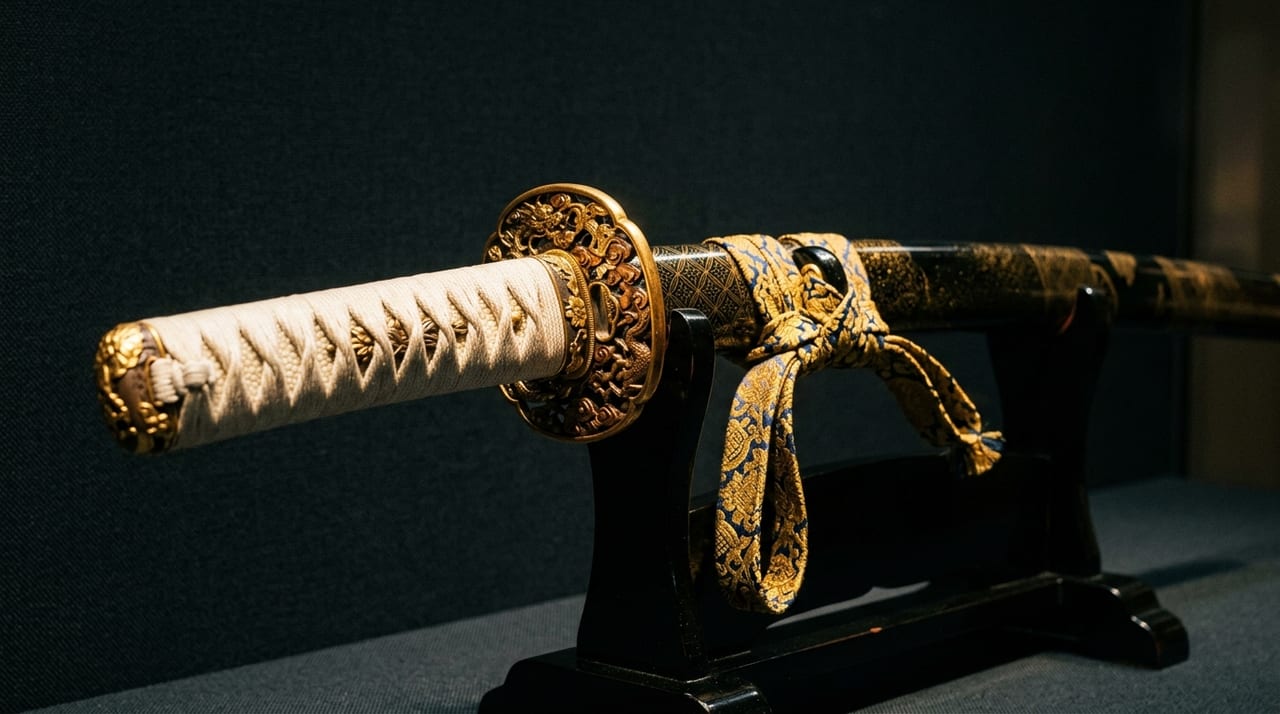
Most honou-tachi possess lengthy blades, expressing the "solemnity" appropriate to "gifts to the kami." They typically feature luxurious metal fittings and lacquer work, with their designs employing Shinto and Buddhist motifs (auspicious birds, dragons, lotus flowers, Sanskrit characters, etc.).
4. Ko-honou-tou (small votive swords) and kaketatematsuri (suspended dedication)
Relatively small swords and sword fittings dedicated by commoners and lower-ranking samurai. In addition to tachi and uchigatana, wakizashi, tanto, and sword fittings (tsuba, menuki, etc.) were sometimes dedicated. These are called "kaketatematsuri," and by the Edo period, the practice of displaying them on shrine sanctuary walls and shelves—similar to votive plaques and bells—had become standard.
Formal characteristics—differences from practical swords
Swords forged specifically for dedication to shrines display several formal characteristics distinct from practical blades.
- Omission of edge sharpening (hatsuke)—Swords intended as offerings to the kami did not necessarily require sharpening to a keen edge. In particular, with goshintai-tou and formally constructed honou-tachi, cases exist where the blade is polished but the edge remains unsharpened.
- Elongated blade length—When dedicating swords to shrine sanctuaries and worship halls, especially lengthy blades were sometimes chosen to convey presence. When displayed leaning against the kami's altar, visual solemnity was required.
- Ornate fittings—The fittings of votive swords employed precious materials such as gold, silver, coral, gold lacquer work, and mother-of-pearl inlay. Decoration prioritized artistic value over practicality, often embodying the highest levels of sword-fitting metalworking technique.
Examples of important extant votive swords
Numerous historically significant votive swords remain in shrines throughout Japan.
| Shrine (Location) | Characteristics |
|---|---|
| Kasuga Taisha (Nara Prefecture) | The shrine treasure hall houses numerous honou-tachi from the Heian through Kamakura periods, rich in National Treasures and Important Cultural Properties. Ancient swords dedicated against the background of the Fujiwara clan's formidable power have become primary historical materials transmitting the Heian period's blade styles to the present day. |
| Tsurugaoka Hachimangu (Kanagawa Prefecture) | As a shrine closely associated with the Minamoto clan, it received numerous dedicatory gifts from military commanders, and retains an abundance of ancient Kamakura-period blades. Swords connected to Minamoto no Yoritomo and the Hojo clan are included, representing an important heritage demonstrating the relationship between samurai culture and votive sword dedication. |
| Atsuta Jingu (Aichi Prefecture) | Renowned as the shrine enshrining the Kusanagi Sword, one of the "Three Sacred Treasures," as its divine body. Due to its elevated status, important dedications have been made by successive holders of power, demonstrating the profound connection between sword culture and Shinto practice. |
The modern votive sword system
In the present day, the practice of dedicating swords to shrines and temples continues. The custom of contemporary swordsmiths creating votive blades to offer to shrines and temples persists in various regions, with instances where Living National Treasures and renowned smiths craft hōnōtō for special ceremonies.
The management of dedicated swords requires careful consideration from a property-rights perspective. Swords offered to shrines become the shrine's legal property, and responsibility for their management and preservation falls to the shrine. For votive swords designated as cultural properties, appropriate preservation conditions must be maintained under the guidance of the Agency for Cultural Affairs.
Conclusion—swords that bridge kami and humanity
Votive swords embody in Japanese sword history a "religious intermediary" dimension distinct from their aspects as weapons or artworks. When a blade becomes the vessel for the kami's descent, when a samurai's oath is carried to the divine, when it certifies the contract between human and kami—this sacred role represents one basis for the special status that swords have occupied beyond mere weaponry in Japanese culture. When we encounter votive swords resting in shrine treasure halls, we touch the deepest layer of blade culture. Those interested in votive swords and historical blades are welcome to browse freely from our online catalogue of works.