Japanese Swords as Seen by a Contemporary Hamono-shi — Technical Overlap and the Unique Difficulties of Swords Compared to Kitchen Knives, Sickles, and Farm Tools
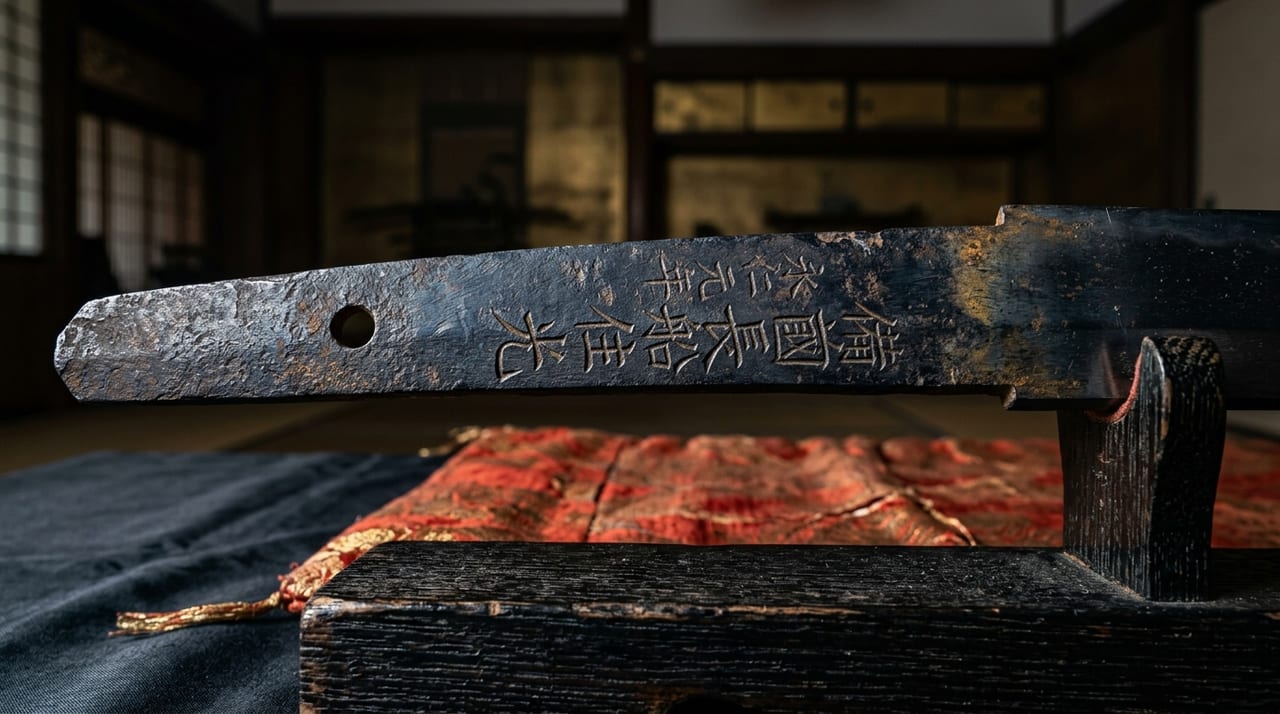 * Image is for illustrative purposes only.
Table of Contents
Hamono-shi and Tōshō — The Distance and Intersection of Two Worlds
Japan has two types of kaji craftsmen: the tōshō who forge nihontō, and the hamono-shi who hand-craft kitchen knives, sickles, farm tools, and the like. The world of tōshō registration, overseen by the Agency for Cultural Affairs, and the world of hamono-shi, which has developed independently as a cutlery industry, share much at the technical root while also differing in decisive ways.
From the outside, both tend to be lumped together under the single label of "blacksmith," but the two have traveled different paths in how they select materials, how they forge, and what purpose they forge steel toward. Hamono-shi pursue sharpness and durability as tools that support everyday life, while tōshō are required to achieve, beyond practicality, a level of completion as works of art.
In this article, from the perspective of craftsmen actually engaged in blade-making, we examine the technical common ground between nihontō and ordinary blades, and the difficulties unique to swords. We also touch on practical questions that hamono-shi tend to face when aspiring to become tōshō.
Common Technical Foundation — The Principles of Steel Selection and Processing
Both hamono-shi making kitchen knives and sickles, and tōshō, share the common challenge of "controlling the carbon content of steel." The steel materials used for kitchen knives — white paper steel, blue paper steel, SKD stainless, and the like — are industrial products with uniformly managed carbon content, but the tamahagane used for nihontō is a natural material with uneven distribution of carbon content, requiring the tōshō to judge the suitability of the material by visual inspection and feel.
Even so, the basic principles of forging — "heating, hammering, folding, and shaping" — are shared by both. There are cases, such as among Sakai kitchen knife craftsmen, where techniques close to orikaeshi tanren are employed, and the goal of homogenizing the structure of the steel is the same. The practice of gauging the heating temperature range by the color of the flame and the way sparks fly from the steel is also a point of intuition handed down among both kitchen knife kaji and tōshō alike.
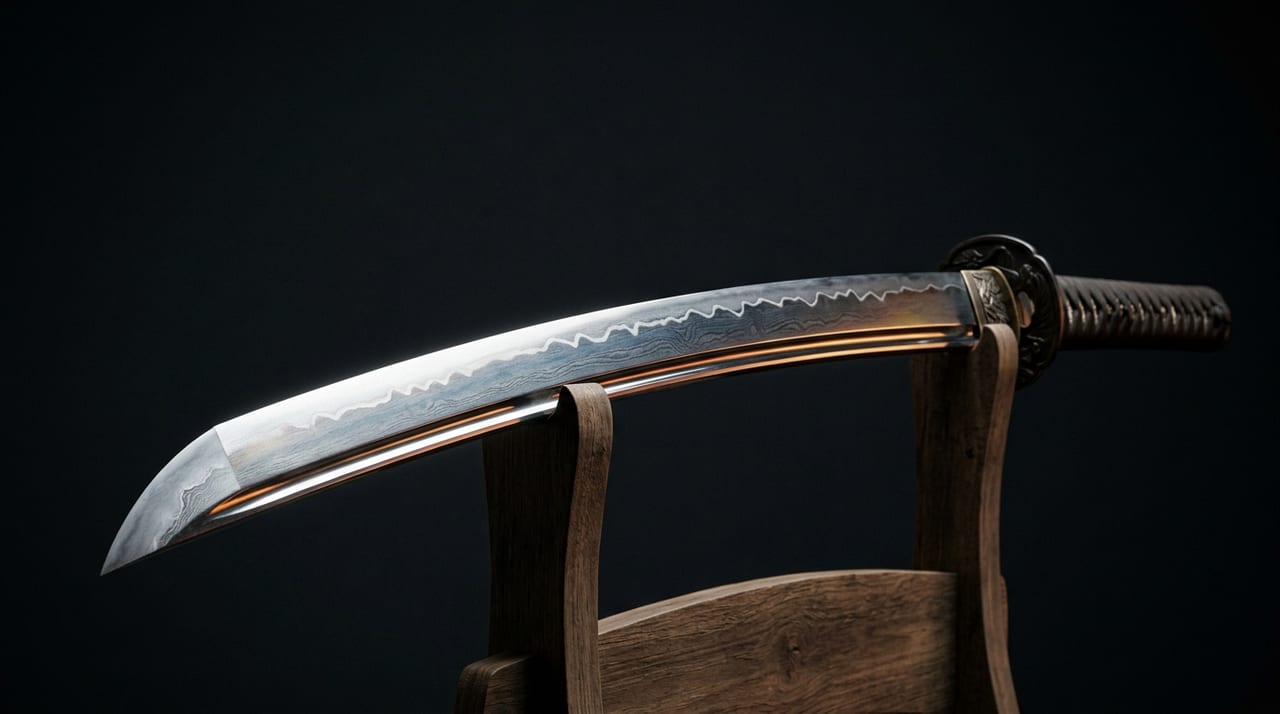
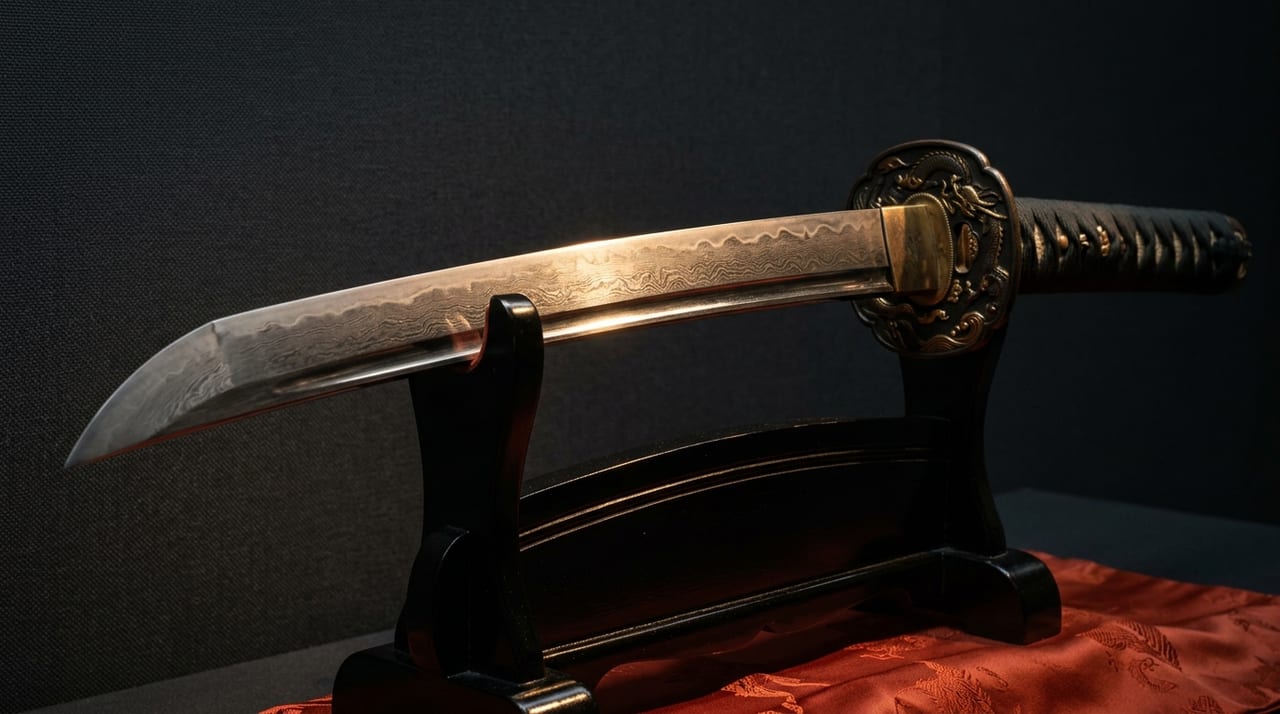
The concept of yaki-ire (quenching through rapid cooling to achieve martensitic transformation) is also shared. However, in nihontō, the hamon is produced by the tsuchioki process of applying clay before quenching. This tsuchioki is the very core of the aesthetics and difficulty unique to swords.
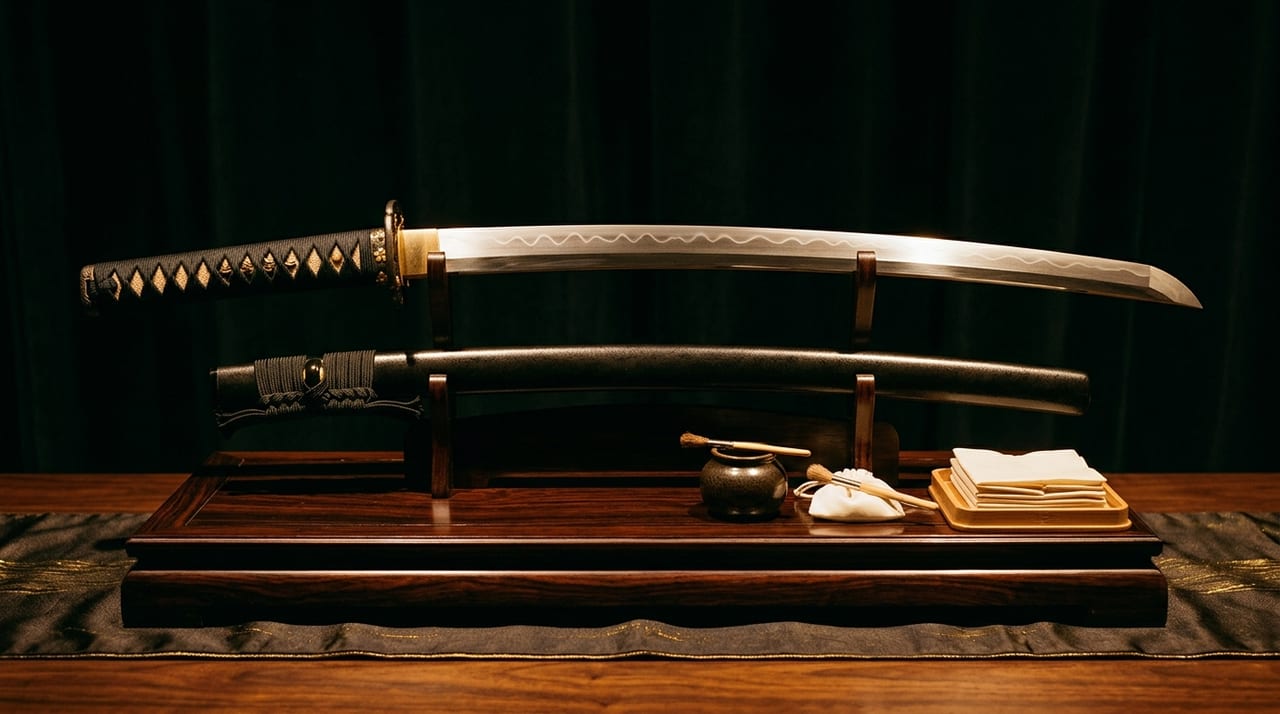
There is common ground in the togi process performed after quenching as well. Both kitchen knives and nihontō are not complete as products through forging and quenching alone; their true sharpness and form emerge only after finish polishing by a togishi. In the case of swords, specialized polishing techniques are additionally required to bring out the scenery of the hamon and jigane, and the division of labor between kaji and polisher is also a notable characteristic.
The Peculiarities of Nihontō That Surprise Kitchen Knife Smiths
Craftsmen who have spent years making kitchen knives as hamono-shi are said to be surprised by several aspects of the nihontō process.
First: The Difficulty of Handling Tamahagane Unlike industrial steel, the distribution of carbon content and impurities in tamahagane is not uniform. Tōshō accumulate sensory judgments that cannot be quantified — "splitting the steel to examine the cross-section," "judging by the color of the charcoal flame and the steel's reaction" — and so forth. For kitchen knife kaji, judging the material is also important, but they rarely have occasion to work with natural materials exhibiting the degree of variation found in tamahagane. The "steel selection" itself — sorting harder and softer portions from each piece of material and deciding where each is to be used in the blade — is treated as a separate, specialized skill.
Second: The One-Shot Nature of Tsuchioki and Hamon Formation A failed yaki-ire on a kitchen knife can, to some extent, be remedied by reheating and reattempting, but the tsuchioki yaki-ire of a nihontō is essentially a one-shot process. The composition of the clay, its thickness, its state of dryness, the temperature of the furnace, the temperature of the water tank — all of these must come together optimally; otherwise, the expected hamon will not appear. Once it fails, the structure of the steel is altered, making correction extremely difficult. This sense of tension is something rarely experienced in the kitchen knife kaji workplace, which operates on the premise of mass production.
Third: The High Standards of Aesthetic Quality For kitchen knives, "sharpness" is the top priority, and aesthetic quality is a secondary element. Nihontō, on the other hand, are evaluated for the beauty of the scenery of the hamon, the surface of the jigane, and the shape of the bōshi (kissaki) to a degree equal to or greater than sharpness. The aesthetic sensibility of "this hamon is beautiful" is something that must be cultivated separately as a tōshō.
Fourth: The Length of the Process to Completion Many kitchen knives can be finished from forging the material through to edge-setting in a comparatively short process, but nihontō generally pass through multiple specialized processes — tanren, sonobe, tsuchioki, yaki-ire, polishing, and the making of the saya and tsuka — with each handled by different craftsmen. The tōshō's role extends only to the process of forging the blade, and before the finished piece is released into the world it passes through the hands of other specialists: the togishi, the saya-shi, the tsukamaki-shi, and others.
Challenges for Hamono-shi Seeking to Become Tōshō
In recent years, a certain number of hamono-shi who make kitchen knives and farm tools have sought to become tōshō. However, receiving approval to forge swords for the first time requires, among other things, having devoted oneself continuously for five years or more to refining one's technique under a tōshō who has previously received approval, and having received the training conducted by the Commissioner of the Agency for Cultural Affairs; there is no provision that shortens this period on the basis of experience as a hamono-shi (Rules on Approval of the Production of Art Swords (e-Gov Law Search), Article 2).
The barriers to be overcome are clear: procuring tamahagane and developing the ability to judge it as a material, mastering the tsuchioki technique, and, most difficult of all, cultivating an eye for the aesthetics of hamon and jihada. This requires not only making swords but also viewing many of the masterworks of past swordsmiths and taking time to internalize the aesthetic sensibility unique to the sword world.
Common Questions for Those Considering the Transition
- Will experience in making kitchen knives go to waste? — The basic principles of forging and yaki-ire are shared, and the intuition for handling a hammer and managing heat carries over as a foundation. However, the handling specific to tamahagane and tsuchioki requires the willingness to start learning from the beginning again.
- Can tools and equipment be repurposed? — While there are aspects of basic equipment such as furnaces and anvils that overlap in principle, specialized tooling is required for the tanren and tsuchioki of nihontō, so equipment from one's hamono-shi days cannot necessarily be repurposed directly.
- How does one cultivate an aesthetic eye? — An accumulation of viewing experiences — actually seeing the many surviving masterwork swords, encountering the real thing at museums and sword dealers — is indispensable. It is considered something that cannot be supplemented by technical books alone and must be cultivated over time.
Influence in the Reverse Direction — The Impact of Tōshō Techniques on the Blade World
There are also examples of tōshō techniques influencing the general blade world. The concept of steel homogenized through orikaeshi tanren has drawn attention in the world of Western kitchen knives as a technique analogous to Damascus steel (laminated steel). In addition, the "single-bevel yaki-ire" technique, in which quenching is applied only to the cutting edge, is an application of the yaki-ire philosophy of swords to blade manufacturing.
In the cutlery industry of Seki, Gifu, products incorporating the orikaeshi tanren technique of nihontō into high-end kitchen knives are produced, and the technical boundary between swords and kitchen knives remains fluid even today. There are also cases of craftsmen who trained as tōshō and subsequently turned to making kitchen knives and craft blades, creating works that combine the techniques of both fields.
This exchange of techniques is not one-directional. The dedication to sharpness as a practical blade that hamono-shi have cultivated, and the approach to process management with mass production in mind, are sometimes incorporated into the sword-making workplace.
Conclusion — The "Spirit of Confronting Iron" Common to Hamono-shi and Tōshō
The hamono-shi who forge kitchen knives and the tōshō who forge swords are the same kind of craftsman in that they face the properties of steel and draw out those properties with the heat of the furnace and the force of the hammer. However, nihontō add a dimension of "pursuit of beauty" that goes beyond the pursuit of practical sharpness. The hamon produced by tsuchioki yaki-ire — this is the core that distinguishes the profession of tōshō from that of a mere hamono-shi.
The technical dialogue between the two holds the potential to enrich Japanese blade culture as a whole, and further deepening of craftsman exchange and industrial collaboration is to be expected. Whether kitchen knife or nihontō, the attitude of the craftsman who continues to face a single piece of steel is, one could say, the common foundation that has sustained Japanese kaji culture.