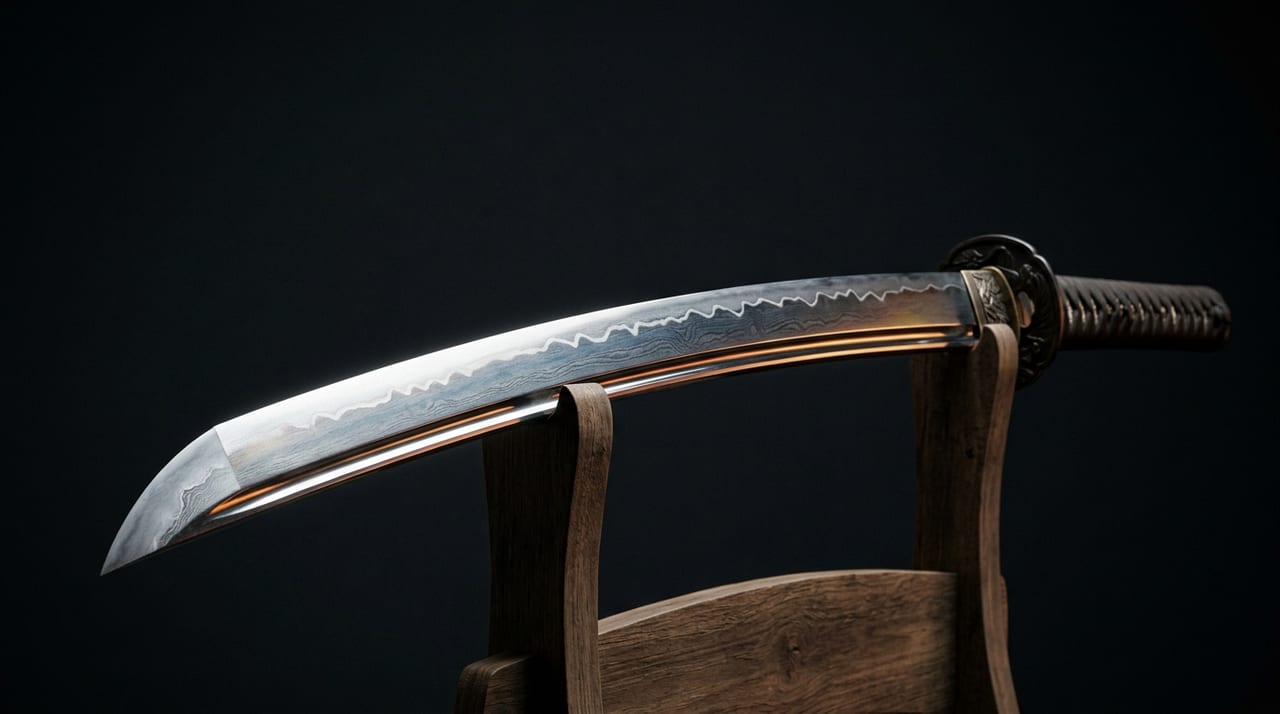
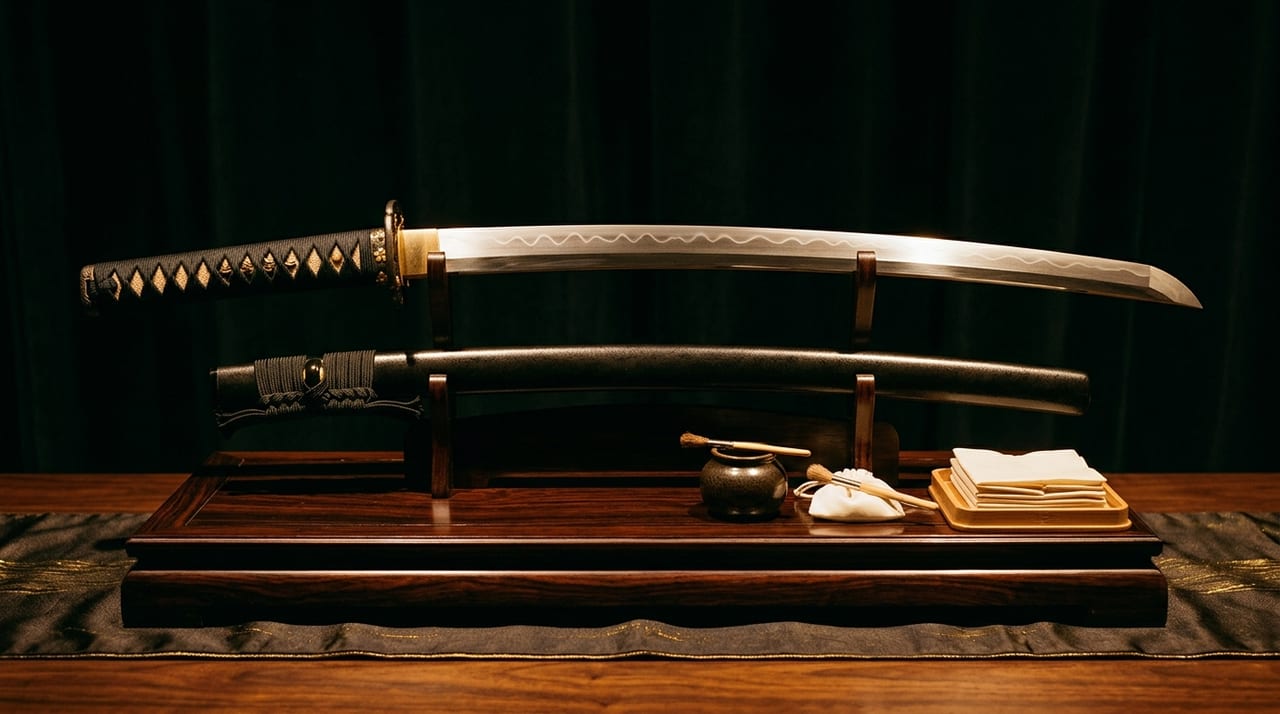
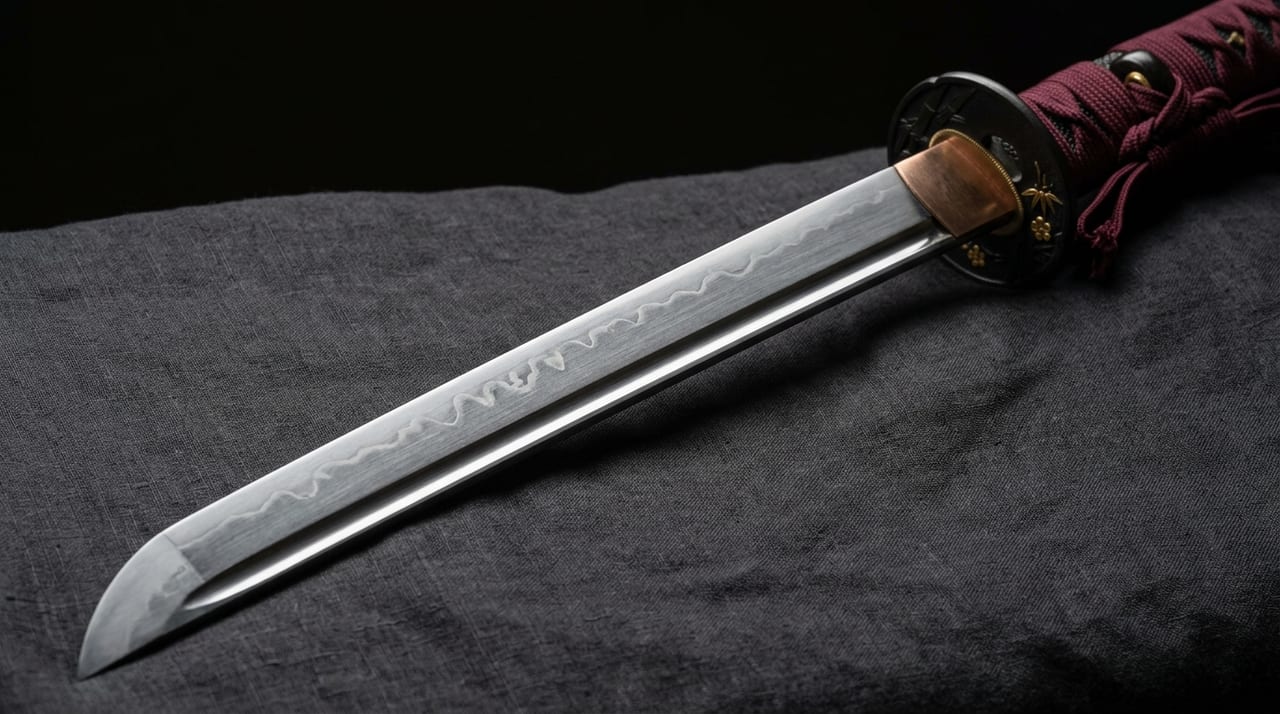
Magnetization and Demagnetization of Japanese Swords — Magnetic Problems and Countermeasures During Forging and Storage
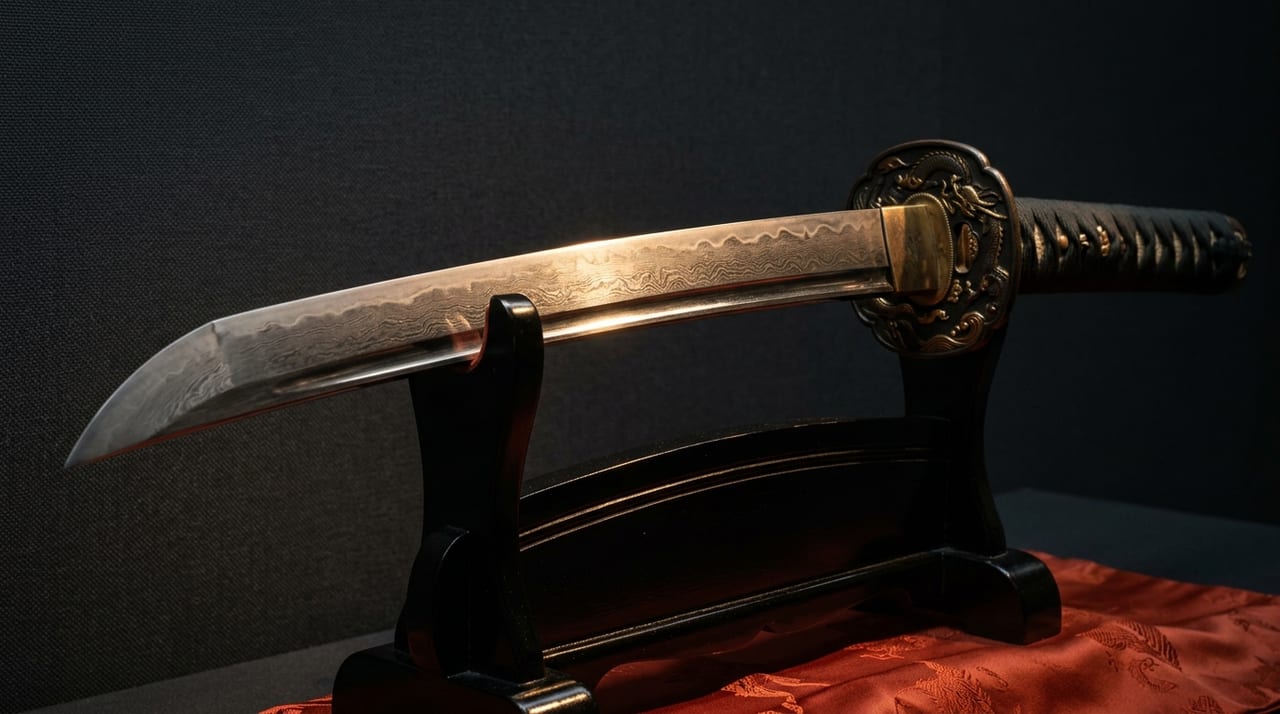 * Image is for illustrative purposes only.
Table of Contents
Japanese swords, being steel products, can become magnetized. In a swordsmith's workshop, magnets are sometimes used, and depending on storage conditions, swords may become magnetized without the owner's knowledge. The topic of "sword magnetization" rarely comes to public attention, but as a practical issue affecting appraisal, storage, and use, it is an important theme in the world of Japanese swords. This article explains the causes of magnetization in Japanese swords and the actual demagnetization process.
Why Do Japanese Swords Become Magnetized
Japanese swords are primarily composed of iron (Fe), which is a ferromagnetic material. When a magnetic field is applied to a ferromagnetic material, it becomes magnetized, and under certain conditions, "remanent magnetization" occurs, where the magnetic properties persist.
There are several primary causes of magnetization in Japanese swords.
- Impact during the forging process: When steel is heated and forged, the structure of magnetic domains in iron changes. Normally, heating to high temperatures eliminates magnetism (at the Curie point, approximately 770°C or higher, ferromagnetism is lost). However, if an external magnetic field is present during the cooling process, magnetization may become fixed in that direction. Historically, swords cooled under the influence of Earth's magnetic field can retain remanent magnetization aligned with the direction of Earth's magnetism, albeit weakly.
- Contact with tools and equipment: In a modern swordsmith's workshop, there are electric tools, electric motors, and devices with built-in electromagnets. Swords can become magnetized through prolonged exposure to or direct contact with these strong magnetic fields. There are documented cases where polishers working near electric motors that rotate whetstones have inadvertently brought swords close to these machines.
- Magnetic fields in storage environments: Magnetization can also occur when swords are stored for extended periods near everyday sources of magnetism such as speakers, electromagnetic clamps, display stands with magnets, and refrigerator doors. In cases where museums or private collectors use magnets in the stands where swords are stored, their effects can be significant.
Problems Caused by Magnetization
There are three main perspectives from which to consider the problems that arise when a sword becomes magnetized.
- Impact on appraisal: Japanese sword appraisal examines multiple aspects such as hamon, jihada, and overall form. Strongly magnetized swords attract iron particles, making fine iron dust adhere easily to the surface of the jihada. This adherence can alter the appearance of the surface finish and interfere with accurate appraisal. Particularly with swords immediately after polishing, the polish dust contains fine iron particles, and on magnetized swords, this adhesion becomes particularly pronounced.
- Risk of accelerated rust: On the surface of magnetized iron, fine iron particles adhere more easily through electrostatic attraction, and in some cases, this can act as a nucleus for rust formation. Particularly in storage environments with inadequate humidity control, a chain reaction can occur: magnetization → iron particle adhesion → localized oxidation → rust progression.
- Impact on polishing work: When a polisher polishes a magnetized sword, the polishing powder from the whetstone (whetstone particles and detached iron dust) adheres more readily to the blade surface. This can cause polishing marks and result in uneven luster. Skilled polishers are sensitive to such changes and are said to sometimes check the magnetization state of the sword before polishing.
Methods and Practice of Demagnetization
Demagnetizing a magnetized Japanese sword can be done by several methods.
- AC demagnetization: This is the most common method. By applying an alternating magnetic field while gradually decreasing the field strength, magnetic domains are reoriented in random directions and remanent magnetization is removed. A device called a "demagnetizer" or "degausser" is used. The basic procedure involves slowly passing the sword through the coil of the demagnetizer or gradually moving the demagnetizer away from the sword while it is operating.
- Demagnetization by heating: When steel is heated to the Curie point (approximately 770°C) or above, its magnetic properties are lost, and if no external magnetic field is present during cooling, the magnetization does not return. However, because this method applies heat to the sword itself, there is a risk of changes to the hamon and distortion, and it is normally not used on swords of cultural heritage value. While this is understood as a naturally occurring phenomenon during the process when a swordsmith creates a new sword, intentional application to finished pieces is avoided.
- Reverse magnetic field using permanent magnets: Theoretically, applying a strong reverse magnetic field can achieve demagnetization, but excessive reverse magnetization carries the risk of creating remanent magnetization in the opposite direction. This method is difficult to control precisely and is considered unsuitable for general sword management.
In practice, AC demagnetization using a demagnetizer is the safest and most reliable method. While it is standard procedure in precision machinery and medical device manufacturing, it is not necessarily widely recognized in the world of Japanese swords. Some sword dealers and polishers are equipped with demagnetizers and sometimes perform magnetization checks as a routine before restoration or polishing.
Everyday Magnetization Prevention and Checking
For sword collectors and iaido practitioners, the primary magnetization prevention strategy that can be practiced daily is the selection of storage location. The basic guideline is to store swords at a distance of at least 30 cm from speakers, refrigerators, computers, magnetic storage accessories, and similar sources.
To check whether a sword is magnetized, a compass can be used. When a compass is brought near a magnetized sword, the needle can be seen being drawn toward the sword. This check is a convenient method that requires no special equipment.
Japanese swords are both precisely crafted metalwork and practical tools that directly reflect the physical properties of steel. Magnetization is one such physical property, and understanding it correctly and managing it appropriately leads to passing swords down to future generations in good condition.