Preventing Decarburization and Scale—How Surface Oxidation During Forging Shapes Katana Quality
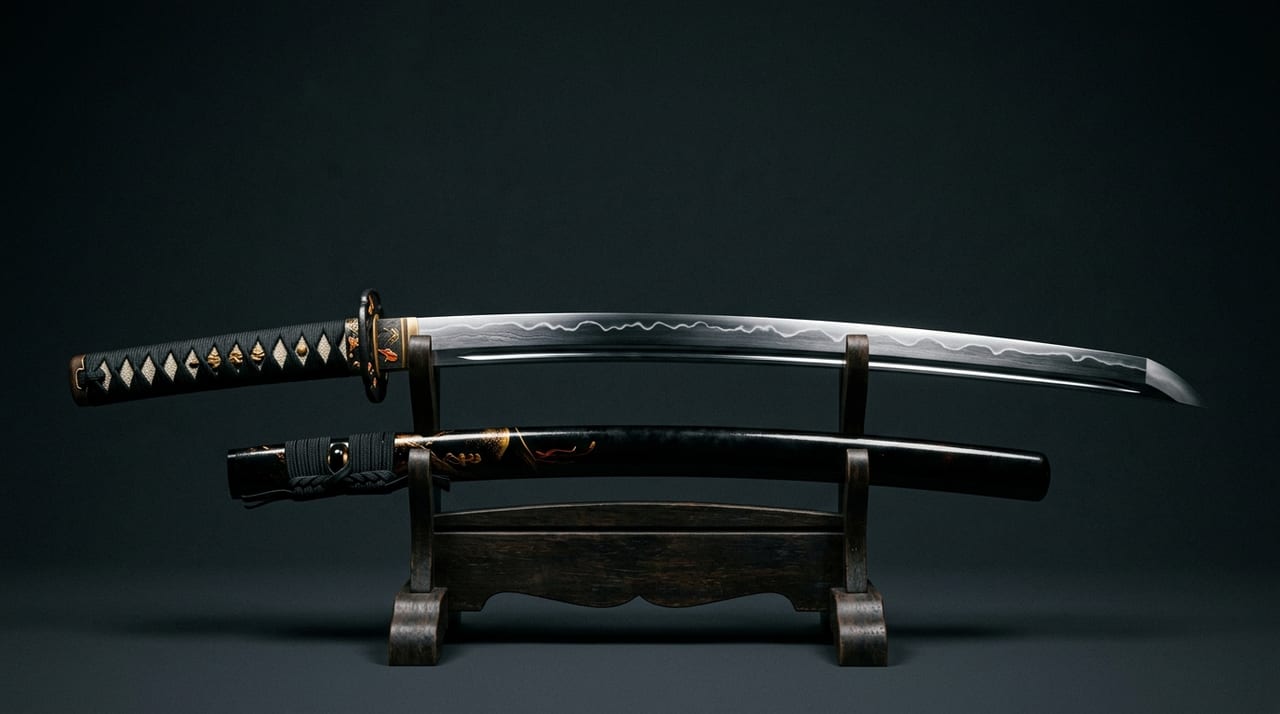 * Image is for illustrative purposes only.
Table of Contents
In Japanese sword forging, one of the problems that demands the most attention from sword smiths is "decarburization" and "burning." Both are surface degradation phenomena of steel occurring in high-temperature environments, and they directly affect the quality of the finished product. In technical discussions of forging, the beauty of hamon and jihada is often discussed, but as a prerequisite, techniques to control surface oxidation are essential. This article explains the mechanisms of decarburization and burning, and the prevention techniques that sword smiths practice.
What is Decarburization—The Phenomenon of Steel "Thinning"
Decarburization is the phenomenon in which carbon contained near the surface of steel reacts with oxygen in high-temperature environments and escapes as CO₂ or CO. Carbon content in steel is a determining factor of hardness and toughness, and as decarburization progresses, the carbon concentration at the surface decreases and the hardness in that area is lost.
Tamahagane is a high-carbon steel with a carbon content of approximately 0.6–1.5%, but repeated heating during forging causes the surface carbon to be depleted. When hardening is applied, martensite transformation occurs less readily in the carbon-depleted surface layer, resulting in hamon not appearing as expected or uneven hardness.
The rate of decarburization is proportional to the heating temperature and the intensity of the oxidizing atmosphere. The higher the temperature, the faster the process, and in an environment of oxidizing flame, decarburization is accelerated. Conversely, decarburization can be suppressed in a reducing flame atmosphere by limiting the oxygen in the furnace. This is also why sword smiths carefully adjust the air flow (bellows output) in the furnace.
What is Burning—Surface Damage from Overheating
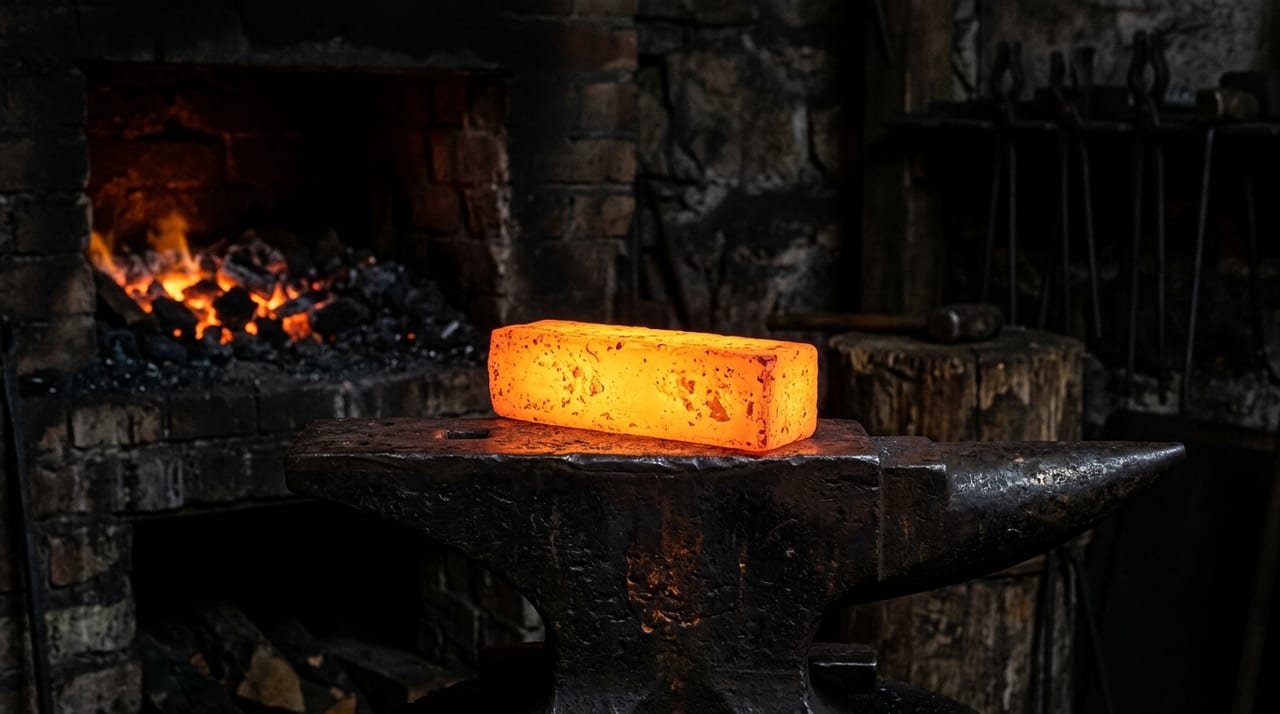
"Burning" is a Japanese sword forging term referring to a state in which the surface of excessively heated steel is covered with an oxide film (scale), and the steel microstructure has become coarse and brittle due to overheating. In English, this is expressed as "overheating" or "burning," and in terms of metallic microstructure, it is a state where "burning" due to excessive overheating has occurred.
Burned areas have a black surface with a crumbly texture. When struck, they produce a dull sound different from normal steel, so experienced sword smiths can detect burning by sound alone. If one attempts to forge a burned area forcefully, that section will crack or peel. Additionally, burning causes coarsening of the steel microstructure and is a cause of lost refinement in the jihada.
Burning and decarburization often occur simultaneously. Heating that is too high increases the rate of decarburization and can lead to burning. To avoid exceeding the temperature "upper limit," sword smiths constantly monitor the color of the flame while working.
Prevention Techniques Practiced by Sword Smiths
Practical techniques to prevent decarburization and burning can be organized into three main areas: "temperature management," "minimizing heating time," and "use of protective agents."
- Temperature management is the most fundamental countermeasure. The optimal forging temperature for tamahagane is said to be approximately 900–1200°C, but the precise value varies depending on the carbon content of the steel and is determined not by instruments but by the color of the flame and the radiance of the steel. When the brightness exceeds the proper range of yellow-orange to incandescence and surpasses white, it enters the danger zone. This judgment is a sensing technique acquired through years of training, and it is an area where experienced and young smiths show considerable differences.
- Minimizing heating time is also important. At the same temperature, the longer the steel remains in the furnace, the more decarburization occurs. Sword smiths operate a rapid cycle of "heating for the minimum necessary time and immediately removing and striking." Particularly in the fine detail finishing stages, slight differences in flame exposure result in surface quality variations, so work rhythm is extremely important.
- Use of protective agents: In the forge welding process, "rice straw ash" is used as a flux. Rice straw ash has the effect of dissolving and removing oxide scale during heating, exposing fresh steel surfaces. This chemical action locally prevents oxidation during forge welding and enables uniform joining. Additionally, by consciously creating a "carbon atmosphere" using charcoal, one can obtain a "carburization protection" effect that prevents decarburization.
Removal of burned areas is another countermeasure. If burning occurs, that section is actively forged out and removed during the forging process. Since burning concentrates on the surface, striking and removing the scale leaves only the sound steel at depth. If this work is not done properly, burned microstructure will be incorporated into the blade's interior, leading to quality degradation of the finished product.
Post-Processing of Decarburization and Burning—Relationship with Polishing
If minor decarburization or burning exists on the finished blade, that layer may be removed during the polishing process. The polisher progressively changes whetstones from coarse to medium to finishing grades while grinding the blade surface; in this process, the surface decarburized layer is removed and the steel surface with its original carbon concentration is exposed.
However, if the decarburized layer is deep, polishing alone cannot address it, and the blade itself may require "reworking." This is why minimizing decarburization and burning during forging is important. Post-processing after completion can only remedy minor cases.
The phenomenon of decarburization and burning is one facet of the "chemistry of steel" underlying the beauty of Japanese swords. The work of sword smiths controlling these four variables—carbon, oxygen, temperature, and time—through their five senses forms the foundation for producing the beauty of jihada and the radiance of hamon in the finished blade.