The Difference Between Orikaeshi-mei, Kiritsuke-mei, and Saidan-mei: Reading the Mei Left on the Nakago by Suriage and Tameshigiri
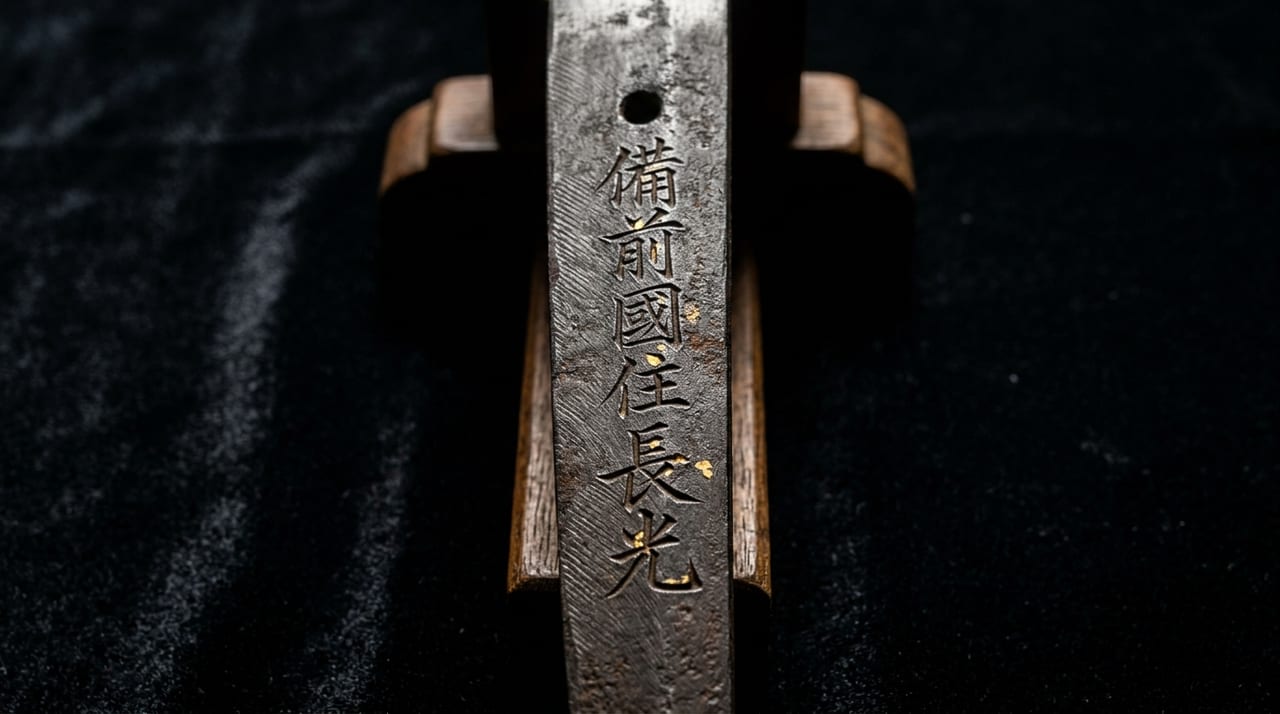 * Image is for illustrative purposes only.
Table of Contents
The nakago of a nihontō may bear not only the swordsmith's name but also a record of the sword's history. In swords that have undergone suriage in particular, different treatments of the mei on the nakago gave rise to distinct terms such as "orikaeshi-mei" and "kiritsuke-mei." There is also "saidan-mei" (also written with an alternate character), which records tameshigiri results, and since the purposes of these differ, confusing them can lead to misreading when appreciating a sword. This article organizes the differences among these three.
Suriage and the Problem of Mei
Suriage refers to the process of shortening a sword by filing down the nakago side of the blade to reduce the overall length. It was performed to match the length of a sword to its user's preferences or the customs of the age, and the nakago too became shorter. The problem that arose here was the swordsmith's mei that had been cut into the nakago.
If the nakago was simply shortened, part of the mei — in some cases all of it — would be lost. Since the swordsmith's mei is a key factor affecting a sword's value, former owners and craftsmen devised ways to preserve it. The two most representative methods are as follows.
- Orikaeshi-mei: a method in which the portion bearing the mei is folded back and secured to the reverse side of the shortened nakago
- Kiritsuke-mei: mei and provenance details chiseled onto the nakago anew after suriage
The technique of suriage itself and its significance for appraisal are covered in detail in The Technique and Appraisal of Suriage. Here the focus is kept on the mei.
What Is Orikaeshi-mei?
Orikaeshi-mei refers to the practice, when suriage has shortened the nakago, of folding back the portion bearing the original mei in order to preserve it. Rather than cutting away the nakago, the section bearing the mei is bent and affixed alongside it, so that the original swordsmith's mei survives in a readable condition — this is its defining characteristic.
It should be noted that some accounts describe the term "orikaeshi-mei" as a modern coinage, and there are records indicating that the same phenomenon was called "orimawarimei" in the Edo period. Because the terminology differs by era, when reading old kanteisho or books it is wise to keep in mind that a different word may have been applied to the same phenomenon.
The points to look for when examining orikaeshi-mei are as follows.
- Whether the mei has not shifted from its original position on the nakago
- Whether the condition of the yasurime and rust on the folded portion connects naturally with the nakago as a whole
- Whether the lettering style and chisel work of the mei do not diverge significantly from the characteristics associated with the attributed swordsmith
Because orikaeshi-mei is also a trace of later reworking, careful observation is required when considering authenticity. When in doubt, the records in a kanteisho that has been examined by an appraisal body should also be consulted.
Kiritsuke-mei and the Recording of Provenance
Kiritsuke-mei is described as provenance chiseled onto the nakago, recording suriage, cutting performance, lineage, and other history. If orikaeshi-mei is "a device to preserve the swordsmith's mei," kiritsuke-mei can be characterized as "mei that records a sword's subsequent journey."
For example, when suriage was carried out, who owned the sword and through what circumstances it had been passed down might be inscribed on the nakago. Such mei carries a value separate from the swordsmith's mei — namely, value as a document that tells the story of the sword's lineage.
A fuller understanding of how to read the position and format of mei can be gained by also reading the explanation in Two-character Mei and Long Mei. For an introduction to reading the nakago as a whole, Reading the Nakago is well suited for beginners.
Saidan-mei Is a Record of Tameshigiri
The previous two types of mei are related to suriage, but saidan-mei is different in character. Saidan-mei is the term for results of tameshigiri — cutting tests performed to assess a sword's sharpness — inscribed on the nakago. One sword commentary introduces an example in which a longer nakago bears the swordsmith's mei on the front and the date together with saidan-mei on the reverse.
In other words, saidan-mei conveys "how this sword was tested" on an axis separate from who the swordsmith was or whether suriage was performed. Even if it looks similar to orikaeshi-mei or kiritsuke-mei, it is important to note that the meaning inscribed is different.
Regarding notation, saidan-mei may be written with either of two sets of characters. Usage varies by source, so it is safer not to commit to one spelling but to judge the meaning from context.
Distinguishing the Three Types of Mei
The differences among the three types of mei are organized here in terms of their purpose.
- Orikaeshi-mei: a device to preserve the swordsmith's mei
- Kiritsuke-mei: mei that records suriage and provenance
- Saidan-mei: mei that records the results of tameshigiri
On an actual sword these may appear overlapping on a single nakago, and it is not always possible to distinguish them at a glance. It is therefore necessary to read the textual content, position, relative age of the chisel work, and traces of reworking on the nakago together.
Things to Keep in Mind When Buying or Appreciating
Knowing the types of mei changes how one reads product descriptions. For example, if "suriage orikaeshi-mei" is written, one can understand that suriage shortened the nakago and the original mei was preserved by folding it back. While there is the advantage that the swordsmith's mei can be confirmed, it also means that later reworking has taken place, so the condition of the nakago should be examined carefully in photographs.
- Check whether the terms "orikaeshi-mei," "kiritsuke-mei," or "saidan-mei" appear in the description
- In photographs of the nakago, look at the position of the mei and the continuity of the yasurime
- If a kanteisho is present, read the entries concerning the mei
For anything of concern, inquiries about listed items can also be submitted through the online inquiry form.
Summary
The mei on a nakago is at once a signature identifying the swordsmith and a record of the time through which the sword has passed. Remembering that orikaeshi-mei is a device to protect the swordsmith's mei, kiritsuke-mei is a record of provenance, and saidan-mei is a record of tameshigiri will bring one's reading of the nakago into sharper focus.
TOUKENZA's online catalog allows you to view photographs of the nakago for each listed sword. If a sword catches your interest, try browsing it with an eye to how the mei has been applied.